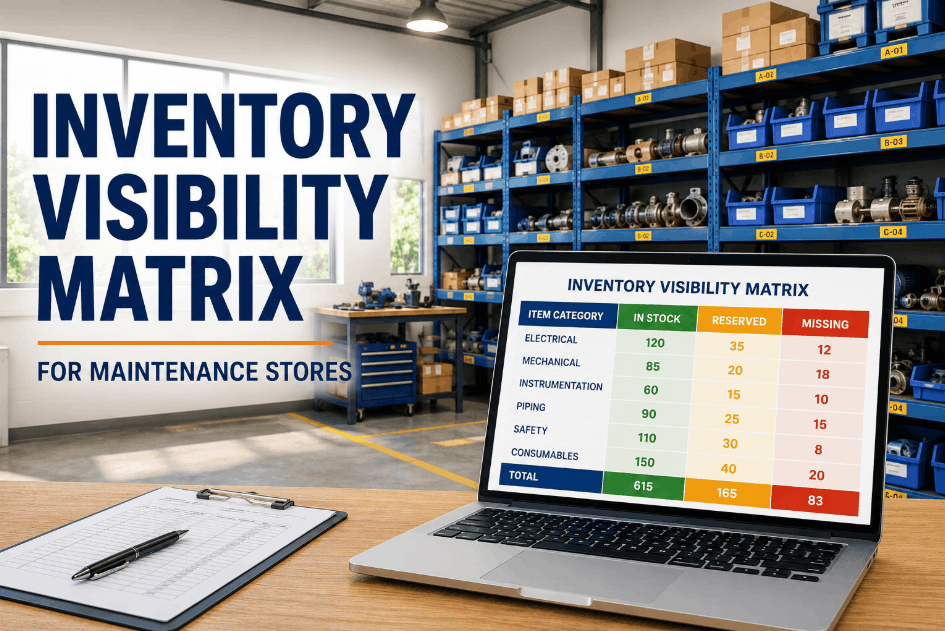
Stockout exposure in maintenance warehousing doesn't announce itself — it compounds quietly through missed reorder windows, invisible demand spikes, and no structured method for distinguishing critical items from low-priority stock. A mid-size industrial warehouse supporting two active production facilities and a rotating repair crew of 11 technicians found itself repeatedly short on fast-moving items at the worst possible moments — during urgent line restart calls and unplanned breakdowns. The parts were somewhere in the system. The problem was timing, visibility, and the absence of any demand-aware reorder logic. If your warehouse is absorbing the same availability risk, Sign Up Free to see how Oxmaint structures inventory control from the first issue — or Book a Demo with a maintenance operations specialist.
Inventory Control · Parts Readiness · Stockout Reduction
Connect Parts Availability to Maintenance Execution
Reorder automation, demand-aware buffer stock, and item-level visibility — OxMaint helps warehouses eliminate stockout exposure before it stops a line.
Warehouse Profile
The Operation: Two Facilities, One Inventory System, Zero Demand Signal
Site Profile
IndustryIndustrial manufacturing — discrete parts and repair kits
Facilities Served2 production facilities, 80+ active asset SKUs tracked
Team11 maintenance technicians, 1 storeroom coordinator
Issue Volume120–160 parts issued per week across both facilities
Prior systemManual stock logs, reactive reorder by visual inspection
Oxmaint featuresInventory Management · Reorder Automation · Work Order Linking · Parts History · Demand Tracking
Baseline Pressure Points
34%
Of urgent work orders delayed by stockout on a required part or repair kit
2.7×
Average lead-time overshoot on critical items due to late reorder triggers
19%
Of fast-moving items hitting zero stock with no system-generated alert
Root Cause Analysis
Why Stockout Exposure Was Building — And Why Reorders Kept Missing the Window
A structured review of 90 days of issue records and purchase logs revealed four inventory management gaps that were compounding availability risk faster than any procurement constraint. The warehouse did not need a larger budget. It needed demand-aware reorder logic, item-level visibility for fast-moving parts, and a direct link between work order activity and inventory drawdown signals. Sign Up Free to map your own stockout drivers — or Book a Demo to see how Oxmaint's inventory engine applies to your parts structure.
41%
No Demand Signal at Reorder Point
Reorder decisions were based on visual shelf inspection, not consumption history. Fast-moving items with irregular demand patterns consistently fell below buffer stock before any action was taken.
26%
Critical Items Not Separated from Slow-Movers
Line-critical parts and low-priority consumables shared the same reorder logic — or no reorder logic at all. Stockout risk on items that stop production was treated identically to items that cause minor delays.
20%
Lead-Time Gaps Not Factored Into Buffer Stock
Reorder points did not account for actual supplier lead times. Items with long or variable delivery windows were held at the same buffer level as items available same-day, creating predictable shortages.
13%
Work Order Demand Not Linked to Inventory
Scheduled maintenance work generated no forward-looking demand signal in the storeroom. Repair kits required for planned PMs arrived after the work order opened rather than staged in advance.
The Solution
How Oxmaint Rebuilt Reorder Timing and Parts Visibility Across Both Facilities
The warehouse deployed Oxmaint without changing its storeroom headcount or procurement relationships. The platform replaced manual visual reorder checks with a demand-aware inventory system that tracked consumption history by item, set reorder points against actual lead times, and flagged fast-moving parts before they reached critical stock levels. Work orders generated automatic parts demand signals — giving the storeroom coordinator a forward view of what repair kits and critical items would be needed before a technician submitted the request. Book a Demo to see how the platform handles item classification and reorder automation for your parts catalog.
01
Demand-Aware Reorder Points by Item Class
Each inventory item was classified by criticality and consumption velocity. Reorder points were calculated from rolling issue history and actual supplier lead times — replacing the previous visual inspection method with system-generated alerts that triggered before buffer stock was breached.
02
Fast-Mover Flagging and Priority Visibility
Items with high issue frequency and line-critical status were segmented into a dedicated visibility layer. The storeroom coordinator could view all fast-moving parts, current stock levels, and incoming demand at a glance — without manually scanning shelves or reviewing individual purchase records.
03
Work Order to Inventory Demand Linking
Scheduled maintenance work orders automatically generated parts requirements in the inventory system. Repair kits and critical items needed for upcoming PMs were visible to the storeroom before technicians requested them — converting reactive parts chasing into proactive staging.
04
Lead-Time Buffer Stock Calibration
Supplier lead times were recorded per item in Oxmaint. Buffer stock calculations updated automatically as lead times changed — ensuring that items with variable or long delivery windows carried proportionally higher safety stock without manual recalculation by the coordinator.
Results at 90 Days
What the Numbers Looked Like Three Months After Deployment
61%
Drop in work orders delayed by stockout — from 34% to 13% of urgent calls
78%
Reduction in zero-stock events on fast-moving items after reorder automation
44%
Faster average parts availability for urgent line restart work
+33%
Increase in repair kits staged before work order open — not after
100%
Item-level issue documentation — up from ~40% under manual log system
3.8×
ROI on platform cost within 90 days from recovered production availability
| Metric |
Before Oxmaint |
90 Days After |
Change |
| Work orders delayed by stockout |
34% |
13% |
-61% |
| Zero-stock events (fast-movers) |
19 / month avg |
4 / month avg |
-78% |
| Avg lead-time overshoot |
2.7× target |
1.1× target |
-59% |
| Repair kits staged pre-WO |
28% |
61% |
+33% |
| Item issue documentation |
~40% (manual) |
100% (digital) |
Full compliance |
| Avg parts availability (urgent) |
4.3 hrs |
2.4 hrs |
-44% |
Key Business Impact
What Stockout Reduction Actually Means for Maintenance-Dependent Operations
"The warehouses I see with chronic stockout problems are almost never short on budget. They're short on visibility. When a storeroom coordinator has no forward demand signal from the maintenance schedule, every reorder is reactive — and reactive reorders always lag the actual need. The fix isn't more stock on every shelf. It's knowing which items move fast, which ones stop production when they run out, and what the real lead time is for each. With that data structured correctly, a single coordinator can manage a catalog of hundreds of items without a single surprise stockout on anything that matters."
Daniel Rao, Maintenance Supply Chain Advisor
18 years industrial warehousing and maintenance operations · Former storeroom and procurement manager, multi-site discrete manufacturer · Specialist in parts availability strategy and inventory health improvement
Parts Readiness · Reorder Timing · Demand Visibility
Replace Reactive Reorders with Demand-Aware Inventory Control
Item classification, reorder automation, work order demand linking, and lead-time buffer calibration — OxMaint gives maintenance warehouses the structure to keep critical parts ready without overstocking everything.
FAQs
Frequently Asked Questions
How does Oxmaint reduce stockout exposure for critical maintenance parts?
Oxmaint tracks consumption history per item and sets demand-aware reorder points calibrated to actual supplier lead times. Fast-moving and line-critical items are flagged separately — so alerts trigger before stock runs out, not after.
Can Oxmaint link work order schedules to inventory demand?
Yes. Scheduled work orders generate forward-looking parts demand in the inventory system, so repair kits and critical items can be staged before technicians submit requests rather than sourced after the work order opens.
Does Oxmaint handle multiple facilities under one inventory view?
Yes. Oxmaint supports multi-site inventory tracking with facility-level stock visibility, shared item catalogs, and consolidated reorder management from a single dashboard.
What happens when supplier lead times change?
Lead times are recorded per item in Oxmaint. Buffer stock calculations update automatically as lead times are revised — no manual recalculation required from the storeroom coordinator.
How quickly can a warehouse see reduced stockout exposure after deployment?
Most sites see measurable improvement in parts availability within the first 30 days. Full reorder cycle normalization — including buffer stock alignment and demand signal accuracy — typically stabilizes within 60–90 days.
Every Part Available When Needed Is Downtime You Prevent
Give Your Maintenance Warehouse the Inventory Structure It Needs
Oxmaint brings demand-aware reorder automation, fast-mover visibility, work order demand linking, and lead-time buffer management to maintenance warehouses — with no additional storeroom headcount required.