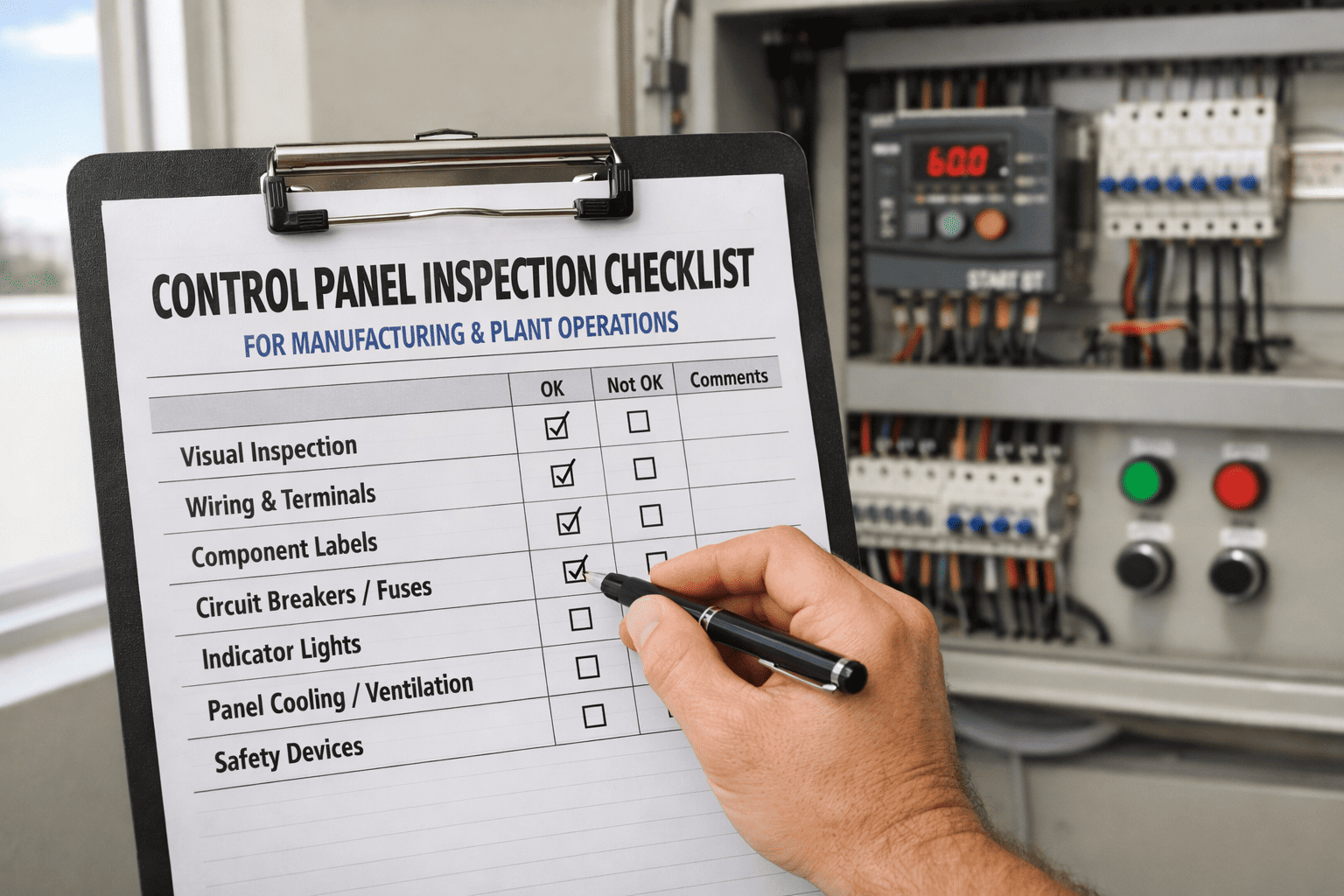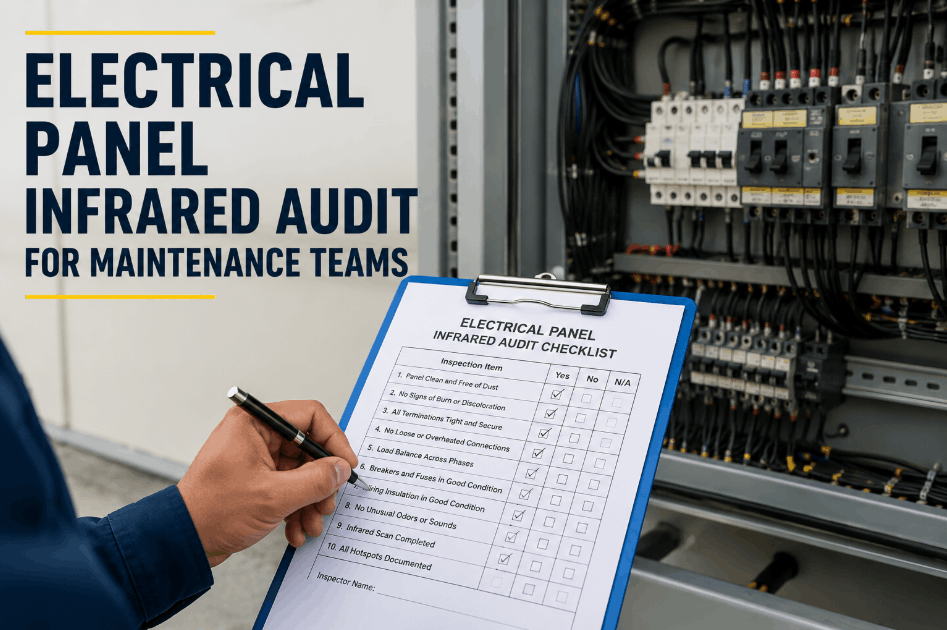
Electrical panel failures that interrupt production are rarely sudden — they are the end result of thermal conditions that were detectable weeks or months before the failure, but never identified because infrared inspection was not part of the maintenance routine. Loose terminations generating heat, unbalanced loads stressing conductors, and overloaded breakers operating above their thermal rating all produce infrared signatures long before they produce failures. The structural gap is consistent across industrial and commercial facilities: infrared audits are performed reactively, results are documented informally if at all, and there is no process that connects hotspot findings to corrective work orders, repair timelines, or load management decisions. This checklist helps maintenance teams, electricians, and reliability engineers conduct a systematic electrical panel infrared audit — covering hotspot identification, termination review, load balance assessment, and corrective action documentation — so thermal anomalies are found and addressed before they cause unplanned outages. Sign Up Free on Oxmaint to schedule recurring infrared audit work orders, capture thermal findings with photo documentation, and route panel hotspot deficiencies to electricians with priority-based work order assignment. From loose terminations to load imbalance, an undocumented infrared scan leaves thermal risk in the panel until the next failure. Book a Demo to see how Oxmaint connects infrared audit results to corrective work orders, asset maintenance history, and electrical compliance records — so every thermal finding has a documented response and a closed-loop outcome. Use this checklist during your next electrical panel infrared audit to confirm that every thermal anomaly is identified, classified, and assigned for corrective action before it becomes a production interruption.
1. Pre-Audit Safety Setup and Load Condition Verification
Infrared audits only produce meaningful data when panels are under representative load. Confirm that electrical panels are carrying near-normal operating load before scanning — and that the audit team has established the required safe working distance and PPE for energized electrical work before approaching any panel.
2. Hotspot Identification and Severity Classification
Not all thermal anomalies carry the same risk. Infrared findings must be classified by temperature differential and assigned a severity tier that determines the urgency and timeline of the corrective action — immediate shutdown, planned repair, or scheduled maintenance.
3. Loose Termination and Connection Point Review
Loose terminations are the single most common source of electrical panel hotspots and the most preventable. Confirm that thermal scanning is complemented by a physical termination torque check on flagged circuits — infrared identifies the symptom while torque verification confirms the cause.
4. Load Balance Assessment Across Phases
Load imbalance across phases is a chronic source of thermal stress that is invisible without measurement. Infrared alone will not identify phase imbalance — confirm that current measurements across all three phases are taken during the audit and that imbalance exceeding acceptable limits is flagged for load redistribution planning.
5. Post-Audit Documentation and Corrective Action Closure
An infrared audit that produces a report but no closed-loop corrective actions has not reduced electrical risk — it has documented it. Confirm that every finding from the audit has an assigned corrective action, an owner, a timeline, and a verification step that confirms the thermal anomaly was resolved before the panel is removed from the watchlist.

![monthly-manufacturing-plant-safety-audit-checklist-[osha---iso-45001]](./manage-post-2k26/uploads/monthly-manufacturing-plant-safety-audit-checklist-[osha---iso-45001].png)