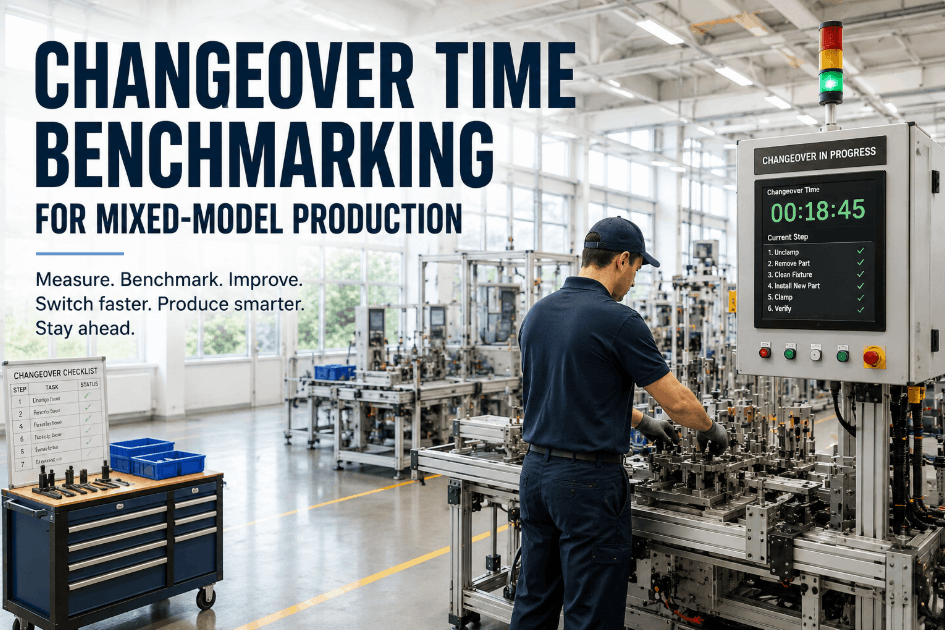
Changeover loss in production environments accumulates not through single large failures but through repeated small delays — a setup step done out of sequence, a release check skipped and then re-done, a trial run that runs longer than necessary because readiness wasn't confirmed before it started. A discrete manufacturing facility running multiple SKUs across shared lines found itself with a chronic changeover problem: batch transitions consumed more time than planned, startup losses followed nearly every changeover, and the gap between scheduled and actual line availability after a change was wide enough to affect daily throughput targets. If your operation is absorbing preventable changeover loss without structured setup standards, Sign Up Free to see how Oxmaint brings structure to transition execution — or Book a Demo with a maintenance operations specialist.
The Operation: Multi-SKU Discrete Manufacturing, Unsequenced Changeovers, and Recurring Startup Loss
Why Changeover Loss Kept Accumulating — And Why Setup Standards Alone Weren't Reducing It
A detailed review of 45 days of changeover records, trial run logs, and production schedule variances identified four structural gaps sustaining the changeover loss problem. Written setup sheets existed but were not enforced in sequence, release checks were performed informally without a structured sign-off, and no visibility existed into where time was being lost within the changeover window. Startup losses were tracked as a production metric but had no operational connection to what happened during the changeover that preceded them. Sign Up Free to assess your own changeover loss exposure — or Book a Demo to see how Oxmaint structures transition execution.
How Oxmaint Reduced Changeover Loss and Recovered Productive Minutes Between Batches
The facility deployed Oxmaint to replace printed changeover sheets with structured digital checklists that enforced step sequence and required release sign-off before line restart. Setup steps were ordered within Oxmaint so that operators could not advance to later steps before earlier ones were confirmed complete — eliminating the out-of-sequence rework that had been the single largest contributor to transition overrun. Release readiness was formalized as a structured check within the changeover workflow. Trial run duration was tracked separately, giving supervisors visibility into whether startup loss was linked to setup completeness or machine adjustment. Transition time became visible in real time rather than only in retrospect. Book a Demo to see how changeover structure applies to your production lines.
Changeover steps were digitized in Oxmaint with enforced sequence — operators could not mark a step complete and advance to the next until prior steps were confirmed. Out-of-sequence rework was eliminated as a delay source, and supervisors could see step completion status in real time rather than learning about overruns after the transition window had closed.
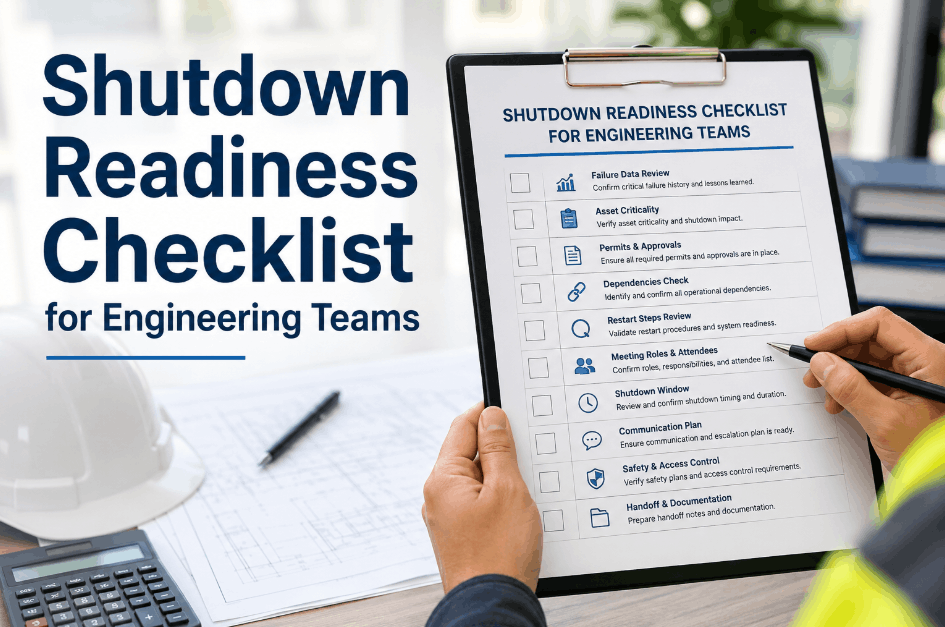
A structured release check was built into the end of every changeover workflow in Oxmaint, requiring confirmation of all setup conditions before line restart authorization was granted. Informal visual checks were replaced by a documented sign-off — preventing the premature starts that had generated first-article failures and extended trial runs across the production floor.
Trial run time was tracked as a distinct phase within the changeover workflow in Oxmaint, separated from setup and teardown time. Supervisors gained the ability to identify which changeovers generated the most startup loss and whether overruns were linked to setup completeness, machine adjustment, or operator readiness — enabling targeted improvement rather than aggregate tracking.
Changeover progress became visible in real time through Oxmaint, allowing supervisors to see where a transition stood against its planned window while it was still in progress. Early identification of transitions running behind plan enabled in-shift resource deployment that recovered time before the delay reached the next production batch.
What Changeover Loss and Transition Time Looked Like Three Months After Deployment
| Metric | Before Oxmaint | 90 Days After | Change |
|---|---|---|---|
| Changeovers exceeding planned window | 41% | Under 20% | -52% |
| Startup loss per changeover | 2.4× target | Under 0.8× target | -67% |
| Changeovers with out-of-sequence rework | 33% of all changeovers | Under 11% | -67% |
| Formal release check completion | ~40% (verbal) | 78% signed off | +38% |
| Trial run duration visibility | Aggregate only | Phase-level tracked | Full visibility |
| In-shift transition recovery actions | Book a Demo |