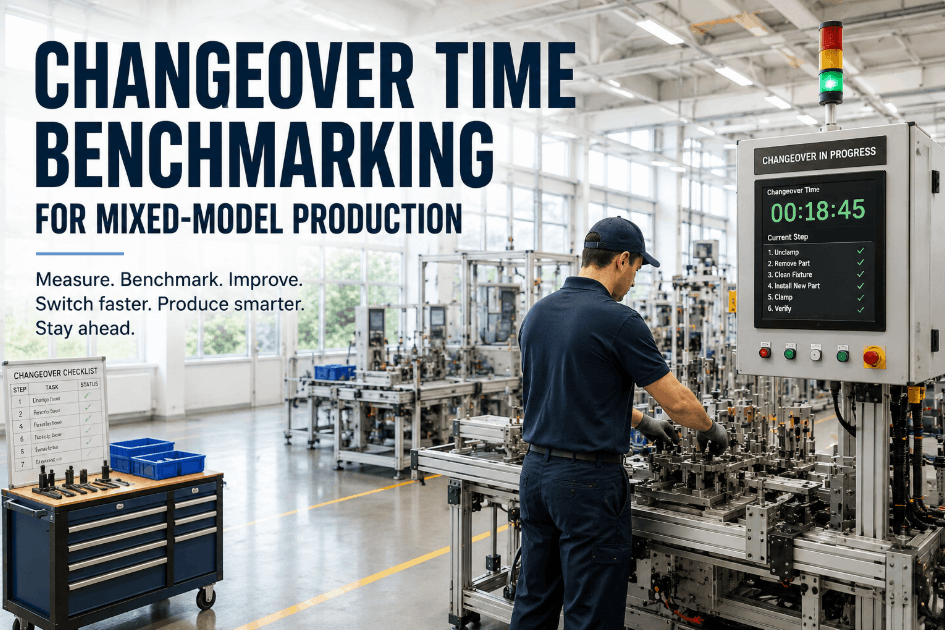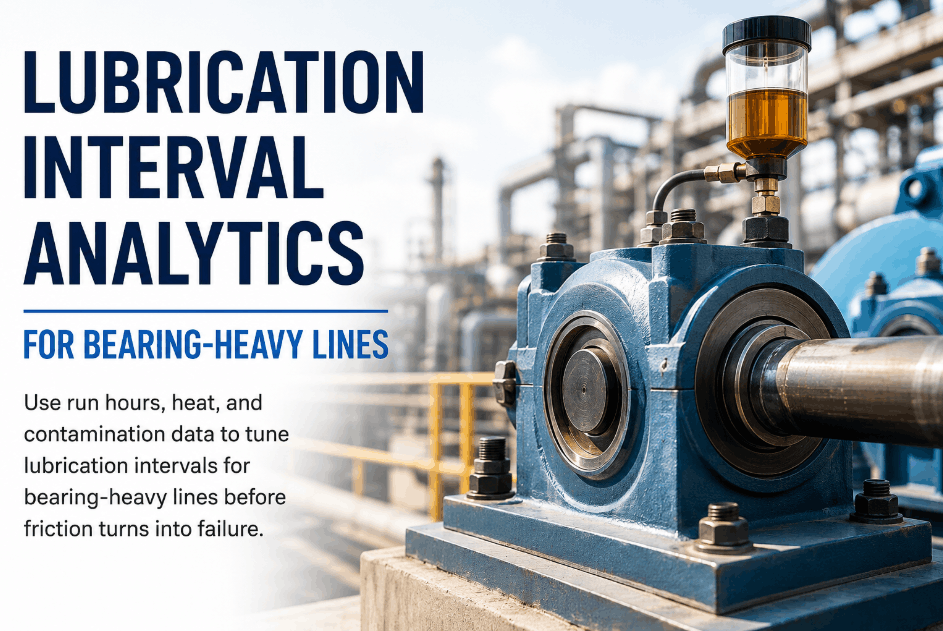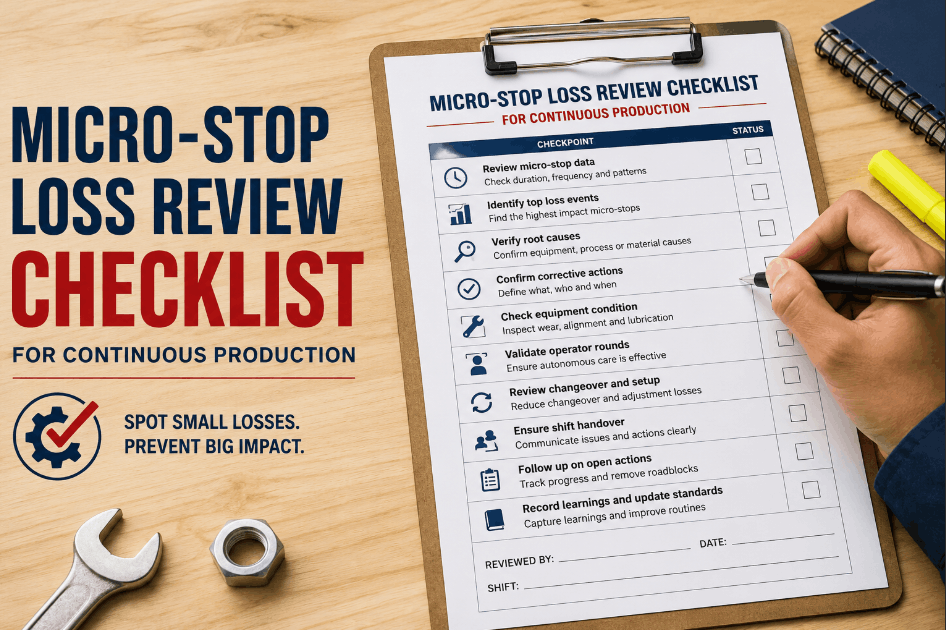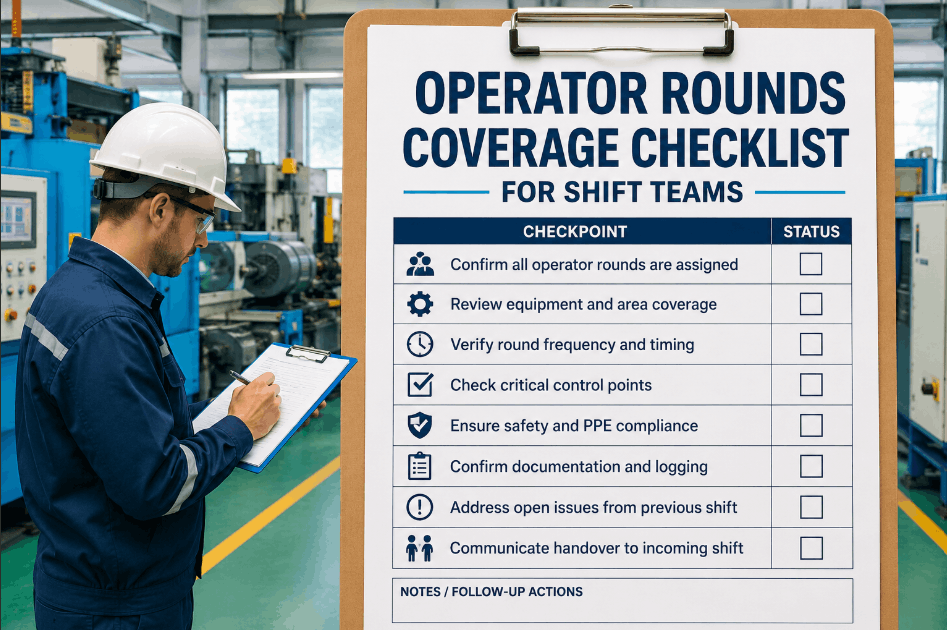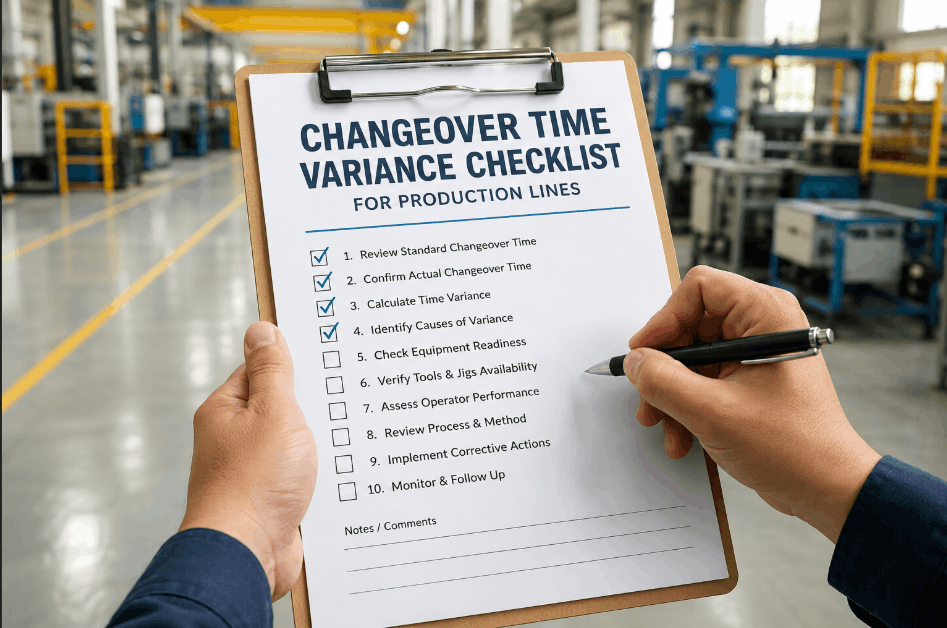
Changeover time variance is one of the most underreported sources of hidden output loss in production operations. When line changeovers start adding unplanned minutes to every shift, the losses rarely appear cleanly in downtime records — they accumulate as compressed run windows, late starts, and eroded throughput targets. The root causes are almost always systemic: inconsistent operator technique, missing materials, incomplete setup documentation, or uncoordinated shutdown and startup sequences that vary by shift team. This checklist helps production managers, process engineers, and shift teams audit changeover execution quality, identify variance drivers, and restore predictable changeover performance across all lines. Oxmaint's Sign Up Free platform gives operations teams digital work instructions, task completion tracking, and changeover time analytics — so variance is visible before it becomes a planning problem. From product changeovers to line format adjustments, poorly managed changeover discipline is one of the most correctable sources of line efficiency loss. Book a Demo to see how Oxmaint's operations task tools reduce changeover variance and protect planned output windows. Use this checklist before your next line review or shift planning cycle to confirm changeover discipline is not hiding time from your production schedule.
1. Changeover Time Baseline & Variance Measurement
You cannot reduce changeover variance you have not measured. Before investigating root causes, establish actual changeover time data by shift, line, and product transition type — not standard times from a planning sheet.
2. Changeover Preparation & Materials Readiness
The majority of changeover time variance originates before the changeover starts — in missing materials, unconfirmed setup equipment, or incomplete prior-shift preparation that forces the changeover crew to recover time that should have been pre-staged.
3. Changeover Work Instructions & Sequence Compliance
Changeover variance driven by technique inconsistency requires standardized work instructions at the task level — not general procedure documents. If operators follow different sequences, execution times will vary by the same degree the sequences differ.
4. Shutdown Coordination & Line Startup Quality
Changeover time is not only what happens between production runs — it includes the final production shutdown sequence and the first-article quality confirmation after startup. Both are sources of recoverable variance that rarely appear in changeover time reports.
5. Changeover Performance Review & Continuous Improvement Cadence
Changeover time improvement is not a one-time project — it is a continuous management process. Without a structured review cadence, variance reductions made through focused improvement events gradually return as discipline erodes and team memory fades.