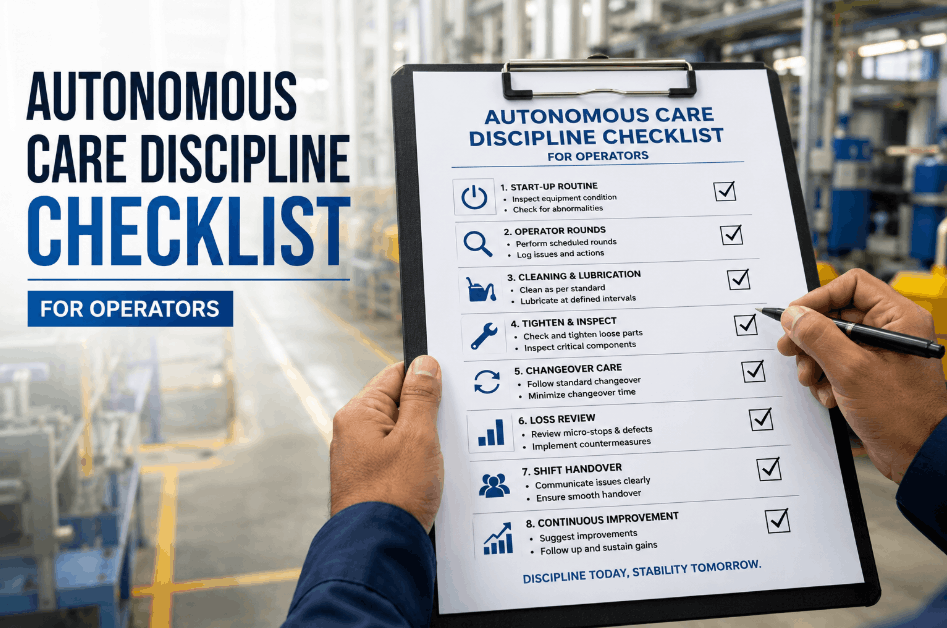
Autonomous care discipline is the first layer of defense against equipment degradation — and the layer most likely to erode quietly. When operator routines drift into inconsistent habits, micro-stops increase, lubrication intervals get missed, and shift handovers lose precision. The damage compounds before anyone notices it in the data. This checklist helps production managers, reliability engineers, and shift teams systematically audit operator care routines, evaluate cadence consistency, and restore discipline before it starts costing line stability and throughput. Oxmaint's Sign Up Free platform gives teams live visibility into operator round completion, care task status, and shift handover quality — so discipline is tracked by data, not assumption. From lubrication interval compliance to breakdown recovery coordination, poor autonomous care is one of the most correctable sources of avoidable equipment loss. Book a Demo to see how Oxmaint's operator task management tools reinforce care discipline across every shift. Use this checklist before your next shift review or daily management meeting to confirm the first layer of your maintenance program is holding.
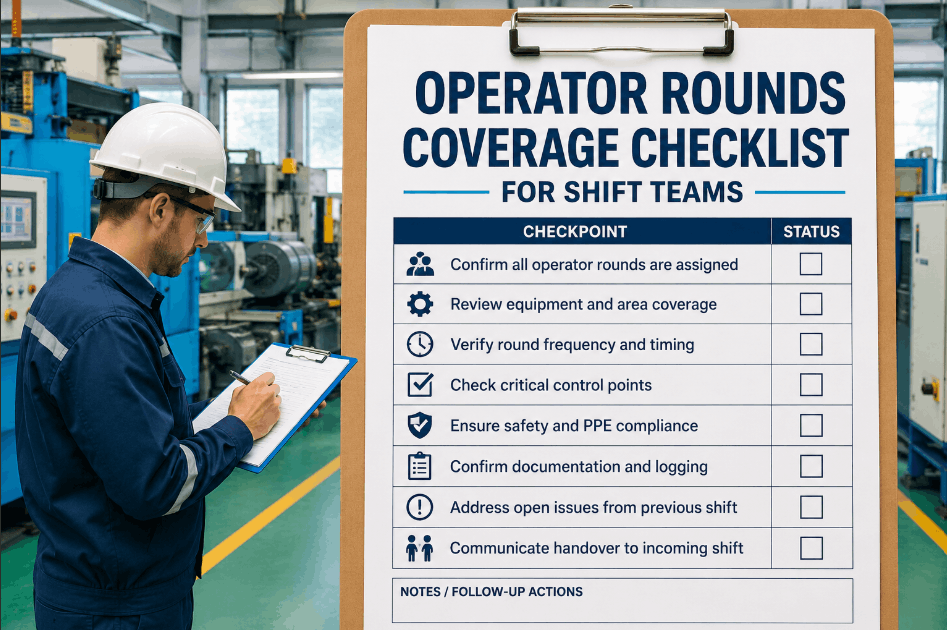
1. Operator Round Compliance & Routine Verification
Before evaluating care quality, verify that operator rounds are actually being completed at the required cadence. Missed rounds are invisible losses — they don't appear in downtime records until a failure event connects the gap.
2. Lubrication Interval & Care Task Precision
Lubrication interval compliance is the single highest-return autonomous care activity. Missed or incorrect lubrication is a leading cause of premature bearing failure, drive degradation, and unplanned downtime on rotation assets.
3. Shift Handover Quality & Information Transfer
Shift handover is where care discipline either transfers or terminates. Incomplete handovers create knowledge gaps that allow emerging equipment problems to restart their accumulation on the next shift without context.
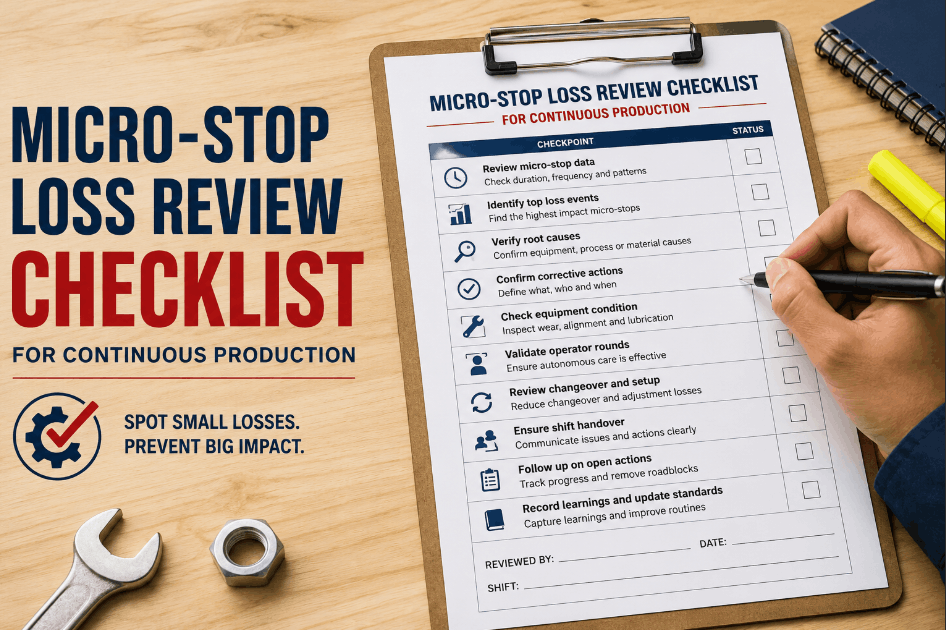
4. Micro-Stop Tracking & Loss Review Integration
Micro-stops are the hidden output loss that autonomous care discipline is designed to prevent. If care discipline is eroding, micro-stop frequency will increase before formal downtime records reflect it.
5. Team Cadence & Daily Management Discipline
Autonomous care discipline is sustained by daily management cadence — not by periodic audits. If the daily management system is not reinforcing care expectations every shift, discipline will drift regardless of how well the initial rollout was executed.