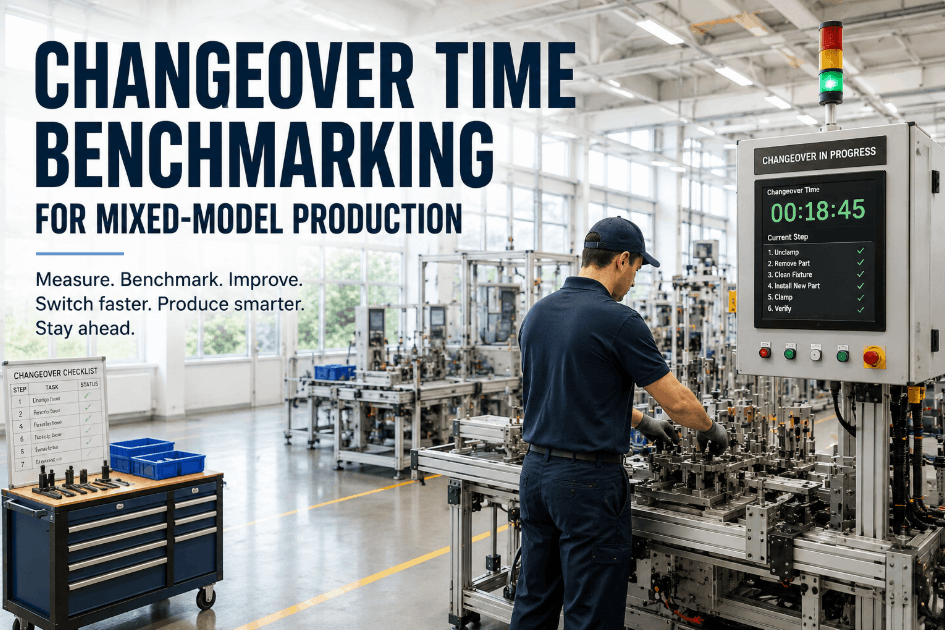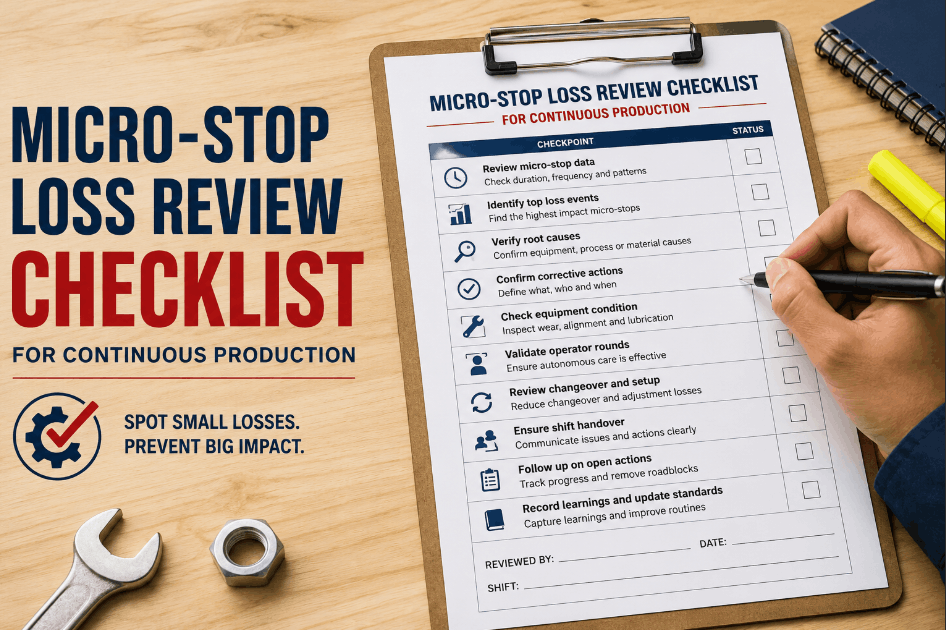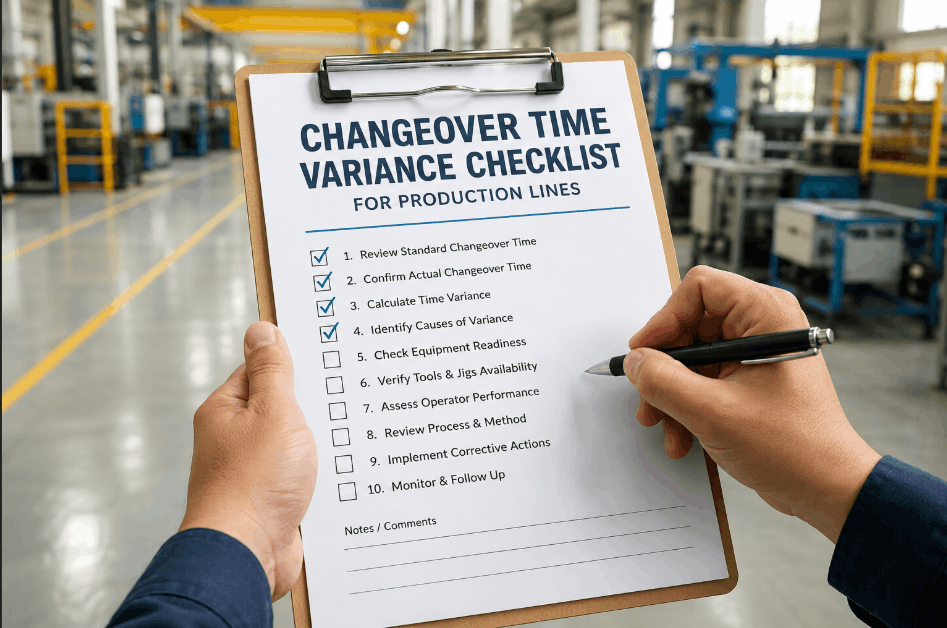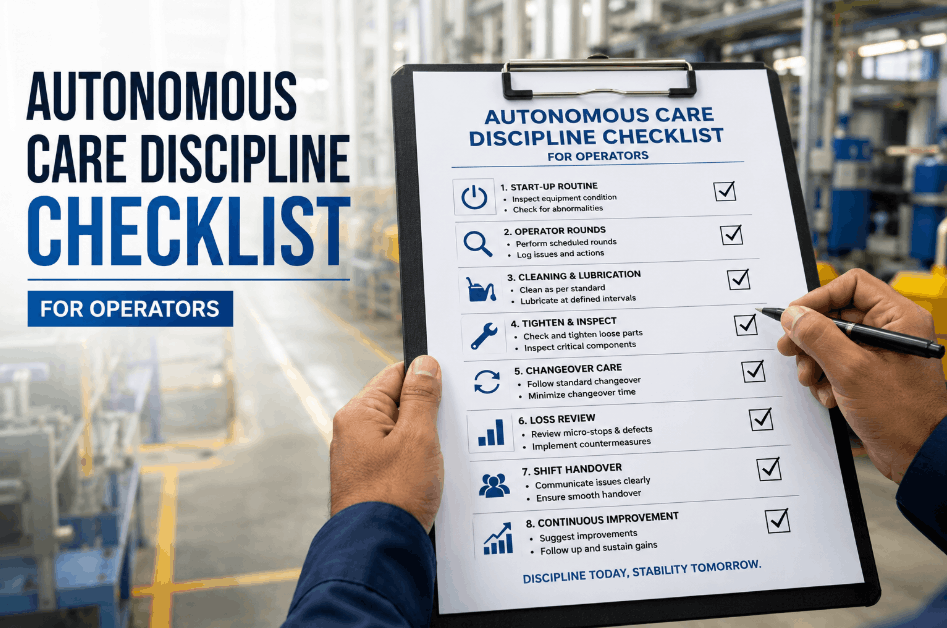
Changeover friction is one of the most underreported sources of throughput loss in batch production environments. Every minute lost between batches — waiting for tools, clearing lines, confirming startup conditions — compounds into hours of lost output across a shift. Facility and operations teams using Sign Up Free on OxMaint can map changeover sequences, track step-level delays, and identify exactly where friction accumulates during batch transitions. Eliminating setup waste starts with a structured audit that turns switching time from an assumption into a measured, improvable metric. Book a Demo to see how OxMaint supports changeover tracking across production lines.
Where Changeover Friction Hides in Batch Production
Most production teams know changeovers take too long — few have mapped exactly where the time goes. Book a Demo to explore how OxMaint structures changeover checklists and transition work orders to surface friction points by step, line, and operator.
Six Friction Points That Inflate Batch Changeover Time
A structured changeover friction audit examines each phase of the transition sequence. Sign Up Free to deploy OxMaint changeover checklists and start capturing step-level timing data across your production lines.
Tool and Fixture Readiness Gaps
Changeovers stall when required tools are not staged before the batch ends. Auditing tool readiness against scheduled transition start times reveals preparation failures that add avoidable minutes to every switch.
Line Clearance Delays and Release Criteria
Inconsistent line clearance standards between shifts create startup delays even when equipment is ready. Standardizing clearance checklists in OxMaint ensures every operator releases lines against the same documented criteria.
Startup Qualification and First-Article Delays
Time spent re-qualifying equipment after changeover — running test batches, inspecting first articles — compounds when qualification steps are undefined or inconsistently applied. Structured startup checklists reduce qualification time per transition.
Operator Standard Gaps Across Shifts
When changeover sequences vary by operator, transition times vary unpredictably. Auditing step sequence compliance across shifts identifies where operator-to-operator variance drives friction without any equipment-related cause.
Sequence Gaps and Out-of-Order Steps
Steps performed out of optimal sequence force rework within the changeover itself — re-cleaning, re-staging, or re-adjusting equipment already set up. Mapping sequence compliance against transition time data surfaces reordering opportunities.
Restart Delays After Unplanned Interruptions
Batch changeovers interrupted by equipment faults or material shortages require restart procedures that duplicate earlier steps. Tracking restart frequency and added time by transition type identifies which interruptions carry the highest switching cost.
Changeover Friction Audit by Production Transition Type
Book a Demo to see how OxMaint organizes changeover work orders, step-level timing, and operator compliance data to support structured batch transition audits across multiple lines.
| Transition Type | Primary Friction Source | Key Audit Metric | Operator Impact | OxMaint Tracking Lever |
|---|---|---|---|---|
| Product-to-Product Switch | Cleaning validation, material staging | Clearance-to-startup elapsed time | High — multiple steps affected | Changeover checklist with step timestamps |
| Line Speed or Format Change | Mechanical adjustment, first-article qualification | Qualification pass rate per attempt | Medium — skilled adjustment required | Work order with qualification sign-off step |
| Shift Handover Changeover | Operator standard gaps, incomplete handover | Time from shift change to first batch start | High — varies by operator pair | Handover inspection record per shift |
| Batch Size Adjustment | Material loading, recipe parameter entry | Setup step count vs. standard | Low-medium — system-driven delay | Recipe and parameter checklist in OxMaint |
| Emergency Batch Switch | Unplanned tooling, out-of-sequence steps | Restart delay vs. planned transition time | High — compressed preparation time | Emergency changeover WO with deviation log |
How Untracked Changeover Friction Compounds Throughput Loss
Sign Up Free to start capturing changeover timing data in OxMaint and build the transition performance baseline your production improvement program requires.
Frequently Asked Questions: Changeover Friction Audit for Batch Production
What is a changeover friction audit?
A changeover friction audit maps each step of a batch transition sequence to identify where time is lost due to tool readiness gaps, clearance delays, operator variance, or out-of-sequence steps that inflate total switching time.
How does OxMaint support changeover time reduction?
OxMaint captures step-level timestamps through structured changeover checklists and work orders, giving production teams the timing data needed to identify friction points, set improvement targets, and track reduction progress.
Which changeover friction points have the biggest throughput impact?
Tool readiness gaps, inconsistent line clearance criteria, and operator standard variance across shifts are the highest-impact friction sources in most batch production environments.
How often should changeover performance be reviewed?
High-frequency changeover lines benefit from weekly transition time reviews. Monthly audits aligned to production planning cycles are appropriate for lower-frequency batch switching environments.
Can OxMaint track changeover performance across multiple production lines?
Yes. OxMaint links changeover work orders and checklists to specific assets and lines, enabling cross-line comparison of transition times, step compliance rates, and friction point frequency.