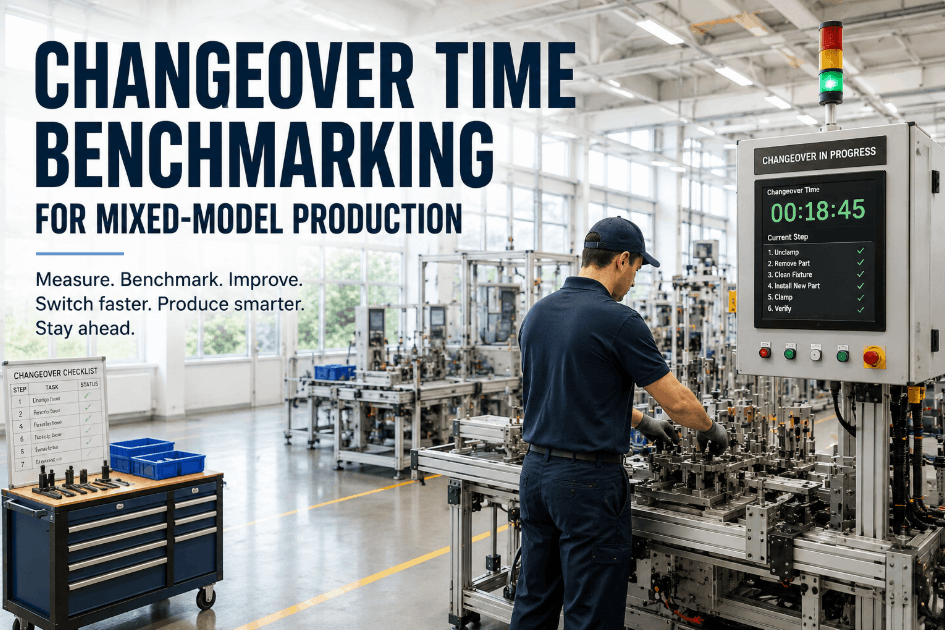
Changeover time is one of the most controllable variables in mixed-model production — yet most facilities have no structured benchmark to measure it against. When setup steps are not sequenced, crew assignments are undocumented, and product family transition data is scattered across shift logs, changeover duration expands unpredictably and takt time targets become impossible to maintain. Maintenance and operations teams using Sign Up Free on OxMaint can log changeover work orders, track setup step completion times by product family, and build a structured benchmark database that makes fast, controlled line transitions a repeatable capability rather than a shift-by-shift improvisation. Structured changeover benchmarking turns transition data into scheduling precision for mixed-model operations.
Why Changeover Time Benchmarking Matters in Mixed-Model Operations
Mixed-model production lines switch between product families multiple times per shift. Without benchmarks, each transition depends on individual crew knowledge rather than documented sequences — making changeover duration unpredictable and setup loss invisible in shift reporting. Book a Demo to see how OxMaint captures setup step timing, crew sequence data, and product family transition metrics to build benchmarks that drive repeatable changeover performance.
Six Dimensions of Changeover Time Benchmarking
A complete changeover benchmark covers more than total transition time. It connects setup step duration, crew sequence efficiency, tooling readiness, first-part quality outcomes, and product family complexity into a single operational performance picture. Sign Up Free on OxMaint to begin capturing changeover data by product family and build the benchmark baseline your mixed-model scheduling needs.
Setup Step Timing and Sequence Documentation
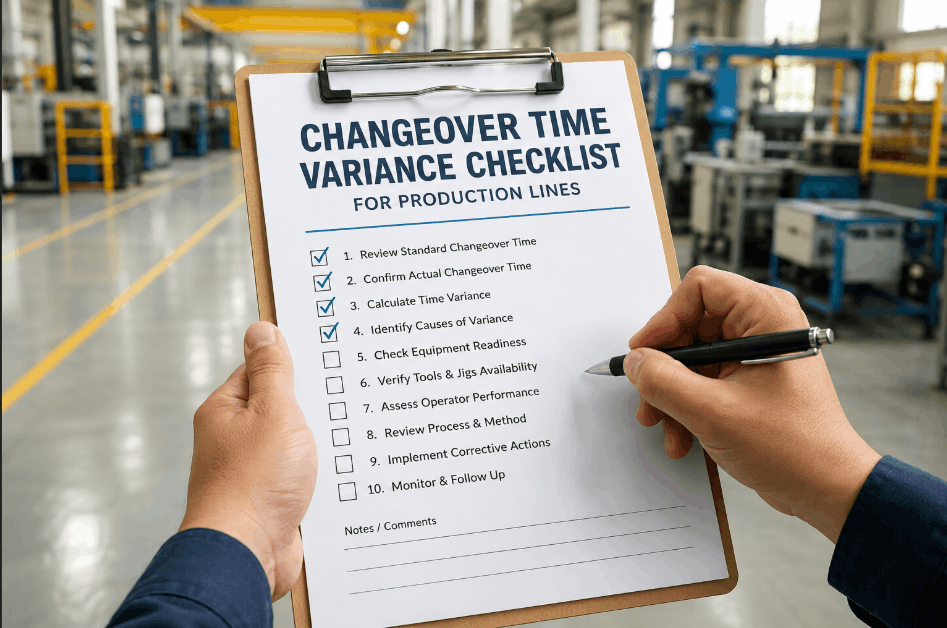
Changeover duration is the sum of individual setup steps — tooling removal, fixture adjustment, parameter entry, first-part verification, and sign-off. Capturing step-level timing in OxMaint work orders reveals which steps are consistently slow, which are skipped, and where parallel execution would reduce total transition time.
Crew Sequence and Role Assignment Benchmarking
Setup efficiency depends on how tasks are distributed across crew members during the transition. Benchmarking crew sequence by product family and shift identifies the assignments that produce the fastest changeover without quality compromise — and makes those sequences the default for every transition.
Product Family Complexity and Setup Loss Correlation
Some product family transitions generate significantly more setup loss than others due to tooling complexity, parameter range, or inspection requirements. Correlating changeover time with product family pairs identifies which transitions are candidates for pre-kitting, standardization, or sequencing redesign.
Tooling and Parts Readiness Tracking
Changeover extensions frequently trace to tooling not staged before the transition begins. Tracking tooling readiness status in OxMaint against changeover start times quantifies how much setup time is consumed by retrieval and preparation work that could be completed during the previous production run.
First-Part Quality Outcome Linkage
A fast changeover that produces defective first-parts extends total transition time through rework and re-qualification cycles. Linking first-part quality outcomes to changeover step completion data identifies which setup steps, when rushed or skipped, generate downstream quality failures that extend effective transition time.
Changeover Trend Reporting and Takt Time Alignment
OxMaint generates changeover trend reports by product family, crew, and shift — allowing production planners to sequence transitions in ways that protect takt time targets and minimize setup loss across the full production schedule. Benchmark data replaces guesswork with planning precision.
Changeover Benchmarks by Mixed-Model Line Configuration
Changeover duration and setup loss patterns vary significantly by line type, product complexity, and transition frequency. Comparing your actual changeover profile against configuration-specific benchmarks identifies where structured sequencing and pre-staging have the highest payback potential. Book a Demo to explore how OxMaint tracks changeover work orders alongside production scheduling data in one platform.
| Line Configuration | Primary Changeover Driver | Typical Setup Duration Range | Setup Loss Risk | OxMaint Maintenance Lever |
|---|---|---|---|---|
| High-Mix Assembly Lines | Fixture swaps, parameter re-entry, guide adjustment | 15–45 minutes per transition | High | Step-level timing capture + crew sequence benchmarks |
| CNC Machining Cells | Program loading, tooling setup, first-part verification | 20–90 minutes per transition | High | Tooling readiness tracking + setup step work orders |
| Packaging Lines | Format parts change, film threading, seal adjustment | 10–30 minutes per changeover | Medium–High | Product family complexity correlation + pre-kitting triggers |
| Injection Molding Cells | Mold swap, purge cycle, temperature stabilization | 30–120 minutes per changeover | High | Setup loss reporting + first-part quality linkage |
| Food Processing Lines | Sanitation cycles, allergen changeover, tooling sanitization | 45–180 minutes per transition | High | Changeover trend dashboards + takt time alignment reports |
How Unmanaged Changeover Time Compounds Production Risk
Changeover overruns do not resolve themselves. They compound through compressed production windows, crew fatigue, missed takt targets, first-part quality failures, and maintenance deferred to create setup time — each of which reduces the line's ability to run the next transition cleanly. Book a Demo to see how OxMaint connects changeover data with production scheduling to surface compounding setup risk before it affects throughput.
Building a Changeover Benchmarking Program with OxMaint
Map Product Family Transitions and Setup Step Libraries
Register all product family pairs and their associated setup step sequences in OxMaint. This foundation enables step-level timing capture by transition type and builds the structured data layer needed for meaningful benchmark comparison across shifts and crews.
Capture Changeover Work Orders with Step Timing Data
Log every changeover in OxMaint as a structured work order with step-level timestamps, crew assignments, tooling status, and first-part quality outcome. Structured changeover logging replaces manual shift notes with searchable, trend-ready transition data.
Establish Benchmark Targets by Product Family and Line
Use OxMaint's reporting tools to analyze historical changeover data and set benchmark targets by product family pair, crew configuration, and line type. Benchmark targets replace anecdotal expectations with data-driven performance standards that support takt time planning.
Configure Overrun Alerts and Escalation Triggers
Set changeover duration thresholds in OxMaint that trigger escalation alerts when transitions exceed benchmark targets. Automated alerts give shift leaders real-time visibility into setup overruns before they compress the next production window or displace scheduled maintenance.
Report Changeover Trends Across Shifts and Product Families
Use OxMaint's dashboards to track changeover duration trends, setup step performance, crew sequence efficiency, and first-part quality linkage across product families and shifts. Turn transition data into governance-ready manufacturing analytics without manual aggregation.
Frequently Asked Questions: Changeover Time Benchmarking
What is changeover time benchmarking for mixed-model production?
Changeover time benchmarking captures setup step duration, crew sequence efficiency, and product family transition data to establish target performance ranges — turning transition time from a variable outcome into a measurable, improvable production metric.
How does crew sequence affect changeover duration in mixed-model lines?
Crew sequence determines whether setup tasks are executed in parallel or series. Undocumented or inconsistent crew assignments introduce step sequencing delays that extend changeover duration without any change in task content — often accounting for 30–50% of total setup time variance.
How does OxMaint support changeover time benchmarking?
OxMaint captures changeover work orders with step-level timing, crew assignments, tooling readiness status, and first-part quality outcomes — building a benchmark database that makes repeatable, data-driven setup performance achievable for every product family transition.
What is setup loss and how does it affect takt time?
Setup loss is the production time consumed by changeover activity beyond the planned transition window. It directly compresses available run time for the next product family, making takt time targets impossible to achieve without consistent, benchmarked changeover performance.
How often should changeover benchmark data be reviewed?
High-frequency mixed-model lines benefit from shift-level changeover duration reviews; weekly analysis should cover product family complexity correlation and crew sequence efficiency. OxMaint automates both reporting layers so benchmark review is maintained without additional planning overhead.