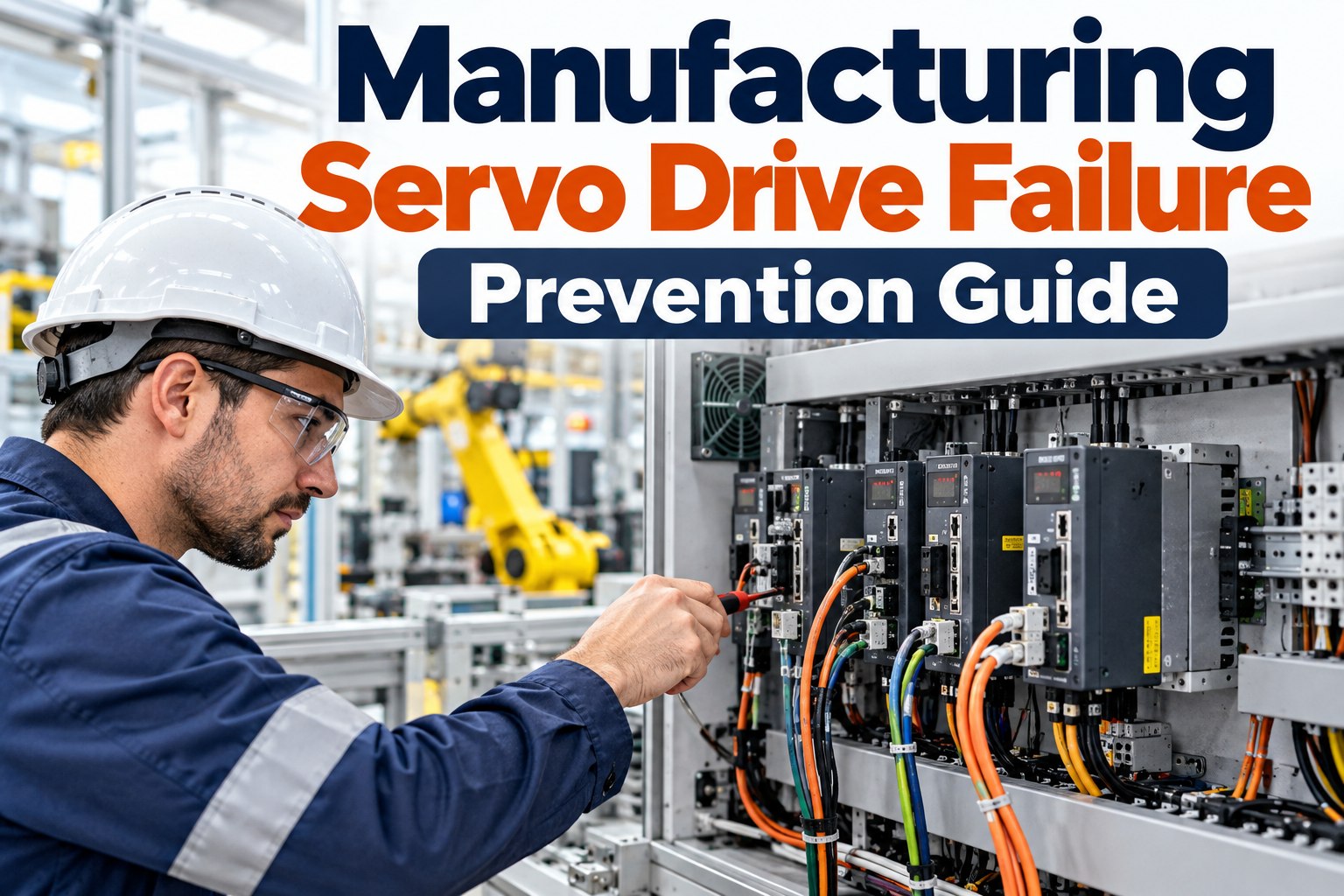
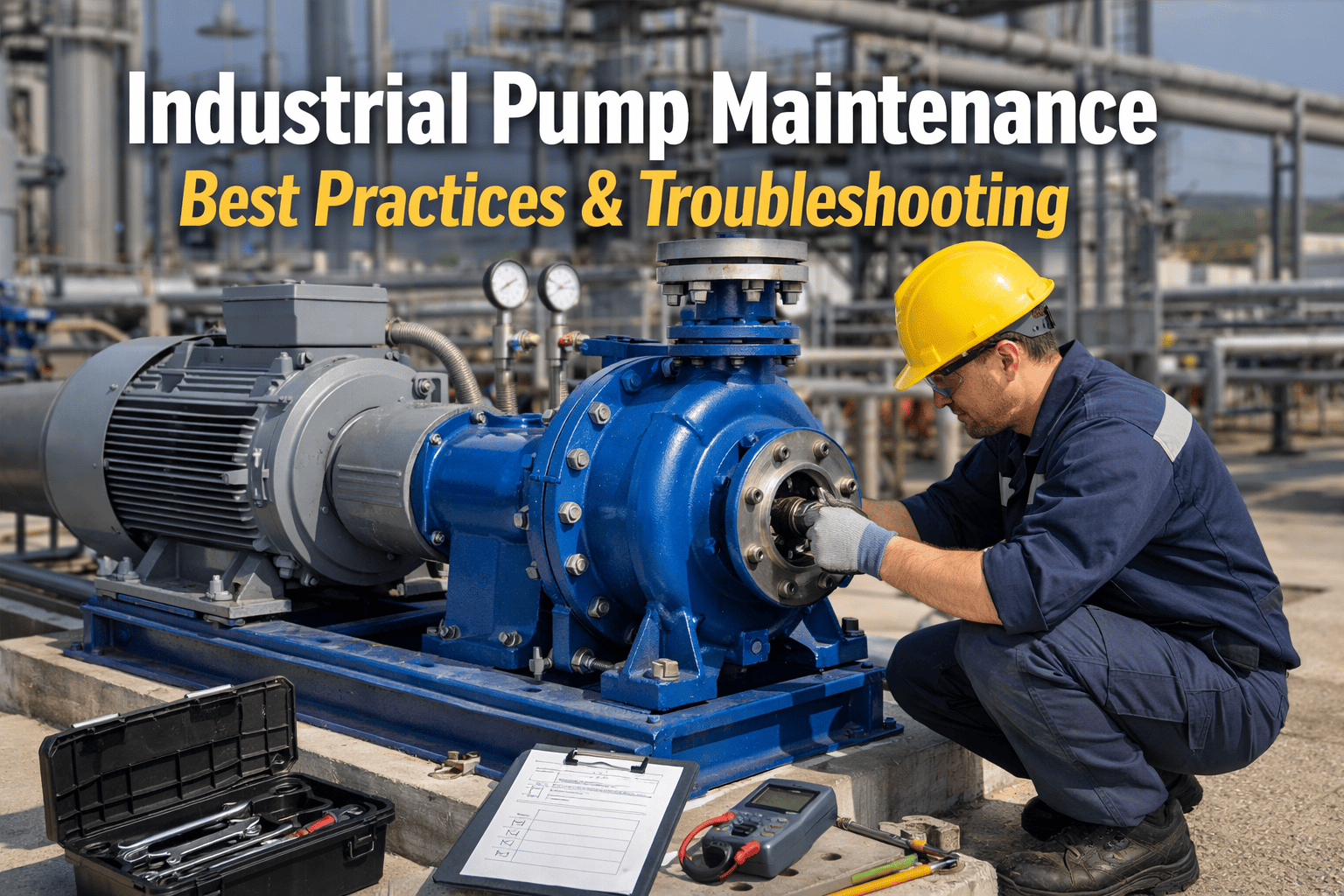
Electric motors drive 64% of all industrial power consumption in manufacturing — and when they fail without warning, the repair bill is rarely the worst part. Lost production, scrambled crews, and emergency parts orders are. The hard truth is that 80% of motor failures show detectable warning signs weeks before breakdown— bearing heat signatures, vibration spikes, insulation degradation — and a plant with a structured PM program using a CMMS like Oxmaint catches these signals consistently while reactive plants keep paying emergency rates. This guide covers the maintenance practices, inspection intervals, and common failure modes for the three motor types that break plants most often: standard electric motors, variable frequency drives (VFDs), and servo motors.
Industrial Motor Maintenance Guide
VFDs, Servo Motors & Drive Systems — failure causes, inspection intervals, and PM checklists for reliability engineers and plant maintenance teams.
Why Industrial Motors Fail: The Real Breakdown
Understanding what actually causes motor failures — not just the component that failed, but the root condition that started the chain — is the foundation of any effective PM program. The same failure patterns repeat across motors of every size and type.
Root Causes
Motor insulation life is cut in half for every 10°C rise above rated operating temperature. A motor designed for 20 years at 40°C will last just 5 years running continuously at 60°C. Temperature is the single most controllable variable in motor life — and the one most often ignored until it's too late.
Standard Electric Motor Maintenance
Standard AC induction motors are the workhorses of manufacturing — conveyors, pumps, fans, compressors. They are built tough, but they are not maintenance-free. A systematic inspection program at defined intervals is what separates a 20-year motor from a 4-year replacement cycle.
Operational Checks
Physical Inspection
Electrical Testing
Deep Inspection
Stop tracking motor PMs in spreadsheets.
Oxmaint automatically schedules motor inspection work orders by interval, routes them to the right technician, and tracks completion — so nothing falls through the cracks between daily checks and annual teardowns.
Variable Frequency Drive (VFD) Maintenance
VFDs save 20–50% on energy costs for pump, fan, and conveyor applications — but they introduce failure modes that do not exist in direct-on-line motor systems. Improper maintenance of a VFD can silently destroy the connected motor over months, with bearing fluting from shaft current being the most common and most avoidable damage mechanism.
Top 5 VFD Failure Causes
A dust-clogged cooling filter raises internal drive temperature until capacitors and IGBTs fail. This is the single most preventable VFD failure — a monthly filter check eliminates it entirely. Electronics hate heat; keep them cool and 80% of trouble disappears.
Electrolytic capacitors on the DC bus degrade over time regardless of use. Most manufacturers recommend capacitor replacement at 7–10 years. Proper scheduled replacements can double effective drive service life.
VFD switching frequency generates common-mode voltages that discharge through motor bearings as shaft current — creating microscopic EDM pitting across the bearing races. Over time this causes fluting failure. Solution: install shaft grounding rings and insulated bearings on VFD-driven motors.
Cable runs over 100 feet without output filtering create voltage spikes at the motor terminals from reflected waves — stressing insulation beyond its rating. One packaging plant burned out 24 motors in 6 months from this single, avoidable issue. Use dV/dT filters or output reactors on long runs.
Motor power cables routed alongside encoder feedback or control signal cables couple electromagnetic interference that causes random faults, nuisance trips, and position errors. Always physically separate power and signal wiring in dedicated conduit paths with shielded cables terminated 360° at both ends.
VFD Preventive Maintenance Schedule
Servo Motor & Drive System Maintenance
Servo motors power the precision motion in CNC machines, robotics, packaging lines, and assembly automation. They are significantly more expensive to replace than standard motors and operate in high-duty cycles with frequent direction changes — making them far more vulnerable to the specific failure modes below.
Servo Motor Failure Modes
Bearing Failure
High-speed operation amplifies even microscopic bearing imperfections. Warning signs: grinding or screaming noise at speed. Prevention: vibration sensors, correct lubrication type, laser alignment at installation. Never align at room temperature for high-speed servo applications.
Contamination
Oil, coolant, and debris entering through seal wear or poor IP protection degrade windings and bearings simultaneously. In machining environments, contamination is the primary accelerator of every other failure mode. Seal condition inspection every 6 months is non-negotiable.
Cable and Encoder Failure
In applications with frequent flexing motion, improperly rated cables crack or fatigue internally — causing position errors and intermittent faults that are notoriously difficult to diagnose. Use drag-chain rated cables for any dynamic cable runs, and inspect connector condition quarterly.
Brake Failure
Servo motor holding brakes are designed for position holding only — not dynamic stopping. Using the brake for repeated emergency stops accelerates wear rapidly. Brake failure on vertical-axis applications (lift tables, robotic arms) creates immediate safety hazards. Test brake engagement and release timing on all servo axes annually.
Demagnetization
High temperatures, overcurrent, and mechanical shock can demagnetize the permanent magnets in servo motors — causing progressive torque loss and speed instability. Operating within specified thermal and current limits prevents this entirely. Monitor drive current draw relative to rated values monthly.
Winding Overload
VFD-fed servo windings face voltage spikes from switching harmonics and reflected wave effects identical to those in standard motors. Use inverter-rated cables, proper grounding, and output reactors. Check insulation resistance with a megohmmeter quarterly — winding degradation is invisible until it shorts.
Predictive Tools That Catch Failures Before They Happen
Scheduled PM keeps motors healthy. Condition monitoring catches the failures that scheduled PM misses — the ones that develop between intervals. These four techniques together cover every major motor failure mode.
| Technique | What It Detects | Equipment | When to Flag | Frequency |
|---|---|---|---|---|
| Vibration Analysis | Bearing wear, imbalance, misalignment, looseness | Accelerometer / vibration meter | 10% increase from baseline | Monthly (critical), Quarterly (standard) |
| Thermography | Hot spots in windings, bearings, connections | Thermal camera (FLIR or equivalent) | Bearing above 80°C; connections above ambient +20°C | Quarterly |
| Insulation Resistance | Winding insulation degradation | Megohmmeter (Fluke 1507) | Below 1 MΩ per kV of motor rating | Quarterly |
| Ultrasonic Testing | Early-stage bearing defects, lubrication state | Ultrasound probe | 8 dB rise from baseline = re-lube; 16 dB = inspect | Monthly (critical equipment) |
| Current Signature Analysis | Rotor bar faults, eccentricity, load changes | Clamp meter / motor circuit analyzer | Deviation from nameplate FLA under known load | Quarterly |
How Oxmaint Makes Motor Maintenance Systematic
The biggest gap in most plant motor maintenance programs is not knowledge — it is execution. Inspections that should happen monthly get pushed to quarterly. Lubrication gets done when someone remembers. Vibration readings get taken but never compared to baseline. Oxmaint closes that gap by automating the scheduling, routing, and tracking that manual systems inevitably drop.
Asset-Level PM Schedules
Set motor-specific PM tasks by calendar interval, runtime hours, or condition reading threshold. Oxmaint generates work orders automatically — daily checks, monthly lubrication, quarterly electrical testing — with no manual scheduling required.
Vibration and Temperature Trending
Technicians record vibration readings and temperature values directly in Oxmaint's mobile app at the motor. The system builds a trend line automatically — detecting when readings deviate from baseline before they reach failure thresholds.
Failure History per Asset
Every work order, every repair, every reading is stored against the specific motor asset. When a bearing fails on Motor A12, Oxmaint shows every previous failure, lubrication event, and reading in one view — making root cause analysis hours faster.
Criticality-Based Prioritization
Not every motor deserves the same interval. Assign criticality ratings in Oxmaint and the system adjusts PM frequency, alert thresholds, and spare parts stocking recommendations automatically based on production impact.
Every motor on your floor deserves a schedule — not a guess.
Book a 30-minute demo and see how Oxmaint sets up motor PM workflows, tracks condition readings, and generates work orders automatically for your specific motor mix — electric, VFD, and servo.