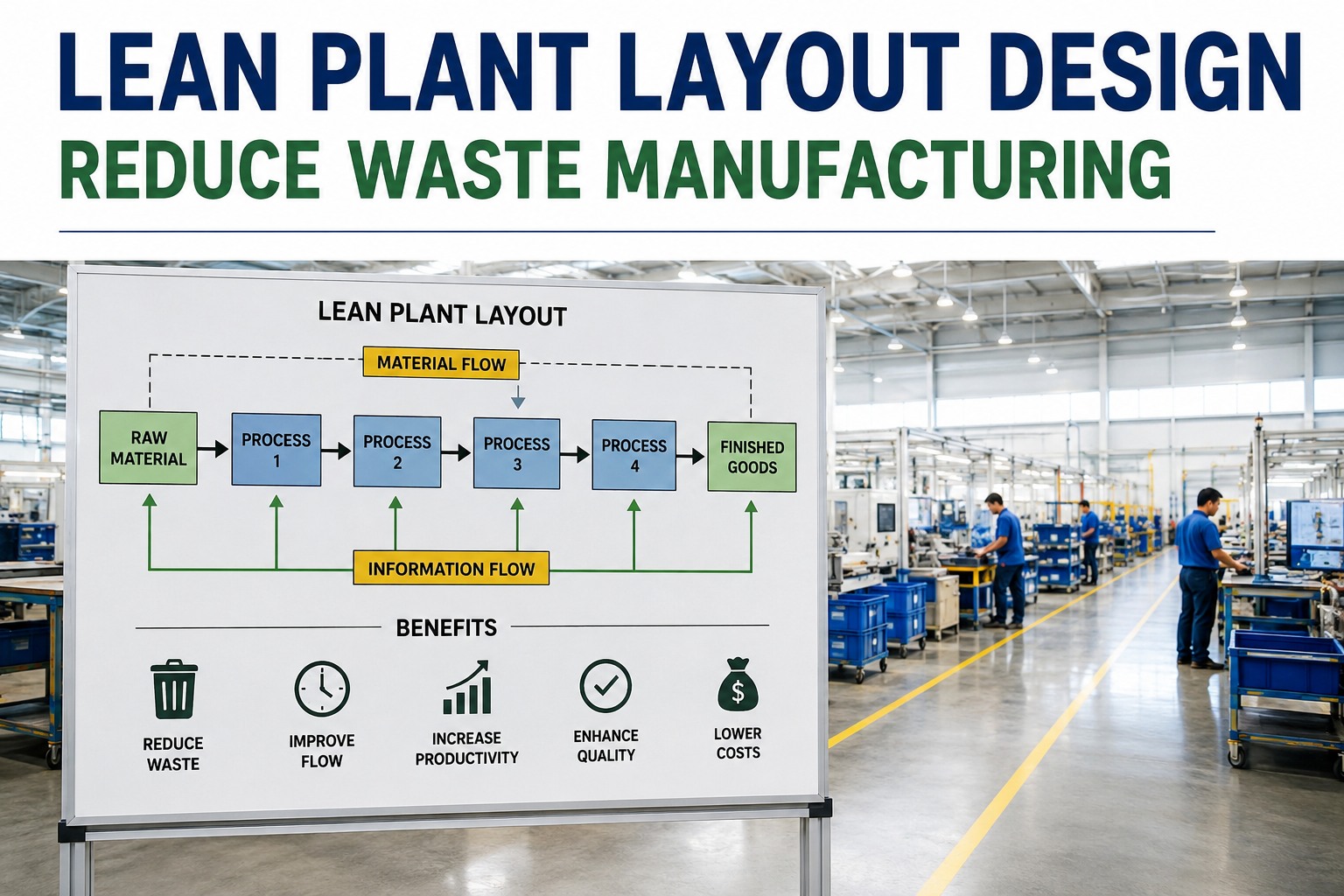
Manufacturing plants that run maintenance operations on reactive instinct rather than lean discipline don't just lose hours — they lose competitive ground, with every unplanned breakdown, excess inventory, and wasted technician hour compounding into a cost burden that erodes margins quarter after quarter. OxMaint's lean maintenance platform gives manufacturing teams the CMMS infrastructure, work order analytics, and PM optimization tools to systematically eliminate the eight wastes from their maintenance operations — improving wrench time, reducing reactive work, and turning maintenance from a cost center into a production asset. Book a free OxMaint demo and see how lean maintenance principles translate into measurable efficiency gains in your facility.
Lean Maintenance · Manufacturing Efficiency · CMMS · OxMaint
Lean Maintenance in Manufacturing: Reduce Waste, Improve Wrench Time & Boost Efficiency
Most manufacturing maintenance teams are running at 25–35% wrench time — meaning technicians spend up to 75% of their shift NOT maintaining equipment. Lean maintenance changes that by eliminating the eight wastes from your maintenance workflows: the waiting, excess motion, over-processing, and underutilized talent that quietly drain productivity every single day. OxMaint is the CMMS built to make lean maintenance operational, measurable, and sustainable.
25–35%
Average industry wrench time — most of the shift goes to non-maintenance activities
50%
Of all maintenance costs are estimated to be waste activities that add zero reliability value
57%
Productivity jump when wrench time improves from 35% to 55% — same team, same hours
30%
Of PM tasks are performed more frequently than necessary — a major source of over-maintenance waste
The Real Problem
Your Technicians Are Busy. Your Equipment Still Breaks Down. Here's Why.
There is a paradox at the heart of most manufacturing maintenance operations. Teams feel constantly busy — yet reactive breakdowns keep happening, backlogs grow, and costs keep rising. The answer is not more headcount. The answer is lean maintenance: the systematic removal of waste from how maintenance work is planned, scheduled, and executed.
D
Defects
Rework caused by incorrect repairs, missing steps, or undocumented procedures that fail inspection
O
Overproduction
Performing PM tasks more frequently than failure patterns require — over-maintaining equipment wastes labor and parts
W
Waiting
Technicians idling for parts, permits, instructions, or equipment access — the single largest waste category in most plants
N
Non-utilized Talent
Skilled electricians doing paperwork. Experienced diagnosticians assigned to basic PM rounds. Talent wasted on low-value tasks
T
Transportation
Unnecessary movement of parts, tools, and people — walking to storerooms, hunting down equipment manuals, retrieving permits
I
Inventory
Excess spare parts tying up capital — or worse, critical parts not available when needed because there's no consumption tracking
M
Motion
Unnecessary technician movement within a job — reaching, repositioning, walking back to the office to update a paper work order
E
Extra-processing
Redundant approvals, excessive sign-off chains, documentation completed twice — process steps that consume time without adding reliability
The Wrench Time Reality
Where Does Your Team's Time Actually Go?
Most maintenance managers assume their teams are productive. The data says otherwise. A technician on a 10-hour shift with 25% wrench time spends just 2.5 hours maintaining equipment. The other 7.5 hours? Lost to the system — not to the people.
Where Technician Time Goes in a Typical 10-Hour Shift
Actual maintenance work (wrench time)
25–35%
Waiting — for parts, permits, access, instructions
~22%
Travel — walking to storeroom, job site, office
~18%
Paperwork, reporting, and administrative tasks
~14%
Coordination, meetings, and status updates
~11%
World-Class Target
55–65%
wrench time
Going from 35% to 55% wrench time delivers the equivalent productivity of adding 23 extra technicians to a 40-person team — at zero additional labor cost
Still tracking wrench time on spreadsheets — or not tracking it at all?
OxMaint's work order analytics give you real wrench time visibility, PM optimization, and lean workflow automation — without a six-month implementation. Free to start.
Before vs After
What Changes When Lean Maintenance Becomes Operational
This is not a theoretical comparison. These are the operational differences manufacturing facilities measure in the first two maintenance cycles after implementing lean maintenance principles through OxMaint.
| Maintenance Area |
Reactive / Traditional |
Lean with OxMaint |
Measurable Impact |
| Wrench Time |
25–35% — technicians spend the majority of their shift on non-maintenance activities |
50–65% achieved through pre-kitted jobs, mobile work orders, and parts staged at job sites |
Up to 57% productivity increase — same team |
| PM Frequency |
Calendar-driven PM — 30% of tasks performed more frequently than failure patterns require |
Consumption and condition-driven PM schedule — frequency aligned to actual failure rates, not assumptions |
30% reduction in PM labor hours without reliability impact |
| Parts Availability |
Manual inventory checks — technicians discover missing parts after arriving at the job site |
Automated parts verification against work orders — gaps flagged days before the job starts |
Waiting waste from parts delays eliminated |
| Work Order Documentation |
Paper records completed post-job or not at all — institutional knowledge leaves with staff turnover |
Mobile task completion captures findings, photos, and measurements at the point of work |
100% documentation rate — audit-ready at task closure |
| Reactive vs Planned Ratio |
60–80% reactive — maintenance teams constantly firefighting instead of preventing failures |
Planned maintenance ratio above 70% within 12 months — structured PM replaces breakdown response |
MTBF increases; unplanned downtime drops significantly |
| Technician Skill Utilization |
Senior technicians assigned to routine tasks — experienced diagnosticians doing basic PM rounds |
Task complexity matched to technician skill level through CMMS work assignment logic |
Non-utilized talent waste eliminated; specialist capacity freed for reliability work |
Implementation Roadmap
How to Implement Lean Maintenance: A 90-Day Starting Framework
Lean maintenance transformation does not require a 12-month consulting engagement. The first gains are visible within weeks when you follow a structured sequence — starting with measurement, not technology.
Days 1–14 — Baseline
Measure Before You Fix
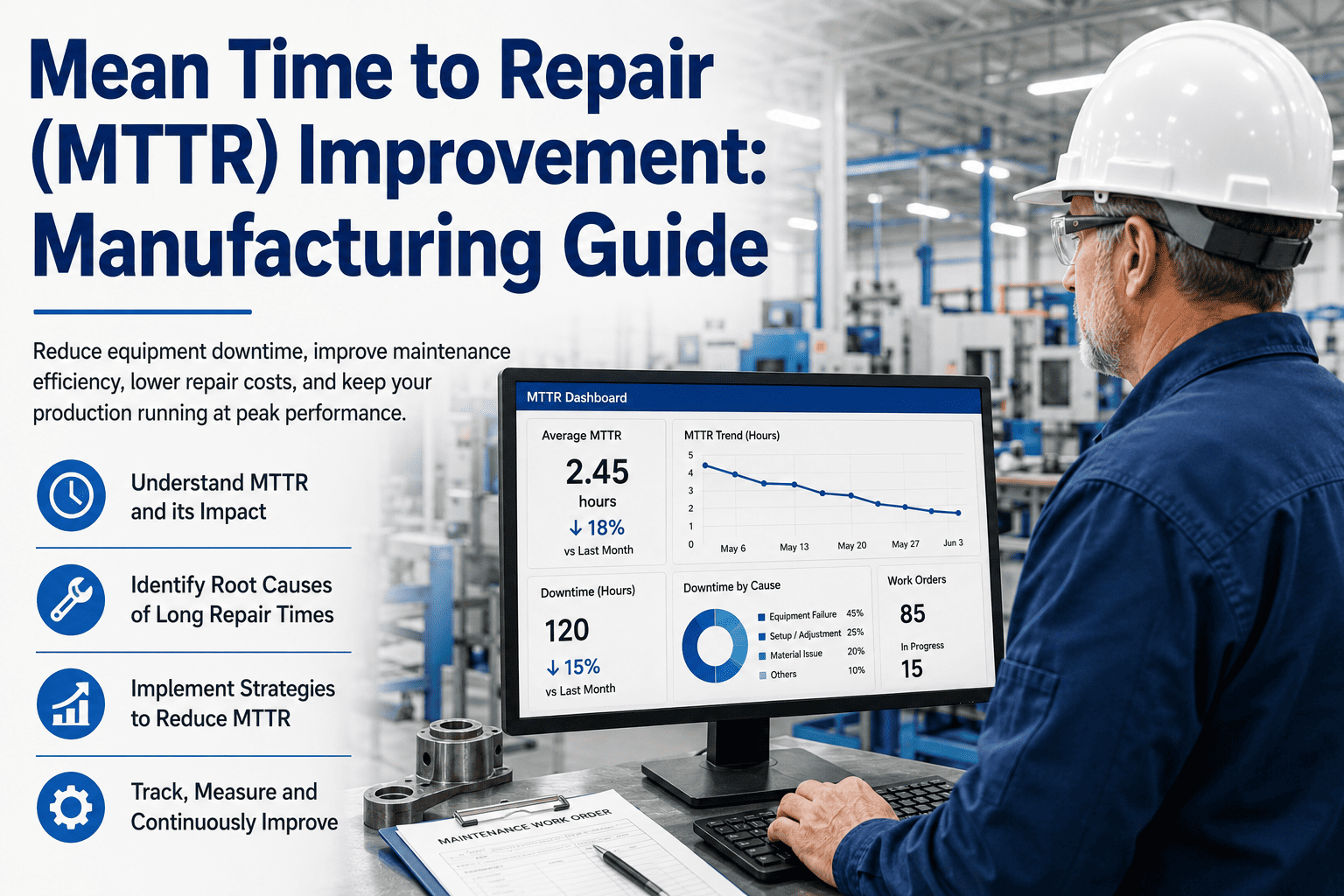
Conduct a maintenance waste audit. Calculate your current wrench time using work order data or a Day-in-the-Life-Of (DILO) observation. Map your current maintenance value stream to identify where non-value-added steps accumulate. Establish baseline KPIs: planned vs reactive work ratio, MTBF, MTTR, and maintenance cost per unit produced. You cannot eliminate waste you have not measured.
Days 15–30 — Foundation
5S and Standardized Work
Implement 5S in maintenance workshops and spare parts storage. Eliminate motion and transportation waste immediately — tools and parts at the point of use, storeroom organized with visual location management. Write standard operating procedures for your top 20 most frequent maintenance tasks.
Deploy OxMaint to digitize work orders and attach SOPs to tasks so technicians access procedures on mobile, not on paper back at the office.
Days 31–60 — Optimization
PM Rationalization and Autonomous Maintenance
Audit your PM schedule against actual failure data. Remove or extend tasks where failure history does not justify current frequency — this directly reduces overproduction waste and frees labor for value-added reliability work. Begin autonomous maintenance training for operators: basic cleaning, lubrication, and inspection tasks that do not require specialist technicians. Each operator-owned task is one less reactive call from production.
Days 61–90 — Kaizen Cycle
Root Cause Analysis and Continuous Improvement
Launch root cause analysis for the top 10 recurring failures identified during baseline. Each RCA cycle eliminates a defect waste source and reduces future reactive maintenance volume. Begin weekly kaizen reviews using OxMaint's work order analytics — backlog trend, repeat failures, technician utilization, and planned maintenance ratio. The discipline of weekly data review is what separates facilities that sustain lean maintenance gains from those that revert after 90 days.
90 Days+ — Sustain
CMMS-Driven Lean Operations
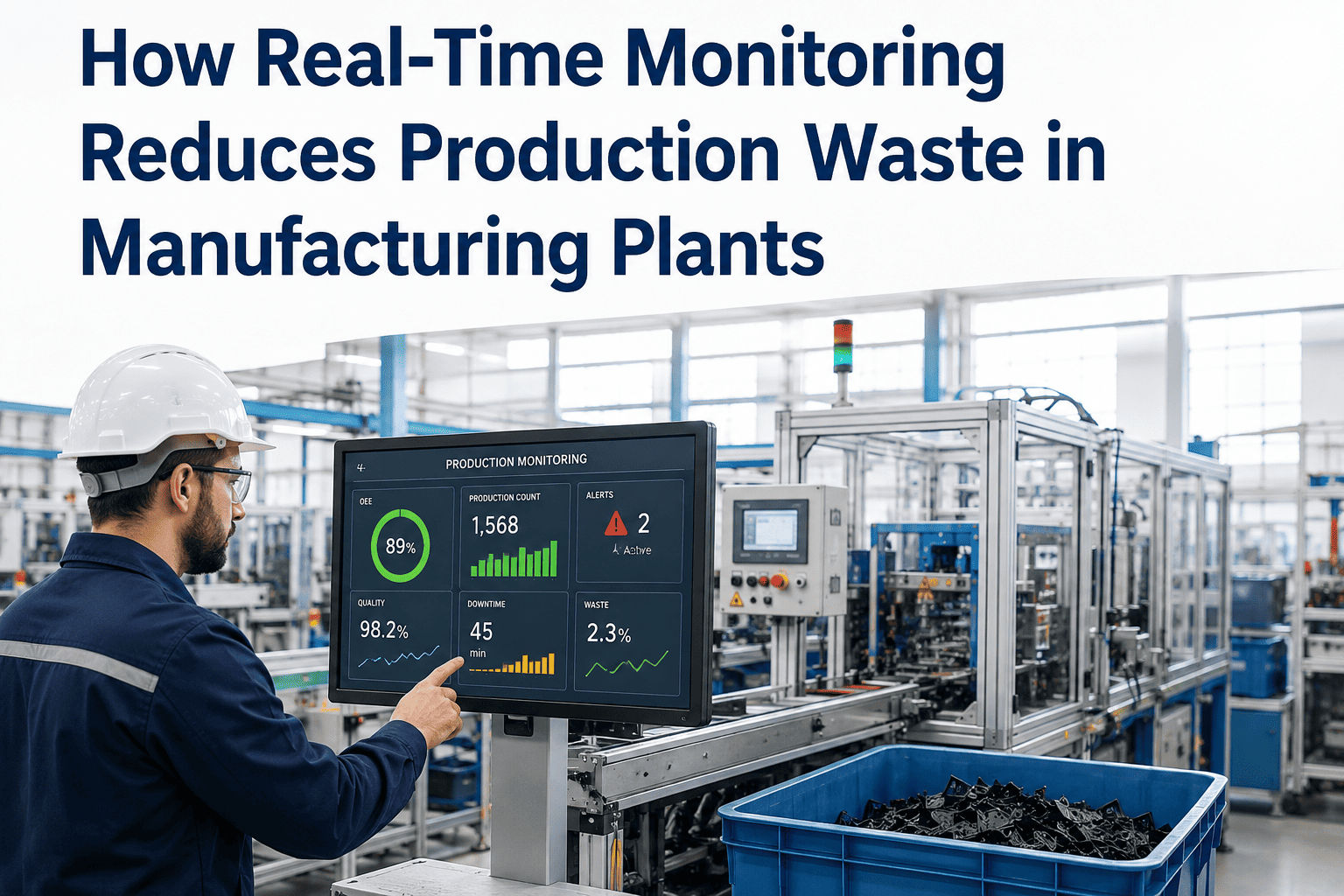
At this stage, lean maintenance is operational — not a project. OxMaint dashboards display wrench time, OEE, planned maintenance ratio, backlog, and MTBF live, making waste visible and progress measurable for every shift supervisor and maintenance manager.
Book a technical walkthrough to see how OxMaint's analytics layer maps to your current maintenance KPI targets.
Documented Outcomes
What Manufacturing Teams Measure After Lean Maintenance with OxMaint
Across manufacturing facilities that transitioned from spreadsheet and reactive maintenance management to lean operations on OxMaint — measured within the first 12 months of deployment.
55%+
Wrench Time Achieved
From an industry average of 25–35%, lean-driven operations consistently reach 55% or above — translating directly to higher productivity from the same headcount without adding labor cost.
35%
Reduction in Maintenance Costs
Driven by PM rationalization eliminating over-maintenance, spare parts optimization reducing excess inventory, and wrench time improvement reducing labor hours per completed job.
70%+
Planned Maintenance Ratio
Moving from a predominantly reactive operation to planned work above 70% is the single largest driver of downtime reduction — planned work costs 5–15x less than emergency repairs on the same equipment.
100%
Work Order Documentation Rate
Versus a 61% average for paper and spreadsheet-managed maintenance operations. Compliance documentation is complete at task closure — not reconstructed weeks later before an audit.
Common Questions
What Manufacturing Maintenance Teams Ask About Lean Maintenance
What is the difference between lean maintenance and TPM?
Lean maintenance is the broader framework — it applies lean manufacturing's waste-elimination principles to maintenance operations as a whole. Total Productive Maintenance (TPM) is one of the most powerful tools within lean maintenance, specifically focused on involving operators in basic equipment care and maximizing Overall Equipment Effectiveness (OEE). In practice, facilities implementing lean maintenance almost always integrate TPM as their operator engagement strategy.
OxMaint supports both through autonomous maintenance checklists, operator task assignments, and OEE tracking built directly into the work order system.
How do I calculate wrench time for my maintenance team?
The most reliable method is digital work order tracking — technicians log task start and completion on mobile, and your CMMS calculates wrench time from actual elapsed data. The alternative is a Day-in-the-Life-Of (DILO) observation study, where an observer follows technicians for a full shift and records time spent on each category of activity. Most facilities find wrench time between 25–35%, well below the 55% world-class benchmark.
Book a demo to see how OxMaint's work order analytics provide continuous wrench time visibility without manual observation studies.
How long does lean maintenance implementation take to show results?
The first visible gains typically appear within the first 30 days — specifically from 5S implementation in the storeroom and workshop, which immediately reduces motion and transportation waste. Wrench time improvements are measurable within 60–90 days once digital work orders and pre-kitting eliminate the waiting and travel delays that consumed most of the lost time. PM rationalization and autonomous maintenance produce cost reductions over a 6–12 month horizon.
Start free with OxMaint to begin digitizing work orders immediately — no infrastructure changes or lengthy implementation required.
Does lean maintenance work for small and mid-size manufacturing facilities, or only enterprise plants?
Lean maintenance applies regardless of plant size — in fact, smaller facilities often see faster results because the waste patterns are simpler to identify and the culture change is more straightforward to manage. The core tools — 5S, standardized work orders, PM rationalization, and basic work order analytics — scale from a 10-person maintenance team to a 200-person department without requiring different systems. OxMaint is designed to be deployed within two to four weeks, making it practical for plants that cannot support a long implementation cycle.
Speak with our team about configuring OxMaint for your specific plant size and maintenance structure.
Lean Maintenance · Wrench Time Optimization · Manufacturing CMMS
Every Hour Your Technicians Aren't Turning Wrenches Is Revenue Your Plant Is Not Recovering.
OxMaint gives manufacturing maintenance teams the CMMS infrastructure to implement lean maintenance operationally — digitized work orders, PM optimization, wrench time analytics, and continuous improvement data in one connected platform. Not a consulting program. A working system you deploy in weeks.