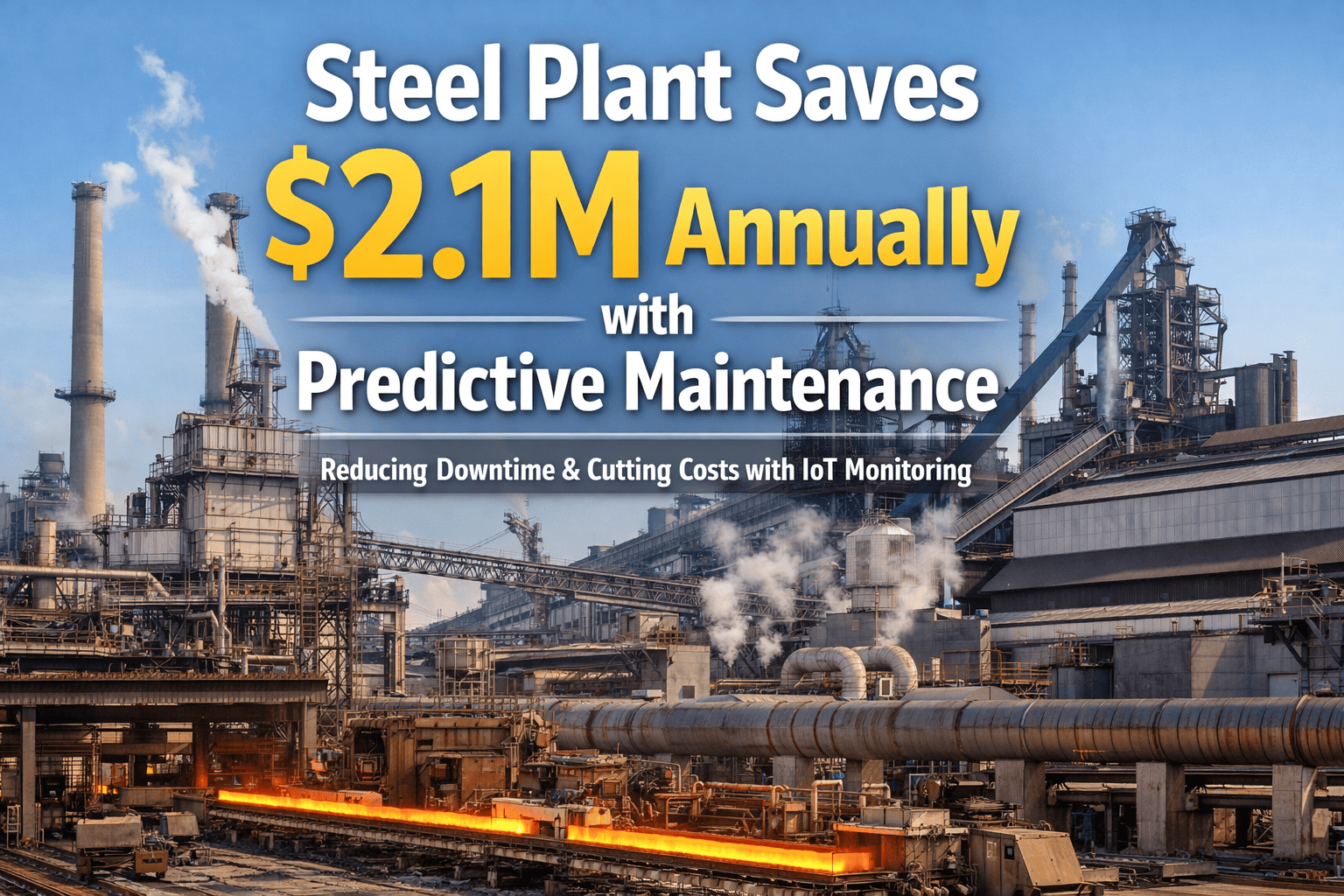
CFOs and plant directors evaluating predictive maintenance face a fundamental question: does the technology investment deliver measurable financial returns that justify the capital expense and implementation effort? The answer lies in quantifying three core value drivers — downtime avoidance, maintenance cost reduction, and asset lifecycle extension. Traditional reactive maintenance approaches create hidden costs: emergency repairs at premium labor rates, production losses from unplanned shutdowns, inventory carrying costs for emergency parts stockpiles, and accelerated asset degradation from run-to-failure cycles. Predictive maintenance flips this equation by identifying equipment failures weeks before they occur, enabling scheduled interventions during planned downtime windows and eliminating the cascading costs of unexpected breakdowns. Oxmaint CMMS provides manufacturing operations with predictive maintenance capabilities that deliver documented ROI within the first year — combining vibration analysis, temperature monitoring, and oil analysis with automated work order generation that turns sensor alerts into scheduled maintenance actions.
Quantify the Financial Case. Build Executive Buy-In. Deliver Measurable Returns.
Global manufacturing operations using predictive maintenance achieve 32% reduction in unplanned downtime, 28% lower maintenance costs, and full investment payback within 14 months on average.
Three Revenue-Protecting Value Drivers That Justify Investment
Predictive maintenance ROI emerges from eliminating the hidden costs embedded in reactive maintenance operations. Most manufacturing facilities drastically underestimate the true financial impact of unplanned equipment failures.
Downtime Avoidance Value
Production interruptions create revenue loss, labor idle time, customer penalties, and expedited shipping costs. Predictive maintenance identifies failures before they stop production.
Maintenance Cost Reduction
Emergency repairs require overtime labor, expedited parts delivery, and contractor mobilization. Scheduled interventions eliminate these premium costs.
Asset Lifecycle Extension
Run-to-failure cycles accelerate wear and secondary damage. Predictive maintenance detects degradation early, preventing catastrophic failures that destroy assets.
What Predictive Maintenance Technology Actually Costs
A complete predictive maintenance program requires sensor infrastructure, software platforms, and technical training. Understanding total cost of ownership enables accurate ROI calculation.
| Investment Category | Description | Typical Cost Range | Deployment Timeline |
|---|---|---|---|
| Vibration Sensors | Wireless accelerometers for rotating equipment | $800 - $2,400 per unit | 2-4 weeks |
| Temperature Monitoring | Infrared cameras and thermal sensors | $3,500 - $12,000 | 1-2 weeks |
| Oil Analysis Program | Sampling kits and laboratory testing | $45 - $120 per sample | Ongoing monthly |
| CMMS Platform (Oxmaint) | Predictive analytics and work order automation | $150 - $400 per user/month | 3-5 weeks |
| Technical Training | Technician certification in PdM techniques | $2,800 - $5,500 per person | 1-2 weeks |
| Integration Services | Sensor connectivity and data pipeline setup | $8,000 - $25,000 | 4-8 weeks |
Building the Business Case: Three-Year Financial Projection
This model demonstrates typical ROI for a manufacturing plant with $15,000 per hour production value and 240 hours of annual unplanned downtime at baseline.
Predictive Maintenance Pays for Itself — Then Keeps Delivering
Manufacturing executives worldwide use Oxmaint to quantify predictive maintenance ROI and present board-ready investment cases. Calculate your facility's specific financial benefits with our ROI assessment tool.
What Technologies Enable Predictive Maintenance Programs
Vibration Analysis
Wireless accelerometers detect bearing wear, imbalance, misalignment, and looseness in rotating equipment. Trend analysis identifies degradation weeks before failure.
Thermal Imaging
Infrared cameras identify hot spots in electrical systems, mechanical friction points, and insulation failures before they cause equipment damage or safety hazards.
Oil Analysis
Laboratory testing of lubricants reveals metal particulates, contamination, viscosity breakdown, and additive depletion — indicators of internal component wear.
Ultrasonic Testing
High-frequency sound detection identifies compressed air leaks, steam trap failures, electrical arcing, and bearing lubrication deficiencies.
Phased Implementation Strategy for Predictive Maintenance
Successful PdM programs start with high-value assets and expand coverage based on demonstrated ROI. This phased approach minimizes risk and builds organizational capability.
Pilot Program on Critical Assets
Install sensors on 15-20 highest-value production assets. Establish baseline condition data and configure alert thresholds. Train core maintenance team on PdM interpretation.
Expanded Coverage and Process Refinement
Add sensors to next 40-60 assets based on criticality analysis. Refine alert thresholds to reduce false positives. Document early failure interventions and cost avoidance.
Full-Scale Deployment and Optimization
Achieve target coverage across all critical and semi-critical assets. Integrate PdM alerts with production scheduling. Establish continuous improvement cycle for program maturity.
Common Questions About Predictive Maintenance Investment
Build the Business Case. Present to Leadership. Deploy With Confidence.
Global manufacturing operations trust Oxmaint to deliver predictive maintenance programs that generate documented financial returns. Start your free trial today to assess your facility's specific ROI potential — no credit card required.