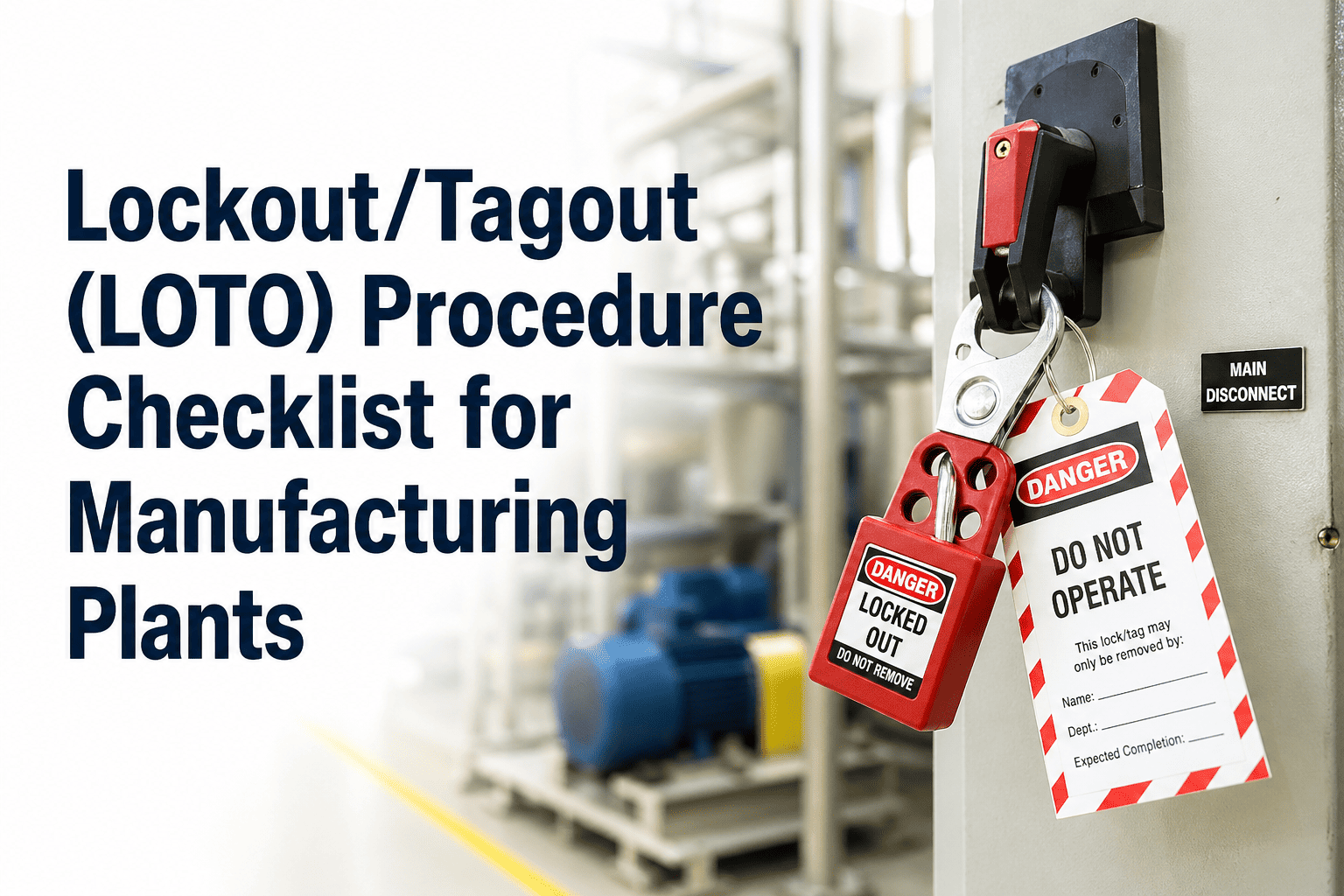
Lockout/tagout is the standard that kills when it fails — a machine cycles with someone inside it, and the hazard was invisible until that second. It's also the reason OSHA writes so many citations in manufacturing: 1910.147 ranked #4 on OSHA's Top 10 most-cited standards in FY2025, and the same three failures show up over and over — missing machine-specific procedures, gaps in training, and skipped annual inspections. This guide covers how to build and run a LOTO program that holds up under inspection: the six-step sequence, isolation-point identification, the three worker roles, group lockout, and why paper procedures are where programs quietly break. Start free or book a demo.
Manufacturing · EHS · OSHA 1910.147 · Energy Control · 2026
Lockout/Tagout Program Guide: Control the Energy Before It Controls the Outcome
A LOTO program isn't a binder of procedures — it's the discipline that guarantees every energy source is isolated, every lock is applied, and zero energy is verified before a technician's hands go near a machine. Here's how to build one that protects your people and survives an audit.
#4
1910.147's rank on OSHA's Top 10 most-cited standards, FY2025
~120
fatalities OSHA estimates the standard prevents every year when followed
Why LOTO Programs Fail Audits — and People
The three most common LOTO citations aren't exotic. They're missing or generic procedures, inadequate training, and skipped annual inspections — all preventable with a properly implemented energy control program. The root cause underneath all three is the same: the program lives on paper, disconnected from the machines it's supposed to protect. A procedure printed once and stuffed in a binder doesn't get updated when the equipment changes, doesn't prove who was trained on it, and doesn't remind anyone the annual inspection is due. Sign up free and every procedure, training record, and inspection lives on the asset it belongs to — not in a folder nobody opens until the inspector arrives.
OSHA's Energy Control Program: Three Components, All Required
01
Written Procedures
Machine-specific documents that state the scope, purpose, isolation points, and technique for each piece of equipment. A single generic procedure for everything is a citation waiting to happen.
02
Employee Training
Every worker trained for their role, with retraining when jobs, machines, or procedures change — and certified records carrying each name and date.
03
Periodic Inspections
Each procedure inspected at least annually by an authorized employee who isn't the one using it — certified in writing, with the machine, date, employees, and inspector named.
The Six-Step Sequence — In Order, Every Time
OSHA 1910.147 prescribes a specific six-step sequence for controlling hazardous energy, and it must be followed in order on every lockout. Skipping or reordering a step creates the exact gap that ends in a serious injury. Verification — step six — is the one people rush, and it's the one that confirms the machine truly can't start. Book a demo to see each step delivered as a guided procedure on a technician's phone at the machine.
1
Prepare & Identify
Identify every energy source on the equipment — electrical, mechanical, hydraulic, pneumatic, thermal, chemical, and gravitational. Review the machine-specific procedure before touching anything.
2
Notify & Shut Down
Tell every affected employee the machine is going down, then power it off using its normal operating controls — an orderly shutdown, not an emergency stop that could create new hazards.
3
Isolate
Physically operate every energy-isolating device — open the breaker, close the valve, disconnect the pneumatic supply — so the equipment is separated from all its power sources.
4
Apply Locks & Tags
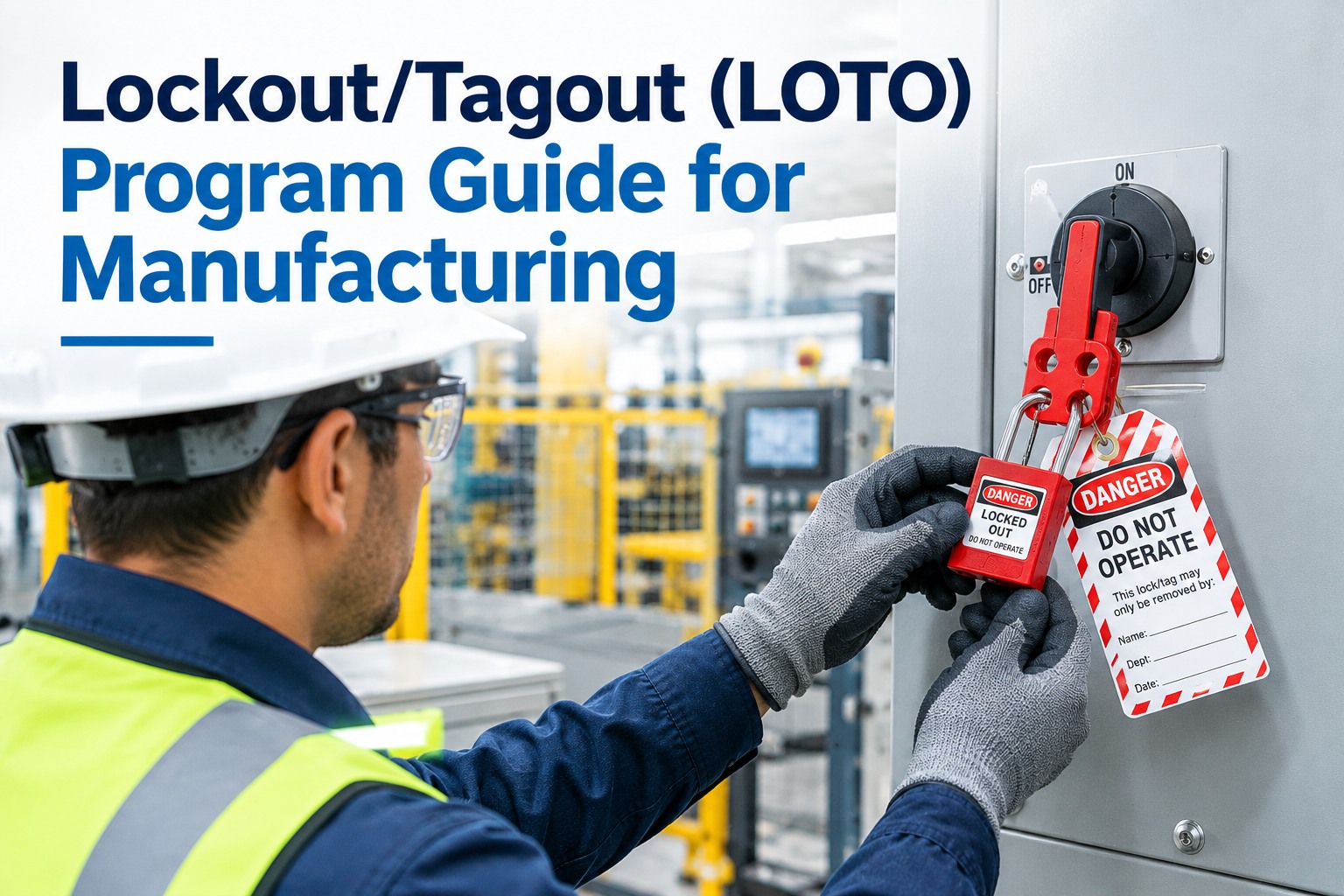
Affix a lock and tag to each isolating device — one lock per authorized worker. The tag warns; the lock physically prevents re-energization until that worker removes it.
5
Release Stored Energy
Discharge or restrain residual and stored energy — capacitors, springs, hydraulic pressure, suspended loads, trapped steam. Isolation isn't safety until stored energy is gone.
6
Verify Zero Energy
Attempt to start the machine with normal controls and confirm it won't operate — then return controls to off. This is the step that turns a locked machine into a safe one.
Know Who's Who: The Three Worker Roles
LOTO training requirements hinge on role — and mixing them up is a documented citation source. Each role carries a different responsibility, a different level of training, and a different place in the procedure. Getting the boundaries right is half of building a defensible program. Try OxMaint free and track which employees are trained and authorized for which procedures, so the right person is always the one holding the lock.
Authorized
The workers who actually perform the lockout — they isolate energy, apply locks, verify zero-energy state, and do the servicing. The highest training bar, because they're the ones inside the hazard.
Affected
Operators and workers who use the equipment or work in the area. They don't apply locks, but must be notified and must know never to attempt a restart while a lockout is active.
Other
Anyone else who may be in an area where energy control is used. They need enough awareness to recognize a lockout and stay clear of a machine being serviced.
The Procedure Was Correct. It Was Just Written for the Old Machine.
The line was rebuilt last year — a new disconnect, a relocated valve, an added hydraulic accumulator. The LOTO procedure in the binder still described the old layout. A technician followed it to the letter and missed a stored-energy point that no longer matched the machine. OxMaint ties every procedure to its asset, so when equipment changes, the linked procedure is flagged for review — and the technician pulls up the current version at the machine, not last year's.
Group LOTO: When One Lock Isn't Enough
When a crew services a machine together, one person's lock can't protect everyone — because that person could remove it while a colleague is still exposed. Group lockout solves this with a simple, non-negotiable principle: every authorized worker applies their own lock, and the machine can't be re-energized until the last lock comes off. Nobody's safety depends on anyone else remembering they're still in there. Book a demo to see group lockout tracked live — who's locked on, and who's cleared.
One Lock Per Worker
Each authorized employee applies and removes their own lock. A group lockbox holds the isolation-device keys, and each worker's personal lock secures it.
Last Lock Rule
The equipment stays locked out until every individual lock is removed. Re-energization is physically impossible while a single worker remains locked on.
Shift & Contractor Handoff
Lockout continuity across shift changes and coordination with outside contractors must be documented — the protection can't lapse in the gap between crews.
Where Digital LOTO Closes the Audit Gaps
Paper LOTO fails at the seams — between a machine change and the procedure update, between training delivered and training proven, between an inspection due and an inspection done. A maintenance and asset platform closes exactly those seams by keeping procedures, permits, training, and inspections attached to the equipment and to the work order that authorizes the job. Start free and the whole energy-control program moves from a binder to a system that keeps itself current.
Procedure on the Asset
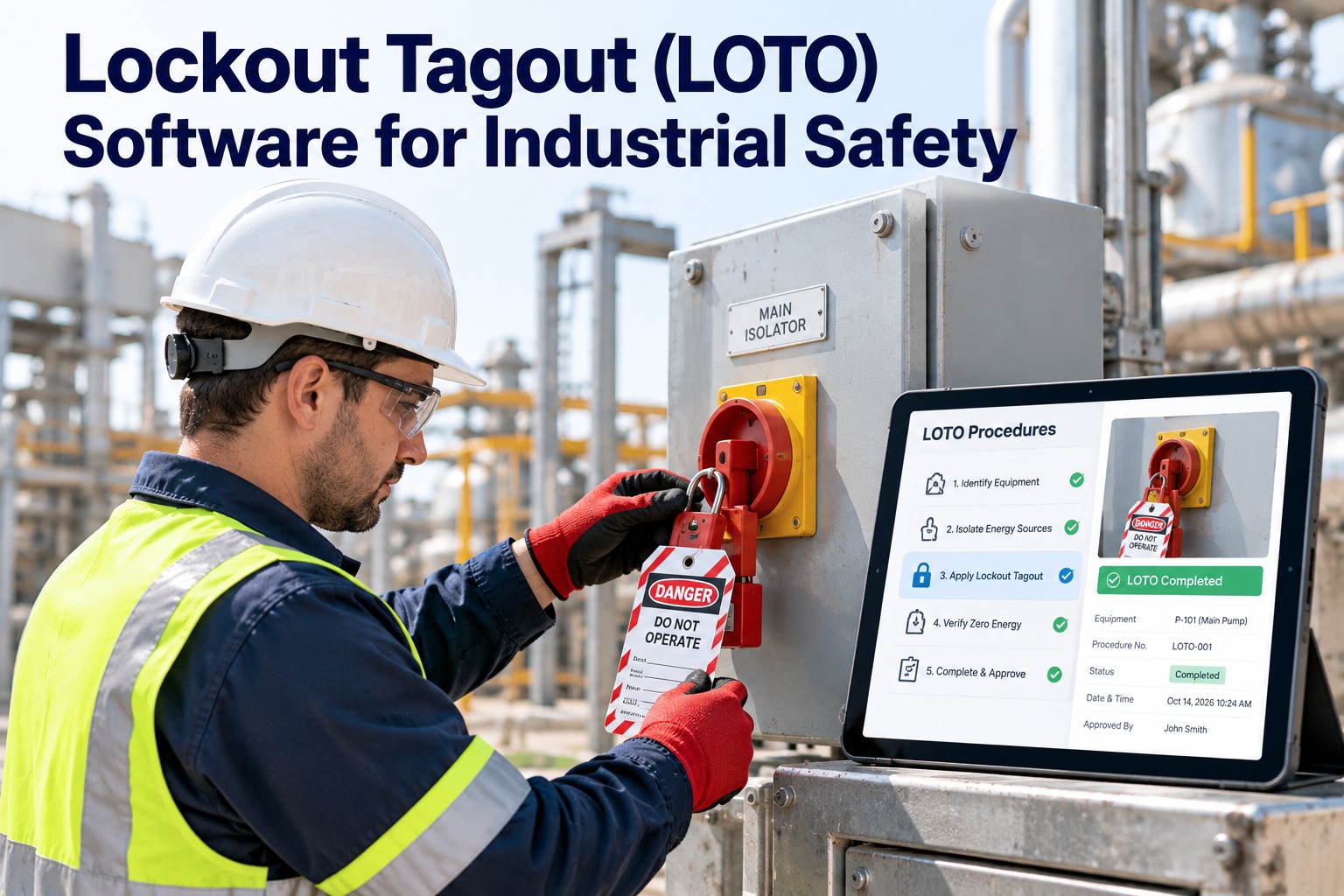
Each machine-specific procedure lives on its equipment record, so technicians pull the current version at the machine via QR tag — never a stale printout.
LOTO Tied to Work Orders
Energy isolation is a required step on the maintenance work order, so no servicing job proceeds without the lockout being acknowledged and recorded.
Change Flags Review
When equipment is modified or replaced, its linked procedure is flagged for update — closing the gap where a procedure silently stops matching the machine.
Training & Authorization Records
Who's trained and authorized for which procedures is tracked and dated, giving you the certified records OSHA requires without a filing-cabinet search.
Annual Inspection Scheduling
Periodic inspections schedule themselves as recurring tasks and capture the machine, date, employees, and inspector — the exact certification the standard demands.
Complete Audit Trail
Every procedure edit, lockout event, training entry, and inspection is time-stamped and attributed, so the whole program is inspection-ready on demand.
Build the program once, tie every procedure to its asset and its work order, and the locks, training, and inspections stay in sync with the plant floor — through every rebuild and every audit. Try OxMaint free or book a demo to see it on your equipment.
$165,514
2026 maximum civil penalty per willful or repeat 1910.147 violation
$16,550
per serious or other-than-serious violation — before the cost of the incident itself
"
We rebuilt a packaging line and updated the drawings, the spares, everything — except the LOTO procedure, which nobody thought to touch. It caught us on a near-miss, not the inspector, thank god. Now the procedure is attached to the asset and the work order won't close without the lockout logged. When we modify a line, the procedure gets flagged automatically, and our annual inspections come up as scheduled tasks with the certification already half-filled. The last audit was the calmest one I've run.
EHS & Maintenance Lead · Contract Packaging Manufacturer
Frequently Asked Questions
What are the three components of a LOTO program?
Written energy control procedures, employee training, and periodic inspections. OSHA's 1910.147 requires all three — missing or weak versions of any one are among the most common citations.
What are the six steps of lockout/tagout?
Prepare and identify energy sources, notify and shut down, isolate, apply locks and tags, release stored energy, and verify zero-energy state. They must be performed in order on every lockout.
Do we need a separate procedure for every machine?
Not always — similar machines using the same type and magnitude of energy with similar controls can share a procedure. But a single generic procedure for all equipment is a frequent citation.
How often must LOTO procedures be inspected?
At least annually, by an authorized employee who isn't the one using the procedure. The inspection must be certified in writing, naming the equipment, date, employees involved, and inspector.
What is group lockout?
When a crew services equipment together, each authorized worker applies their own lock, usually via a group lockbox. The machine can't be re-energized until every individual lock is removed.
How does a CMMS improve LOTO compliance?
It attaches procedures to assets, makes lockout a required work-order step, flags procedures for review when equipment changes, and schedules and certifies annual inspections.
Sign up free to map your equipment.
Move Your LOTO Program Off Paper and Onto the Machine.
OxMaint ties every energy control procedure to its asset, makes lockout a required step on the maintenance work order, flags procedures for review when equipment changes, and schedules the annual inspections OSHA certifies — so your program protects technicians and passes audits at the same time. Start free — no credit card, unlimited users, forever. Or book a demo.

-audit-checklist-for-manufacturing-plants.png)