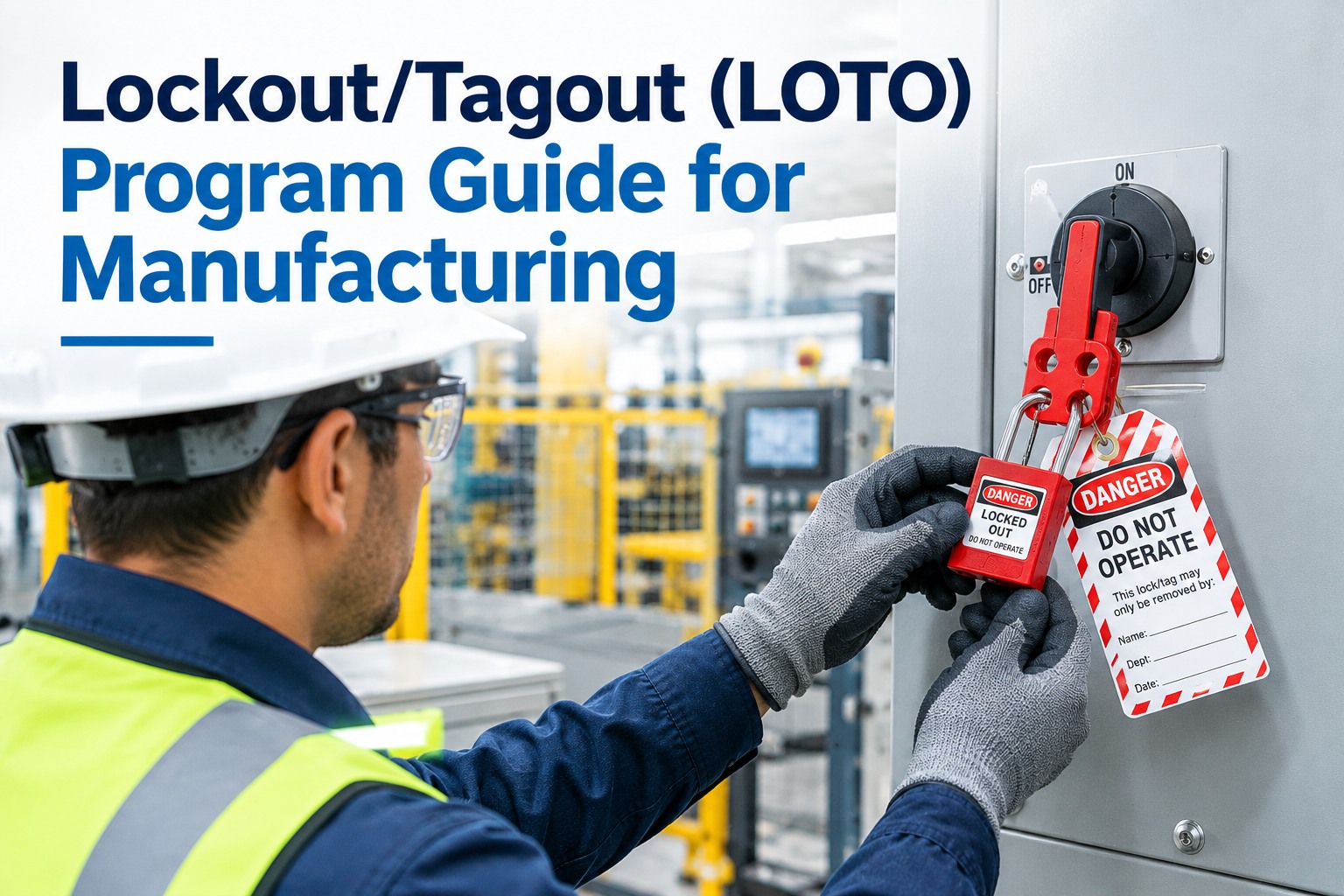
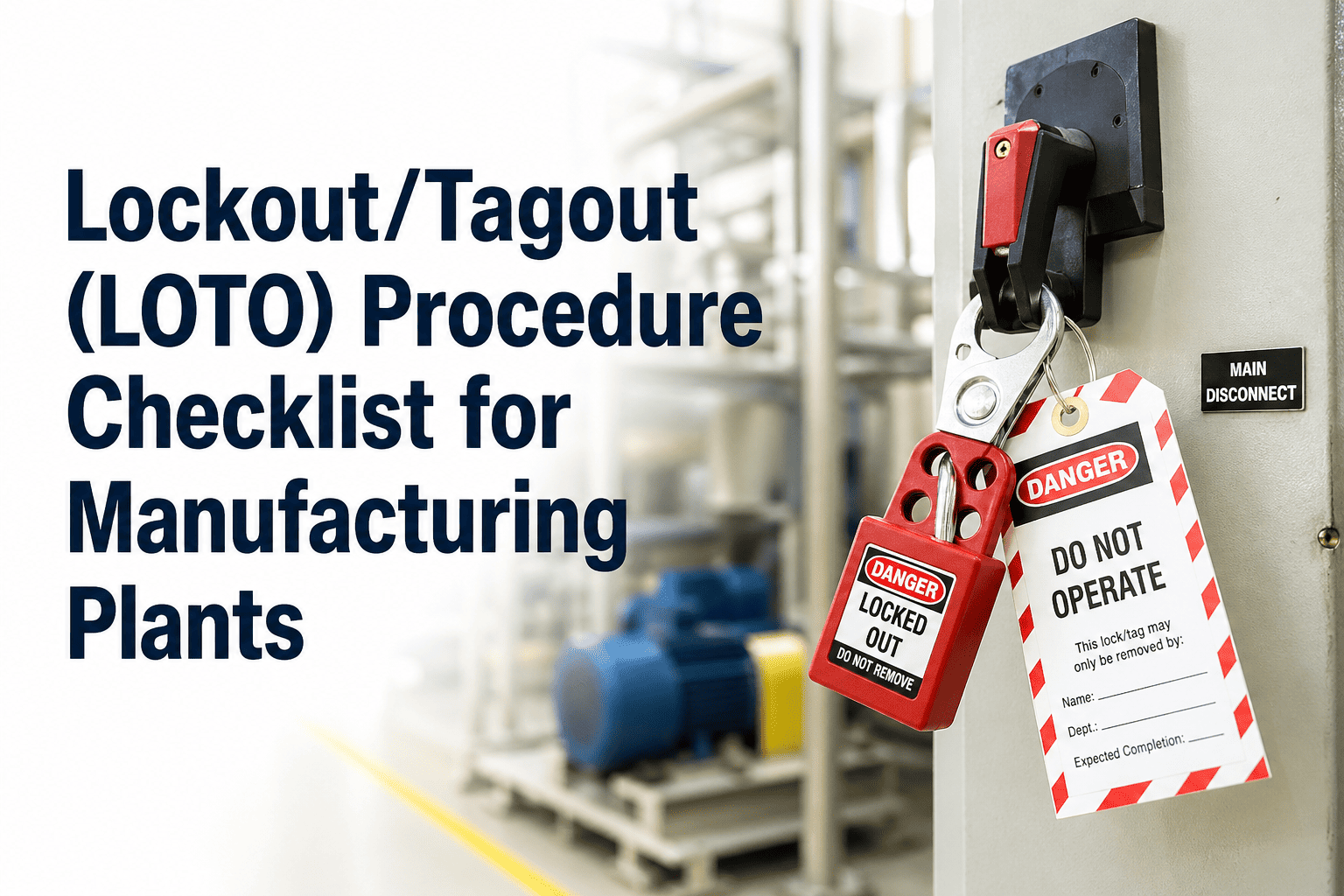
Lockout/tagout violations have ranked among OSHA's top-ten most-cited standards for over a decade, and the root cause is almost always outdated paper binders that vanish, fade, or never get updated when equipment changes. LOTO procedure manufacturing digitization inside a modern CMMS replaces those fragile binders with equipment-specific isolation workflows, authorized-employee verification, and a tamper-proof audit log that satisfies OSHA 29 CFR 1910.147 without the weekend scramble. Plants that deploy digital lockout tagout procedures typically cut lockout-related delays by 30–50% and sail through periodic inspections with zero paper findings. If your team is still photocopying tagout sheets, it is time to Start Free Trial of a purpose-built maintenance platform and see the difference on your own assets.
Is a paper LOTO binder putting your plant one audit away from a six-figure OSHA fine?
Manufacturing plants average 3.4 days of lost production per year searching for or correcting outdated lockout procedures. Digitizing LOTO workflows inside a CMMS eliminates paper chase, enforces isolation steps in real time, and turns compliance from a liability into a measurable uptime advantage.
The hidden cost of paper-based LOTO procedures in manufacturing
A typical 180-asset plant maintains over 220 equipment-specific lockout procedures across multiple binders, satellite storage rooms, and supervisor desks. The moment a disconnect is relocated, a valve is re-piped, or a new energy source is introduced, that paper procedure becomes a compliance hazard disguised as a safety document.
When a maintenance technician cannot find the correct procedure, they improvise. That improvisation is exactly what OSHA 29 CFR 1910.147 is designed to prevent, and it is why digital LOTO manufacturing workflows are rapidly becoming the industry standard. A CMMS lockout log captures every isolation point, every authorized employee sign-off, and every periodic inspection result in a searchable, time-stamped record that auditors can access instantly.
How to digitize LOTO procedures in a manufacturing CMMS
Moving from paper to digital lockout tagout is not just scanning PDFs into a folder. True LOTO digitization re-engineers how isolation steps are authored, approved, executed, and audited. Here is the proven four-phase path plants follow inside OxMaint.
Asset & energy-source mapping
Link every piece of equipment to its energy types — electrical, hydraulic, pneumatic, thermal, chemical, gravitational — inside the CMMS asset registry. Each asset record becomes the single source of truth for where isolation points physically exist and what device (breaker, valve, blank, block) controls them.
Equipment-specific digital procedure authoring
Build step-by-step digital LOTO procedures for each asset: shutdown sequence, isolation point location with photo references, device application, stored-energy release method, and verification test. Approvals route electronically through your authorized personnel, and version history is automatic.
Mobile execution with authorized-employee tracking
Technicians launch the correct procedure on a tablet or phone at the point of work. The CMMS validates that the user is an authorized employee for that energy category, requires step-by-step acknowledgment, and logs the exact timestamp, GPS location, and employee ID for each isolation and de-isolation action.
Periodic inspection & audit automation
Schedule the mandatory annual LOTO periodic inspection as a recurring CMMS work order. The inspector reviews a digital record of every lockout event, certifies each procedure was correctly followed, and closes the loop — no binder mining, no spreadsheet tracking, zero audit panic.
How OxMaint powers LOTO compliance for manufacturing plants
OxMaint is an AI-powered CMMS and EAM platform that embeds digital lockout tagout directly into the maintenance workflow — not as a bolt-on module, but as a native capability tied to every work order, asset record, and inspection schedule.
Equipment-specific digital procedures
Author isolation steps once, attach them to the asset record, and auto-trigger them whenever a work order requires that equipment to be locked out. Technicians see the exact procedure on their mobile device — no searching, no guessing.
Authorized-employee verification
OxMaint cross-references the technician's certification level against the energy type before allowing a lockout step to be acknowledged. If an unauthorized employee attempts the action, the system blocks it and alerts the supervisor in real time.
Group LOTO & permit integration
Manage complex group lockout scenarios with multi-craft coordination, hasp tracking, and permit-to-work integration. Every authorized employee's lock is logged, and removal requires individual verification — fully compliant with 1910.147(f).
Tamper-proof CMMS lockout log
Every isolation point, energy release, verification test, and de-isolation is time-stamped and immutably stored. Generate an OSHA-ready audit packet for any asset, any employee, or any date range in seconds — not weeks.
Paper vs digital LOTO: what changes when you digitize
The gap between paper-based and CMMS-powered lockout tagout is not incremental — it is structural. Here is what maintenance leaders report after switching to digital LOTO procedures inside OxMaint.
| Capability | Paper LOTO Procedure | OxMaint Digital LOTO |
|---|---|---|
| Procedure accuracy | 42% outdated within 12 months | 100% version-controlled, linked to live asset data |
| Authorized-employee tracking | Sign-in sheet, manual verification | Automatic role-based certification check at each step |
| Lockout execution time | 28 minutes average per procedure | 12 minutes average with mobile step-by-step guidance |
| Periodic inspection | Manual binder review, 2–3 days per audit cycle | Auto-scheduled, auto-documented, audit packet in seconds |
| Group LOTO coordination | Whiteboard and hasp log, frequent miscommunication | Digital hasp tracking with real-time multi-craft visibility |
| Audit readiness | Weeks of preparation, missing documents common | Always audit-ready, any record retrievable in under 60 seconds |
A 180-asset plant saved $42K and cut lockout delays by 38%
A Midwest food-processing plant with 180 assets and 12 production lines was spending $42,000 annually on LOTO-related costs: paper, reprinting after equipment changes, supervisor overtime for audit prep, and production delays when procedures could not be located. Within 90 days of deploying OxMaint digital LOTO procedures, the results were measurable.
"Before OxMaint, our LOTO binders were always one equipment change behind reality. Now the procedure lives with the asset, updates automatically, and our last OSHA inspection was the first one in my career with zero documentation findings."
See OxMaint digital LOTO on your assets — book a 30-min demo
Watch how fast your team can author, execute, and audit lockout procedures when the CMMS does the heavy lifting. Bring your toughest LOTO scenario and we will walk through it live.
Digital LOTO procedure questions, answered
What does OSHA 29 CFR 1910.147 require for LOTO procedures?
OSHA requires that every machine with unexpected energization or startup risk have a written, equipment-specific lockout/tagout procedure covering shutdown, isolation, blocking, and verification steps. The standard also mandates annual periodic inspections by an authorized employee other than the user. Digital LOTO procedures inside a CMMS like OxMaint satisfy every documentation requirement — written procedure, employee training records, periodic inspection certification, and audit traceability — in a format OSHA inspectors accept.
Can a CMMS replace paper LOTO procedures for OSHA compliance?
Yes. OSHA does not mandate paper — it mandates that procedures be written, specific, accessible, and periodically inspected. A digital LOTO procedure stored in a CMMS and accessible on a mobile device at the point of work meets and exceeds those requirements. OxMaint also maintains a tamper-proof audit trail, which paper cannot provide. You can see this in action — book a demo and we will walk through a compliance mapping.
How long does it take to digitize existing LOTO procedures?
Most manufacturing plants with 100–300 assets complete full LOTO digitization in 4–8 weeks. OxMaint accelerates this with bulk-import tools for existing procedures, asset-import templates, and a guided energy-source mapping workflow. Phase 1 (asset mapping) typically takes 1–2 weeks; Phase 2 (procedure authoring) runs in parallel and wraps within 3–5 weeks. Mobile execution can go live as procedures are approved — no need to wait for 100% completion.
How does digital LOTO handle group lockout scenarios?
Group lockout is where paper systems break down most often. OxMaint manages group LOTO with a digital hasp log: each authorized employee's lock is recorded against the isolation point, primary authorized employee is designated, and no lock is removed until that employee's individual verification is electronically captured. Multi-craft coordination — electrician, mechanic, pipefitter — is visible in real time on the work order, satisfying 1910.147(f)(3) requirements without whiteboard tracking.
What does LOTO software cost for a manufacturing plant?
Digital LOTO is typically included as a native capability within a CMMS platform rather than purchased as standalone software. OxMaint pricing scales with the number of users and assets, and most plants find the platform pays for itself within 3–6 months through eliminated paper costs, reduced audit overtime, and recovered production hours. You can start a free 14-day trial with no credit card, or book a demo for a tailored quote based on your asset count and facility footprint.
Stop relying on paper binders for the safety of your people
Join the manufacturing plants that have eliminated LOTO documentation findings, cut lockout delays in half, and made audit day feel like any other Tuesday. Your assets, your procedures, your compliance — all in one platform.
Free 14-day trial · No credit card