An auditor asks who signed off a critical PM, on what procedure version, and when and the answer is a smudged paper log that could have been backdated, filed under a binder lost in the last office move. Paper and spreadsheets can't prove who did what, when, against which SOP. This guide covers digital maintenance recordkeeping for manufacturing plants, and how OXMAINT AI, the AI-powered compliance CMMS, captures a tamper-evident, sign-off-bound record for every task.
Manufacturing · Maintenance Compliance · Digital Recordkeeping · 2026
Digital Maintenance Recordkeeping for Manufacturing Plants
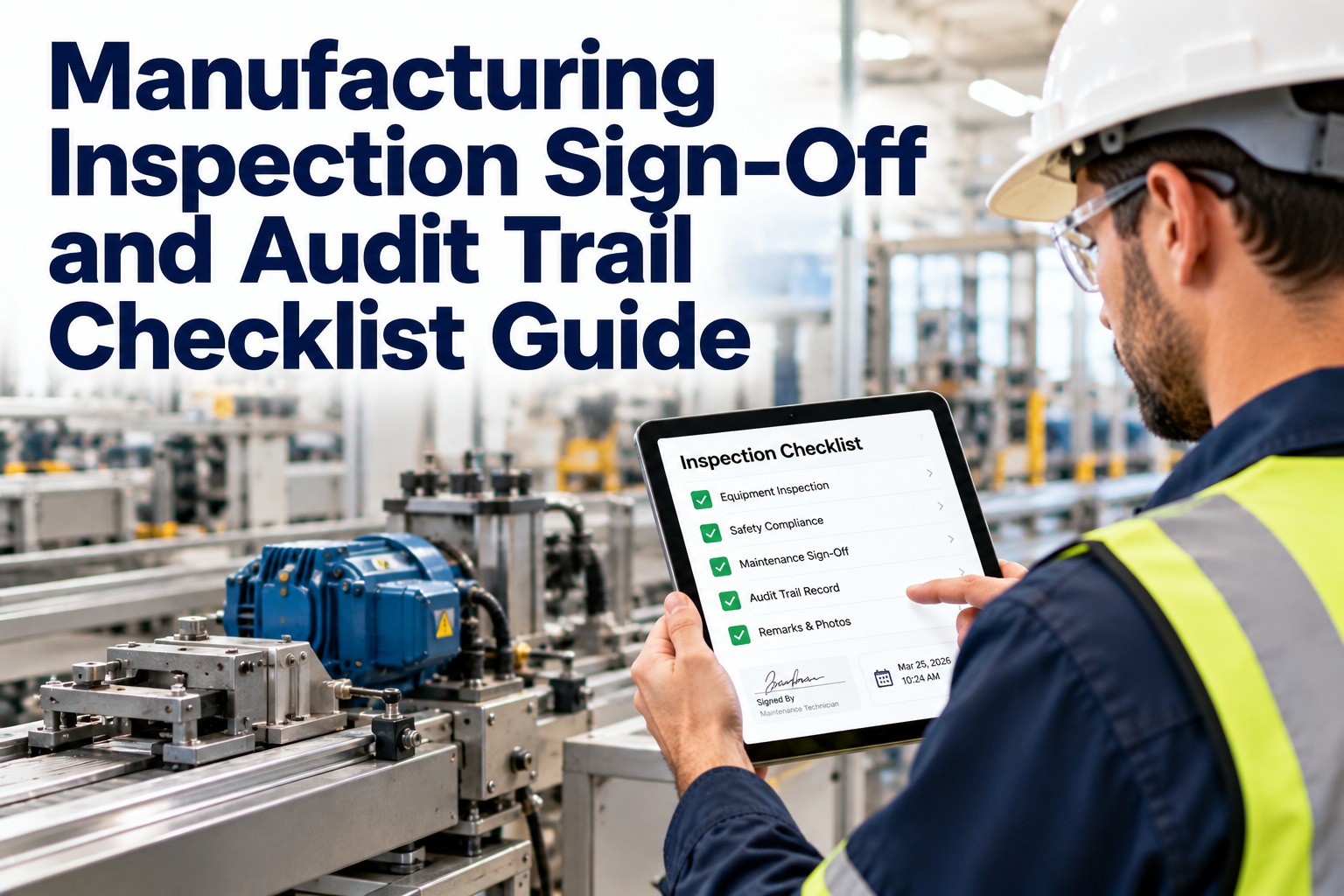
A backdated signature, a record that never linked to the procedure version used, days of reconstruction when the auditor asks — that's the cost of paper maintenance logs. OXMAINT AI, the AI-powered CMMS and maintenance management software, binds every entry to an identity, a server timestamp and the exact SOP version, locks the closed record, and exports a signed, tamper-evident audit bundle on demand.
1Capture & sign
→
2Version-pin
→
3Lock on close
→
4Export trail
PAPER VS DIGITAL
✗Degrades, gets lost in floods, moves, turnover
✗Signatures can be backdated or forged
✗No link to the SOP version actually used
✗Parts traced from memory, not by batch
✓Digital: identity-bound, timestamped, version-pinned, sealed
Who / What / When
the three questions every audit trail must answer
Part 11
e-records & signatures: §11.10, 11.50, 11.70
No overwrite
corrections logged as new entries, history kept
SHA-256
hash on exported bundles for tamper evidence
Anatomy of an Audit-Ready Record
A record survives an audit only if it answers, beyond dispute, who did the work, what they did, when, against which procedure — and proves none of it was altered afterward. Six attributes turn a maintenance entry into evidence, and OXMAINT AI captures all of them automatically as the work happens, so you can book a demo to see the audit record in OXMAINT AI.
WHO
Identity-bound signature
The signer, the meaning of the signature (approved, verified) and a reason code — not a scrawl anyone could have made.
WHAT
The work itself
Status changes, checklist results, photos, parts consumed with lot or batch and supplier, and meter readings.
WHEN
Server timestamp
Generated server-side to the second, so an entry cannot be backdated to cover a missed window.
BEFORE / AFTER
No silent edits
The original entry is never overwritten — each correction is a new entry with a reason code and the full change history kept.
VERSION
Procedure pinned
The exact SOP, OEM manual or checklist version used is tied to the work order, so you can prove the current method was followed.
INTEGRITY
Sealed & hashed
A closure seal on completed records and a SHA-256 hash on exported bundles make tampering evident.
The Records That Face An Auditor
Not every maintenance record carries the same compliance weight, but each needs the same disciplined capture. These are the categories an auditor reaches for, and OXMAINT AI keeps each one against the asset with its full history, so you can start free and organize your records in OXMAINT AI.
Work orders
Corrective and PM-driven, each logging its trigger, timestamp, sign-off, parts and findings — the backbone of the history.
PM & inspection records
Scheduled task completions, checklist pass/fail results and PM compliance percentages, linked to corrective actions.
Calibration & LOTO
Instrument calibration records and lockout/tagout periodic inspection logs under OSHA 1910.147.
Nonconformance & CAPA
Nonconformance logs and corrective-and-preventive-action records tied to the asset and the finding that raised them.
An Unsigned Record Is The Finding, Not The Work.
Auditors cite missing and unsigned maintenance documentation more than almost anything else — and a correct repair with no provable record is treated as a gap. Identity-bound sign-off and a sealed trail turn the work you already do into evidence you can hand over.
Controlled Procedures, Pinned To The Work
A record is only as defensible as the procedure behind it. When the exact SOP, OEM manual or checklist version is pinned to each work order, you can prove the technician worked to the current controlled method — not a photocopy two revisions out of date pulled from a drawer. Procedure control and recordkeeping are two halves of the same evidence.
A
Current version servedThe work order opens the controlled SOP revision in force that day — no stale drawer copies.
B
Version pinned to the recordThe revision used is stamped onto the completed record, linking method to outcome.
C
Change history preservedOlder revisions stay on file, so a historical record still points at the method that applied then.
How OXMAINT AI Builds The Trail
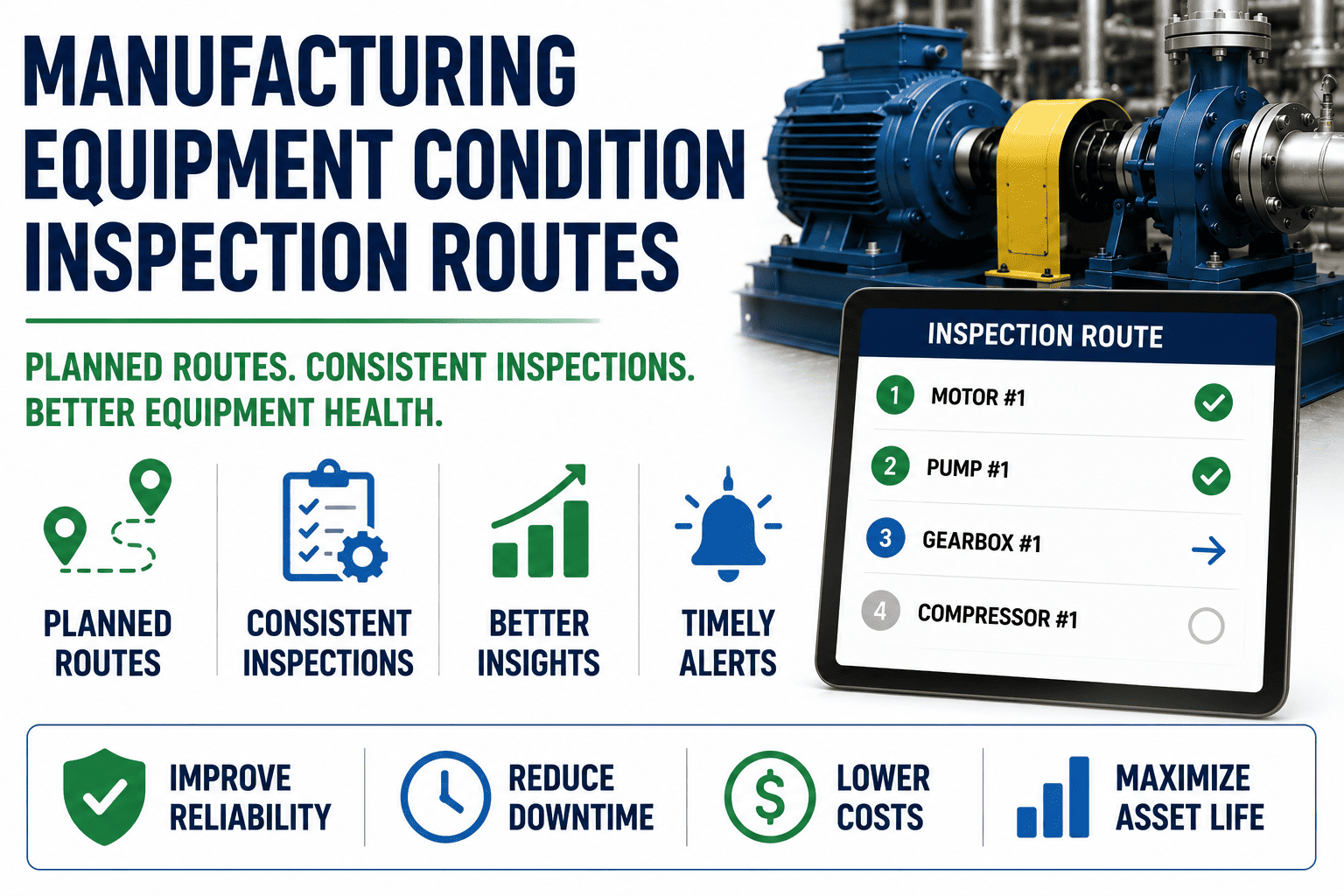
Every compliant record follows the same path, from the trigger that created the work to the signed bundle an auditor receives. OXMAINT AI runs that path end to end so the trail assembles itself, and you can book a demo to see the end-to-end trail in OXMAINT AI.
01
Trigger & Assignment
A PM, meter reading or inspection request generates a work order that logs its source and timestamp.
02
Execution & Capture
Technicians complete mobile checklists, photograph defects, scan parts and record readings, each field timestamped.
03
E-Signature & Approval
Technicians sign off; supervisors countersign safety-critical or high-cost work with a reason code.
04
Closure & Correction Lock
Closed records are sealed; any later correction is added as a new logged entry, never an overwrite.
05
Audit Export
Filter by asset, date, standard or work-order type and export a signed PDF bundle with a SHA-256 hash.
06
Live Compliance View
PM compliance, inspection completion, corrective close rate and documentation completeness on one dashboard.
The Standards The Record Serves
Different plants answer to different regulators, but the underlying demand is the same: provable, retained, controlled records. The references below are the common anchors — always confirm which apply to your plant and product.
FDA 21 CFR Part 11
Secure timestamps, identity-bound e-signatures and version control (§11.10, 11.50, 11.70)
ISO 9001
Calibration records and nonconformance logs (§7.1.3, 8.5.1)
ISO 55001
Documented information and asset management plans (§7.5, 8.2)
OSHA 1910.147
Lockout/tagout energy-control logs and periodic inspection records
ISO 14224
Failure and maintenance data taxonomy — failure mode, cause code, repair action, downtime
Customer audits
Tier-1 programs such as PPAP and Layered Process Audits
“
Our audits used to start with a sinking feeling — pulling paper logs, deciphering initials, and hoping the signature dates held up to scrutiny. Moving to identity-bound sign-off, server timestamps and SOP version pinning changed the whole posture: when an auditor asks who did a PM and on what procedure, it's a filtered export with a hash on it, not a week in the records room. The work didn't change; proving it did got effortless.
Plant Maintenance & Quality Manager · Regulated Manufacturing
Frequently Asked Questions
What makes a maintenance record audit-ready?
It answers who, what and when beyond dispute, and proves it wasn't altered: an identity-bound signature with a reason code, the work captured with parts and readings, a server timestamp, the SOP version pinned to the task, corrections logged as new entries rather than overwrites, and a tamper-evident seal. Paper struggles with every one of those.
Book a demo to see audit-ready records in OXMAINT AI.
Why is paper such an audit risk?
Paper and spreadsheets degrade and get lost through floods, office moves and staff turnover; signatures can be backdated or forged; records rarely link to the procedure version used; and parts are traced from memory rather than by batch. An auditor challenge can then require days of reconstruction, and missing or unsigned documentation is a common finding.
How does version control fit in?
Each work order serves the controlled SOP, OEM manual or checklist revision in force that day, and the version used is pinned to the completed record. That links method to outcome and lets you prove the technician worked to the current approved procedure, not an out-of-date photocopy.
What does tamper evidence actually mean here?
Closed records are sealed so they can't be silently edited; corrections are appended as new, logged entries with reason codes; and exported bundles carry a SHA-256 hash, so any change to the file after export is detectable. The goal is an unbroken, demonstrable chain of custody for the record.
Which standards does digital recordkeeping support?
Commonly FDA 21 CFR Part 11 for e-records and signatures, ISO 9001 for calibration and nonconformance, ISO 55001 for documented asset information, OSHA 1910.147 for lockout/tagout logs, and ISO 14224 for failure-data taxonomy — plus customer programs like PPAP and Layered Process Audits. Always confirm which apply to your plant and retain records per that standard.
Start free and align records to your standards in OXMAINT AI.
Make Every Record Prove Itself.
Run maintenance recordkeeping on the OXMAINT AI maintenance management software — identity-bound sign-off, server timestamps, SOP version pinning, correction-logged edits, sealed closed records, and a signed, hashed audit export on demand. Turn the maintenance work you already do into evidence an auditor accepts the first time.