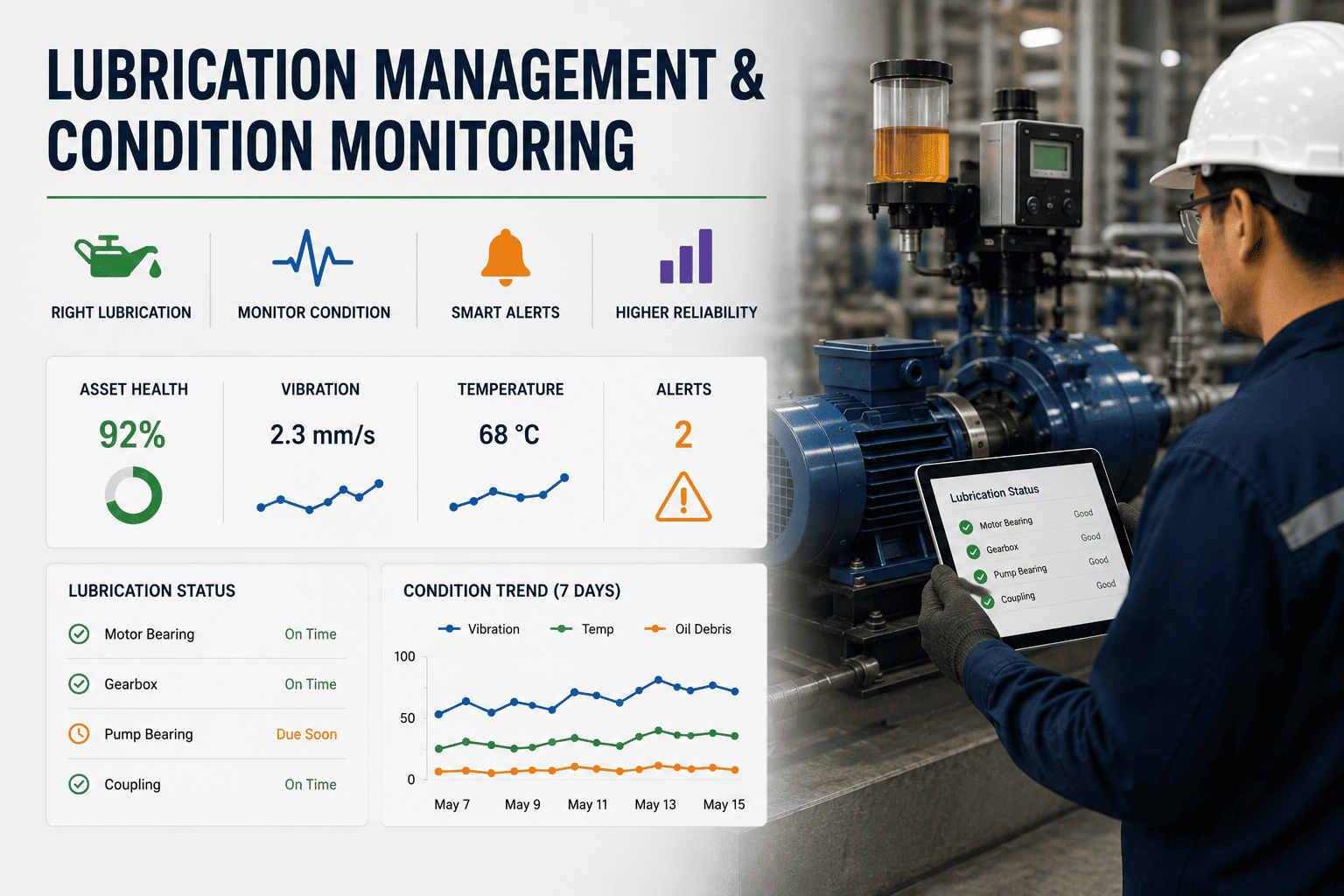
Lubrication failures are responsible for an estimated 40–50% of premature rotating equipment failures across manufacturing plants — yet most maintenance programs treat lubrication as a calendar task rather than a condition discipline. Without structured lubrication reliability benchmarks, teams cannot measure contamination control performance, interval adherence, or the rate at which repeat failures signal a systemic gap. You can Sign Up Free and start tracking lubrication performance metrics across your rotating asset fleet within days. This guide covers how to establish contamination benchmarks, measure interval discipline, detect repeat failure patterns, and use condition monitoring signals to build a lubrication program that measurably reduces unplanned downtime on bearings, gearboxes, pumps, and compressors.
Why Lubrication Reliability Benchmarks Are Critical for Rotating Equipment Programs
Most plants track whether a lubrication PM was completed on schedule. Very few track whether it was done correctly, whether the lubricant was in condition, or whether the interval was right for the actual operating environment. Book a Demo to see how Oxmaint maps lubrication performance benchmarks to each rotating asset record and surfaces interval discipline and contamination deviations automatically. The gap between PM completion and lubrication reliability is where bearing and gearbox failures originate — and where benchmarking creates measurable value.
Establish ISO cleanliness code targets per asset class. Track particle count trends from oil analysis results and alert when contamination levels approach a threshold that accelerates wear.
Measure lubrication task completion against scheduled intervals at the asset level — not just the work order level. Chronic late completions on high-speed bearings are quantified as a reliability risk, not just a scheduling miss.
Oxmaint flags assets with recurring lubrication-related fault codes — bearing overtemperature, excessive vibration at bearing frequencies, seal failures — as candidates for interval, lubricant type, or application method review.
Track the time between a detectable lubrication condition signal and work order creation. Reducing detection latency on oil degradation events directly reduces the proportion of lubrication failures that become catastrophic.
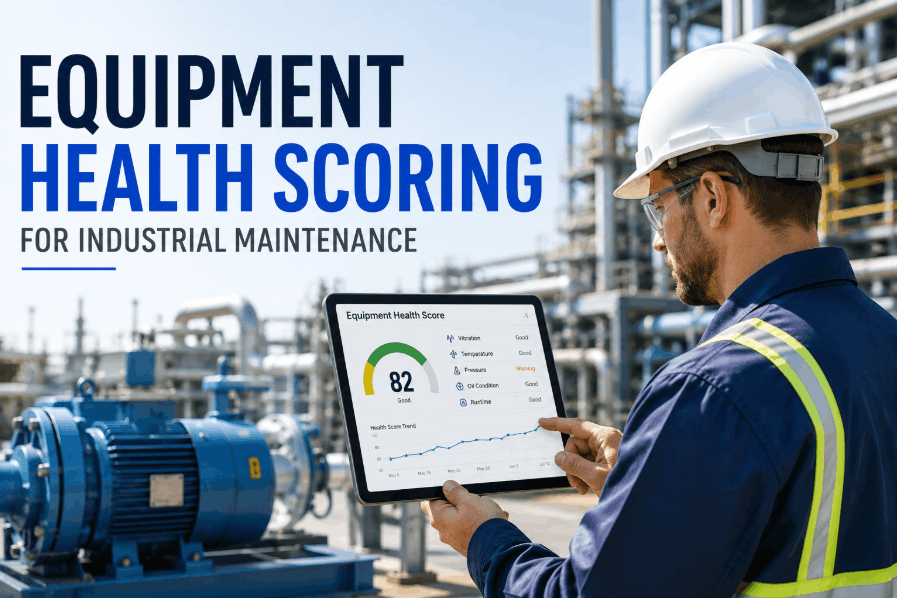
Each rotating asset receives a lubrication health score combining oil analysis results, inspection cadence compliance, vibration trend data, and repair history — giving maintenance planners a single number to prioritize intervention.
Oxmaint correlates lubrication condition data with vibration and temperature signals to produce multivariate fault pattern detection — identifying developing bearing failures weeks before any single measurement would trigger an alarm.
Lubrication Benchmark Reference Table: Rotating Asset Classes and Performance Targets
Lubrication reliability benchmarks must be set at the equipment class level — the right contamination target for a high-speed compressor bearing differs fundamentally from a slow-speed gearbox in a wet environment. The table below provides reference benchmark ranges and monitoring priorities. Sign Up Free and configure asset-class benchmarks in your Oxmaint environment on your first session.
| Asset Class | Contamination Target | Monitoring Priority | Interval Type | Predictive Signal | Failure Recurrence Risk |
|---|---|---|---|---|---|
| High-speed bearings (>3000 RPM) | ISO 16/14/11 | Critical | Condition-based | Vibration + temperature | High |
| Gearboxes (helical/bevel) | ISO 17/15/12 | Critical | Oil analysis interval | Ferrous particle count | High |
| Centrifugal pumps | ISO 18/16/13 | High | Fixed + condition override | Temperature + vibration | Medium |
| Compressors (rotary screw) | ISO 16/14/11 | High | Oil life monitor | Viscosity degradation | High |
| Electric motor bearings | Grease NLGI 2 purity | High | Fixed (hours-based) | Bearing temperature | Medium |
| Fans and blowers | ISO 18/16/13 | Medium | Fixed (calendar) | Vibration amplitude | Medium |
| Slow-speed conveyors | ISO 19/17/14 | Medium | Calendar-based | Visual inspection | Low |
| Hydraulic systems | ISO 16/14/11 | High | Oil analysis interval | Particle count + water | High |
How Oxmaint AI Turns Lubrication Benchmarks Into Condition-Based Maintenance Actions
Lubrication data without a structured response path produces reports, not results. Oxmaint connects contamination benchmarks, interval discipline metrics, and predictive signals to automated work order workflows — so a particle count deviation or a late relubrication becomes a dispatched technician, not a logged observation. Book a Demo to walk through how Oxmaint handles a lubrication condition alert from detection through to work order close-out in your specific equipment environment.
Oxmaint ingests oil analysis results from laboratory submissions and on-site sensors, mapping each result to the corresponding asset record. Contamination readings are evaluated against asset-class-specific ISO cleanliness benchmarks at every submission.
Oxmaint tracks actual lubrication task completion timestamps against required intervals at the asset level. Assets with chronic late completion patterns receive elevated failure risk scores that surface in maintenance planning dashboards before the next PM window.
Oxmaint's AI engine correlates oil condition data with vibration signatures and bearing temperature trends. Fault patterns involving lubrication degradation — rising iron content paired with increasing vibration at bearing frequencies — are detected as a combined signal, not separate alarms.
When an asset generates more than one lubrication-related work order within a defined window, Oxmaint automatically flags it for root cause investigation — prompting a structured review of interval, lubricant specification, or application method rather than another repeat repair.
When a contamination threshold breach, interval compliance failure, or predictive signal fires, Oxmaint creates a fully populated work order — asset record, triggering data, recommended lubricant action — and routes it to the assigned technician on mobile within minutes of detection.
Measuring Lubrication Program Maturity: Key Performance Benchmarks
A mature lubrication reliability program is measurable. Oxmaint provides the KPI framework to track program performance across contamination control, interval compliance, detection latency, and failure recurrence — giving maintenance managers the data to demonstrate improvement and justify program investment. Sign Up Free and access lubrication KPI dashboards within your first deployment session.