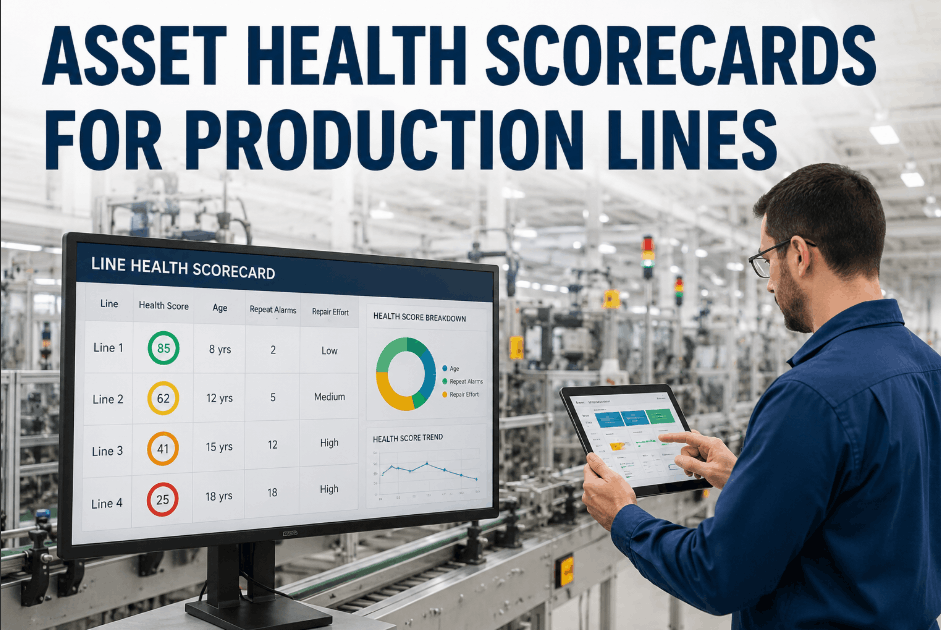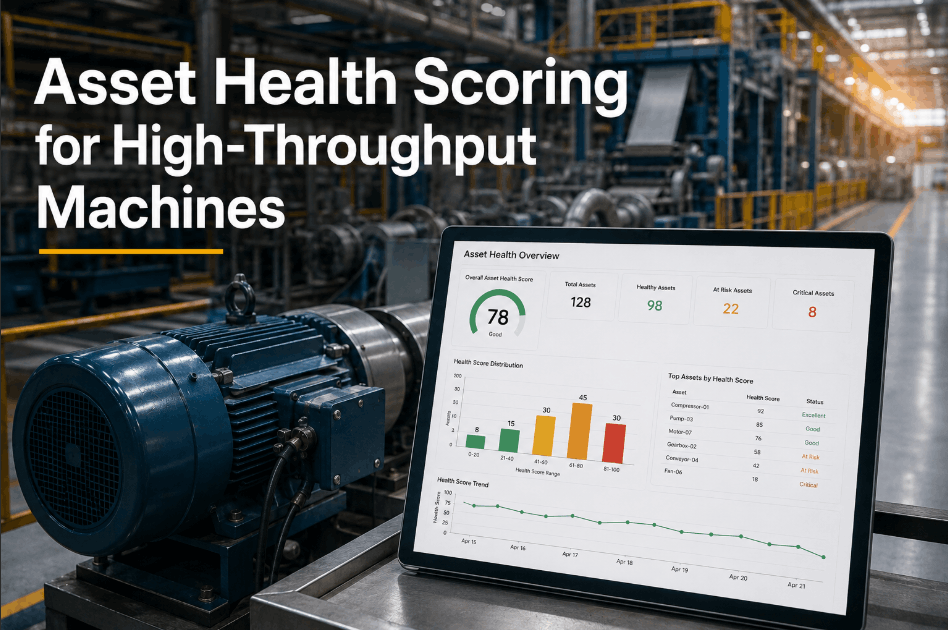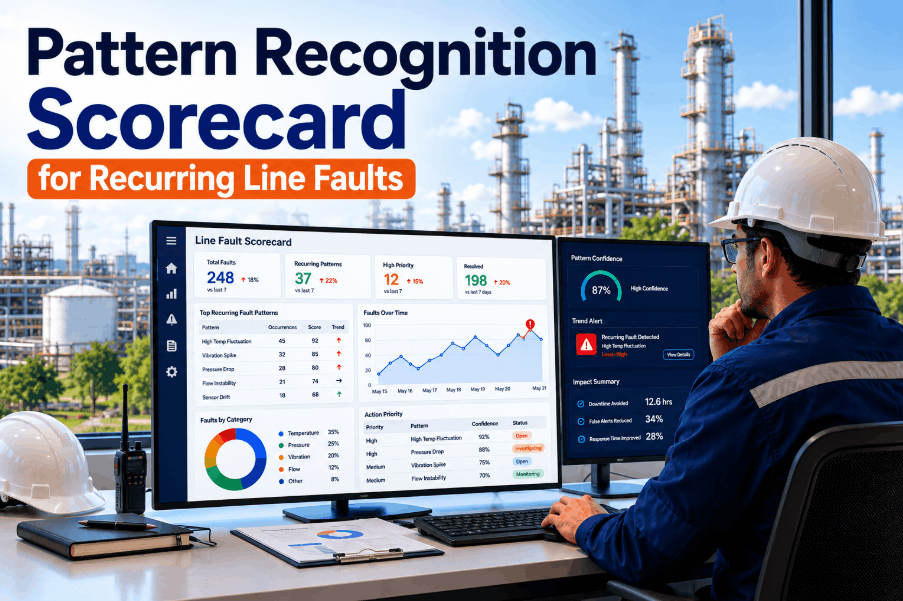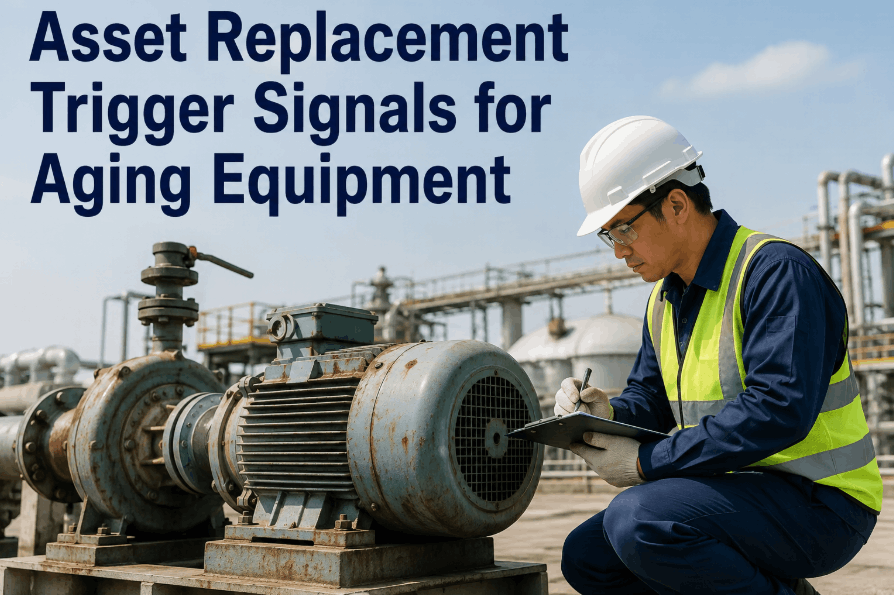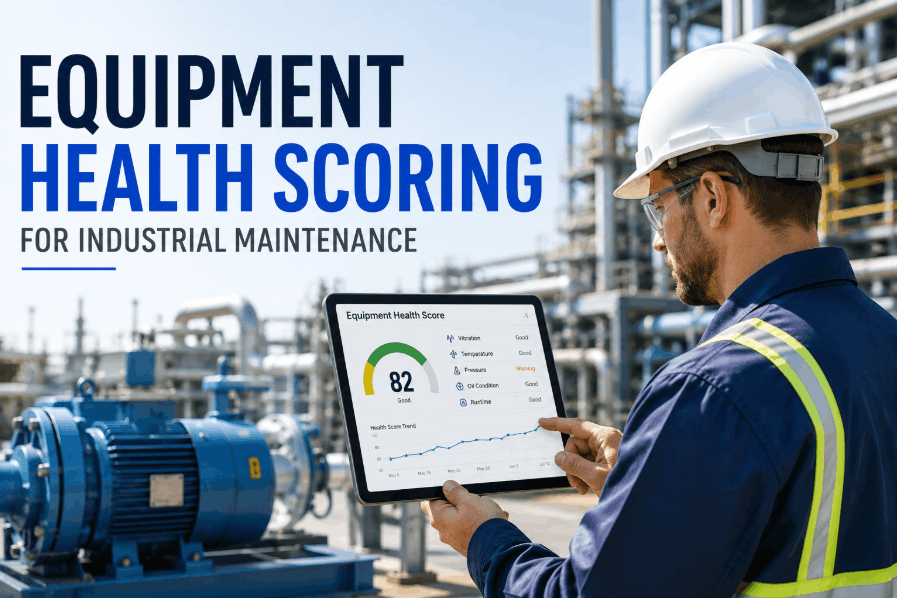
Condition data from industrial assets — vibration readings, temperature trends, pressure deviations, and inspection findings — has little strategic value until it is translated into a single, comparable score that tells maintenance teams which assets need attention today, which can wait, and which are approaching a failure threshold. Equipment health scoring converts multi-variable condition data into a ranked asset priority list that drives maintenance planning before small defects become bigger failures. Oxmaint AI automates this translation — assigning a dynamic health score to every asset in your register and generating predictive work orders when scores cross defined thresholds. Sign Up Free to start scoring your industrial assets and replace reactive maintenance with a condition-driven priority system your team can act on daily.
Rank Every Asset by Health Score — Before Defects Become Failures
Oxmaint AI converts condition monitoring data into dynamic equipment health scores — automatically prioritising assets and generating predictive work orders before the next failure window opens. Most plants are live within 48 hours.
Why Condition Data Alone Does Not Drive Industrial Maintenance Decisions
Gap #1
Multi-Variable Overload
Vibration, temperature, pressure, and flow data each signal different fault modes. Without a unified health score, maintenance teams cannot compare asset condition across different parameter types.
Gap #2
No Asset Ranking
Raw condition data shows individual readings — it does not rank assets by urgency. Maintenance planners cannot determine which of fifty assets needs attention first without a scoring framework.
Gap #3
Signal Quality Gaps
Not all condition monitoring signals are equally reliable. Without signal quality scoring, a noisy sensor reading carries the same weight as a high-confidence trend — distorting health assessments.
Gap #4
Static Inspection Cadence
Inspection schedules set by calendar do not respond to real asset health changes. A declining health score should trigger an earlier inspection — not wait for the next scheduled date.
Gap #5
No Remaining Useful Life Estimate
Condition data shows what is happening now — but not how long before failure. Without a remaining useful life estimate derived from health score trends, maintenance planning operates without a time horizon.
Gap #6
Predictive Signal Ignored
Early-stage health score degradation is often too subtle for threshold-based alarms to catch. The predictive signal exists in the data — but without AI scoring, it never reaches the maintenance team.
How Oxmaint AI Generates Equipment Health Scores for Industrial Assets
01
Condition Data Ingestion
Oxmaint ingests condition monitoring data from connected sensors, inspection records, and historian feeds — aggregating multi-parameter signals per asset into a unified data stream.
→
02
Baseline Modelling
The AI engine establishes a healthy baseline per asset using historical condition data — enabling deviations to be scored relative to normal operating behaviour rather than fixed threshold values.
→
03
Dynamic Health Score
Oxmaint calculates a continuous health score per asset — combining signal quality, deviation magnitude, fault mode classification, and maintenance history into a single priority ranking updated in real time.
→
04
Predictive Work Order Trigger
When a health score crosses a defined threshold or shows a declining trend pattern, Oxmaint automatically raises a predictive work order — prioritised by score severity and asset criticality.
Equipment Health Scoring Framework — What Oxmaint Tracks Per Asset
Condition Input Layer
Vibration, temperature, pressure, and flow signal feeds
Signal quality scoring per monitoring source
Inspection finding integration into health score calculation
Scoring Engine
Per-asset health score updated continuously
Fault pattern classification by failure mode type
Remaining useful life estimate from health score trend
Maintenance Planning
Asset priority ranking by health score across the register
Inspection cadence dynamically adjusted to score trend
Predictive WO auto-generated at threshold breach
Asset Reliability Outcome
Defects addressed in health score decline window — not post-failure
Planned maintenance replaces emergency breakdowns
Full audit trail from condition signal to closed work order
40%
Reduction in unplanned downtime reported by plants using Oxmaint AI equipment health scoring in Year 1
72hrs
Average early fault detection lead time before a critical asset failure occurs through health score monitoring
3.2×
Higher work order completion rate when predictive WOs are generated from equipment health score data
48hrs
Typical time from condition data connection to first health score rankings appearing in Oxmaint dashboard
Oxmaint AI vs Standard CMMS for Equipment Health Scoring
Standard CMMS — No Health Scoring
Condition data stored separately from maintenance records — never integrated into a health score
Asset priority based on technician judgment — not objective condition data
Threshold alarms generate high noise volume — real degradation signals buried
Inspection cadence fixed by calendar — does not respond to declining asset health
No remaining useful life estimate — maintenance planning lacks a time horizon
Predictive signal ignored until a threshold breach triggers an alarm — too late for planned intervention
Oxmaint AI — Dynamic Health Scoring Built In
Condition data converted to a health score per asset — updated continuously in real time — Sign Up Free
Asset priority list ranked by health score — objective, consistent, and always current
AI detects degradation patterns before threshold breach — early fault signals captured
Inspection cadence dynamically adjusted when health score trend shows accelerating decline
Remaining useful life estimate generated per flagged asset from health score trajectory
Predictive WO auto-generated at health score threshold — planned intervention replaces emergency response
KPIs to Track When Using Equipment Health Scoring in Oxmaint
These six KPIs give maintenance managers measurable evidence that equipment health scoring is improving asset reliability and reducing unplanned downtime — and Oxmaint calculates all of them automatically. Book a Demo to see your plant's live health scoring dashboard.
KPI 01
Mean Health Score by Asset Class
Average health score across each asset category — compressors, pumps, heat exchangers, and so on. Declining mean score in a category is an early warning that a class-level intervention may be needed.
Fleet Health
KPI 02
Assets Below Health Threshold
Count of assets currently scored below the defined intervention threshold. Rising count indicates that the maintenance program is not keeping pace with asset degradation across the register.
Risk Exposure
KPI 03
Predictive WO Trigger Rate
Number of predictive work orders auto-generated from health score thresholds per month. Rising rate alongside declining emergency WOs confirms the scoring model is functioning correctly.
Prediction Volume
KPI 04
Mean Time Between Failures (MTBF)
Tracks whether health-scored assets are failing less frequently over time. Rising MTBF per asset class confirms that early health score interventions are preventing failure recurrence.
Asset Reliability
KPI 05
Remaining Useful Life Accuracy
Compares predicted remaining useful life at WO generation against actual time to failure if no intervention occurred. Improving accuracy confirms the health scoring model is learning from each closed work order.
Model Quality
KPI 06
Emergency Work Order Rate
Monthly count of breakdown WOs across health-scored assets. Sustained decline is the clearest financial evidence that equipment health scoring is converting reactive maintenance into planned intervention.
Cost Reduction
Industries Using Oxmaint AI Equipment Health Scoring
Process Manufacturing
Health Scoring for Compressors, Reactors, and Heat Exchangers
Chemicals and refining plants use Oxmaint health scoring to rank condition across critical rotating and static equipment — identifying which compressors, reactors, and heat exchangers are declining toward failure and generating predictive work orders before production impact occurs. Sign Up Free for your process facility.
Power & Utilities
Turbine and Generator Health Score Monitoring
Power generation plants use Oxmaint to score turbine and generator health across vibration, bearing temperature, and lube pressure signals — ranking assets by condition and enabling planned outage windows instead of forced shutdowns driven by late-stage failure detection. Book a Demo for your facility.
Food & Beverage
Hygiene-Critical Asset Health Prioritisation
F&B facilities use Oxmaint health scoring on CIP lines, refrigeration systems, and filling equipment — prioritising maintenance attention by condition score rather than calendar date to prevent both production downtime and food safety compliance failures.
Oil & Gas
Remote Asset Health Scoring at Scale
Upstream operations use Oxmaint to score wellhead and pipeline asset health across pressure, flow, and temperature signals — providing operations teams with a ranked priority list for remote inspection scheduling that reflects actual condition rather than fixed maintenance intervals.
Your Condition Data Already Knows Which Assets Are Declining. Oxmaint Scores Them.
Connect Oxmaint to your condition monitoring feeds and start ranking assets by health score — before the next small defect becomes a bigger failure. Book a Demo to see the health scoring workflow live with your asset types.
Frequently Asked Questions
What is equipment health scoring in industrial maintenance?
Equipment health scoring converts multi-variable condition data — vibration, temperature, pressure, and inspection findings — into a single ranked score per asset, enabling maintenance teams to prioritise attention by actual condition rather than calendar schedule.
How does Oxmaint AI calculate an equipment health score?
Oxmaint combines condition signal feeds, signal quality scoring, fault mode classification, and asset maintenance history into a dynamic health score — updated continuously and calibrated against an asset-specific baseline model.
What condition monitoring data does Oxmaint use for health scoring?
Oxmaint integrates vibration, temperature, pressure, and flow signals from connected sensors and historian feeds, as well as inspection findings and work order history — combining all available data sources into a unified health score per asset.
Can Oxmaint estimate remaining useful life from a health score?
Yes. Oxmaint generates a remaining useful life estimate per flagged asset based on the trajectory of the health score trend — giving maintenance planners a time horizon for intervention scheduling.
How quickly does equipment health scoring reduce unplanned downtime?
Plants typically see measurable reductions in emergency work orders within 60–90 days of activating health scoring. Full ROI tracked against MTBF and OEE baselines is reportable within the first production quarter.
Stop Waiting for Threshold Alarms. Start Acting on Health Score Trends.
Oxmaint AI converts condition data into dynamic equipment health scores — automatically prioritising assets and generating predictive work orders before small defects become costly failures. Sign Up Free and start health-scoring your industrial assets today.