Maintenance procurement workflow optimization addresses one of the most overlooked cost centers in manufacturing operations — the gap between identifying a parts need and having the right component at the right location when a technician requires it. Poorly structured procurement workflows inflate maintenance costs through emergency purchasing premiums, extend repair durations through parts waiting delays, and erode production availability when critical assets sit idle awaiting materials that could have been stocked in advance. With Sign Up Free on Oxmaint, maintenance teams can replace disconnected requisition processes with automated approval workflows, vendor coordination tools, and spare parts inventory management that connects directly to work orders and PM schedules.
Why Maintenance Procurement Inefficiency Is a Hidden Production Cost
Maintenance procurement is rarely analyzed with the same rigor applied to production purchasing — yet the consequences of procurement failure are felt directly on the plant floor. Emergency purchase orders placed at spot pricing carry 30 to 150 percent cost premiums over planned procurement. Parts waiting time routinely accounts for 15 to 25 percent of total repair duration, converting what should be a 2-hour fix into a multi-shift event. And reactive purchasing driven by breakdown maintenance systematically bypasses volume discount opportunities, preferred vendor agreements, and lead time optimization that structured procurement programs capture. Book a Demo to see how Oxmaint connects maintenance planning to procurement workflows across multi-site operations.
Core Components of an Optimized Maintenance Procurement Workflow
Procurement optimization is not a single process improvement — it is the integration of inventory management, work order planning, vendor coordination, and approval automation into a connected workflow where each component feeds the next. The goal is eliminating the manual handoffs and information gaps that cause delays, duplicate orders, and emergency purchasing. Sign Up Free to configure Oxmaint's procurement workflow for your maintenance operation.
A CMMS-managed spare parts catalog with defined minimum stock levels and automatic reorder triggers eliminates the reactive discovery of parts shortages at the point of repair. Oxmaint's inventory module tracks stock levels against min/max thresholds and generates purchase requisitions automatically when stock falls below reorder points — converting emergency purchasing into planned replenishment.
When a work order is created in Oxmaint, required parts can be reserved against the planned work order before the job begins — preventing the scenario where multiple technicians draw from shared inventory simultaneously and the last technician to arrive finds the shelf empty. Parts reservation also generates advance warning when stock is insufficient to cover all scheduled work.
Oxmaint generates purchase requisitions automatically from min/max trigger events, work order parts requirements, and PM schedule-driven forecasts. Requisitions pre-populate with preferred vendor, last purchase price, lead time, and approval routing based on purchase value — eliminating manual data entry steps that delay the purchasing cycle and introduce errors.
Multi-tier approval workflows configured in Oxmaint route purchase requisitions to the appropriate approval authority based on total order value — bypassing manual routing delays for routine stocking replenishments while ensuring higher-value purchases receive the required management review. Mobile approval notifications allow authorizers to approve or hold requests without returning to a desktop system.
Maintenance Procurement Workflow: Process Stages and Optimization Points
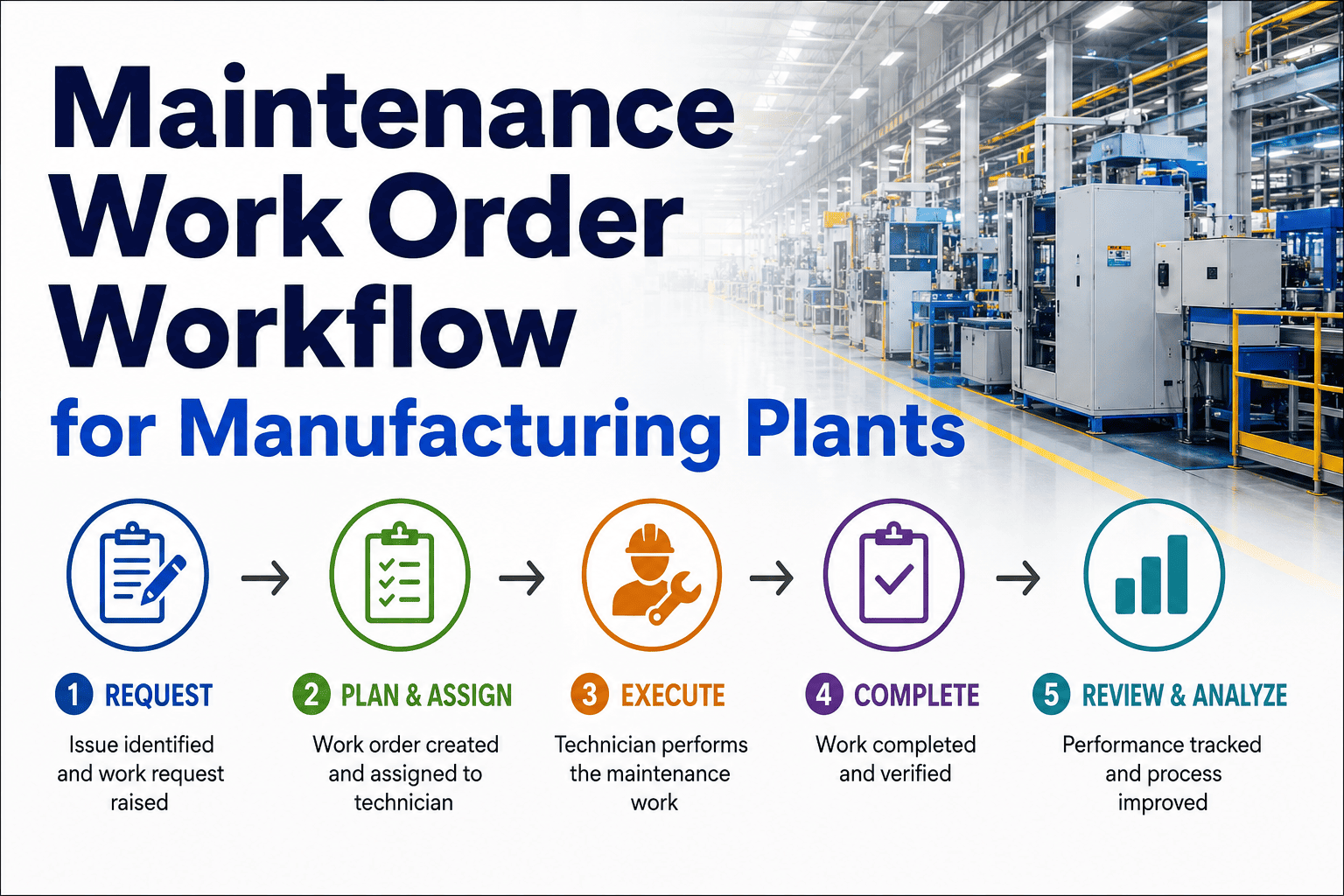
Every maintenance procurement event passes through a predictable sequence of stages — and each stage contains specific optimization opportunities that reduce cost, improve speed, and increase parts availability at point of need. Book a Demo to walk through Oxmaint's end-to-end procurement workflow with a product specialist.
| Workflow Stage | Common Inefficiency | Optimization Approach | Oxmaint Capability |
|---|---|---|---|
| Need Identification | Discovered at point of failure | Forecast from PM schedules and historical usage | PM-linked parts forecasting |
| Requisition Creation | Manual entry with missing vendor/price data | Auto-generate with preferred vendor and last price pre-populated | Automated requisition engine |
| Approval Routing | Email chains with no visibility or deadline | Rules-based routing with mobile approval and escalation timers | Multi-tier approval workflow |
| Vendor Coordination | Phone-based ordering with no documentation | Structured PO with lead time tracking and receipt confirmation | PO management and vendor tracking |
| Receipt and Stocking | Received parts not linked to originating work order | Receipt against PO with automatic work order notification | PO receipt with WO alert |
| Cost Tracking | Maintenance spend not attributable to assets | Parts cost linked to work order and asset for lifecycle costing | Asset-level cost accumulation |
Building an Optimized Maintenance Procurement Program with Oxmaint
Build a Structured Spare Parts Catalog
Create a complete spare parts catalog in Oxmaint covering every stocked component, consumable, and critical spare for production assets. Each item should include part number, preferred vendor, lead time, unit cost, and min/max stock levels. A complete catalog is the prerequisite for all downstream procurement automation — and the foundation for eliminating reactive emergency purchasing.
Link Parts Requirements to PM Work Orders
For every preventive maintenance task in Oxmaint, attach the parts and consumables required for that task to the work order template. When a PM is scheduled, Oxmaint automatically checks inventory availability and generates a parts reservation or purchase requisition if stock is insufficient — converting PM execution from a reactive scramble into a planned, parts-ready event.
Configure Approval Tiers and Escalation Rules
Define approval authority levels by purchase value — for example, automatic approval below $500, supervisor approval between $500 and $2,500, and manager approval above $2,500. Set escalation timers so that unapproved requisitions auto-escalate after a defined window to prevent approval bottlenecks from converting planned procurement back into emergency purchasing.
Register Preferred Vendors with Lead Time Data
Enter preferred vendor records in Oxmaint with contract pricing, lead time estimates, and contact information for each parts category. This data allows Oxmaint to pre-select the preferred vendor when generating purchase requisitions and calculate expected parts availability dates — enabling maintenance planners to schedule work based on realistic parts arrival timelines rather than optimistic assumptions.
Close the Loop with Receipt-to-Work-Order Matching
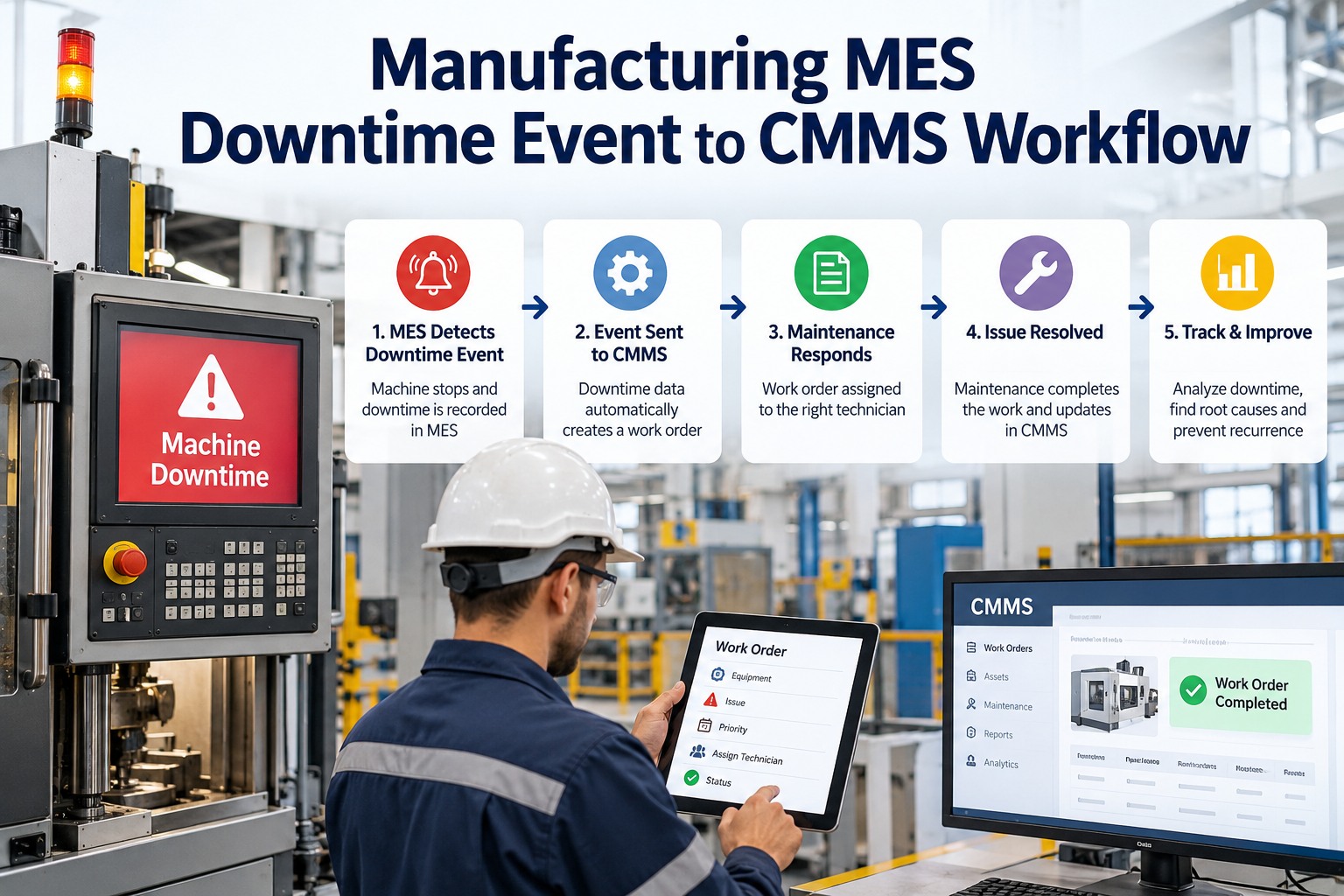
When parts are received against a purchase order in Oxmaint, the system automatically notifies the technician assigned to the pending work order — eliminating the manual communication step that frequently delays repair start after parts arrive. Received quantities update stock levels in real time, and actual purchase costs are recorded against the asset for lifecycle cost tracking.
Maintenance Procurement KPIs to Track in Your CMMS
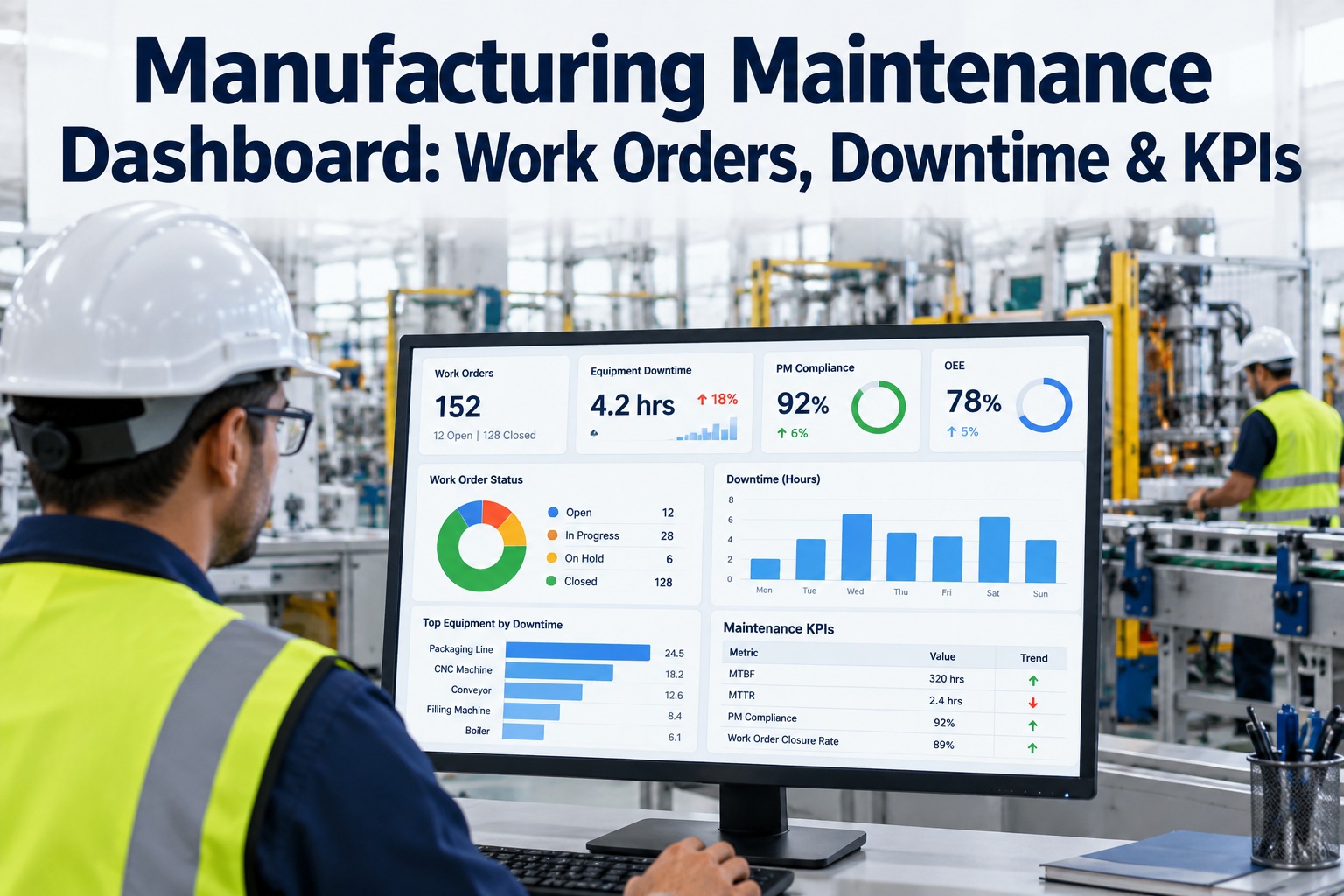
Procurement KPIs quantify the financial and operational impact of workflow improvements — from emergency purchase rate reduction to parts availability improvements that directly reduce repair downtime. Sign Up Free to access Oxmaint's live procurement analytics dashboards pre-configured for manufacturing operations.
Tracks the percentage of purchase orders classified as emergency or expedited. High rates signal inadequate inventory stocking levels or insufficient PM-driven demand forecasting — both correctable through CMMS configuration improvements.
Measures average time technicians spend waiting for parts before beginning repair work. Reductions directly translate to shorter total repair durations and improved asset availability — making this the most operationally relevant procurement efficiency metric.
Tracks the elapsed time from purchase requisition creation to approval authorization. Long cycle times on routine replenishment orders indicate over-engineered approval workflows that should be streamlined with higher automatic approval thresholds.
Measures how often critical spare parts are unavailable when needed for a corrective or preventive work order. Any stockout on Tier-1 critical assets — those with high downtime cost or long lead times — represents a procurement system failure requiring immediate min/max adjustment.
Compares actual maintenance parts spend against planned budget by period. Consistent overspend concentrated in emergency purchasing categories identifies the specific procurement workflow gaps driving budget variance — enabling targeted corrective action rather than across-the-board budget increases.
Tracks whether preferred vendors are delivering within their quoted lead times. Systematic lead time overruns by specific vendors indicate the need for contract renegotiation or vendor replacement before their unreliability creates emergency purchasing pressure on the maintenance team.