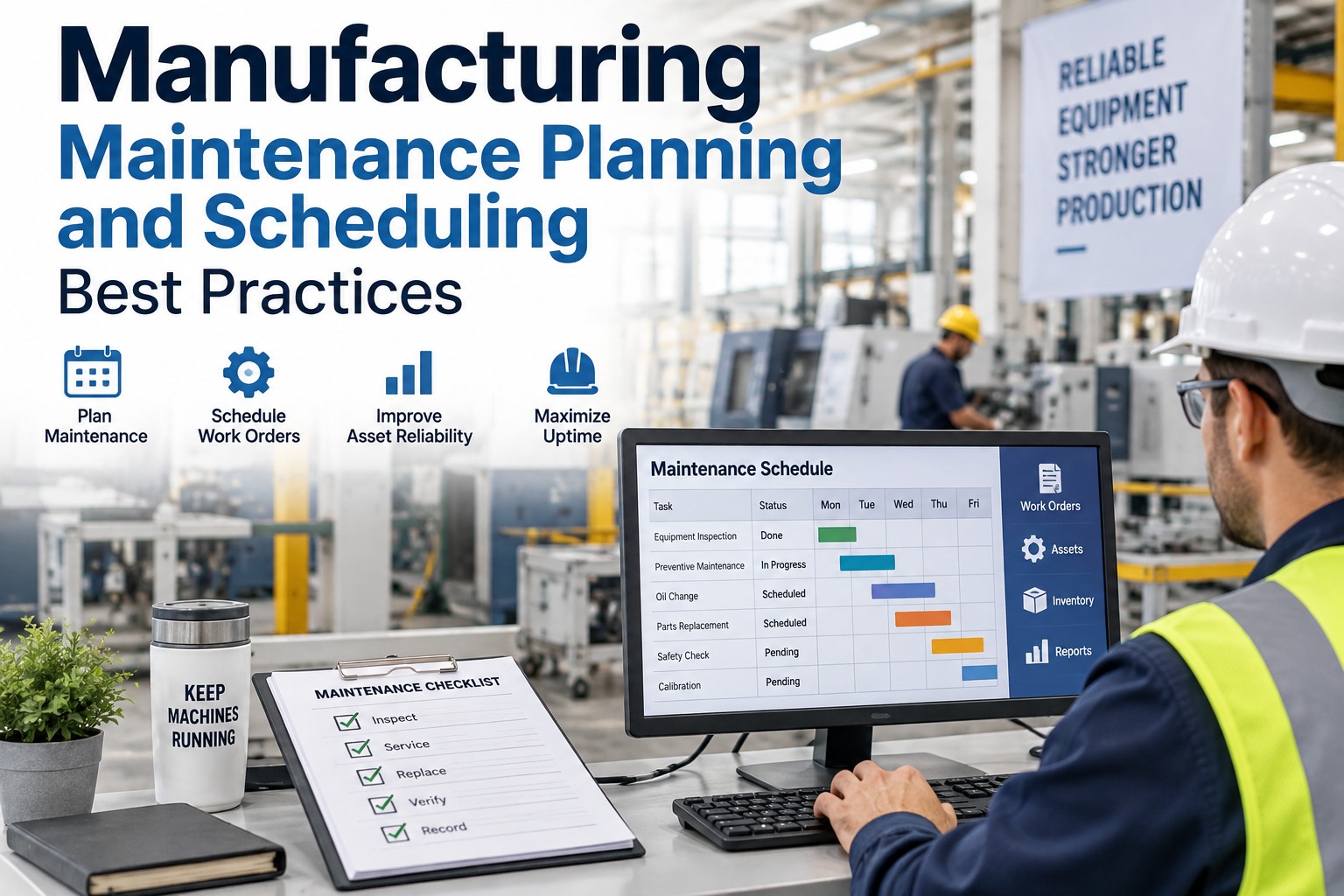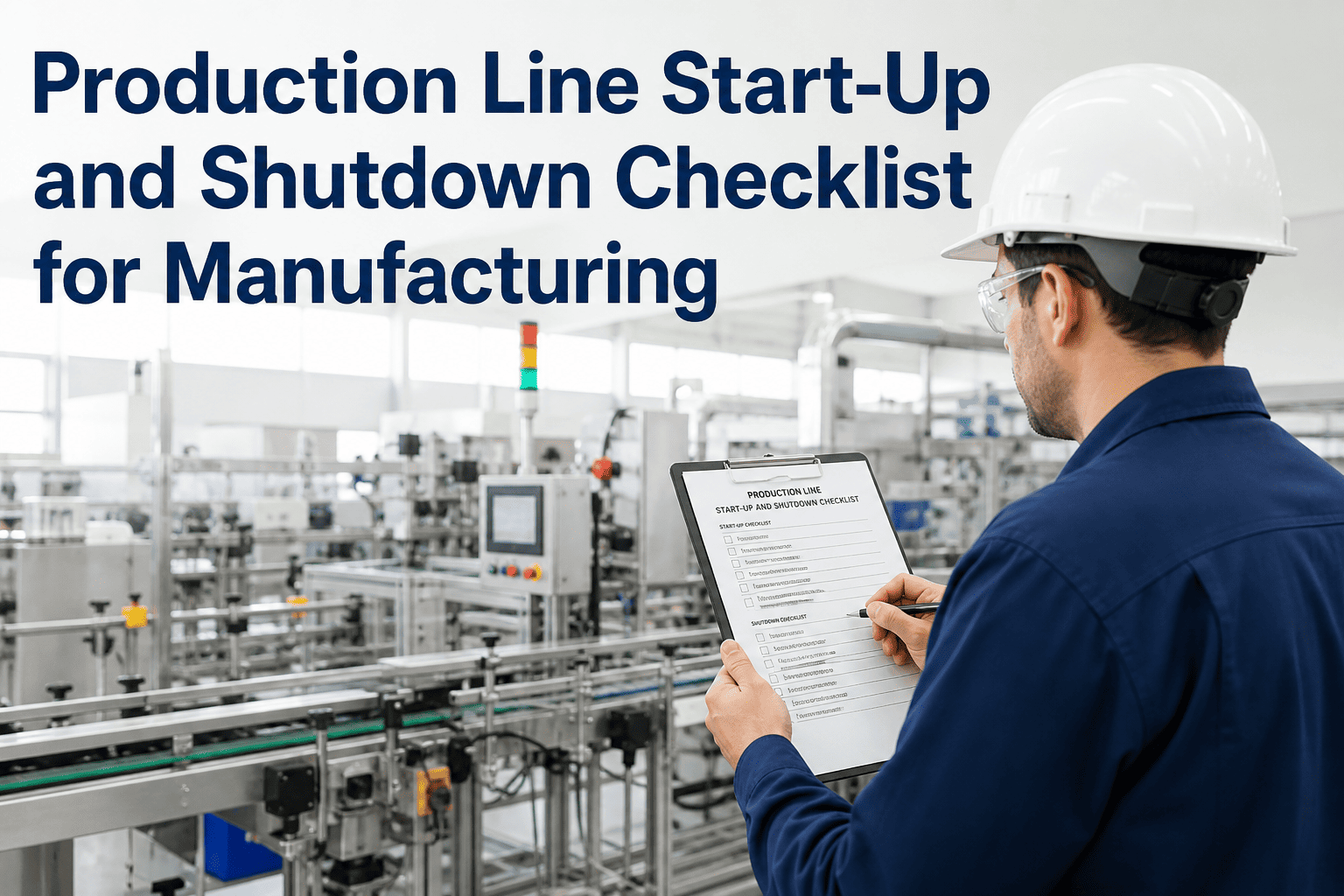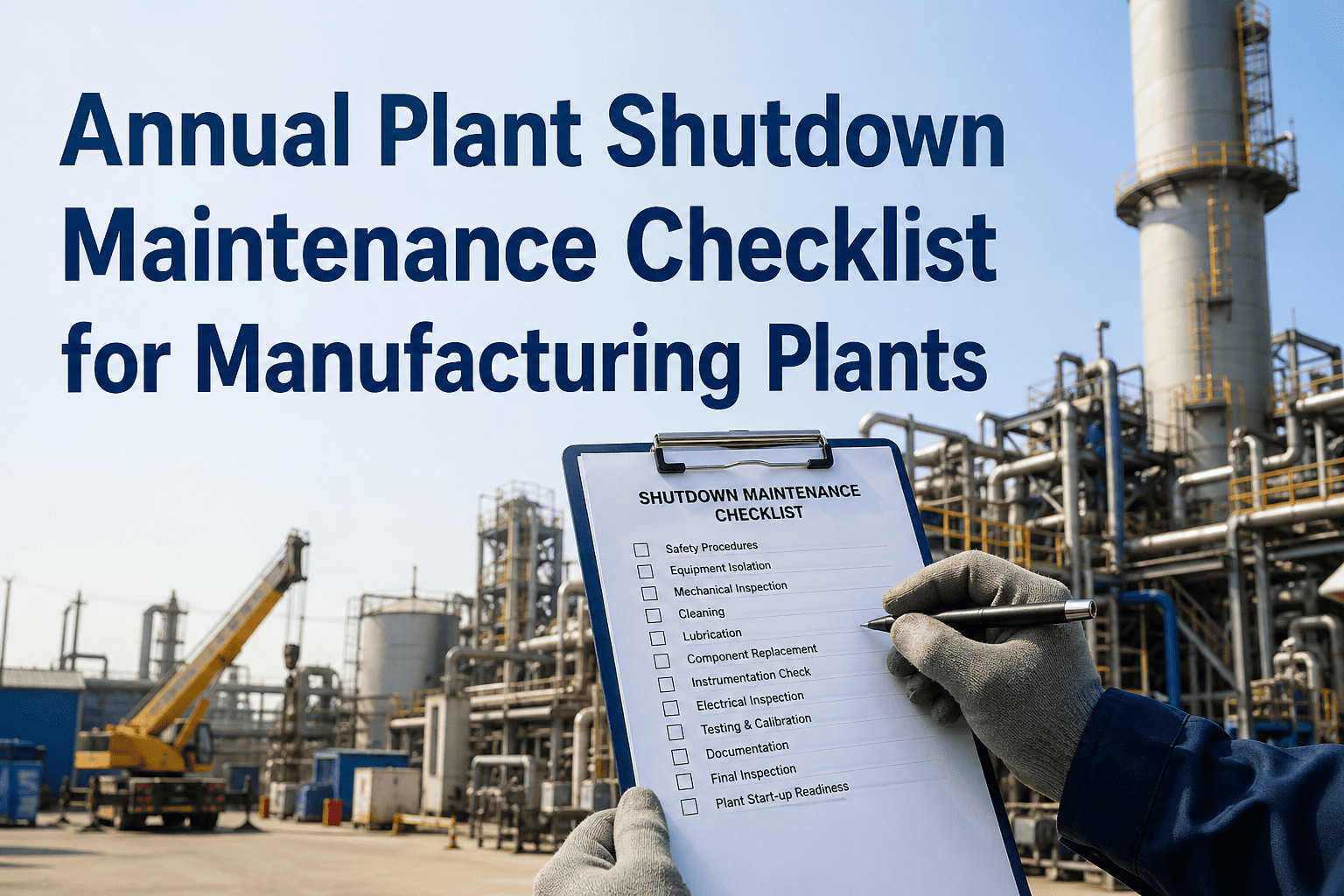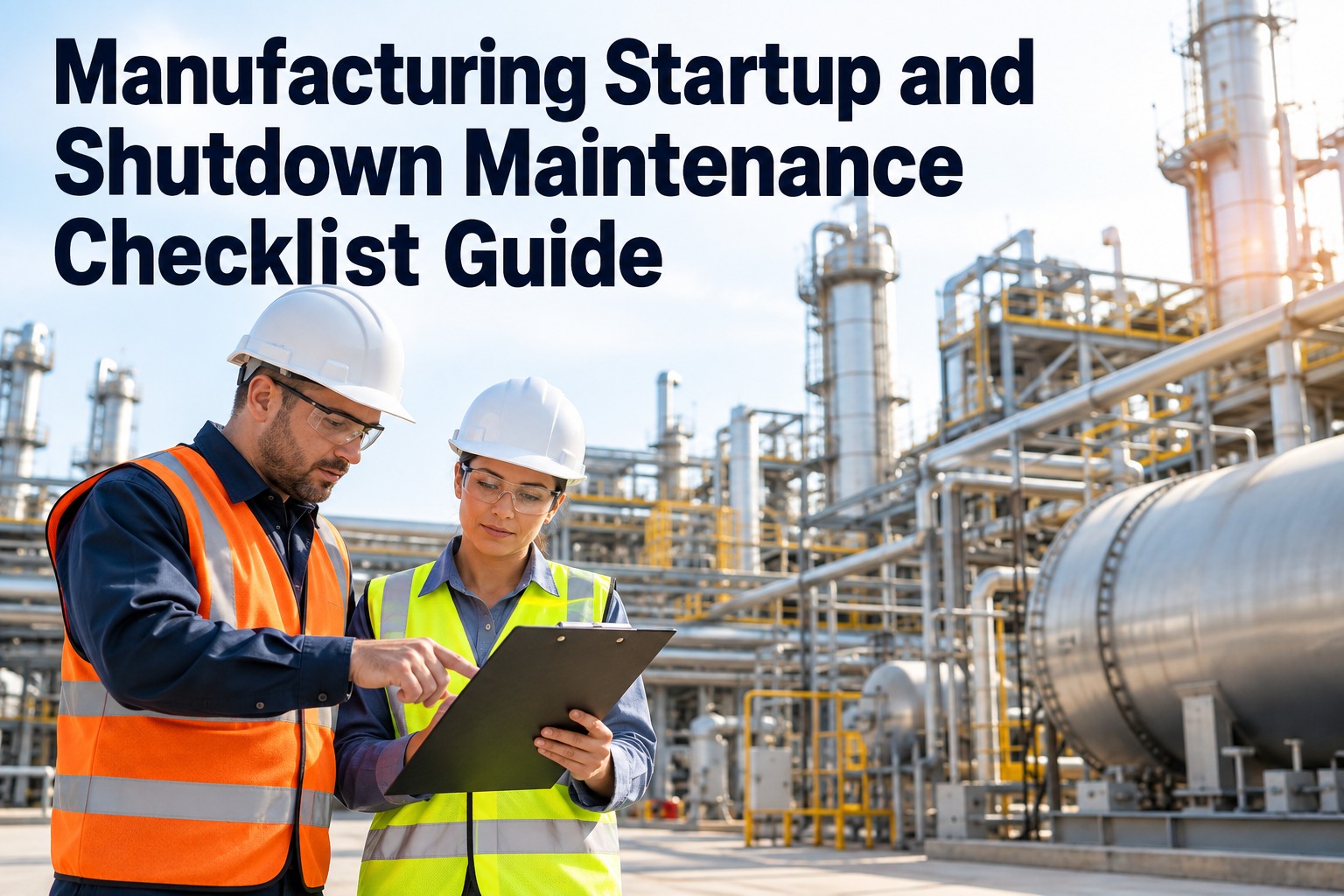
Every restart after a planned stop is a gamble on memory: did someone remove all the locks, test the e-stops, check the lubrication, ramp it slowly? Skip one step and you get a jam, a scrapped first batch, or a safety incident on the first cycle. A startup and shutdown checklist takes the guesswork out — the same steps, the same order, every time, recorded. OXMAINT AI is AI-powered maintenance management software (CMMS) that turns those checklists into assigned, signed-off work orders and rolls a full plant turnaround from scope freeze to safe restart. Book a demo to see your startup and shutdown steps tracked.
Shut Down Safe, Start Up Right — Every Cycle, on the Record
- 1Controlled shutdown
- 2Isolate & lock out
- 3Turnaround work
- 4Verified startup
The Shutdown Checklist: Stop It Without Breaking It
A rushed shutdown leaves energy trapped, work-in-progress stuck, and no record of what state the line was left in. This is the controlled sequence, upstream to downstream. Start a free trial to assign these as sign-offs.
- Stop material feed and let work-in-progress clear the line.
- Stop equipment in forward sequence, upstream to downstream.
- Ramp heating and cooling to a safe idle temperature.
- Depressurize pneumatic and hydraulic systems — gauges reading zero.
- Open and lock out main electrical disconnects per facility LOTO.
- Clean the area of scrap and debris.
- Complete the shift summary and raise work requests for anything abnormal.
The Startup Checklist: Bring It Back Without Surprises
Startup is where skipped steps show up fast — a live lock, an untested e-stop, a dry bearing. Verify before you energize, then ramp, don't slam. Book a demo to see startup sign-offs.
- Area clear of people, tools and foreign objects — supervisor walkthrough done.
- All lockout/tagout devices removed by authorized personnel only.
- Guards, gates and interlocks intact — test emergency stops before energizing.
- Air, hydraulic and electrical pressures within normal range.
- Lubrication verified on all major drive components.
- Energize motors individually with 30-second intervals; watch noise, heat, vibration.
- First-article inspection, then ramp line speed over 10–15 minutes.
Turn Every Start and Stop Into a Signed-Off Record
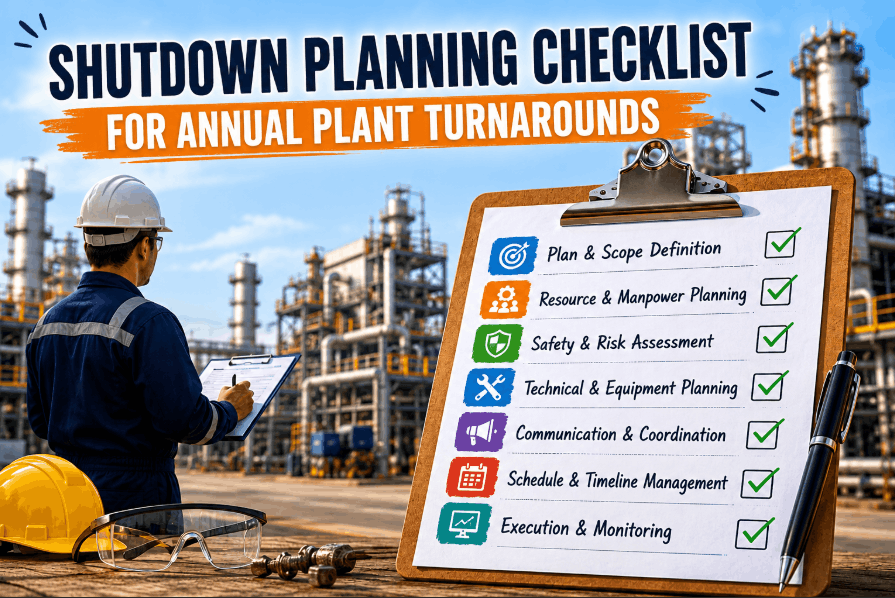
The Six Phases of a Planned Turnaround
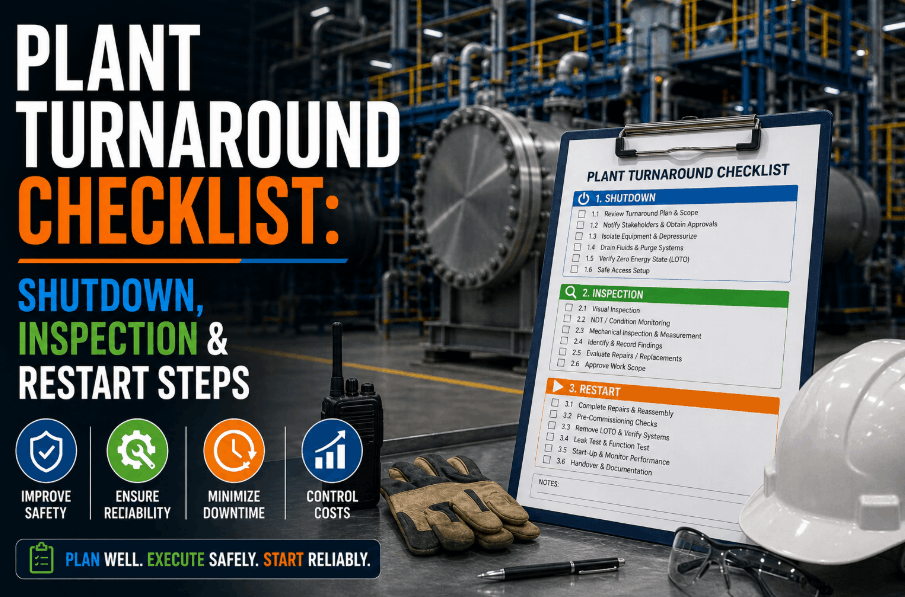
A shutdown checklist handles the daily stop and start; a turnaround is the bigger down window, and it runs on a phased plan. Skip the front phases and execution becomes chaos. Start a free trial to plan your next turnaround.
Six-phase model and scope-freeze guidance per turnaround-management practice (IDCON); startup/shutdown steps per OxMaint's production-line checklist. Adapt sequence and LOTO steps to your facility's own procedures.
Why the Checklist Belongs in the CMMS, Not on Paper
A laminated card on the wall can't prove it was followed, can't chase a missed step, and can't feed the next turnaround. A tracked checklist does all three. Book a demo to see the difference.
How OXMAINT AI Runs Startup, Shutdown and Turnaround
OXMAINT AI is maintenance management software that holds your startup and shutdown checklists, assigns each step, and sequences a full turnaround — so the safe way becomes the standard way. Start a free trial to load your checklists.
-
1
Standardize
Build startup and shutdown checklists once, versioned per line, so every crew runs the same steps. -
2
Assign
Turn each step into a work-order task with an owner and a required sign-off. -
3
Plan the window
Scope, schedule and freeze turnaround work, then run it against a master plan. -
4
Record & review
Capture completions and abnormalities, then feed the critique into the next cycle.