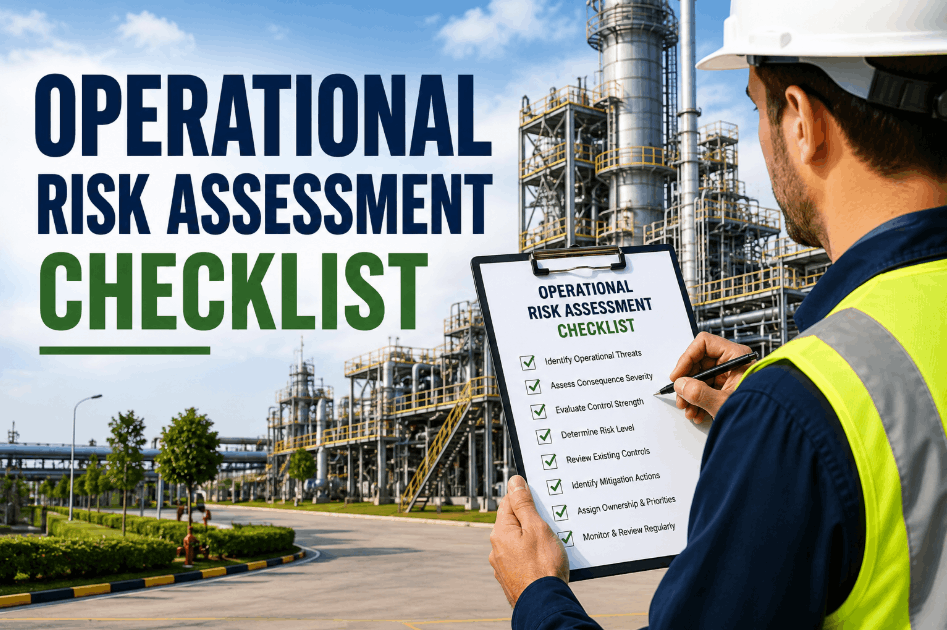
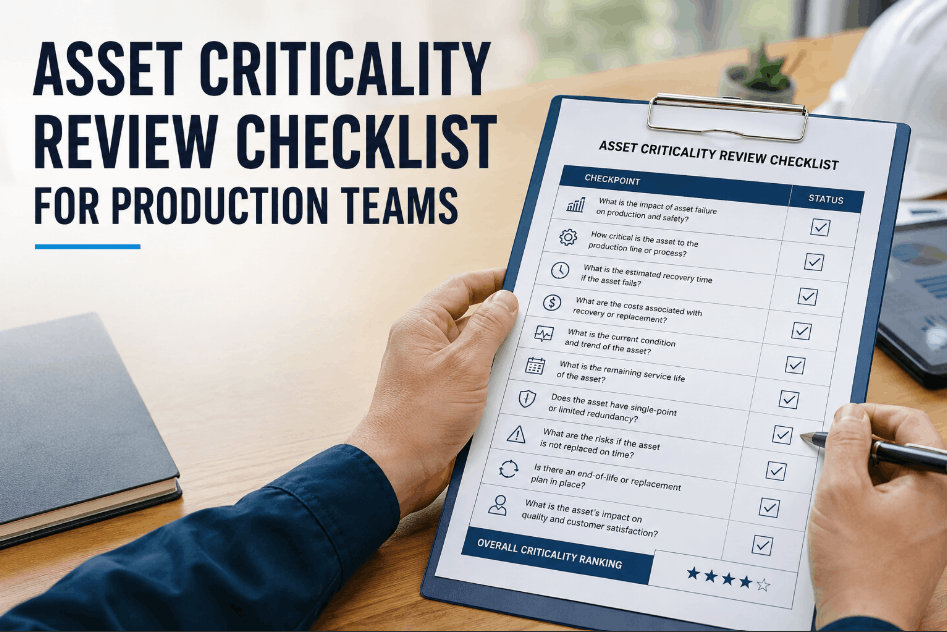
Operational risk assessment is one of the most underdisciplined processes in facility management — not because risk is unknown, but because consequence severity and control effectiveness are rarely evaluated together against a consistent framework. When operational threats accumulate without structured review, mitigation controls drift from active to assumed, and exposure levels rise inside facilities without triggering the escalation they warrant. The root causes are almost always systemic: risk registers that are not updated between formal audits, control effectiveness that is assumed rather than tested, and severity rankings that reflect initial assessment rather than current operating conditions. This checklist helps operations managers, EHS professionals, and plant engineers evaluate operational threats, confirm control strength, and validate that risk exposure levels are understood and managed before the next review cycle. Oxmaint's Sign Up Free platform gives operations teams digital risk registers, inspection-linked control verification, and corrective action tracking — so risk exposure is visible and managed rather than assumed and deferred. From hazard identification to mitigation control confirmation, unstructured operational risk review is one of the most correctable sources of unmanaged facility exposure. Book a Demo to see how Oxmaint's operations and inspection tools connect risk identification to control verification across every facility and production area. Use this checklist before your next risk review meeting or facility audit cycle to confirm that operational exposure is understood at the control level, not just documented at the threat level.
1. Operational Threat Identification & Risk Register Currency
You cannot manage operational risk from a register that does not reflect current operating conditions. Before reviewing control effectiveness, confirm that the risk register has been updated to reflect current threats — not threats identified during a prior review cycle.
2. Consequence Severity Ranking & Exposure Prioritization
Risk prioritization based on outdated severity rankings produces resource allocation decisions that do not match current exposure levels. Before reviewing controls, confirm that consequence severity reflects current operational reality — not initial assessment assumptions.
3. Mitigation Control Strength & Verification Status
Listed controls that have not been verified recently are assumptions, not protections. Before accepting current risk levels as managed, confirm that each mitigation control is active, functional, and operating as designed.
4. Incident Pattern Review & Residual Risk Validation
Residual risk levels accepted in formal assessments require validation against actual incident history. If incidents and near-misses are occurring in areas rated as adequately controlled, the control assessment is incorrect and residual risk is higher than the register reflects.
5. Risk Governance Cadence & Action Closure Discipline
Operational risk management is a continuous process, not a periodic document. Without a structured governance cadence and formal action tracking, risk assessment quality degrades between formal review cycles as conditions change and controls drift without being updated.
-audit-checklist-for-manufacturing-plants.png)