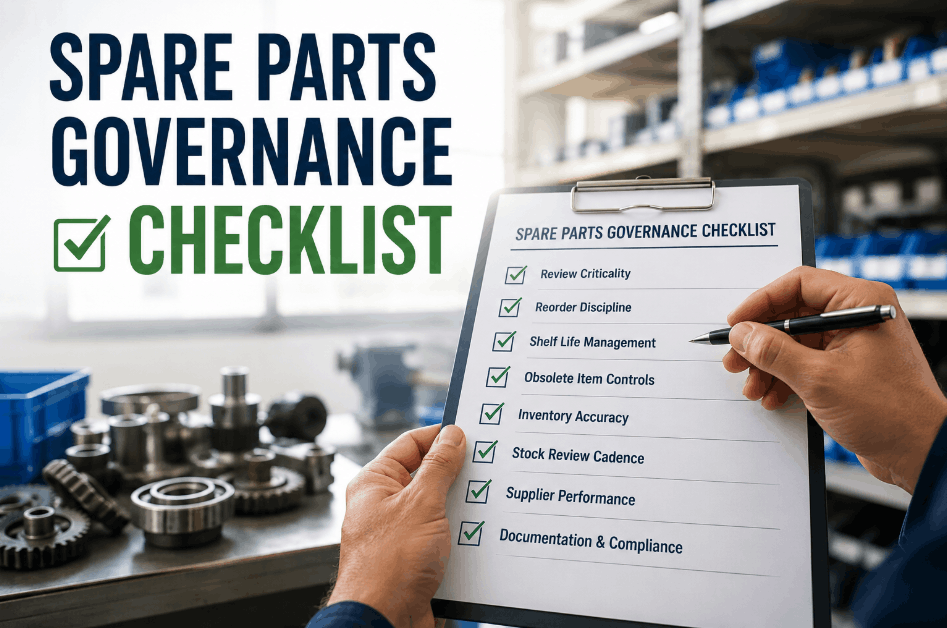
Spare parts governance erodes quietly — a critical item gets reordered late because no one flagged it as critical, a shelf-stable part expires unnoticed in a bin, and an obsolete component keeps showing up in stock counts months after the asset it served was retired. None of these are single failures; they're the result of governance reviews that happen once a year instead of on a fixed cadence. This checklist sets out the criticality, reorder, shelf-life, and obsolescence checks that keep a parts inventory tight rather than reactive. Sign Up Free to see how Oxmaint flags critical items, tracks reorder points, and links every part to the assets and work orders that consume it. If your last full inventory review is more than a quarter old, Book a Demo to see how a fixed governance cadence catches gaps before they show up as a stockout or a write-off.
1. Criticality Classification Review
A parts list with no criticality tiering treats a low-cost gasket the same as a single-source motor controller. Confirm critical items are flagged correctly and reviewed against current asset risk.
2. Reorder Point & Safety Stock Discipline
Reorder points set once at implementation and never revisited drift out of step with actual consumption. Confirm reorder logic still matches real demand before the next stockout happens.
3. Shelf Life & Storage Condition Checks
Parts with a shelf life — seals, lubricants, batteries, adhesives — degrade quietly on the shelf if no expiry tracking exists. Confirm aging stock is reviewed before it fails in service instead of in storage.
4. Obsolete & Inactive Item Controls
Parts tied to retired assets keep consuming storage space and inflating inventory value long after they're useful. Confirm obsolete items are identified, disposed of, and removed from active counts on a fixed cycle.