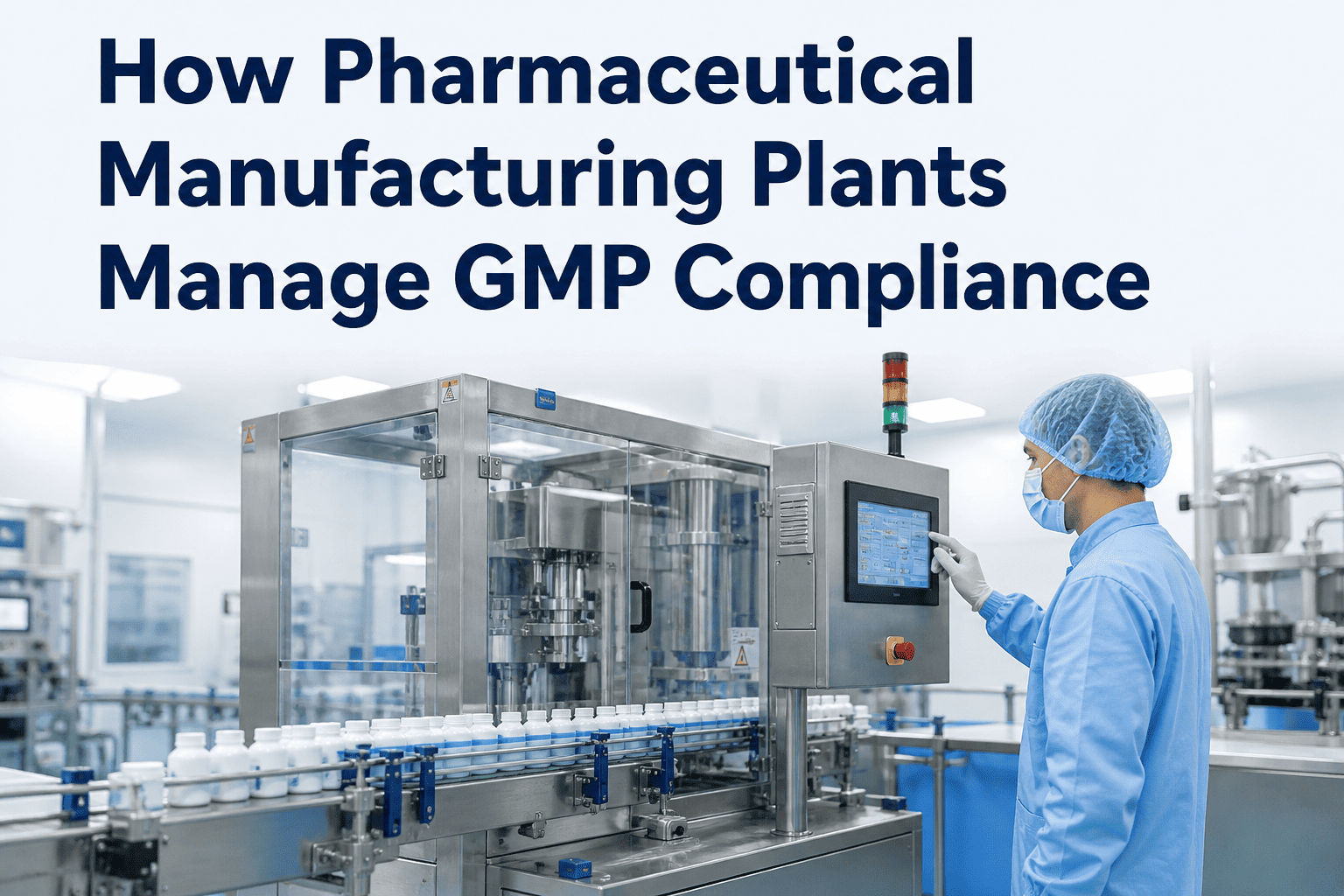
A mid-size pharmaceutical manufacturing plant in the northeastern United States was facing a critical compliance crisis. Recurring GMP violations, missed equipment calibration windows, and fragmented audit documentation had placed the facility under heightened FDA scrutiny — threatening production continuity and market authorization. Manual maintenance logs, disconnected calibration schedules, and zero real-time visibility into equipment status made defensible compliance an operational impossibility. Six months after deploying Oxmaint's CMMS platform with dedicated calibration tracking, digital audit trails, and predictive maintenance scheduling — Sign Up Free to explore the platform — the facility reduced GMP compliance violations by 80%, achieved a clean FDA audit for the first time in three years, and cut unplanned equipment downtime by 47%.
Eliminate GMP Compliance Violations — Starting in 30 Days
See how Oxmaint's CMMS gives pharmaceutical manufacturers real-time calibration tracking, tamper-proof audit trails, and predictive maintenance — deployed without IT overhead.
01 / The Facility
GMP-Regulated Manufacturing. Zero Tolerance for Compliance Failure.
Facility Type
FDA-regulated pharmaceutical manufacturing plant producing solid-dose formulations. Operations governed by 21 CFR Part 211 (cGMP for finished pharmaceuticals) and subject to periodic FDA inspections and internal quality audits.
Scale
Three production lines across one facility. Over 640 calibration-tracked assets including analytical instruments, process equipment, HVAC systems, and cleanroom monitoring units. Annual output exceeding 180 million dosage units.
Maintenance Team
11-person maintenance and reliability team. Two maintenance engineers, seven technicians across mechanical and instrumentation disciplines, two quality-adjacent coordinators managing compliance documentation and calibration records.
Compliance Baseline
Average of 14 GMP-related maintenance findings per quarter prior to deployment — including missed calibration windows, incomplete work order records, and undocumented deviations. Three consecutive FDA audit cycles with repeat observations.
Prior System
Paper-based calibration logbooks, shared spreadsheet maintenance schedules, and manually filed work order binders. No automated scheduling triggers, no digital audit trail, and no real-time equipment status visibility across production lines.
Annual Compliance Cost Exposure
Pre-deployment compliance overhead — including manual audit preparation, deviation investigations, repeat calibrations, and regulatory correspondence — estimated at $290,000 annually. Unplanned downtime attributed to maintenance failures added an estimated $410,000 in lost production value.
02 / The Challenge
When Compliance Depends on Paper, Every Audit Is a Risk
Pharmaceutical maintenance compliance is not a documentation preference — it is a regulatory requirement with production-stopping consequences. This facility's reliance on manual systems created compounding compliance exposure that no amount of technician diligence could fully contain. Calibration due dates existed in spreadsheets that were not connected to technician workflows. Deviation records were manually compiled hours after events occurred. Audit preparation consumed two full weeks of quality staff time per cycle — and still produced findings. The absence of a connected CMMS was not an efficiency problem. It was a systemic compliance liability. Book a Demo to see how Oxmaint closes these gaps across pharmaceutical operations.
14
GMP findings per quarter
Recurring maintenance-related compliance observations per audit cycle — including missed calibration intervals, incomplete work records, and undocumented equipment deviations — had placed the facility on a regulatory watch list requiring corrective action plans each quarter.
23%
Calibration overdue rate
Nearly one in four calibration-due events was either missed or completed outside the approved window — each representing a potential GMP violation, batch release risk, and regulatory observation if identified during an FDA inspection or internal quality audit.
2 weeks
Audit preparation cycle
Each FDA inspection or internal audit required two full weeks of manual document retrieval, record reconstruction, and gap analysis — diverting quality and maintenance staff from production-supporting activities and still resulting in recurring compliance findings.
47 hrs/mo
Unplanned equipment downtime
Reactive maintenance responses to equipment failures in GMP-controlled environments averaged 47 unplanned downtime hours per month — each requiring deviation reports, environmental re-qualification assessments, and production line revalidation before batch processing could resume.
"Every FDA audit started with two weeks of document archaeology. We weren't just managing maintenance — we were managing the fear of what the auditors would find that we couldn't quickly locate."
03 / The Solution
Oxmaint CMMS: Calibration Control, Audit Trails, and Predictive Maintenance Built for GMP Environments
After evaluating five CMMS platforms for GMP suitability, the quality and maintenance leadership team selected Oxmaint for its combination of structured calibration management, tamper-evident digital work order records, automated deviation logging, and predictive maintenance scheduling — all deployable without pharmaceutical-specific IT infrastructure or extended validation timelines. The platform replaced every manual compliance touchpoint with a connected digital workflow that generates audit-ready records automatically. Sign Up Free and configure your calibration schedule in under a week.
CALIBRATE
Calibration management with automated scheduling, due-date alerts, and digital certificate storage eliminated missed calibration windows. Technicians received mobile notifications before calibration deadlines — and every completed calibration generated a timestamped, tamper-evident digital record accessible instantly during audits.
AUDIT
Digital audit trail generation replaced manual logbook reconstruction. Every work order, equipment inspection, deviation record, and corrective action was automatically timestamped, user-attributed, and stored in a searchable archive — reducing audit preparation from two weeks to under four hours.
PREDICT
Predictive maintenance scheduling analyzed equipment age, usage cycles, and service history to generate proactive work orders before failures occurred — preventing the unplanned equipment stoppages that triggered costly deviation investigations and production line requalification requirements in GMP-controlled zones.
ASSETS
A structured asset registry with QR-tagged equipment records gave technicians complete service history, calibration certificates, and manufacturer service intervals at the point of work — eliminating the incomplete-information repairs that generated deviation reports and repeat maintenance events.
04 / Implementation
GMP-Ready in 34 Days. First Clean Calibration Cycle Completed in Week 3.
Days 1–7
Asset Registry and Calibration Schedule Migration
All 640+ calibration-tracked assets catalogued into Oxmaint's asset registry — including analytical instruments, production equipment, environmental monitoring systems, and cleanroom HVAC units. Existing calibration certificates and paper logbook records digitized and linked to asset profiles. QR asset tags printed and installed across all tracked equipment. Calibration intervals configured per manufacturer specifications and internal SOP requirements.
Days 8–16
Predictive Maintenance Configuration and Mobile Deployment
Oxmaint's predictive scheduling engine configured using equipment service histories, production cycle counts, and criticality classifications for GMP-controlled assets. Mobile platform deployed across all 11 team devices with offline capability tested across production floor environments. Automated calibration due-date alerts activated. First system-generated predictive work orders issued on day 14 — identifying nine instruments approaching calibration expiry and four process assets flagged as high-risk for unplanned failure.
Days 17–27
Parallel Operations, Role Training, and Deviation Workflow Setup
Ten-day parallel period running paper and digital systems concurrently. Maintenance technicians completed platform training in 2 hours; quality coordinators in 3.5 hours; maintenance engineers in 4 hours including deviation workflow configuration. Digital deviation logging activated and integrated with corrective action tracking. By day 27, all 11 team members rated themselves operationally confident on the platform.
Days 28–34
Full Digital Cutover and Compliance Dashboard Activation
Complete paper elimination across all three production lines. Supervisor compliance dashboards activated with real-time calibration status, open work order visibility, and asset alert monitoring. Automated audit trail generation confirmed across all work order types. First digital compliance summary report generated in 3.5 hours — replacing a process that previously required 14 days of manual preparation. Facility submitted its first digital-record-supported internal audit within 30 days of cutover.
05 / Results
6 Months of Measurable Compliance and Operational Transformation
The transition from paper-based compliance management to Oxmaint's connected CMMS produced measurable results that exceeded the facility's regulatory and operational targets within the first two audit cycles. GMP findings dropped sharply as automated calibration tracking eliminated missed intervals and digital audit trails replaced manual record reconstruction. The first FDA inspection conducted after Oxmaint deployment produced zero repeat observations — a milestone the facility had not achieved in three consecutive audit cycles. Book a Demo to map your facility's compliance outcomes.
| Metric |
Before Oxmaint |
After Oxmaint |
Change |
| GMP compliance findings per quarter |
14 findings/quarter |
3 findings/quarter |
−80% violations |
| Calibration overdue rate |
23% |
1.4% |
−94% overdue events |
| Audit preparation time |
14 days manual |
Under 4 hours |
−97% prep time |
| Unplanned equipment downtime (monthly) |
47 hrs/month |
25 hrs/month |
−47% downtime |
| Repeat maintenance events (30-day window) |
19% |
5% |
−74% repeat visits |
| Work order record completeness |
58% |
100% |
100% complete records |
| FDA repeat observations (latest audit) |
3 repeat findings |
0 repeat findings |
Zero repeat observations |
| Predictive work orders issued (monthly) |
0 |
58/month |
From zero to 58/mo |
| Deviation investigation cycle time |
6.2 days average |
2.1 days average |
−66% faster resolution |
| Paper-based compliance records |
100% paper |
0% paper |
Fully digital |
−80%
GMP violations reduced
"The first FDA audit after deploying Oxmaint was the first one in three years where we walked in confident instead of anxious. Zero repeat observations. Every record was there, timestamped, and traceable."
06 / Key Analysis
Why the Compliance Transformation Was This Significant
01
Automated calibration scheduling eliminated the single largest source of GMP findings. The facility's 23% calibration overdue rate was not a technician failure — it was a scheduling system failure. Manual spreadsheet calendars were not connected to work order routing, which meant due dates passed without triggering action. Oxmaint's automated calibration alerts and mobile-delivered work orders made overdue calibrations structurally impossible, dropping the overdue rate to 1.4% within the first 60 days of deployment.
02
Digital audit trails converted inspection preparation from a two-week crisis into a four-hour report pull. Under the manual system, audit preparation required physically locating paper logbooks, reconstructing maintenance timelines from fragmented spreadsheet records, and manually cross-referencing calibration certificates against work order dates. Oxmaint's timestamped, user-attributed digital records — searchable by asset, date range, technician, or work order type — made the same documentation retrieval a supervisor-level task completed in hours, not weeks.
03
Predictive maintenance intercepted GMP-critical equipment failures before they triggered deviation events. In pharmaceutical manufacturing, unplanned equipment stoppages in controlled environments do not end with a repair — they initiate deviation investigations, environmental re-monitoring, and potentially batch rejection decisions. Oxmaint's predictive scheduling identified at-risk assets before failure, generating proactive work orders that resolved developing equipment issues during planned maintenance windows rather than during active production runs. The 47% reduction in unplanned downtime hours directly reduced the facility's deviation investigation workload and associated compliance documentation burden. Sign Up Free to see predictive scheduling in action for your facility.
04
Complete digital asset records enabled defensible repair-versus-replace decisions for GMP-critical equipment. With full maintenance cost histories now tracked per asset, the engineering team identified seven instruments whose cumulative repair spend and repeat calibration failure rate exceeded the threshold for planned replacement. Scheduled replacements in the facility's next capital cycle are projected to eliminate an estimated $67,000 in recurring calibration and repair expenditure — a decision that paper-based records structurally prevented the team from quantifying or defending to finance and quality leadership. Book a Demo to explore how Oxmaint builds this asset intelligence for your operation.
07 / Business Impact
Beyond Compliance: What the Transformation Protected at Facility Level
Regulatory Standing
The facility's first clean FDA audit in three consecutive cycles removed it from the agency's heightened observation list — reducing regulatory correspondence burden, eliminating the cost of external consultant-assisted corrective action plan preparation, and restoring full operational credibility with the facility's largest distribution partners.
Production Continuity
Reducing unplanned downtime by 47% across three production lines translated directly to recovered batch output and eliminated the requalification delays that had periodically disrupted scheduled manufacturing campaigns. The facility met its annual production volume targets for the first time in two years in the six months following deployment.
Quality Team Reallocation
Recovering 14 days of manual audit preparation time per inspection cycle freed quality coordinators to redirect effort toward proactive SOP review, supplier qualification activities, and change control documentation — strategic quality functions that had been consistently deprioritized due to reactive compliance documentation demands.
Financial Risk Reduction
Eliminating the compliance findings that had required formal CAPA submissions reduced the facility's external regulatory affairs consulting expenditure by an estimated $78,000 annually. Reduced unplanned downtime contributed an additional $193,000 in recovered production value — a combined financial benefit of approximately $271,000 per year against the pre-deployment compliance overhead baseline.
14
GMP findings/quarter before
3
GMP findings/quarter after
$271K
Annual savings recovered
Ready to Replace Paper Compliance with Digital Certainty?
Oxmaint's pharmaceutical CMMS delivers automated calibration scheduling, tamper-proof audit trails, and predictive maintenance — without extended validation timelines or IT-heavy deployment. See how it maps to your facility's GMP requirements.
09 / FAQ
Frequently Asked Questions
How does a CMMS help pharmaceutical plants reduce GMP compliance violations?
A pharmaceutical CMMS automates calibration scheduling, generates tamper-evident digital work order records, and creates real-time audit trails — eliminating the missed intervals, incomplete records, and manual documentation gaps that produce the majority of GMP maintenance-related findings. Oxmaint's platform makes every maintenance event automatically timestamped, traceable, and audit-ready without additional compliance documentation work.
Can Oxmaint manage equipment calibration schedules for FDA-regulated environments?
Yes. Oxmaint supports calibration interval configuration per equipment type, automated due-date alerts, mobile-delivered calibration work orders, and digital certificate storage linked to asset records — providing the scheduling automation and documentation completeness required in 21 CFR Part 211-regulated manufacturing environments.
How long does it take to deploy Oxmaint in a pharmaceutical manufacturing facility?
Facilities with existing asset lists and calibration records typically reach full digital operation in 30–40 days. This facility — with 640+ tracked assets and 11 team members — was fully deployed and paper-free in 34 days, with the first clean calibration cycle completed in week three.
Does Oxmaint generate audit trails suitable for FDA inspections?
Oxmaint generates timestamped, user-attributed digital records for every work order, calibration event, inspection, and deviation log — searchable by asset, date, technician, or event type. This facility reduced audit preparation from 14 days of manual reconstruction to under 4 hours using Oxmaint's digital record archive.
What is the ROI timeline for a pharmaceutical CMMS investment?
Facilities with high calibration overdue rates and manual compliance documentation typically recover platform costs within two to three quarters through reduced regulatory consulting spend, eliminated repeat corrective action plans, and recovered production output from reduced unplanned downtime. This facility achieved an estimated $271,000 in annual savings within six months of deployment.
Can Oxmaint support predictive maintenance for GMP-critical production equipment?
Yes. Oxmaint's predictive scheduling engine analyzes equipment service history, usage patterns, and maintenance frequency to generate proactive work orders before failures occur — preventing the unplanned stoppages in GMP-controlled zones that trigger deviation investigations and batch release holds.
Does Oxmaint require pharmaceutical-specific IT infrastructure or validation support?
No. Oxmaint is designed for existing operations and quality teams to configure and deploy independently, without dedicated IT infrastructure or external validation consultants. This facility's 11-person team completed full deployment — including asset registry setup, calibration schedule configuration, and team training — in 34 days without external implementation support.
80% Fewer GMP Violations. Zero FDA Repeat Observations. Deployed in 34 Days.
640 tracked assets. Automated calibration management. Digital audit trails from day one. See what Oxmaint delivers for your pharmaceutical facility.


-guide-for-maintenance-teams.png)