-guide-for-maintenance-teams.png)
Pharmaceutical equipment qualification is not a regulatory checkbox — it is the operational backbone of every compliant manufacturing facility. IQ, OQ, and PQ protocols define whether your equipment is installed correctly, operating within validated parameters, and consistently delivering product quality that meets regulatory standards. For maintenance teams managing FDA 21 CFR Part 11, EU GMP Annex 15, and ICH Q7 requirements, a structured qualification program backed by a purpose-built CMMS is the only sustainable path to audit readiness. Sign Up Free to start managing your pharmaceutical equipment qualification workflows inside OxMaint from day one.
Manage IQ OQ PQ Qualification with OxMaint CMMS
OxMaint helps pharmaceutical maintenance teams track qualification status, automate requalification triggers, and maintain audit-ready documentation across every validated asset in your facility.
What Is IQ OQ PQ in Pharmaceutical Manufacturing
Equipment qualification in pharmaceutical manufacturing follows a three-phase validation lifecycle that ensures every piece of critical equipment is fit for its intended GMP use. Installation Qualification (IQ) confirms that equipment is installed according to manufacturer and design specifications. Operational Qualification (OQ) verifies that equipment operates within defined parameters across its full operating range. Performance Qualification (PQ) demonstrates that the equipment consistently performs as required under actual production conditions. Together, these three phases form an unbroken evidentiary chain that regulators expect to be maintained — not just completed once. Book a Demo to see how OxMaint tracks qualification phase status across your entire validated asset registry in real time.
The Three Phases of Equipment Qualification Explained
Installation Qualification
Confirms the equipment is delivered, installed, and configured per approved design specifications. Covers utility connections, calibration baseline, and documentation of all components against the URS and DQ.
- Equipment identity and serial verification
- Utility connection validation (electrical, pneumatic, water)
- P&ID and drawing reconciliation
- Instrument calibration baseline
- Safety and interlock confirmation
Operational Qualification
Demonstrates the equipment operates reliably within specified limits across all defined operating ranges, including worst-case conditions. OQ is where alarm setpoints, control logic, and process limits are challenged and documented.
- Operating range testing (high, low, setpoint)
- Alarm and interlock functional testing
- Control system and software verification
- Cleaning and sanitization cycle validation
- Worst-case challenge protocol execution
Performance Qualification
Proves the equipment consistently delivers product meeting quality specifications under real production conditions. PQ integrates equipment, process, personnel, and materials into a holistic evidence package for regulatory review.
- Process simulation and actual batch runs
- Repeated cycle confirmation across multiple batches
- Environmental and process variable monitoring
- Product quality attribute testing
- Summary report and regulatory submission readiness
Why Qualification Documentation Fails Audits
Most pharmaceutical facilities complete IQ OQ PQ at installation — and then lose track of requalification obligations as equipment ages, undergoes maintenance, or is modified. Audit findings consistently cite the same documentation gaps: missing requalification records after major repairs, undocumented change control linkages, and calibration certificates that expired before PQ renewal. Sign Up Free to centralize all qualification records inside OxMaint's validated document management system, always audit-ready and version-controlled.
No Requalification Trigger System
Without automated requalification triggers linked to maintenance events, facilities miss the mandatory revalidation window after major repairs, component replacements, or process changes — creating silent compliance gaps.
Paper-Based Qualification Records
Manual binders and disconnected spreadsheets cannot provide the tamper-evident audit trail required by FDA 21 CFR Part 11. During inspections, retrieving, verifying, and presenting paper records under time pressure leads to avoidable observations.
Change Control Not Linked to Qualification
When maintenance work orders, spare part changes, or software updates are not automatically flagged against qualification scope, facilities perform change control in isolation — leaving requalification requirements undetected until an audit surfaces them.
Calibration and PM Records Siloed from Qualification
Calibration certificates and preventive maintenance records that live outside the qualification file break the evidence chain regulators expect to follow from IQ through ongoing operational compliance.
IQ OQ PQ Documentation: What Each Phase Requires
Regulatory agencies expect a complete, traceable documentation package for each qualification phase. The following checklist covers the minimum documentation requirements that maintenance teams must control and maintain across the equipment lifecycle. Book a Demo to see how OxMaint's smart document management links qualification records directly to asset profiles, work orders, and calibration events.
Requalification: When Maintenance Triggers Revalidation
Every maintenance event on a validated pharmaceutical asset is a potential requalification trigger. The failure to systematically evaluate maintenance work against qualification scope is one of the most common sources of GMP non-conformance in pharmaceutical plants. Maintenance teams must understand which events require partial or full requalification — and have a system in place that makes that determination automatic. Sign Up Free to configure requalification triggers inside OxMaint that automatically flag work orders on validated assets for qualification impact review.
Major Component Replacement
Replacing a pump head, motor, control module, or sensor on validated equipment typically requires OQ or full IQ/OQ/PQ requalification. Part-for-like replacements may only require documented equivalency review, but must be formally assessed.
Software or Firmware Updates
Any change to PLC logic, HMI software, or control parameters on validated equipment triggers change control and typically requires OQ re-execution to confirm operating parameter integrity post-update.
Relocation or Facility Modification
Moving equipment to a new location or modifying the surrounding utility infrastructure triggers IQ requalification at minimum, as installation conditions, utility connections, and environmental parameters change.
Out-of-Specification Calibration Findings
When a calibration event reveals an instrument was operating outside its qualified range, all batches produced since the last in-specification calibration are potentially affected — and OQ or PQ requalification may be required.
Extended Idle or Shutdown Periods
Equipment that has been idle beyond the requalification interval defined in its validation plan requires re-execution of OQ and PQ protocols before returning to validated production use — regardless of physical condition.
Automate Requalification Triggers Across Every Validated Asset
OxMaint links maintenance work orders, calibration records, and change control events to your qualification register — automatically surfacing requalification obligations before they become audit findings.
How OxMaint CMMS Supports Pharmaceutical Equipment Qualification
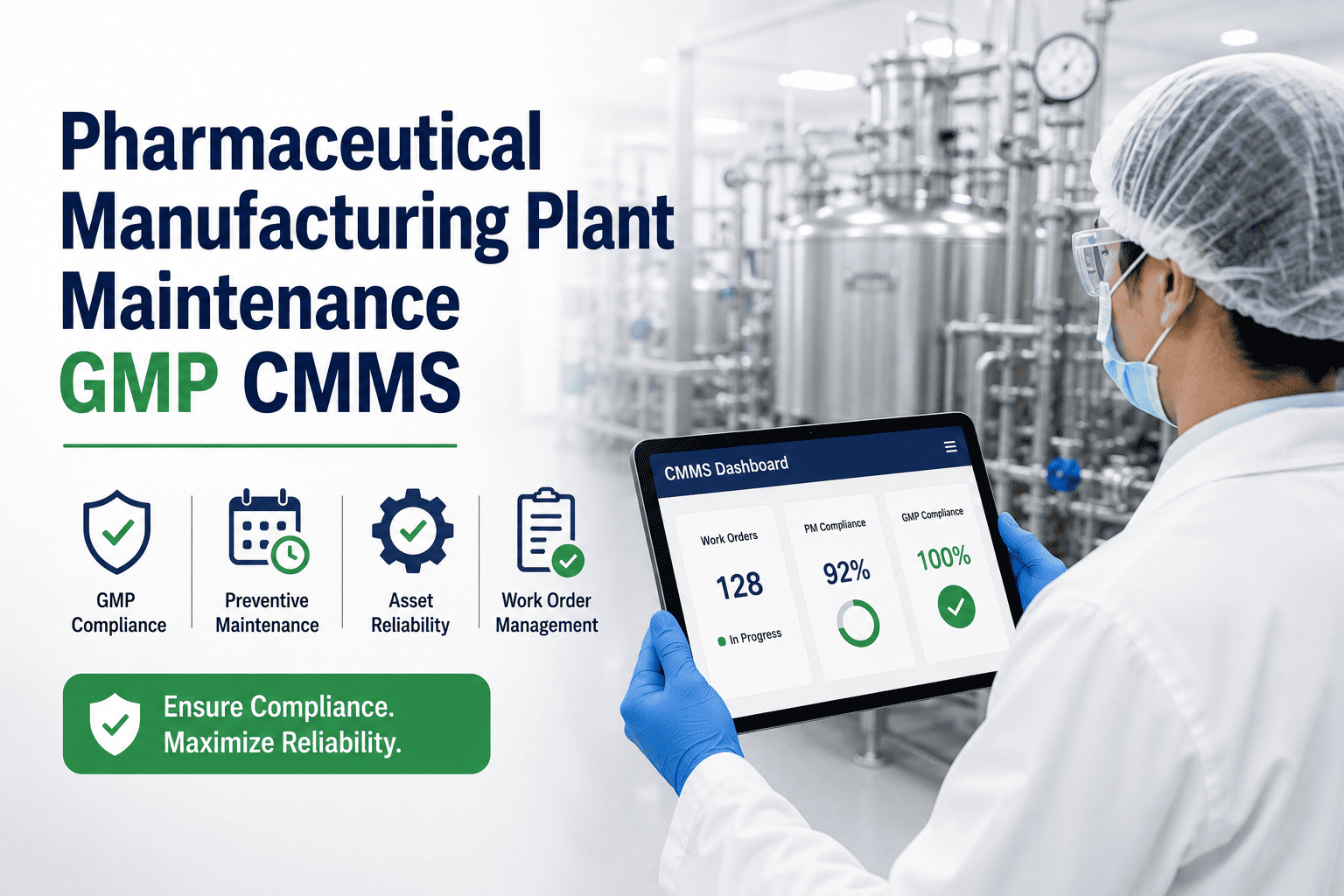
OxMaint is a purpose-built CMMS platform that gives pharmaceutical maintenance teams the compliance infrastructure to manage IQ OQ PQ qualification from initial installation through ongoing operational requalification. From smart document management and calibration tracking to work order change control linkage and audit-ready reporting, OxMaint replaces fragmented qualification management with a single validated data environment. Book a Demo to see how pharmaceutical manufacturers use OxMaint to maintain qualification compliance without increasing headcount.
- Qualification records in disconnected binders and spreadsheets
- No automated requalification triggers after maintenance events
- Calibration and PM records siloed from qualification files
- Change control assessments performed manually and inconsistently
- Audit preparation requires weeks of manual record compilation
- All qualification documents linked directly to asset profiles
- Requalification alerts triggered automatically from maintenance work orders
- Calibration certificates and PM records integrated into qualification evidence
- Change control impact flags built into every work order workflow
- Real-time audit dashboard with full qualification status visibility
Frequently Asked Questions: Pharmaceutical Equipment Qualification
What is the difference between IQ, OQ, and PQ in pharmaceutical manufacturing?
IQ confirms correct installation per design specs, OQ verifies the equipment operates within defined parameters, and PQ demonstrates consistent performance under real production conditions. All three phases must be completed and documented to achieve validated status.
When is requalification required for pharmaceutical equipment?
Requalification is required after major component replacements, software changes, equipment relocation, out-of-specification calibration findings, and extended idle periods beyond the validated requalification interval defined in the validation plan.
How does a CMMS support pharmaceutical equipment qualification?
A CMMS like OxMaint links maintenance work orders, calibration events, and change control records directly to each asset's qualification file — automatically surfacing requalification obligations and maintaining the full audit trail regulators require.
What documentation is required for IQ OQ PQ compliance?
Each phase requires an approved protocol, raw test data, calibration records, deviation reports, and a qualification summary report. All records must maintain version control, traceability, and tamper-evident integrity per FDA 21 CFR Part 11.
Does preventive maintenance affect pharmaceutical equipment qualification status?
Yes. PM activities that involve component replacement, parameter adjustments, or software updates on validated equipment must be assessed against qualification scope. Unassessed maintenance is a common source of audit observations in pharma facilities.
What is the qualification impact of an out-of-specification calibration result?
An OOS calibration finding triggers a retrospective impact assessment covering all batches produced since the last in-specification calibration, and may require OQ or PQ requalification before the equipment can return to validated use.
Make Pharmaceutical Equipment Qualification Audit-Ready — Always
OxMaint gives pharmaceutical maintenance teams the qualification tracking, requalification automation, and document management infrastructure to stay compliant through every inspection, every maintenance event, and every product lifecycle change.