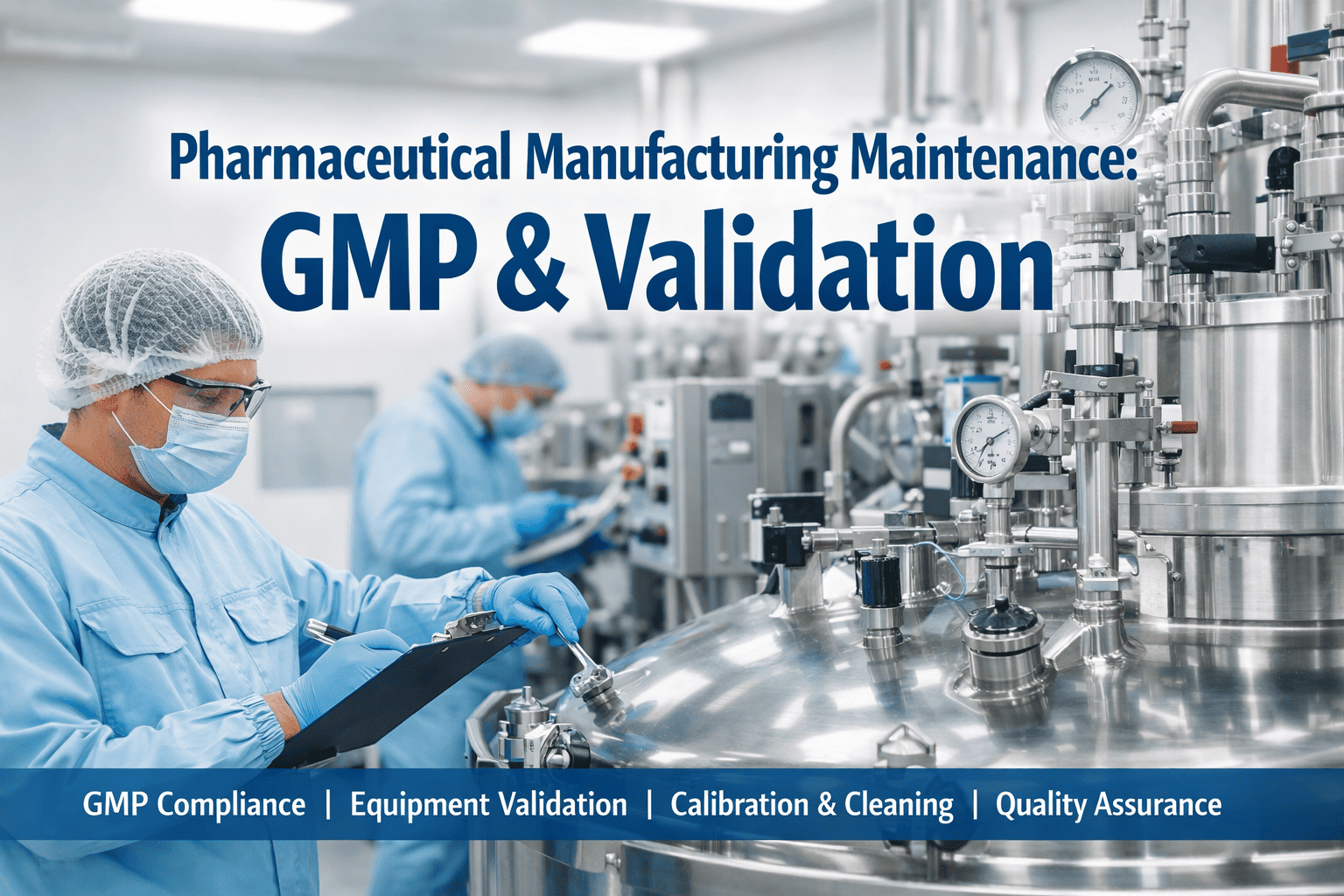
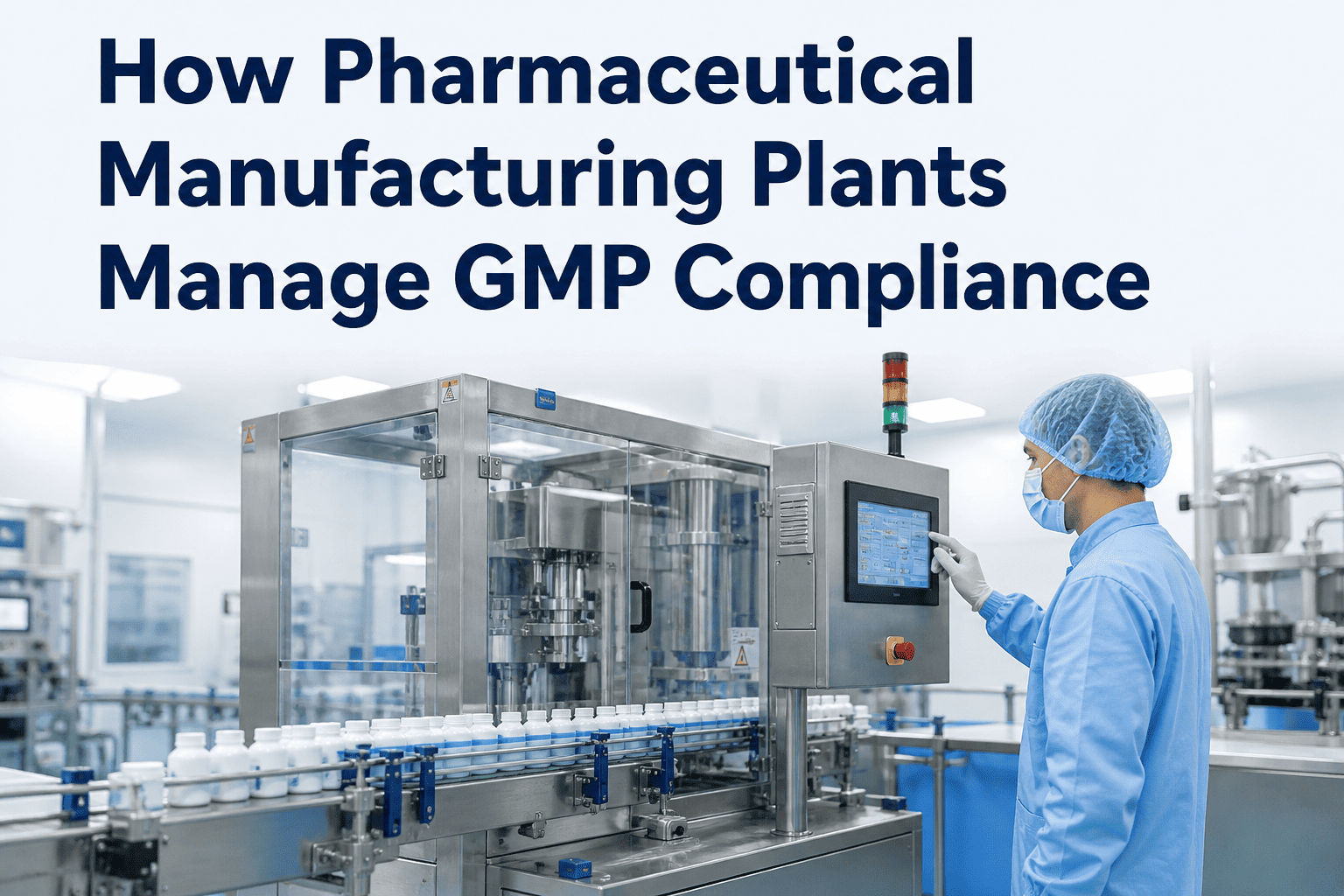
Pharmaceutical manufacturing plants operate under some of the strictest regulatory standards in the world. A single documentation gap, missed calibration, or untracked maintenance event can trigger an FDA Form 483 observation — and escalate to a Warning Letter that costs millions in regulatory holds, product recalls, and remediation. Plants that maintain 99%+ GMP compliance don't just follow rules — they use systems that automate calibration tracking, generate tamper-proof audit trails, and keep every work order, signature, and inspection record inspection-ready at all times. This guide breaks down how pharmaceutical manufacturers manage GMP compliance across 21 CFR Part 11, calibration management, audit documentation, and daily maintenance — and how CMMS software built for pharma replaces scattered spreadsheets with validated, FDA-ready workflows that keep your facility compliant between inspections, not just during them. Book a demo to see how Oxmaint supports pharma GMP compliance from day one.
67%
of FDA pharma inspections cite incomplete electronic records under 21 CFR Part 11
$2.4M
average exposure per Warning Letter from audit trail and documentation failures
10–50x
cost of non-compliance versus implementing a Part 11-compliant CMMS from the start
The 4 Pillars of GMP Compliance Every Pharma Plant Must Manage
GMP compliance in pharmaceutical manufacturing is not a single checklist. It spans equipment qualification, calibration, documentation control, and personnel training — all of which must be documented, traceable, and audit-ready on demand.
01
Equipment Qualification
Every critical piece of manufacturing equipment must be Installation Qualified (IQ), Operationally Qualified (OQ), and Performance Qualified (PQ). Records must demonstrate the equipment performs within validated parameters before product is made on it.
Risk if missed: Batch invalidation, product recall, regulatory hold
02
Calibration Management
Instruments used in critical measurements — temperature, pressure, pH, weight — must be calibrated on validated schedules. Every calibration must be documented with instrument ID, date, result, technician signature, and next due date.
Risk if missed: Out-of-specification results, batch rejection, 483 observations
03
21 CFR Part 11 Records
Electronic records and signatures used to demonstrate FDA compliance must have complete audit trails, user authentication, data integrity controls, and system validation documentation. Paper printouts of digital records do not satisfy inspectors.
Risk if missed: Form 483 observations, Warning Letters, import holds
04
Preventive Maintenance
GMP requires documented PM schedules for all equipment that impacts product quality. Overdue PM work orders, unsigned completion records, or gaps in maintenance history are common inspection findings that delay product release.
Risk if missed: Equipment failure during production, compliance deviations
Oxmaint for Pharmaceutical Manufacturing
Your Audit Trail Is Either Ready Today — Or It Becomes a Crisis During Inspection
Oxmaint gives pharmaceutical plants validated maintenance records, automated calibration schedules, electronic signatures with role-based access, and IQ/OQ/PQ documentation that satisfies FDA inspection requirements. No scrambling. No missing records. No 483 observations from documentation gaps.
21 CFR Part 11: What Pharma Plants Get Wrong
Most pharmaceutical facilities believe their CMMS is Part 11 compliant. FDA inspectors frequently find otherwise. The gap between having electronic records and having compliant electronic records is where Warning Letters are issued.
Requirement 1
Audit Trail Completeness
Every record creation, modification, or deletion must be logged automatically with a timestamp, user identity, and reason for change. If an inspector asks who changed a batch record and when — you must show it in under 2 hours.
Spreadsheets: Not compliant
Validated CMMS: Compliant
Requirement 2
Electronic Signature Authentication
Electronic signatures must be linked to their signers, non-repudiable, and captured with a unique login. Shared accounts, generic passwords, or "signed by department" entries are direct 483 findings during inspection.
Paper-based: Deficient
Validated CMMS: Compliant
Requirement 3
Data Integrity Controls
Records must be protected from unauthorized modification. Systems that allow edits without logging, or that store data in user-editable formats like Excel, fail this requirement outright — regardless of access password controls.
Excel/CSV: Not compliant
Validated CMMS: Compliant
Requirement 4
System Validation Documentation
The software system itself must be validated with IQ, OQ, and PQ protocols. Using an unvalidated system for GMP records — even if the records themselves look correct — is a compliance violation that inspectors cite immediately.
Generic CMMS: Requires manual validation
Oxmaint: Pre-configured validation package
Inspection Readiness Timeline
How fast can you produce these records when an FDA inspector walks in?
All calibration records for the past 3 years
Paper: 2–4 days
CMMS: Under 10 min
PM completion history for a specific equipment ID
Spreadsheet: Hours of searching
CMMS: Instant filter
Who signed which work order and when
Paper: May not exist
CMMS: Full audit trail
Overdue maintenance items at time of batch release
Manual: Unknown until asked
CMMS: Real-time dashboard
System validation documentation (IQ/OQ/PQ)
Generic CMMS: You build it yourself
Oxmaint: Included on deployment
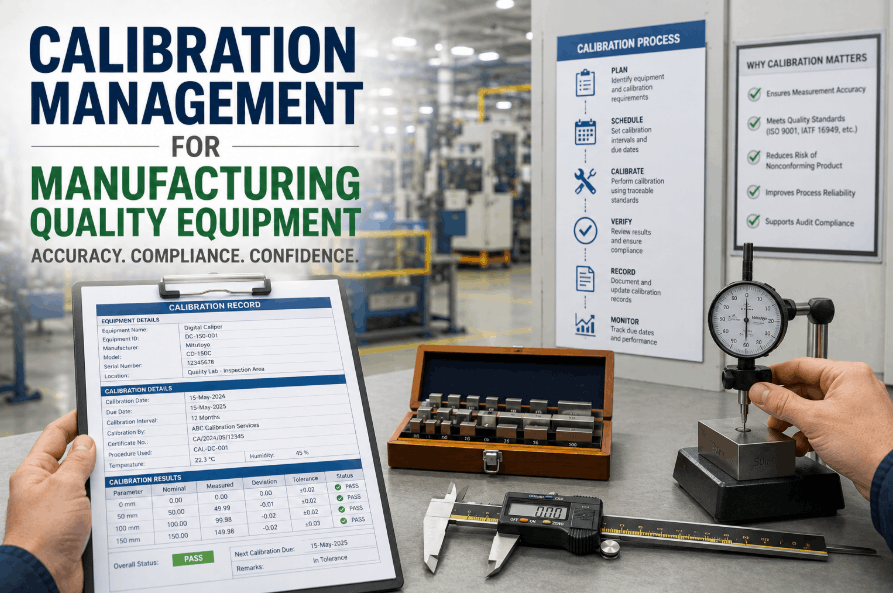
Calibration Management: The Most Common FDA Inspection Finding
Calibration failures are the most frequently cited GMP deficiency during FDA inspections. The problem is rarely that equipment was not calibrated — it's that documentation cannot be retrieved, intervals were not validated, or signatures are missing from records.
Step 1
Asset Registration
Every instrument subject to calibration is registered with a unique ID, calibration interval, acceptable tolerance range, and responsible technician. No instrument falls through the cracks.
→
Step 2
Automated Scheduling
Calibration due dates trigger automatically. Alerts go to the responsible team member 30 days, 14 days, and 7 days before due — with escalation if no action is taken before the deadline.
→
Step 3
Digital Record Capture
Technicians record calibration results on mobile — with before and after readings, standard reference ID, pass/fail status, and authenticated electronic signature. All timestamped and immutable.
→
Step 4
Deviation Handling
When a calibration fails, the system automatically flags all batches produced on that instrument since the last successful calibration — generating the deviation record inspectors expect to see.
→
Step 5
Audit-Ready Export
Complete calibration history for any instrument exports as a tamper-evident PDF with full audit trail — ready for FDA inspectors, internal audits, or batch release reviews in minutes.
Critical Instruments by GMP Category
Stop Building Audit Trails After the Inspector Arrives
Oxmaint Automates Calibration Scheduling, PM Records, and 21 CFR Part 11 Documentation for Pharma Plants
From instrument calibration certificates to electronic work order signatures — Oxmaint captures every record in a validated, tamper-proof system that FDA inspectors accept. No manual compilation. No missing signatures. No last-minute scramble before audits.
How Pharma Plants Prepare for FDA Inspections
Plants that perform well during unannounced FDA inspections share one trait — their compliance documentation is always current, not assembled at the last minute. Here is how inspection-ready pharma plants structure their maintenance and compliance programs.
Centralized record system
All maintenance, calibration, and PM records stored in one validated database — searchable by asset ID, date range, technician, or work order number within seconds.
Pre-built inspection reports
Calibration history, PM compliance rate, overdue maintenance, and equipment status reports generated on demand — not built manually when the inspector asks for them.
Deviation and CAPA linkage
Every out-of-calibration event, equipment failure, or missed PM is linked to a corresponding corrective action record — showing inspectors that your quality system closed the loop.
Equipment status labels
Every piece of equipment carries a current status — qualified, under maintenance, out of calibration, or quarantined — updated in real time through the CMMS. Inspectors verify equipment is only used when qualified.
Maintenance history depth
FDA inspectors typically request 2–3 years of maintenance history for critical equipment. Plants without a validated CMMS frequently cannot produce complete records for this timeframe.
Change control documentation
Any modification to equipment, process parameters, or validated systems must be documented with approval signatures before implementation — not retroactively after an inspection notice.
Technician qualification proof
Inspectors verify that the person who performed a calibration or PM was trained and qualified to do so. Training records must be linkable to specific work orders and personnel IDs.
SOP acknowledgment records
Every standard operating procedure revision requires documented re-training acknowledgment from affected personnel. Gaps here are one of the most common inspection findings across pharma facilities.
Role-based access controls
Inspectors verify that only authorized personnel can approve records, close work orders, or modify calibration data. Shared logins or missing access controls result in immediate Part 11 observations.
GMP Compliance Metrics That Pharmaceutical Plants Track Monthly
Plants that maintain continuous GMP compliance don't wait for audits to measure performance. These are the metrics that pharmaceutical quality managers review every month to stay inspection-ready year-round.
98%+
PM Compliance Rate
Percentage of preventive maintenance tasks completed on schedule. GMP inspectors review overdue PM rates. Below 95% triggers quality review.
0
Overdue Calibrations
Number of instruments past their calibration due date. Any overdue calibration on critical equipment at time of batch production is a potential batch rejection event.
<48 hrs
CAPA Closure Time
Time from deviation detection to corrective action documentation. Inspectors look for evidence that your quality system closes loops quickly and traceably.
100%
Signed Work Orders
Percentage of completed work orders with authenticated technician signatures. Unsigned electronic records are a Part 11 violation regardless of whether the work was performed.
0
Unqualified Equipment in Production
Equipment used for manufacturing must have current qualification status. Using equipment with expired PQ or overdue requalification is a direct GMP violation.
7 yrs
Record Retention Compliance
FDA requires pharmaceutical maintenance records to be retained for a minimum of 7 years. Records must be retrievable and legible for the full retention period.
Frequently Asked Questions
What does 21 CFR Part 11 require for pharmaceutical maintenance records?
21 CFR Part 11 requires electronic maintenance records to have complete audit trails, authenticated electronic signatures, data integrity controls that prevent unauthorized modification, and system validation documentation. Records must be retrievable in human-readable form during the full retention period. A standard CMMS that lacks these validated controls creates direct FDA inspection risk — inspectors increasingly examine CMMS records as part of routine pharmaceutical plant inspections.
How often must pharmaceutical plants calibrate their critical instruments?
Calibration frequency must be defined in a validated schedule based on instrument criticality, historical drift, and manufacturer specifications. Most critical instruments such as balances, pH meters, and temperature sensors require calibration every 3–6 months, with daily verification checks. The key GMP requirement is that intervals are documented, justified, and consistently followed — not that a single universal interval applies to all instruments.
Can spreadsheets be used for GMP maintenance records in pharmaceutical plants?
Spreadsheets fail 21 CFR Part 11 requirements because they have no audit trail, no access controls preventing modification, and no system validation documentation. FDA inspectors consistently cite spreadsheet-based maintenance records as a data integrity deficiency. Pharmaceutical plants subject to FDA regulation must use validated electronic systems for any records used to demonstrate GMP compliance.
What happens during an unannounced FDA inspection of a pharmaceutical plant?
FDA inspectors request records immediately upon arrival — typically asking for calibration history, PM completion records, equipment qualification status, and audit trails for specific work orders. Plants have no preparation time. Facilities using paper systems or non-validated CMMS platforms frequently cannot produce complete records within the timeframe inspectors expect, resulting in Form 483 observations that can escalate to Warning Letters and product holds.
How does a CMMS improve GMP compliance in pharmaceutical manufacturing?
A validated pharma CMMS automates PM scheduling, calibration due date tracking, electronic work order signatures, and audit trail generation — replacing manual paper processes that are prone to documentation gaps. The result is inspection-ready records at all times, not just during scheduled audits. When every calibration, maintenance event, and equipment status change is automatically logged with timestamps and user identity, the compliance documentation that FDA inspectors require is always current and retrievable in minutes.
Ready to Make Your Pharma Plant Inspection-Ready Year-Round?
Oxmaint Builds Your GMP Compliance Program — With 21 CFR Part 11 Validation Included
Most pharmaceutical plants know their compliance documentation has gaps. Oxmaint closes those gaps systematically — with validated electronic records, automated calibration schedules, role-based electronic signatures, and real-time dashboards that show your PM compliance rate, overdue calibrations, and equipment qualification status in a single view. Deploy in days, not months. No custom validation work required.



.png)