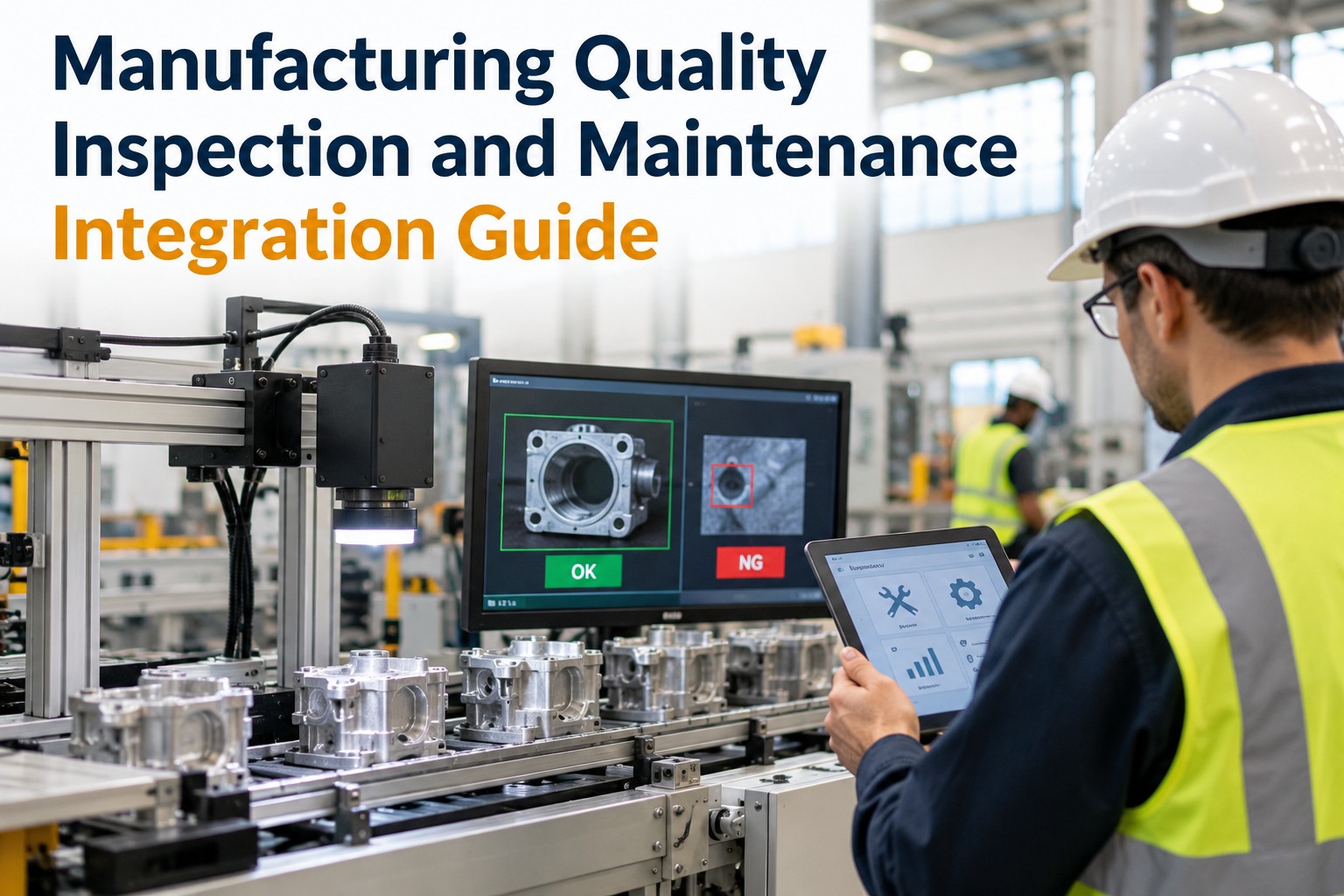
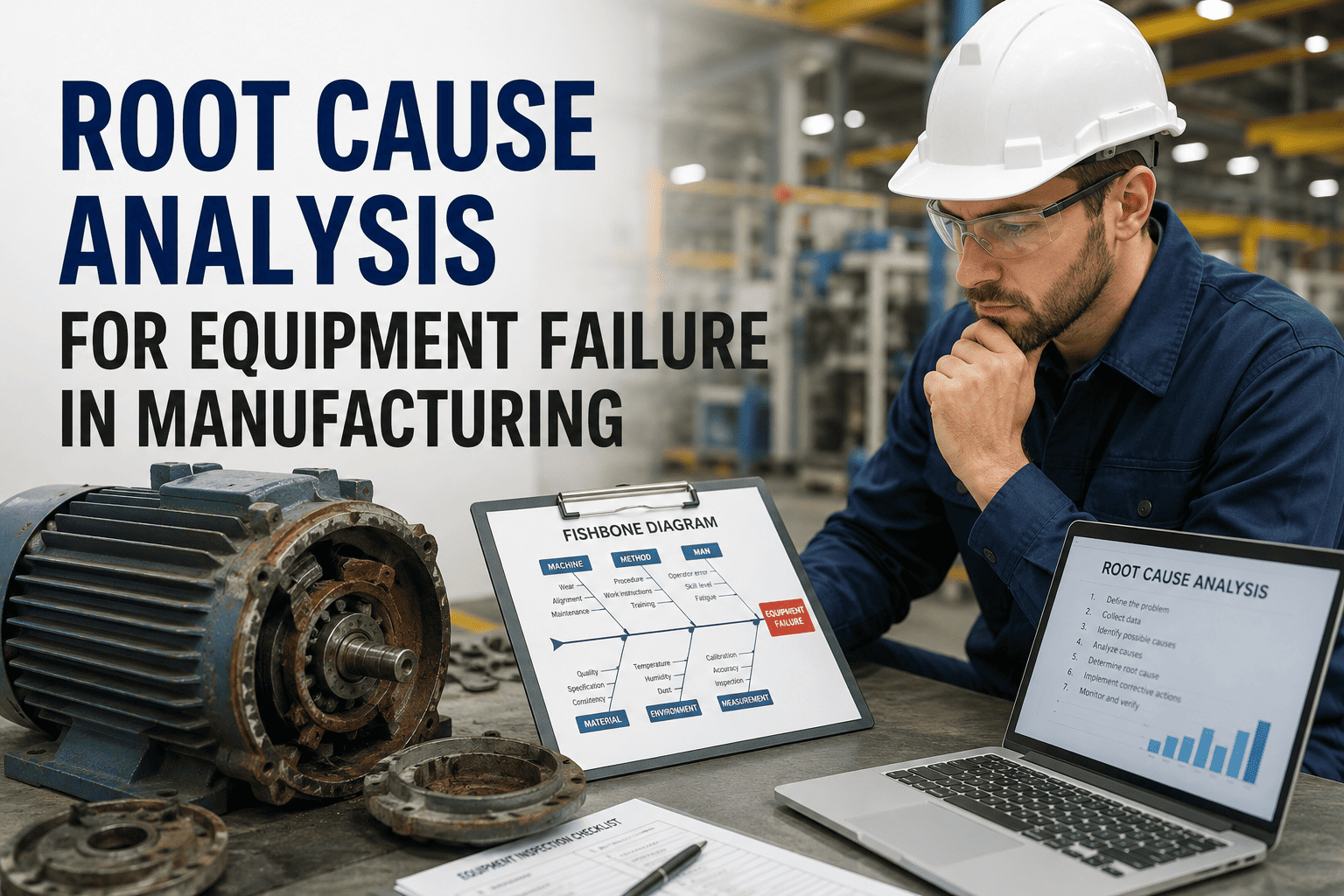
Aerospace manufacturers have long operated two completely separate intelligence systems — AI vision inspection catching surface defects in milliseconds, and CMMS tracking which machines were maintained, when, and by whom. The insight that reduced one manufacturer's scrap rate by 35% came from a simple question nobody had asked before: what if defect data and maintenance data lived in the same system? When an AI vision alert and a missed PM record can be correlated to the same asset on the same shift, root cause analysis stops being a three-week investigation and becomes a three-minute query.
Why Aerospace Scrap Is a Maintenance Problem in Disguise
The aerospace industry's cost of poor quality runs at 10–15% of total revenue — a number that has barely moved in a decade despite billions invested in inspection technology. The reason is structural: most quality teams inspect for defects at the end of the line, while most maintenance teams manage equipment health upstream. These two functions share the same root cause — equipment condition — but rarely share the same data. An AI vision system that catches a surface microfracture on a titanium bracket has no way of knowing the CNC spindle producing that bracket ran its last PM 47 days overdue. That connection, invisible in siloed systems, is where the 35% scrap reduction lived.
0.85
Correlation coefficient between machine vibration anomalies and product defect rates in aerospace manufacturing
70%
Of defect spikes in precision manufacturing trace to an equipment condition event within the prior 72 hours
3 wks
Average time for a quality engineer to manually link a defect pattern to an equipment root cause without integrated data
3 min
Time to surface the same root cause when AI vision alerts stream directly into Oxmaint's maintenance record layer
The Manufacturer: High-Mix, Low-Volume Aerospace Precision Parts
The company in this case study produces structural components, fastener assemblies, and precision-machined brackets for commercial and defense aerospace programs. With 6 production lines, 280 CNC and EDM assets, and AS9100-certified quality requirements, every scrapped part carries both material cost and a traceability burden. Their scrap rate at the start of this project was 4.8% — against an industry benchmark of 2–3% for high-mix aerospace. The quality team had deployed an AI vision inspection system 18 months earlier that accurately detected defects at line speed. What it could not do was explain why defect rates spiked every 6–8 weeks on three specific machine groups.
280
CNC & EDM Assets
Under active maintenance
4.8%
Scrap Rate
vs. 2–3% industry benchmark
18 mo
AI Vision Live
Defects caught, causes unknown
$2.3M
Annual Scrap Cost
Material + rework + traceability
The Root Cause Nobody Could See — Until the Data Was Connected
The quality team's AI vision system had 18 months of defect data. Oxmaint had 18 months of maintenance records for every asset on those six lines — PM completion dates, overdue events, calibration windows, oil change intervals, and vibration readings from quarterly checks. When the two datasets were connected through Oxmaint's API integration layer, a pattern emerged within the first week of analysis that had been completely invisible for a year and a half.
01
Defect Spikes Correlated to PM Overdue Windows
On three CNC machine groups, defect rates in the AI vision data spiked by an average of 2.1× during periods when spindle bearing lubrication PMs were 10 or more days overdue. The correlation coefficient was 0.83. This pattern had occurred across 11 separate cycles over 18 months — and had never been identified because the two datasets had never been in the same room.
Finding: Bearing lubrication interval too long for production intensity on those machine groups
02
Coolant System PM Gaps Drove Surface Finish Defects
A second pattern linked coolant concentration check overdue events — typically missed during high-production weeks — to a specific defect category in the vision system: surface finish deviations on titanium parts. When coolant concentration drifted outside spec, thermal variance during cutting increased and surface irregularities rose 3.4× above baseline defect rates.
Finding: Coolant checks decoupled from production schedule — missing during highest-volume periods
03
Tool Change Interval Mismatch on High-Alloy Programs
The third pattern was subtler: tool change intervals configured in the maintenance system were based on calendar days, not cutting hours. On high-alloy programs that ran heavier stock removal cycles, tools reached end-of-life 30–40% earlier than the calendar-based schedule anticipated — generating dimensional defects in the final 20% of a tool's actual useful life that the AI vision system flagged consistently but could not explain.
Finding: Tool life management needed cycle-based intervals, not calendar-based intervals
Your AI Vision System Is Catching Defects. Is It Explaining Them?
Defect detection without root cause is an expensive alarm bell. Oxmaint connects your AI inspection data to equipment maintenance history so your quality team stops chasing symptoms and starts eliminating causes.
What Changed — The 12-Month Results
4.8% → 3.1% — first time below 3.5% in six years
Annual Scrap Cost Saved
$805K
$2.3M → $1.49M annual scrap spend
Average investigation from 21 days to 4.6 days
PM On-Time Compliance
92%
Up from 68% — defect-linked PMs prioritized automatically
Repeat Defect Events
-44%
Same defect class recurring on same asset — down nearly half
How Oxmaint Connects AI Vision and Maintenance Data
01
AI Vision API Integration
Oxmaint receives defect events from AI vision systems via REST API in real time — including defect type, severity, part number, machine ID, and timestamp. Every defect alert is stored against the producing asset's record, not in a separate quality database that maintenance never sees.
02
Defect-to-Maintenance Correlation Engine
Oxmaint's correlation layer analyzes defect frequency against the producing asset's maintenance history — flagging statistical relationships between defect spikes and PM overdue windows, calibration lapses, or recent work orders. What took engineers weeks to investigate surfaces automatically in the quality dashboard.
03
Quality-Triggered Work Orders
When defect rate on an asset crosses a configurable PPM threshold, Oxmaint automatically generates a maintenance work order — routed to the responsible technician, attached with the vision system's defect images and trend chart, and flagged at the priority level the defect rate warrants. No manual ticket creation. No handoff delay.
04
AS9100 Audit Trail — One System
Every defect event, every triggered work order, every corrective action, and every PM completion that followed are stored in a single traceable record thread per asset. AS9100 and NADCAP auditors can follow the complete quality-to-maintenance evidence chain from a single Oxmaint asset profile — no cross-referencing between systems required.
Frequently Asked Questions
Which AI vision systems does Oxmaint integrate with?
Oxmaint integrates with AI vision platforms via standard REST API, which covers the majority of industrial vision systems including those from Cognex, Keyence, Basler, and custom OpenCV-based deployments. The integration is bidirectional — defect events stream into Oxmaint and maintenance status can be queried by the vision system to enrich defect context at the moment of detection.
Start your free account to explore the integration setup, or
book a technical demo to walk through your specific vision platform.
How quickly can the correlation engine identify a defect-to-maintenance relationship?
Initial correlation analysis can surface patterns within the first week of data integration, provided historical defect data and at least 6 months of maintenance records are loaded into Oxmaint. The correlation engine runs continuously in the background — as new defect events and PM records accumulate, pattern confidence improves automatically.
Oxmaint's quality analytics module displays correlation strength scores so your quality and reliability teams can see which relationships have enough statistical evidence to drive a maintenance interval change.
Can Oxmaint support tool-life management based on cutting hours rather than calendar days?
Yes. Oxmaint supports meter-based PM triggers that can be linked to any counter — cutting hours, cycle counts, spindle rotations, or production unit counts — imported from machine PLCs or manually logged by operators. This is particularly important for aerospace high-alloy programs where calendar-based tool intervals significantly overestimate tool life under heavy stock removal conditions.
Book a demo to see how cycle-based PM scheduling is configured for precision CNC environments.
Does this work for manufacturers that don't yet have an AI vision system deployed?
Absolutely. The maintenance data layer in
Oxmaint delivers significant scrap reduction value even before AI vision integration — through improved PM compliance, condition-based maintenance triggers, and structured failure mode tracking. When your organization is ready to deploy AI vision, the integration layer is already in place and the historical maintenance data is already structured to feed the correlation engine from day one.
How does this integration support AS9100 and NADCAP compliance requirements?
AS9100 requires that corrective actions for nonconformances be traceable to root cause evidence and that preventive actions be documented and verifiable. Oxmaint's integrated record — linking the AI vision defect event, the triggered work order, the maintenance action taken, and the subsequent defect rate trend — provides exactly this evidence chain in a single, auditor-accessible record.
Oxmaint generates AS9100-formatted corrective action reports directly from asset profiles, eliminating the cross-system documentation burden that consumes quality engineer time before every audit.
Your Defect Data Already Has the Answer. You Just Need to Connect It.
The patterns that drive aerospace scrap rates are hidden in plain sight — inside AI vision logs and CMMS records that have never been in the same system. Oxmaint closes that gap and gives your quality and reliability teams the integrated intelligence to stop fixing defects and start preventing them.