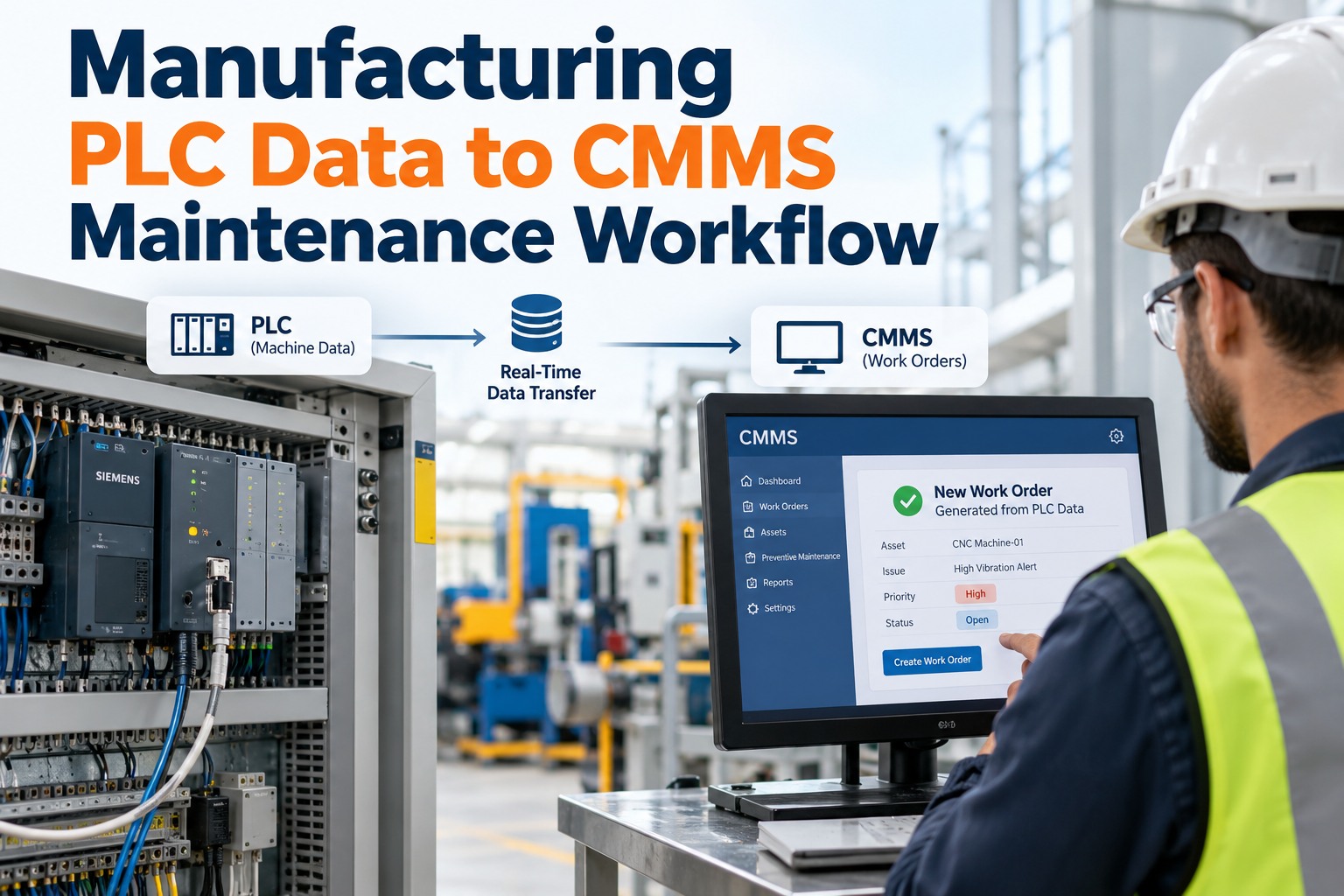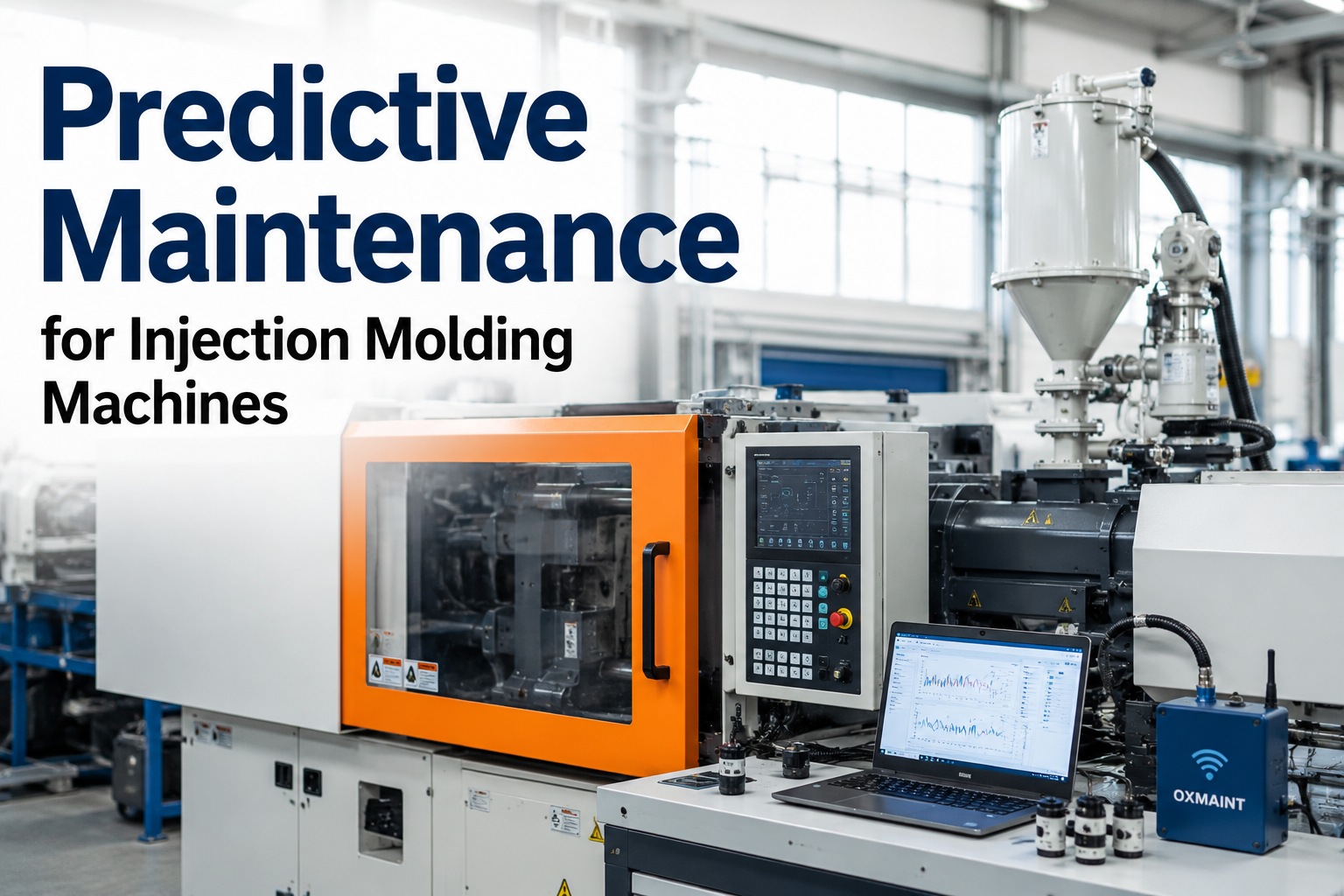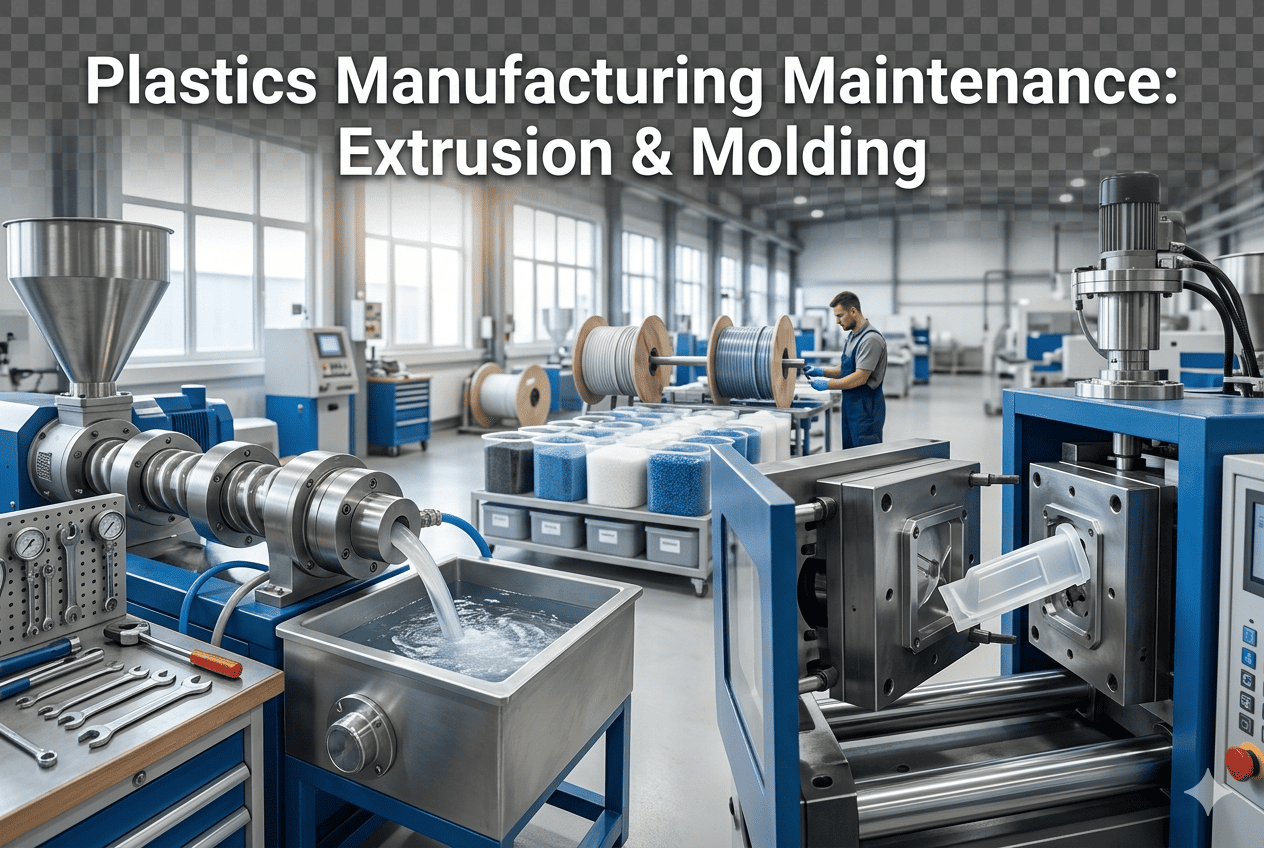
Plastics manufacturing maintenance is the difference between a plant running 90% OEE and one hemorrhaging margin through scrap, cycle-time drift, and unplanned downtime. Whether you run injection molding, extrusion, or blow molding operations, tight temperature and pressure control depends on well-maintained equipment—molds, screws, heater bands, and chillers all working in sync. This plastics CMMS guide covers how a modern maintenance strategy, powered by Start Free Trial of OxMaint, prevents the silent margin killers that cost polymer plants millions annually.
Is scrap and cycle-time drift quietly killing your plastics plant's margin?
A single degree of mold-temperature variance or a worn extruder screw can push scrap rates past 5% and extend cycle times by seconds per shot. Over a year, that's hundreds of thousands in lost resin and machine hours. OxMaint's AI-powered CMMS catches the drift before it hits the floor.
The hidden cost of reactive plastics plant maintenance
A 180-asset injection molding plant running 60% reactive maintenance typically loses $42K–$120K per year in unplanned downtime, scrapped parts, and expedited mold repairs—before factoring in customer chargebacks for late deliveries.
Injection molding plant maintenance: the essential PM checklist
Injection molding maintenance lives and dies by mold condition, hot runner health, and cooling-circuit efficiency. Here are the tiered PM tasks every plastics plant should standardize—exactly what OxMaint automates through recurring work orders and condition-based triggers.
Mold & Hot Runner Checks
- Inspect mold surfaces and cavities for flash, wear, or deposit buildup
- Verify hot runner temperature zones within ±2°C of setpoint
- Check mold cooling water flow rates and inlet/outlet temperature differential
- Lubricate leader pins, ejector pins, and slides per mold spec sheet
Machine & Heater Systems
- Test heater band continuity and amperage draw across all barrel zones
- Inspect hydraulic system for leaks, fluid level, and filter condition
- Calibrate and verify injection pressure transducers
- Clean chiller condenser coils and verify coolant concentration levels
Deep Maintenance & Calibration
- Pull and inspect extruder screw and barrel for wear—measure flight clearance
- Descale mold cooling circuits and flush hot runner manifolds
- Replace thermocouples showing drift beyond 1% accuracy
- Perform full mold flow analysis and compare to baseline cycle data
Equipment failure modes unique to plastics manufacturing
Plastics equipment degrades differently from general industrial machinery—resin abrasion, thermal cycling, and coolant scaling create compound wear patterns. Here's what a plastics manufacturing CMMS must track.
| Equipment | Primary Failure Mode | Warning Signs | PM Frequency | Cost of Failure |
|---|---|---|---|---|
| Injection Molds | Cavity wear, flash, cooling blockage | Dimensional drift, flash on parting line | Every 50K–100K cycles | $3K–$18K per rework |
| Extruder Screws | Flight wear, chrome degradation | Output drop, melt temperature inconsistency | Annual inspection | $8K–$25K replacement |
| Hot Runner Systems | Valve pin seizure, heater failure | Gate freeze, cold slugs, zone alarms | Per job changeover | $2K–$12K per incident |
| Heater Bands | Element burnout, thermocouple drift | Zone over/undershoot, cycle time increase | Monthly continuity test | $200–$600 + downtime |
| Chillers | Fouling, refrigerant loss, pump wear | Mold temp rise, condensation on mold | Quarterly service | $5K–$15K repair |
| Hydraulic Systems | Fluid degradation, seal failure | Pressure drop, slow clamp, leaks | 3,000-hour fluid change | $4K–$20K per failure |
How much does a CMMS save a plastics manufacturing plant?
A mid-size plastics plant (150 assets, 3 shifts) typically invests $15K–$30K annually in CMMS software and implementation. The payback model below uses industry-benchmarked downtime reduction and scrap improvement figures.
Cutting unplanned downtime 30–50% on 10–15 critical machines at $8.2K/hr. OxMaint's predictive alerts catch bearing wear and heater degradation before failure.
Tighter mold cooling PM and hot runner maintenance reduce scrap from 5% to 2–3%. On $2M annual resin spend, every 1% scrap cut saves $20K.
Eliminating paper work orders, manual PM tracking, and parts hunting saves 6–12 technician-hours weekly. OxMaint mobile app puts everything on the floor.
See OxMaint run your plastics maintenance operation
Watch a 30-minute live demo on your own asset hierarchy, PM schedules, and downtime data. We'll map your injection molders, extruders, and chillers to OxMaint before you commit.
How OxMaint's CMMS transforms plastics plant maintenance
OxMaint was built for asset-intensive industries where temperature, pressure, and cycle time define profitability. Here's how four core capabilities map directly to plastics manufacturing maintenance challenges.
Cycle-Based PM Triggers
Auto-generate mold maintenance work orders at exact cycle counts (e.g., every 50K shots). OxMaint reads machine cycle data and triggers PM before cavity wear impacts part quality.
AI Predictive Failure Alerts
Machine learning models analyze heater band amperage, hydraulic pressure trends, and chiller delta-T to predict failures 7–21 days before they happen. No more surprise breakdowns mid-job.
Spare Parts Inventory
Track thermocouples, heater bands, O-rings, and mold components with min/max auto-reorder. Tie parts directly to asset BOMs so technicians find the right part in seconds, not hours.
Mobile Work Orders
Technicians receive and complete work orders on the floor via mobile app—photo capture of mold damage, digital checklists, e-signatures. No clipboards, no data entry lag, no lost PM records.
What plastics maintenance teams achieve with OxMaint
"We cut mold-related scrap from 4.8% to 2.1% in four months. OxMaint's cycle-based PM triggers mean we never miss a 50K-shot mold inspection anymore. The ROI was undeniable by month three."
"Switching from spreadsheets to OxMaint was the best decision we made last year. Predictive alerts caught a failing heater band on our extruder before it caused a 14-hour shutdown. That alone paid for two years of the platform."
Plastics manufacturing maintenance & CMMS: frequently asked questions
What does a CMMS do for a plastics manufacturing plant?
A CMMS for plastics manufacturing centralizes work orders, preventive maintenance schedules, asset tracking, spare-parts inventory, and maintenance analytics into one platform. It replaces spreadsheets and paper-based systems, ensuring mold inspections, heater band checks, and chiller service happen on time—every time. OxMaint adds AI-powered predictive alerts on top, catching failures 7–21 days before they cause downtime. Start Free Trial to see it on your assets.
How often should injection molds be serviced?
Injection molds should be inspected every 50,000–100,000 cycles depending on resin type, part complexity, and mold construction. High-glass-filled resins wear cavities faster and may require inspection at 25K cycles. Full mold refurbishment is typically needed every 500K–1M cycles. A plastics CMMS like OxMaint automates these cycle-count triggers so no mold is ever run past its service interval.
What are the most common maintenance failures in plastics plants?
The most common failures are heater band burnout, hot runner valve-pin seizure, mold cooling-circuit blockage, extruder screw wear, and hydraulic fluid degradation. These account for over 60% of unplanned downtime in most plastics facilities. The majority are preventable with structured PM—quarterly descaling, monthly heater continuity tests, annual screw inspections, and 3,000-hour hydraulic fluid changes.
How long does it take to implement a CMMS in a plastics plant?
A typical plastics plant with 100–200 assets can be fully live on OxMaint in 4–6 weeks. Week one covers asset hierarchy import and PM schedule migration. Weeks 2–3 deploy the mobile app to technicians and configure spare-parts BOMs. By week 4, most plants are running 80%+ PM compliance and seeing the first predictive alerts. We guide you through every step—Book a Demo to see the implementation plan.
Can a CMMS help reduce scrap in plastics manufacturing?
Yes—a CMMS directly reduces scrap by ensuring mold cooling circuits, hot runner systems, and heater bands are maintained to spec. Unmaintained molds cause dimensional drift, flash, and short shots. OxMaint plants typically see scrap rates drop 2–3 percentage points within the first six months, which on a $2M annual resin spend translates to $40K–$60K in saved material alone, plus the avoided cost of rework and customer rejects.
Stop losing margin to preventable equipment failures
Join the plastics plants that cut downtime 40%, scrap 23%, and PM compliance to 90%+ with OxMaint's AI-powered CMMS. Your molds, extruders, and chillers deserve better than a clipboard.
Free 14-day trial · No credit card