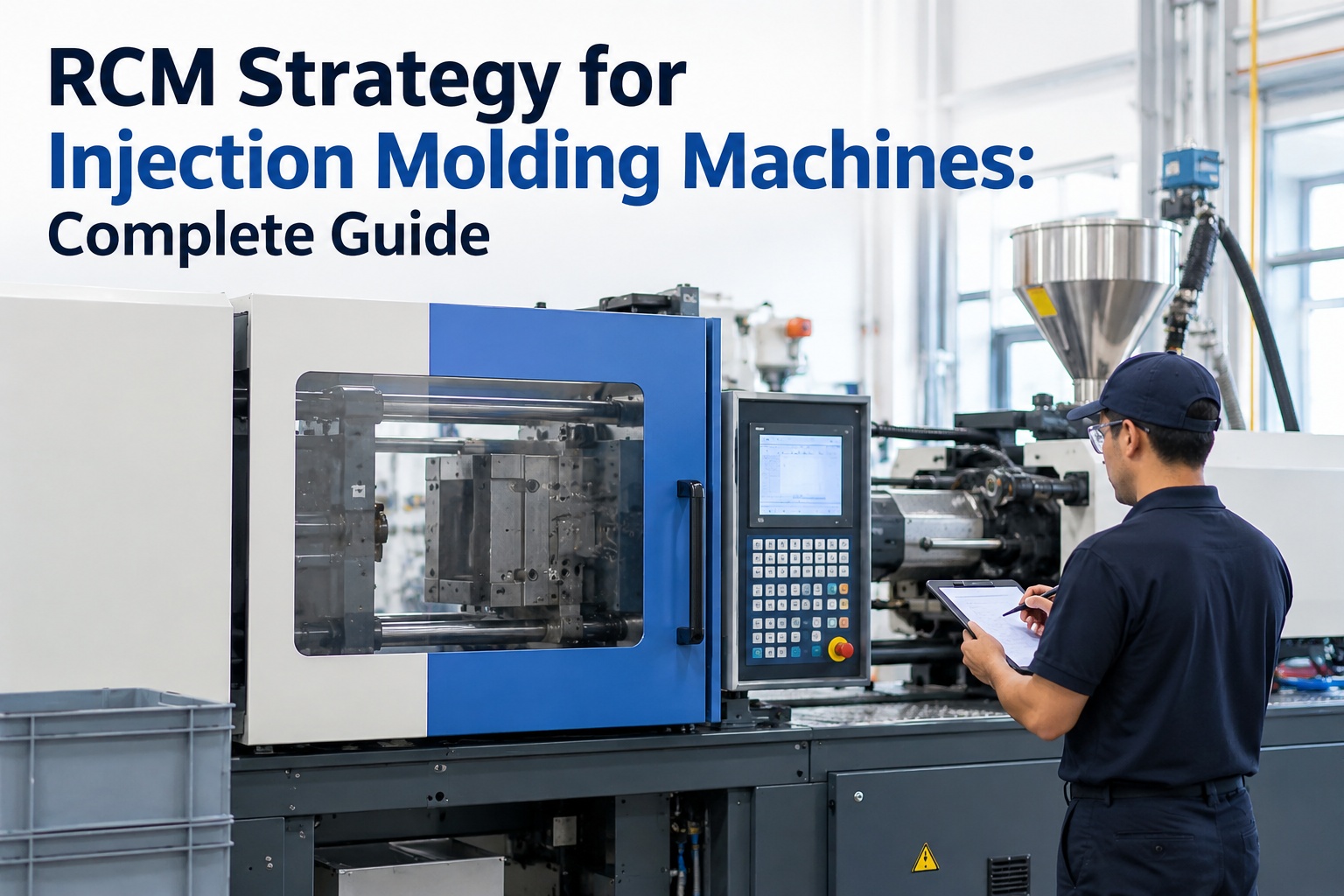
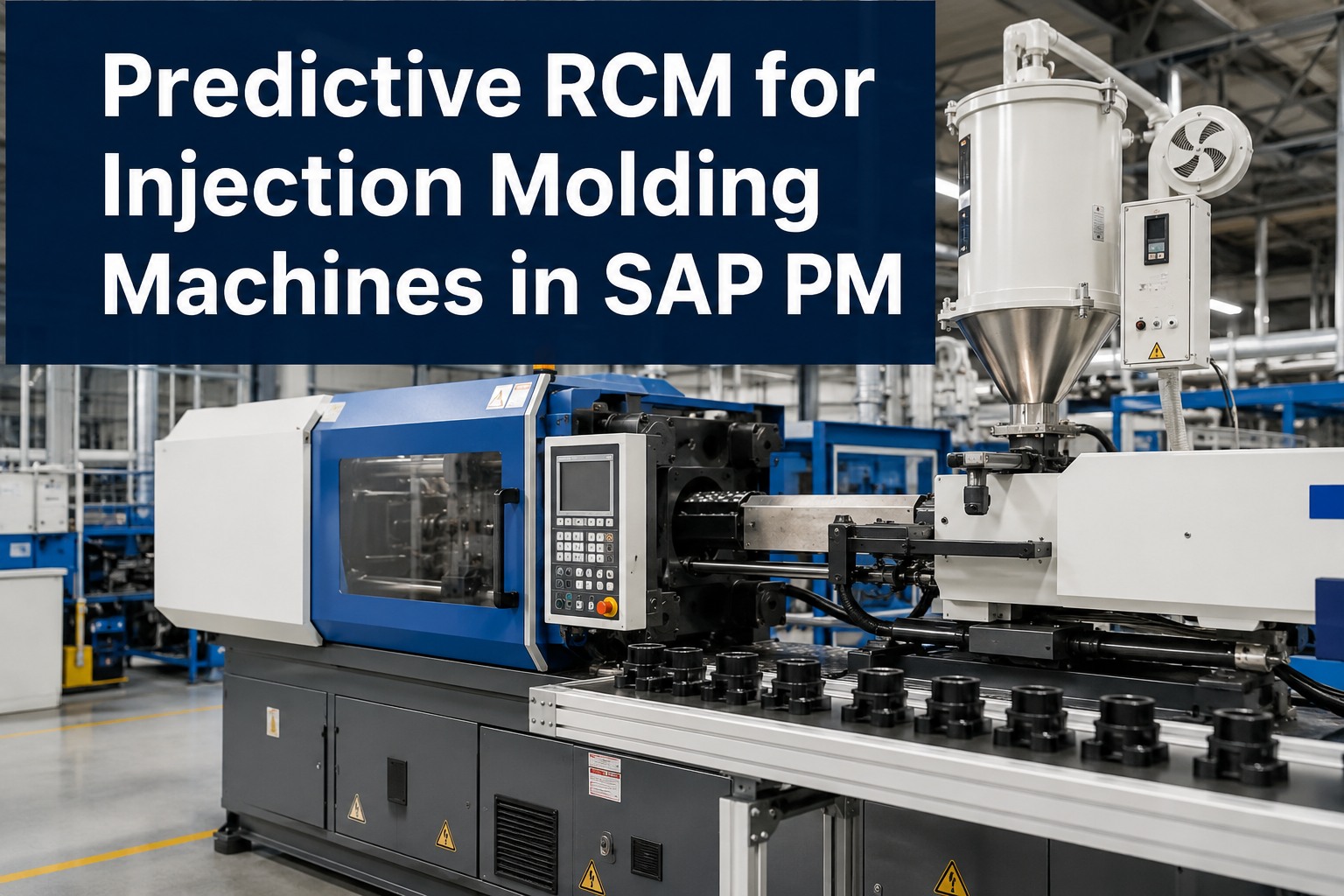
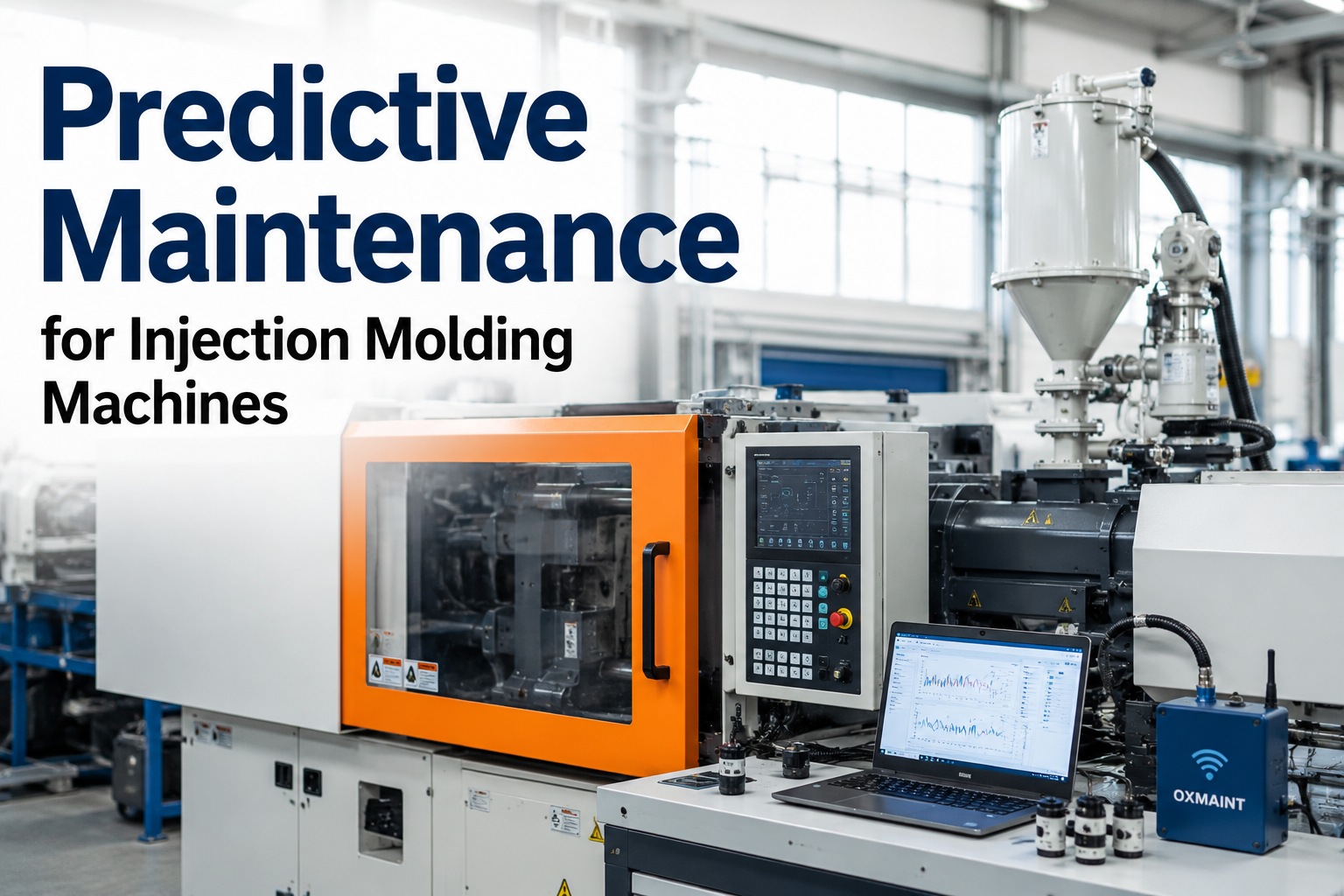
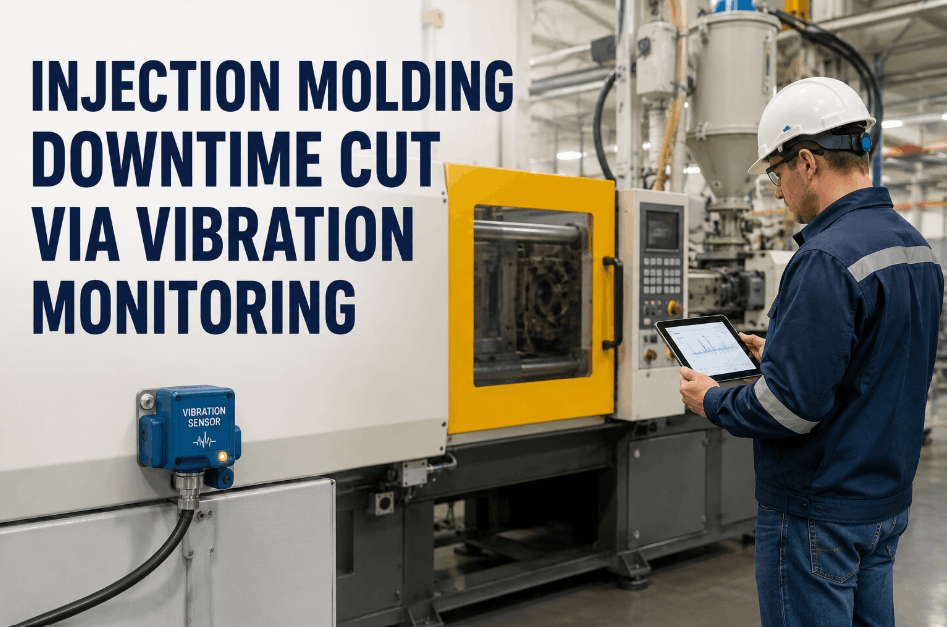
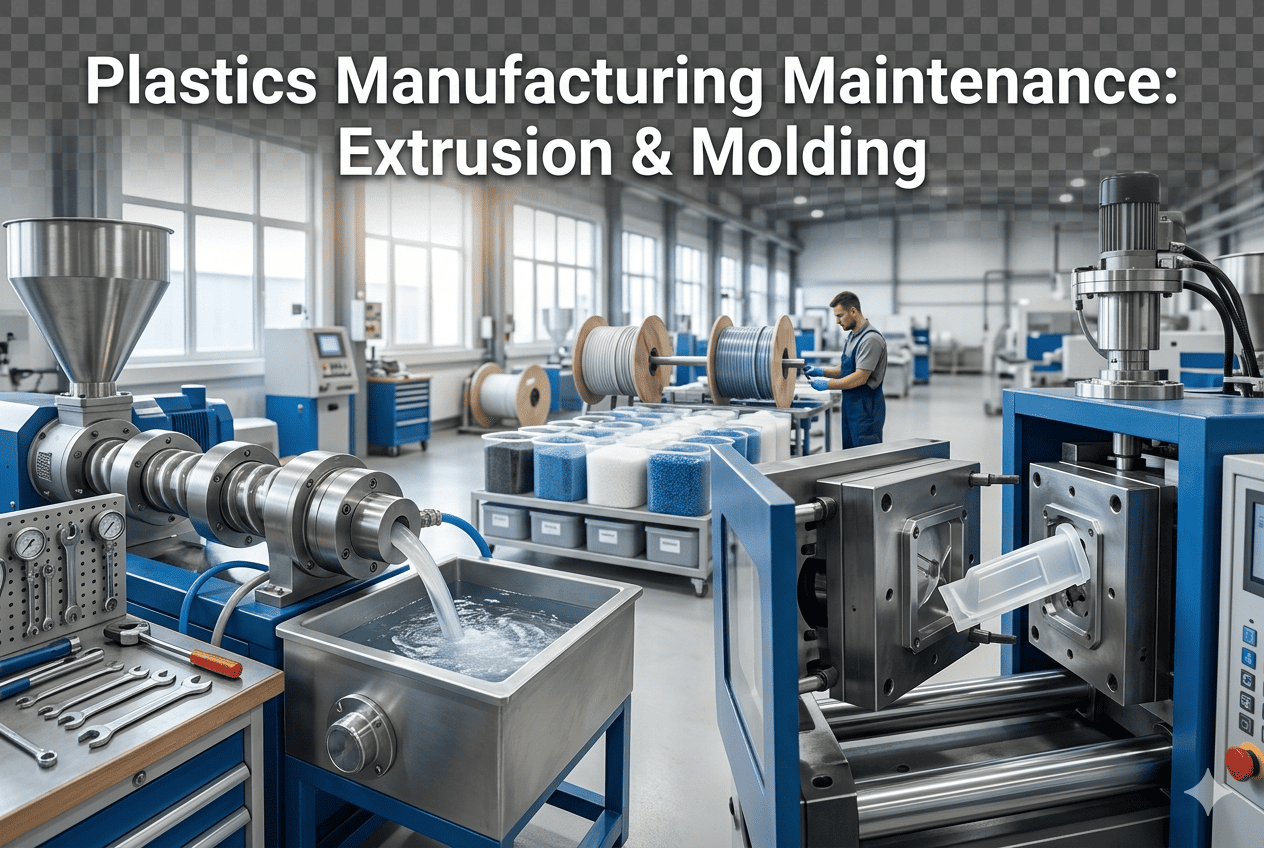
A mid-sized injection molding plant running 12 presses lost 340 production hours to hydraulic failures last year — roughly $1.2 million in missed shipments from problems that routine oil sampling and filter changes would have caught six weeks earlier. Injection molding machines fail in predictable patterns: screw wear shows up in rising cycle times before it shows up in scrap, hydraulic contamination reveals itself in filter particle counts before servo valves seize, and heater band failure announces itself through temperature drift long before a shift supervisor notices short shots. The plants hitting 92%+ OEE aren't running better equipment — they're running the same machines with disciplined maintenance routines tied to runtime hours, shot counts, and material abrasiveness. A 150-ton press represents $80,000 to $200,000 in capital and produces $1,500 to $4,000 of output per shift when running well; one avoidable mold damage incident or hydraulic system failure wipes out months of maintenance budget. For molders running OxMaint's CMMS platform across screw wear logs, hydraulic oil sampling schedules, mold shot counters, and heater band calibration records, the maintenance story stops being reactive — or schedule a 15-minute walkthrough to see how it fits your press floor.
Injection Molding Machine Maintenance: The Complete Technical Playbook
Screw and barrel inspection intervals, hydraulic system service protocols, mold maintenance cycles, and controller diagnostics — structured the way a senior process engineer actually works.
Why Molding Machine Maintenance Is a Financial Decision, Not a Technical One
The global injection molding machine market crossed $10.4 billion in 2024 and is projected to grow at 4.8% CAGR through 2034, with manufacturers investing in smarter machines specifically to reduce downtime. But the machine you already own is where margins live or die. Here's what the numbers look like when maintenance slips — and what they look like when it doesn't.
Every dollar spent on disciplined PM prevents roughly $8-$14 in unplanned repair and lost production cost — and that ratio climbs sharply on machines running glass-filled resins, flame retardants, or 24/7 schedules.
A Molding Machine Broken Down Into What Actually Needs Attention
An injection press has hundreds of components. Five zones generate 90% of downtime. If your maintenance program covers these well, the rest largely takes care of itself.
Turn Machine Zones Into a Living Maintenance Program
OxMaint lets you build asset hierarchies down to the screw, barrel, heater band, and hydraulic pump level — each with its own PM schedule, failure history, and parts list. Warning signals become work orders. Work orders become trend data. Trend data becomes confident go/no-go decisions during production planning.
Daily, Weekly, Monthly, Quarterly, Annual — What Goes Where
Every molder has a PM checklist somewhere. The ones that work share three traits: tasks are tied to operating hours or shot counts, not just wall-clock dates; each task has an accountable owner; and results flow into a trend log. Here's the framework, organized by interval.
| Interval | Plasticizing | Hydraulic | Clamping / Mold | Controls |
|---|---|---|---|---|
| Daily / Shift | Visual heater band check, nozzle seating, purge residue cleanup, thermocouple reading log | Oil level, oil temperature, leak walkaround, filter indicator check | Platen area cleanup, ejector function test, mold clamp force log | Cabinet door seal, alarm history scan, HMI responsiveness |
| Weekly | Torque check on barrel bands, feed throat cleaning, hopper magnet inspection | Strainer inspection, hose chafe check, accumulator pre-charge verification | Tie bar grease, toggle pin lubrication, limit switch trip-arm check, mold water line flush | Cooling fan clean, control cabinet vacuum, safety circuit test |
| Monthly | Check ring & non-return valve wear, heater band resistance test, thermocouple calibration check | Oil sample for ISO particle count, pump pressure curve, servo valve null check | Platen parallelism measurement, machine leveling check, ejector plate return spring test | Ground fault resistance, capacitor visual, backup battery voltage, sensor calibration audit |
| Quarterly | Nozzle tip replacement (abrasive resins), purge compound deep clean | Return-line filter change, case drain flow verification, seal torque audit | Toggle pin clearance gauge, tie bar stretch measurement, mold cavity dimensional audit | Thermography scan of cabinet, PLC firmware check, drive parameter backup |
| Annual / 4000-6000 hrs | Full screw pull, barrel bore gauge measurement, check ring rebuild or replace | Hydraulic oil change (12-18 months typical), pump rebuild on pressure decay, reservoir cleaning | Tie bar alignment survey, toggle rebuild at wear threshold, mold coolant loop descaling | Full electrical audit, thermographic report, insulation resistance test |
Hour-based intervals take priority on any machine running above single-shift schedules. A 24/7 press hits "annual" mileage in roughly 5-6 months of calendar time.
Screw & Barrel: The Component That Quietly Determines Profitability
Screw-barrel wear doesn't announce itself — it bleeds yield. Original clearance between barrel ID and screw flight OD is roughly 0.001 inch per inch of diameter per side. As that gap opens, melt pressure leaks backward, recovery time climbs, and shot-to-shot consistency degrades. A 3.5-inch screw with 0.020 inch of wear can drive a 9% production loss on an average process — a figure most processors mistake for "just the way the machine runs today."
Hydraulic System Health: Oil Is the Cheapest Diagnostic You'll Ever Run
Hydraulic fluid is a sensor network disguised as a lubricant. Particle counts tell you about pump wear, water content signals cooler leaks, viscosity shifts reveal thermal stress, and additive depletion flags oxidation. Most molders already pay for hydraulic oil — very few extract the diagnostic signal sitting in it.
Stop Losing Diagnostic Signal in Clipboards and Spreadsheets
Oil sample reports filed in a binder don't catch trending failures. OxMaint captures every inspection, sample result, and work order against the specific asset — so when viscosity drifts or particle count climbs over three quarters, the trend is impossible to miss and the maintenance decision writes itself.
Mold Maintenance: The Tooling Is Worth More Than the Machine
A custom steel mold can run $50,000 to $200,000+ and often exceeds the value of the press it sits in. Mold damage is usually preventable and almost always catastrophic — a bent ejector pin at shift change becomes a cavity-wide weld repair by lunchtime. The discipline here is simple to describe and hard to execute consistently.
Troubleshooting: Symptoms, Root Causes, and Response
| Symptom | Most Likely Root Cause | Secondary Causes to Rule Out | First Response |
|---|---|---|---|
| Shot weight drifting 2-5% over the shift | Non-return valve wear or check ring leakage | Screw-barrel clearance excessive, back pressure drift, material moisture variation | Pull screw, inspect check ring; measure clearance |
| Cycle time climbing with no process change | Hydraulic pump pressure decay or oil degradation | Cooler scaling, servo valve contamination, worn screw reducing recovery rate | Pump pressure curve test; oil sample for particle count |
| Flash along parting line | Insufficient clamp tonnage or tie bar stretch | Mold venting clogged, cavity wear, platen parallelism drift | Clamp tonnage calibration, tie bar stretch measurement |
| Burn marks or brown streaks in parts | Gas entrapment or material degradation in barrel | Vent clogging, excessive residence time, heater band overshoot, check ring stuck | Purge and inspect vents; verify heater zones with IR thermometer |
| Parts sticking in cavity | Ejector damage or cavity surface issues | Insufficient draft, mold release contamination, over-packing, cooling imbalance | Pull mold, inspect ejectors and cavity finish |
| Hydraulic oil temperature above 60°C | Cooler fouling or insufficient water flow | Pump internal leakage, pressure relief valve chattering, oil viscosity incorrect | Verify cooling water flow and temperature; descale if needed |
| Intermittent fault codes clearing on reset | Loose terminal connections or sensor wiring fatigue | Cabinet overheating, ground fault, EMI from nearby equipment | Thermographic cabinet scan; torque-check all terminals |
| Audible knock at clamp close | Toggle pin or bushing wear | Mold mount bolts loose, tie bar nut torque drift, machine leveling off | Inspect toggle assembly clearances; verify machine level |
The Financial Case for Moving From Calendar PM to Condition-Based Maintenance
Calendar-based PM is better than reactive. Hour-based PM is better than calendar. Condition-based maintenance — triggered by actual sensor data, fluid analysis, and cycle-time trends — is better still. Here's how the three approaches compare on a hypothetical 10-press operation.
Frequently Asked Questions
How often should the screw and barrel be inspected on an injection molding machine?
When should hydraulic oil be changed on an injection molding machine?
What is the acceptable clearance between the screw and barrel?
How can I tell if my injection molding machine needs maintenance before it fails?
Should I rebuild or replace a worn screw and barrel?
How long should a well-maintained injection molding machine last?
What's the most commonly missed maintenance task on injection molding machines?
Build the Maintenance Program Your Equipment Actually Deserves
OxMaint was built for manufacturers who treat uptime like revenue. Every inspection, every oil sample, every screw pull, every shot count, every failure — logged against the specific asset, trended over time, and surfaced as work when the data says it's needed. Not a month early. Not an hour late.