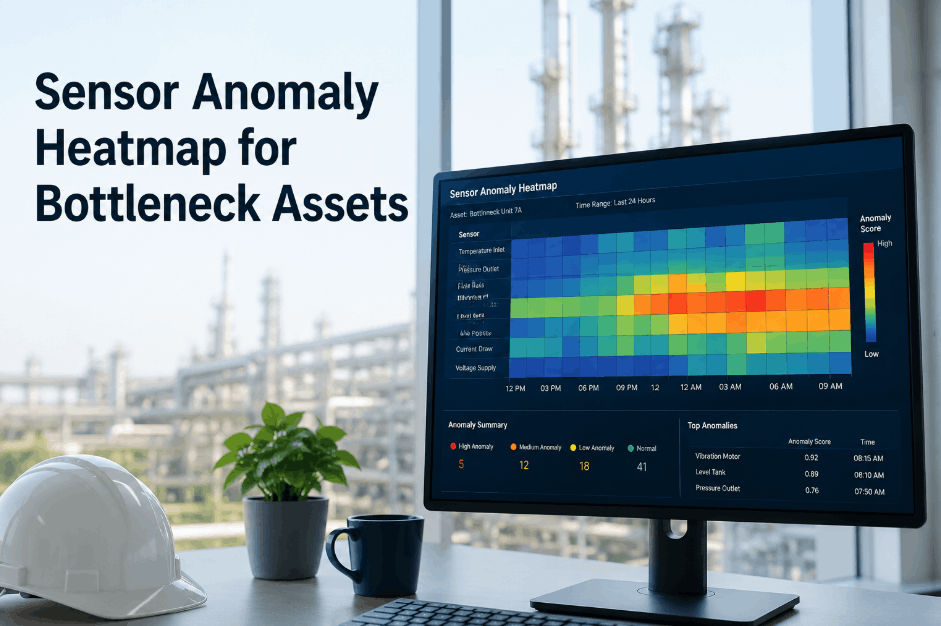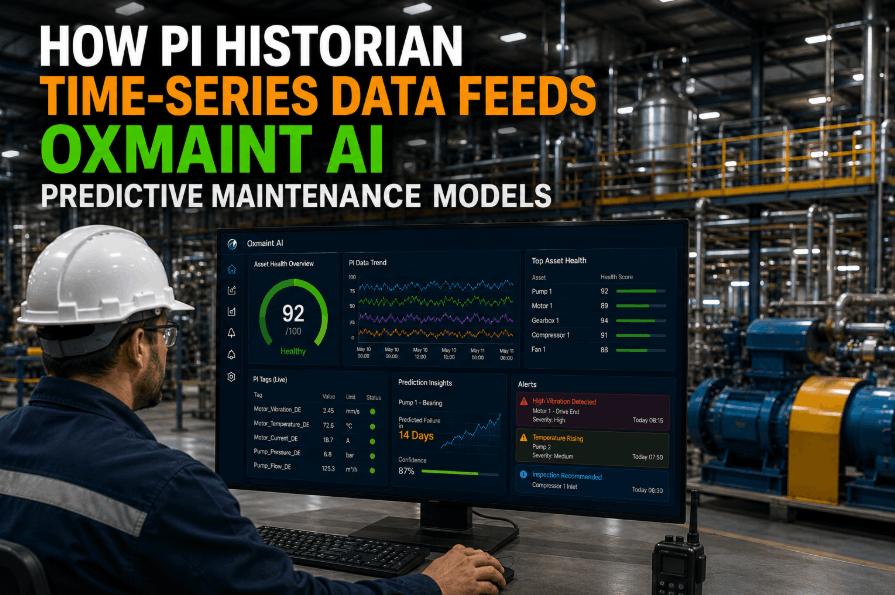
Predictive maintenance programs fail at scale not because the technology is wrong but because factories deploy them before the underlying conditions — sensor coverage, failure history quality, and response workflow discipline — are ready to support reliable prediction. Maintenance teams using Sign Up Free on OxMaint can assess their current data infrastructure, failure history completeness, and maintenance response readiness before committing to predictive rollout across a factory estate. A structured readiness review prevents the most common failure mode of predictive programs: generating anomaly alerts that technicians cannot act on because decision workflows, spare availability, and diagnostic maturity have not been prepared to receive them. Book a Demo to explore how OxMaint supports predictive maintenance readiness assessment and deployment planning.
Why Predictive Maintenance Readiness Reviews Prevent Costly Deployment Failures
Most factories that struggle with predictive maintenance adoption discover the readiness gaps after deployment — when alerts are ignored, models underperform, or response workflows cannot absorb prediction-driven work orders. Book a Demo to see how OxMaint structures failure history, asset condition data, and maintenance response workflows to support predictive readiness review and phased deployment planning.
Six Readiness Dimensions for Factory Predictive Maintenance
A complete predictive maintenance readiness review examines infrastructure, data, and operational readiness in parallel. Sign Up Free to start building the failure history and asset condition baseline in OxMaint that predictive maintenance deployment requires.
Sensor Coverage and Signal Quality Assessment
Predictive programs require condition signals — vibration, temperature, pressure, current draw — at the asset level. Mapping existing sensor coverage against target assets identifies which equipment can support model training immediately and which requires instrumentation investment before deployment.
Failure History Depth and Classification Quality
Anomaly detection models trained on incomplete or poorly classified failure histories produce unreliable predictions. Auditing failure history depth by asset — minimum event count, cause code completeness, and date range coverage — identifies where CMMS records support model training and where data gaps must be closed first.
Response Workflow Maturity and Escalation Design
Prediction confidence means nothing if maintenance teams lack a defined workflow for converting anomaly alerts into work orders with appropriate urgency classification. Designing and testing response workflows before deployment prevents alert fatigue and ensures prediction-driven maintenance actions reach technicians in actionable form.
Asset Intelligence and Criticality Prioritization
Deploying predictive maintenance across an entire factory estate simultaneously dilutes resources and complicates model confidence assessment. Criticality-based prioritization — focusing initial deployment on high-consequence, high-failure-rate assets — maximizes early program value and builds model confidence before scaling.
Diagnostic Skill and Technician Readiness
Predictive alerts require technicians capable of interpreting condition signals and performing targeted diagnostic inspections before intervention. Assessing technician diagnostic maturity by asset type and failure mode identifies training gaps that would otherwise convert good predictions into ineffective responses.
Spare Parts Availability for Prediction-Driven Interventions
Predictive programs that identify developing failures but cannot source replacement parts within lead time windows generate downtime anyway — just with more warning. Auditing spare parts availability against predicted failure modes for prioritized assets validates that the supply chain can support prediction-to-repair execution.
Predictive Readiness by Asset and Deployment Phase
Book a Demo to explore how OxMaint structures asset records, failure histories, and condition data to support predictive readiness scoring and phased deployment planning across factory equipment categories.
| Asset Category | Primary Readiness Requirement | Minimum Data Threshold | Deployment Phase | OxMaint Readiness Lever |
|---|---|---|---|---|
| Rotating Equipment (pumps, motors) | Vibration sensor coverage, failure history depth | 18+ months, 5+ failure events per asset | Phase 1 — high ROI candidates | Asset failure history audit by equipment class |
| HVAC and Cooling Systems | Temperature and pressure signal continuity | 12+ months continuous condition data | Phase 1–2 — moderate complexity | Condition data linked to asset maintenance records |
| Production Line Equipment | OEE history, cycle time deviation data | 24+ months production and downtime records | Phase 2 — requires OEE baseline | Downtime and work order history by asset line |
| Electrical Switchgear | Thermal imaging baseline, inspection history | Inspection records across 3+ cycles | Phase 2–3 — longer baseline required | Recurring inspection records with condition log |
| Utility Infrastructure | Flow, pressure, consumption monitoring | 12+ months metered consumption data | Phase 3 — system-level complexity | Utility asset records with consumption history |
How Skipping Readiness Review Undermines Predictive Investment
Sign Up Free to build the asset intelligence and failure history infrastructure in OxMaint that makes predictive maintenance deployment reliable — and scalable — across your factory estate.
Frequently Asked Questions: Predictive Maintenance Readiness Review for Factories
What is a predictive maintenance readiness review?
A readiness review assesses whether a factory's sensor coverage, failure history depth, technician capability, and maintenance response workflows are mature enough to support reliable predictive maintenance deployment before program investment is committed.
How does OxMaint support predictive maintenance readiness?
OxMaint builds the failure history, asset intelligence, and work order workflow infrastructure that predictive programs require — giving maintenance teams a structured data foundation to assess deployment readiness and support model training.
Which assets should be prioritized for predictive maintenance deployment?
High-criticality, high-failure-frequency rotating equipment with 18+ months of structured failure history and existing sensor coverage delivers the highest early program ROI and the clearest model confidence signal.
What failure history depth is required for predictive maintenance?
A minimum of 18–24 months of failure history with structured cause codes and at least five failure events per asset class is typically required for anomaly detection model training on rotating equipment.
How should predictive maintenance alerts connect to maintenance workflows?
Alerts should trigger structured work orders with defined urgency classification, diagnostic inspection steps, and parts requirements — ensuring that prediction-driven interventions are executed with the same discipline as scheduled preventive maintenance.