Scrap is the one product every plant makes by accident — and the one most plants never count. Offcuts, turnings, sprues and rejected parts leave in a bin, a sale appears on a weight ticket and nobody can say which machine, which shift or which supplier caused it. OXMAINT AI is the maintenance and plant management software that lets you record, weigh, account for and sell scrap with a clear trail from source to sale.
SCRAP INVENTORY · METAL AND PLASTIC · ACCOUNTING · VALUE RECOVERY · 2027
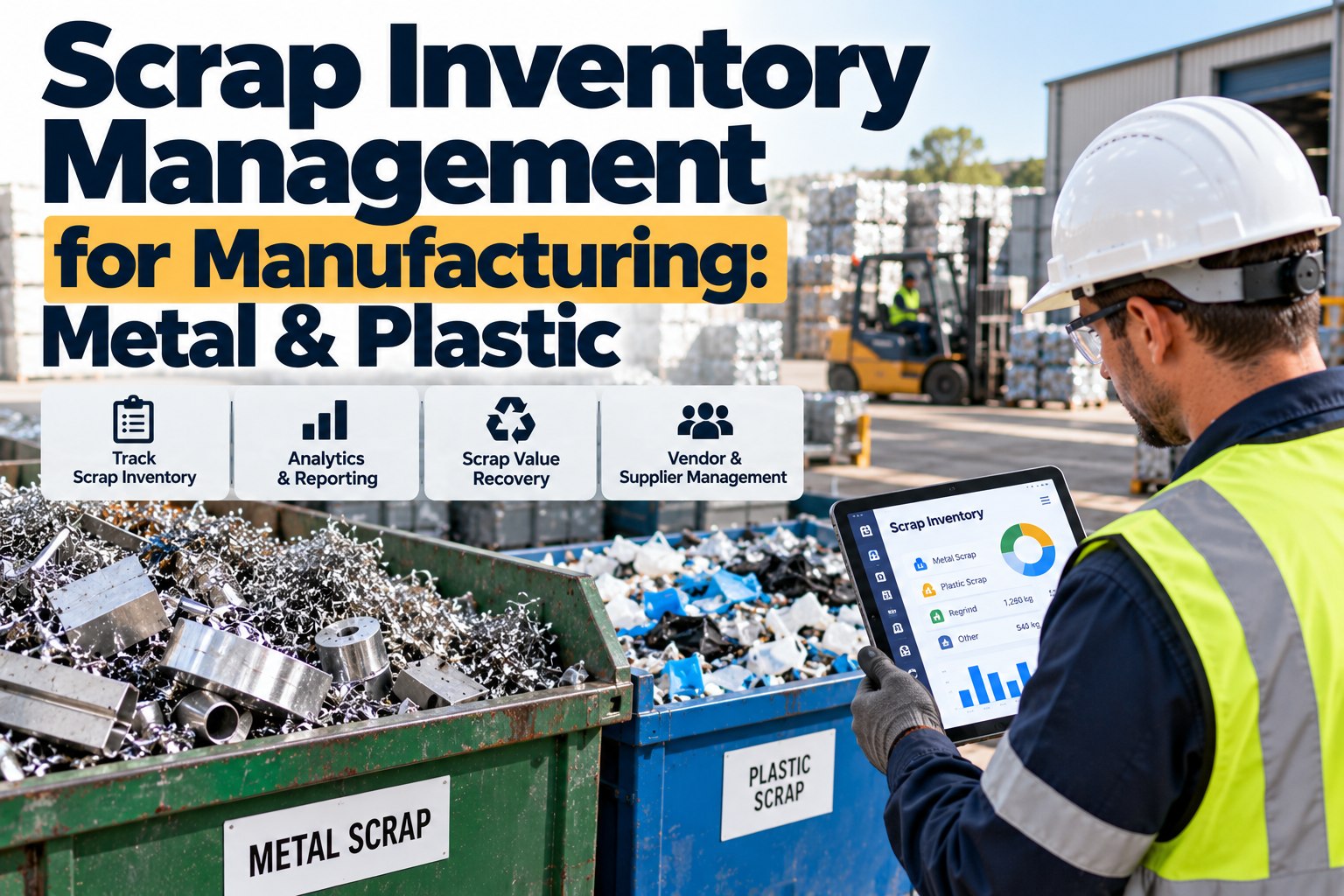
Scrap Inventory Management for Manufacturing: Metal & Plastic
Record scrap at the source, weigh and tag it, account for it correctly and sell it to the right buyer. OXMAINT AI keeps the records that show where scrap comes from and how much value you recover.
Scrap logging
Weigh and tag
Value recovered
Buyer records
20–30%
usual upper limit for regrind in a plastic shot, with less for critical parts
1–2%
of the wrong resin mixed into regrind can cause defects such as delamination
3–5
reprocessing cycles most thermoplastics tolerate before properties fall too far
30–60%
lower cost of regrind versus virgin resin, as one supplier source puts it
THE BLIND SPOT
Most plants know their scrap rate as one number on a monthly report. Few can say which machine made it, what it was worth or whether it went to the best buyer. The records are what turn scrap from a loss into a managed material.
The Scrap Trail: From Machine to Ledger
Every kilogram of scrap should leave a trail. Six steps, each with a record, are enough to answer where it came from and where the value went. Sign up free and set up your scrap log.
1GeneratedLog the machine, the reason and the shift
2SegregatedSeparate by metal grade, resin and colour
3WeighedGross, tare and net on every lot
4Tagged and storedAssign a scrap location and lot number
5Sold or reusedBuyer, price per kilo, or regrind back to the press
6PostedValue recorded in the books
SCRAP TICKET · ILLUSTRATIVE
LotS-0412
MaterialAluminium 6061 turnings
SourceCNC 3 · setup
Gross / tare520 / 40 kg
Net480 kg
BinM-02
Ready to sell
The ticket values are examples only. The point is that a lot has a material, a source, a weight and a place before it leaves the building.
Metal and Plastic Need Different Handling
The goal is the same, but the risks differ. Metal loses value when grades are mixed. Plastic loses quality when resins cross-contaminate. Book a demo to see separate scrap categories for each.
METAL SCRAP
Segregate by alloy and grade; mixed lots sell for less
Keep it dry and free of oil, trash and other metals
Weigh every lot and keep the weight ticket
Sell by grade and weight on a price you can track
PLASTIC SCRAP AND REGRIND
Separate by resin and colour, in colour-coded bins
Keep a granulator per material family with sharp blades
Blend regrind within a validated ratio; use virgin for food-contact and medical parts
Check melt flow before reusing, and retire material that has cycled too often
Regrind guidance is from a moulding supplier source: roughly 15–25% regrind for general industrial parts and 100% virgin for food-contact and medical. Always validate against your own specifications.
How to Account for Scrap Inventory
The accounting depends on whether the scrap is normal or abnormal, and on how your policy treats the proceeds. Here are the common patterns. Start free and capture the data your accountant needs.
Normal scrap
Expected loss in efficient production
CostAbsorbed into the cost of good units
RecordScrap value held as inventory when saleable
Abnormal scrap
Above the expected level: breakdown, error, bad material
DebitAbnormal scrap loss (expense)
CreditWork in process
Scrap sale
Cash or receivable from the buyer
DebitCash or receivable
CreditScrap income, or the job or overhead, per policy
General accounting patterns, not tax or accounting advice. Normal scrap is absorbed into product cost, and abnormal scrap is expensed when detected. How scrap proceeds are credited varies by company policy and standard, so agree the treatment with your accountant before you set up reports.
Turn Scrap From a Guess Into a Number.
Log scrap at the machine, weigh it, tag it and see the value recovered by source. OXMAINT AI gives you the trail in one place.
Where Scrap Comes From: Read the Sources
Once scrap has a source on every record, a simple ranking shows where to act first. Fixing the top cause usually beats chasing all of them. Book a demo to see scrap-by-source reporting.
SCRAP BY SOURCE · SHARE OF WEIGHT · ILLUSTRATIVE
TRACK MONTHLY
Scrap rate
Value recovered
Recovery per kilo
Abnormal share
Top 3 sources
Choosing and Tracking Scrap Buyers
A scrap buyer is a supplier like any other. Compare them on more than price per kilo. Start free and keep buyer records with every sale.
Price basis
Per kilo, by grade, and how the benchmark is set.
Weighing
Whose scale, and do you get a ticket you can check?
Pickup
Reliable collection so bins do not overflow.
Payment
Terms and how quickly funds arrive.
Paperwork
Licences and records for the material you sell.
Disputes
Grade or weight claims, logged and resolved.
EXPERT REVIEWPlant finance and operations view
Do not wait for a perfect system. Start by weighing and logging scrap at your three biggest sources for one month. The first ranking usually points to an obvious fix, and the weight tickets give finance numbers it can trust. Agree one rule on normal versus abnormal scrap so every report uses the same definition.
How OXMAINT AI Supports Scrap Inventory
OXMAINT AI brings scrap records, reports and supplier details together. Book a demo and we will set up your scrap categories.
LOGScrap entries by source
Record machine, reason, material and weight in seconds.
STOCKScrap held as inventory
Lots with a location, weight and status until sold or reused.
SALESales and weight tickets
Attach tickets and prices to each sale for a clean record.
BUYERBuyer and supplier records
Contacts, prices and pickup history per buyer.
REPORTScrap and recovery reports
Rate, value recovered and top sources, month on month.
LINKLink scrap to equipment
See which machines produce the most scrap, then fix them.
Questions Plant Teams Ask About Scrap
How do you record scrap inventory?
What is the difference between normal and abnormal scrap?
How much regrind can we reuse?
Why does mixed metal scrap sell for less?
Can software connect scrap to our accounting system?
Know Where Every Kilo of Scrap Goes — With OXMAINT AI.
Source, weight, buyer and value on one record, for metal and plastic alike. Start with your biggest scrap source.