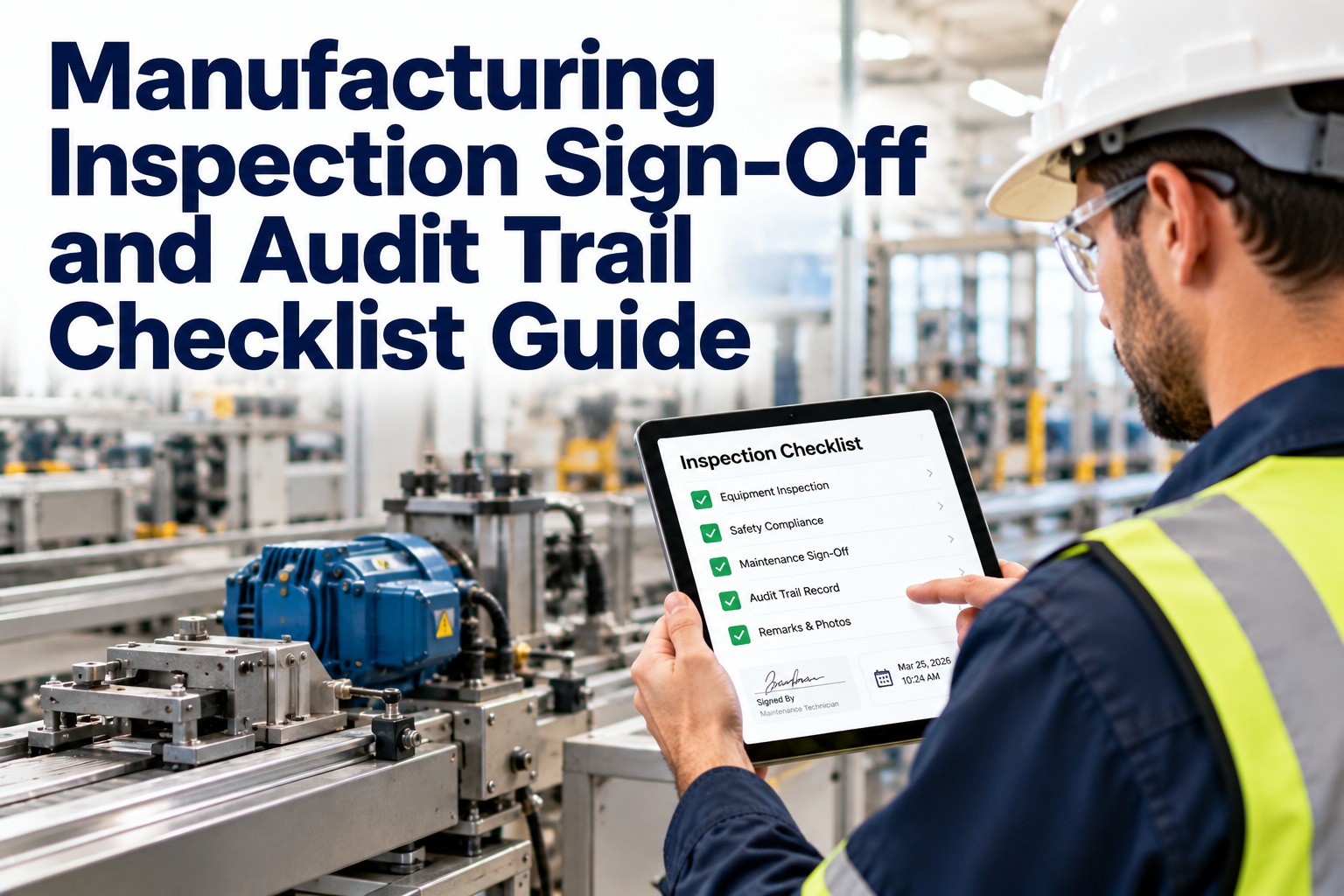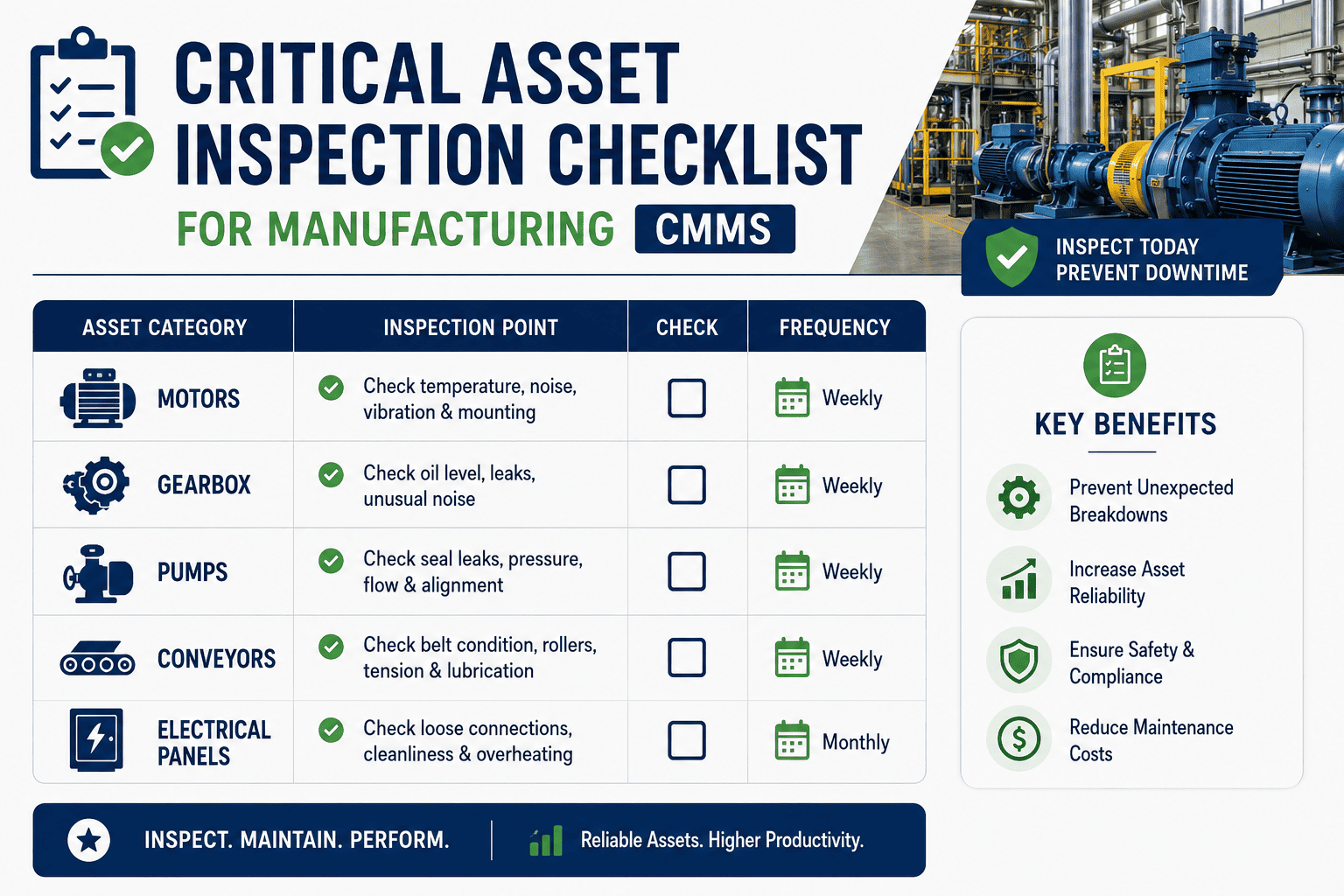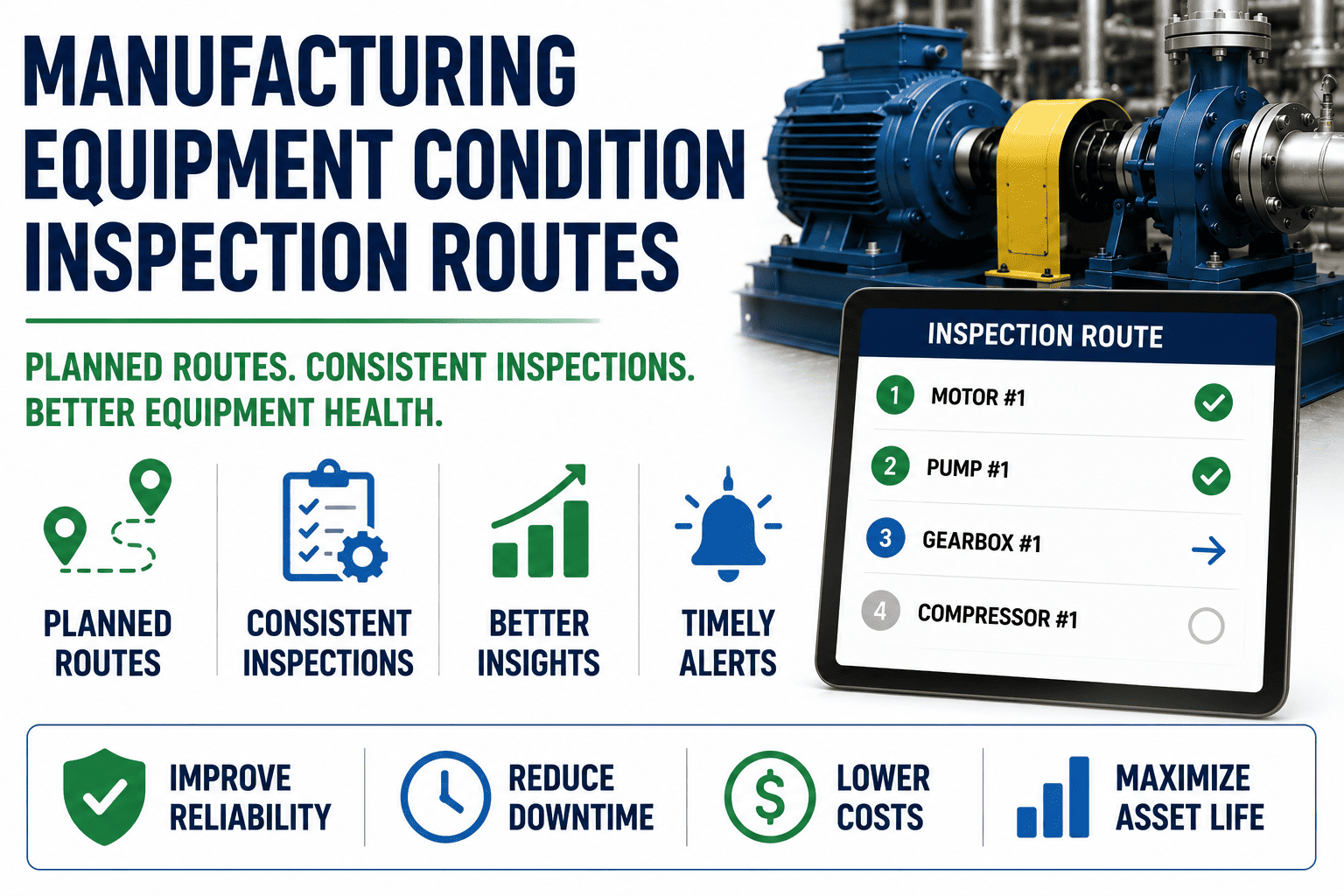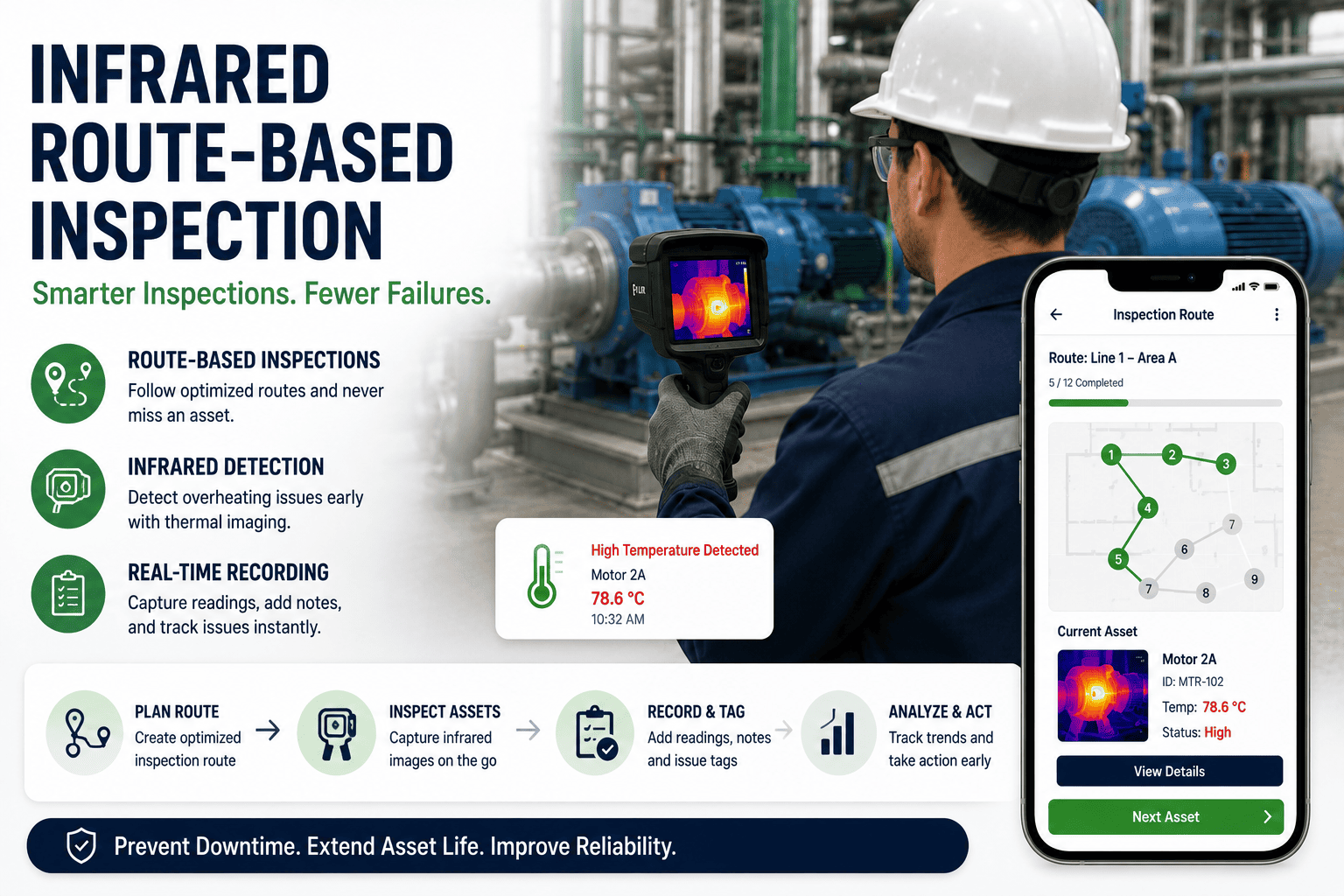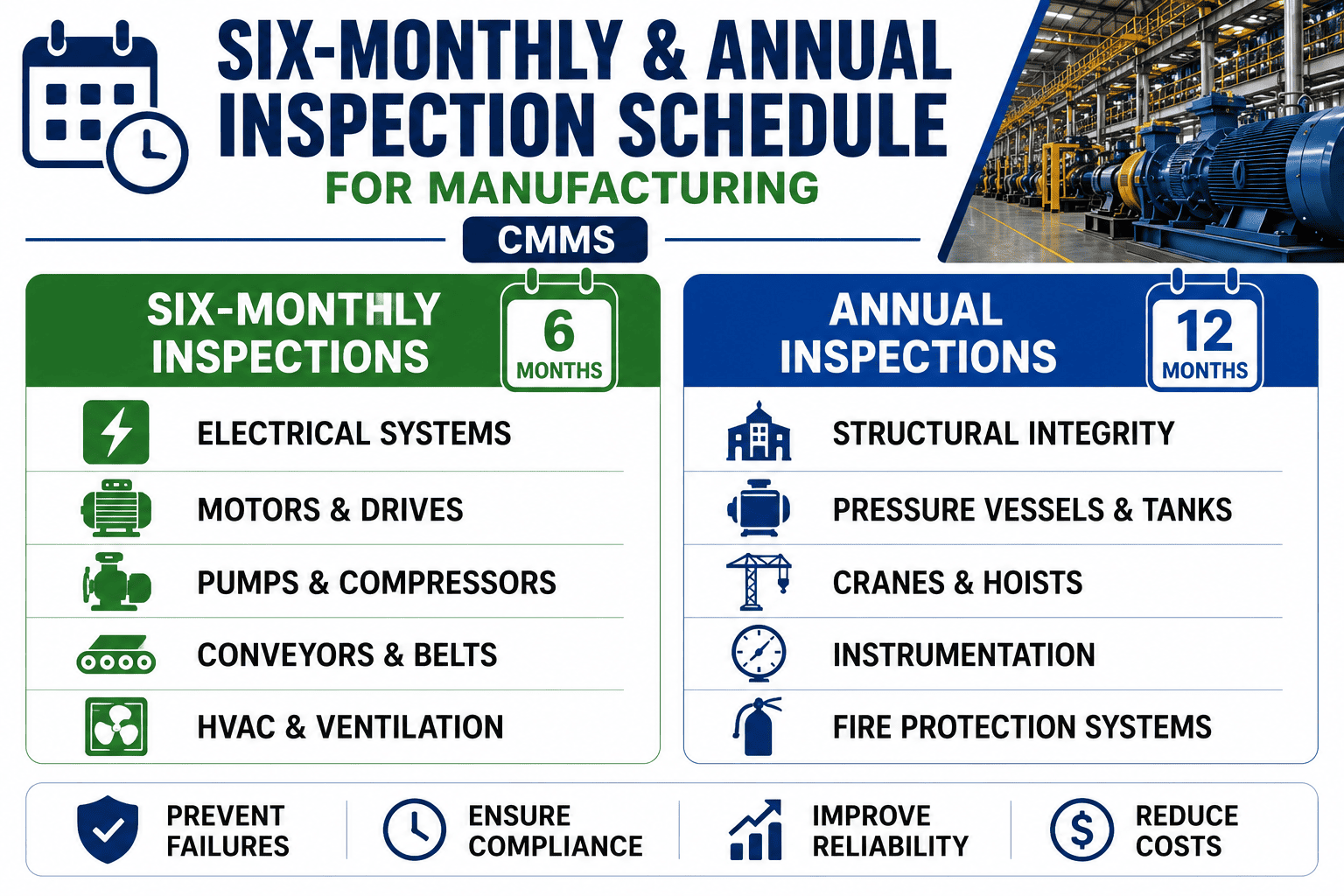
A six-monthly and annual inspection schedule for manufacturing is the structured backbone of plant reliability — the checkpoint where hidden defects, safety hazards, and efficiency losses are caught before they become costly failures. Building an effective manufacturing inspection schedule means defining inspection scope by asset class, aligning outages, coordinating contractors, and tracking every finding to closure in a centralized system. Plants that digitize these workflows in a CMMS close up to 3x more inspection findings before the next audit than those still relying on spreadsheets and paper checklists. This guide walks through how to plan and execute semi-annual and annual plant inspections end-to-end — and how OxMaint turns inspection data into predictive insights that cut unplanned downtime 30–50%. Ready to modernize your inspection process? Start Free Trial today.
INSPECTION SCHEDULE GUIDE
Is your annual plant inspection schedule actually getting executed — or just sitting in a spreadsheet?
A six-monthly inspection plan only works if every task, finding, and corrective work order is tracked to closure. See how modern maintenance teams digitize their entire annual maintenance inspection workflow and close audit findings 3x faster.
WHY IT MATTERS
The hidden cost of skipped semi-annual inspections in manufacturing
Industry studies show that 40% of unplanned downtime in manufacturing stems from hidden defects that only surface during scheduled inspections — yet up to 35% of bi-annual inspection tasks are skipped, delayed, or pencil-whipped.
Consider a mid-sized 180-asset manufacturing plant spending roughly $42,000 annually on reactive repairs tied to defects that a proper six-monthly inspection would have caught early — a leaking heat exchanger, a misaligned gearbox, a worn conveyor bearing. When that same plant digitizes its manufacturing inspection planning in a CMMS, it typically recovers 15–20% of that spend within the first year and slashes unplanned downtime by up to 30%.
INSPECTION SCOPE BY ASSET CLASS
What to include in a six-monthly vs annual plant inspection
Not every asset needs the same inspection frequency. Below is a practical scope breakdown aligned with common manufacturing equipment classes — use it as the baseline for your CMMS inspection schedule.
Rotating Equipment
Pumps, motors, compressors, gearboxes
Electrical Systems
Switchgear, transformers, MCCs, panels
Pressure Vessels & Piping
Boilers, tanks, heat exchangers, pipes
Material Handling
Conveyors, lifts, cranes, forklifts
HVAC & Utilities
AHUs, chillers, compressors, cooling towers
Safety & Fire Systems
Sprinklers, alarms, eyewash, emergency lighting
SCHEDULING IN A CMMS
How to schedule six-monthly and annual inspections in a CMMS
A CMMS annual inspection workflow replaces sticky notes and calendar reminders with automated, date-triggered or meter-triggered work orders. Here's the step-by-step process to build a manufacturing inspection schedule that actually executes.
Build your asset hierarchy
Register every asset, subsystem, and component in the CMMS with location, criticality rating, and manufacturer specs. A clean hierarchy is what lets you roll inspection schedules up by line, area, or plant — and report compliance in seconds.
Create inspection PM templates
For each asset class, build a preventive maintenance (PM) template with digital checklists, pass/fail criteria, required safety permits, and photo capture. Assign each template a frequency: 6-month calendar trigger or 12-month calendar trigger — or meter-based if runtime is the better predictor.
Align with outage windows
Schedule annual maintenance inspections to coincide with planned shutdowns or low-production windows. A good CMMS lets you drag inspection PMs into a shared calendar so production, maintenance, and contractors all see the same plan.
Assign resources and contractors
Assign technicians by skill code, attach external contractor work orders with scopes and pricing, and reserve spare parts from inventory. This eliminates the day-of scramble for parts and labor that typically delays inspections by 2–5 days.
Execute, capture findings, auto-escalate
Technicians complete digital checklists on mobile devices. Any "fail" or "defect" entry auto-generates a corrective work order, prioritizes it by criticality, and routes it for approval — no transcription, no lost paper, no pencil-whipping.
Track findings to closure before audit
Use dashboards to monitor open findings by severity, asset, and due date. Set automated escalation rules so overdue corrective actions notify the maintenance manager — ensuring nothing slips past the next compliance audit.
INSPECTION PLANNING TABLE
Manufacturing inspection schedule: frequency, effort, and coverage at a glance
Use this reference table to scope inspection labor, contractor needs, and coverage across a typical manufacturing plant. Adjust the hours to your asset count and criticality profile.
| Asset Class | 6-Monthly Tasks | Annual Tasks | Typical Hours/Asset | Contractor Needed |
|---|---|---|---|---|
| Rotating Equipment | Vibration, oil analysis, thermal | Teardown, bearing eval, alignment | 4–6 hrs | NDT / vib tech |
| Electrical Systems | Thermography, breaker test | Megger, relay calibration | 3–5 hrs | Electrical contractor |
| Pressure Vessels | Visual, PRV test, leak survey | UT survey, internal, NDT welds | 6–10 hrs | API inspector |
| Material Handling | Belt wear, limit switch, bolts | Load test, gearbox, certification | 3–5 hrs | Crane cert tech |
| HVAC & Utilities | Filters, coils, belts, water tx | Performance test, tube clean | 4–7 hrs | HVAC tech |
| Safety & Fire Systems | Eyewash, lights, extinguishers | Flow test, pump, certification | 2–4 hrs | Fire safety contractor |
CONTRACTOR COORDINATION
Managing contractors and outage alignment for plant annual inspections
Annual inspections often require specialized contractors — NDT technicians, API inspectors, electrical testing firms — and their availability dictates your outage window. Without a shared, digital plan, coordination breaks down.
Issue scopes in advance
Generate contractor work orders from your CMMS 4–6 weeks before the outage with clear scopes, safety requirements, and asset lists. Plants that do this cut contractor idle time by 50%.
Lock the shared outage calendar
Production, maintenance, and contractors should see one inspection calendar. Conflicts surface weeks ahead, not the morning of the shutdown.
Pre-stage parts and permits
Reserve gaskets, seals, filters, and bearings against inspection PMs. Generate hot-work and LOTO permits automatically so nothing stalls on day one.
Capture contractor findings digitally
Give contractors a mobile checklist or portal to log findings and photos directly into the CMMS — no emailed PDFs to chase down and re-enter.
See OxMaint on your assets — book a 30-min demo
Watch how OxMaint digitizes your six-monthly and annual inspection schedule, auto-generates corrective work orders, and closes findings before the next audit.
HOW OXMAINT HELPS
How OxMaint streamlines your CMMS annual inspection workflow
OxMaint is an AI-powered CMMS and EAM platform built for maintenance and reliability teams. Here's how it maps directly to the challenges of planning, executing, and closing six-monthly and annual inspections.
Automated inspection scheduling
Create 6-month and 12-month PM templates with digital checklists. OxMaint auto-generates work orders on schedule, assigns technicians, and reserves parts — eliminating 90% of manual planning effort.
Outcome: Zero missed inspection deadlines
Auto-generated corrective work orders
When a technician logs a failed inspection item on mobile, OxMaint instantly creates a prioritized corrective work order with photos, severity, and asset history attached.
Outcome: 3x faster finding-to-repair cycle
Audit-ready findings dashboard
Track every open finding by severity, asset, due date, and responsible party. Automated escalation rules notify managers when corrective actions slip — so you walk into every audit clean.
Outcome: 100% audit compliance readiness
AI-driven predictive insights
OxMaint's AI analyzes inspection history, vibration data, and failure patterns to predict which assets are heading toward breakdown — letting you shift from time-based to condition-based inspections.
Outcome: Cut unplanned downtime 30–50%
"We moved 1,200 annual inspection tasks from spreadsheets into OxMaint and closed 94% of findings before our ISO 55000 audit — something we never achieved on paper."
— Maintenance Manager, Tier-1 automotive components manufacturer
FAQ
Frequently asked questions about manufacturing inspection schedules
What is the difference between a six-monthly and annual inspection in manufacturing?
A six-monthly (semi-annual) inspection focuses on condition monitoring and early defect detection — vibration analysis, oil sampling, thermography, visual checks — while an annual inspection is more invasive: teardowns, NDT, certifications, and performance testing. Annual inspections typically align with planned outages and require more labor, contractors, and downtime windows.
How does a CMMS improve annual inspection scheduling for plants?
A CMMS automates work-order generation on calendar or meter triggers, assigns technicians, reserves parts, and digitizes checklists so findings are captured in real time. This eliminates the spreadsheet sprawl and pencil-whipping that cause 30–35% of inspection tasks to be skipped — and ensures every finding is tracked to closure. You can see this in action by booking a 30-minute demo with OxMaint.
How far in advance should I plan an annual plant inspection?
Start planning 8–12 weeks ahead. The first 4 weeks are for scope definition, asset list confirmation, and contractor booking; the next 4 for parts staging, permit prep, and outage calendar lock-in. Plants that plan this far out cut contractor idle time by 50% and finish inspections 2–3 days ahead of schedule.
What happens to inspection findings — how are they tracked and closed?
Every failed checklist item should auto-generate a corrective work order in your CMMS, prioritized by asset criticality and defect severity. That work order is then assigned, scheduled, and tracked through completion. Dashboards show open findings by severity and due date, with escalation rules that notify managers when actions are overdue — ensuring nothing survives past the next audit.
Can I switch from spreadsheet-based inspection tracking to a CMMS without disrupting operations?
Yes. Most modern CMMS platforms — including OxMaint — let you import existing asset lists, inspection schedules, and checklist templates via CSV, then phase in digitized inspections by area or asset class over a few weeks. Teams typically see full adoption within 30–60 days. Start a free 14-day trial to import your first 50 assets and test the workflow.
Stop inspecting on paper. Start closing findings in OxMaint.
Join the maintenance teams using OxMaint to digitize inspection schedules, cut unplanned downtime 30–50%, and walk into every audit audit-ready.
Free 14-day trial · No credit card