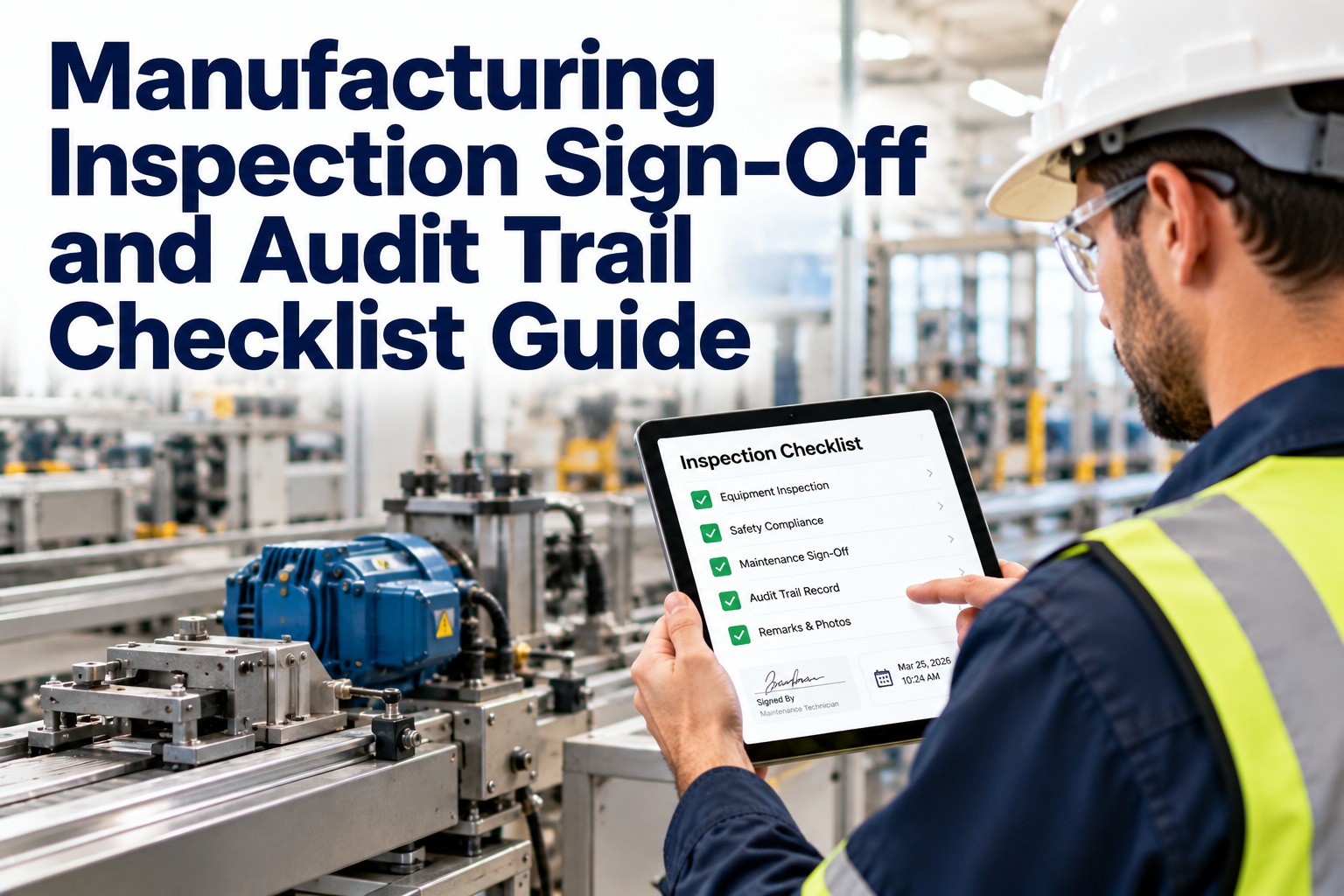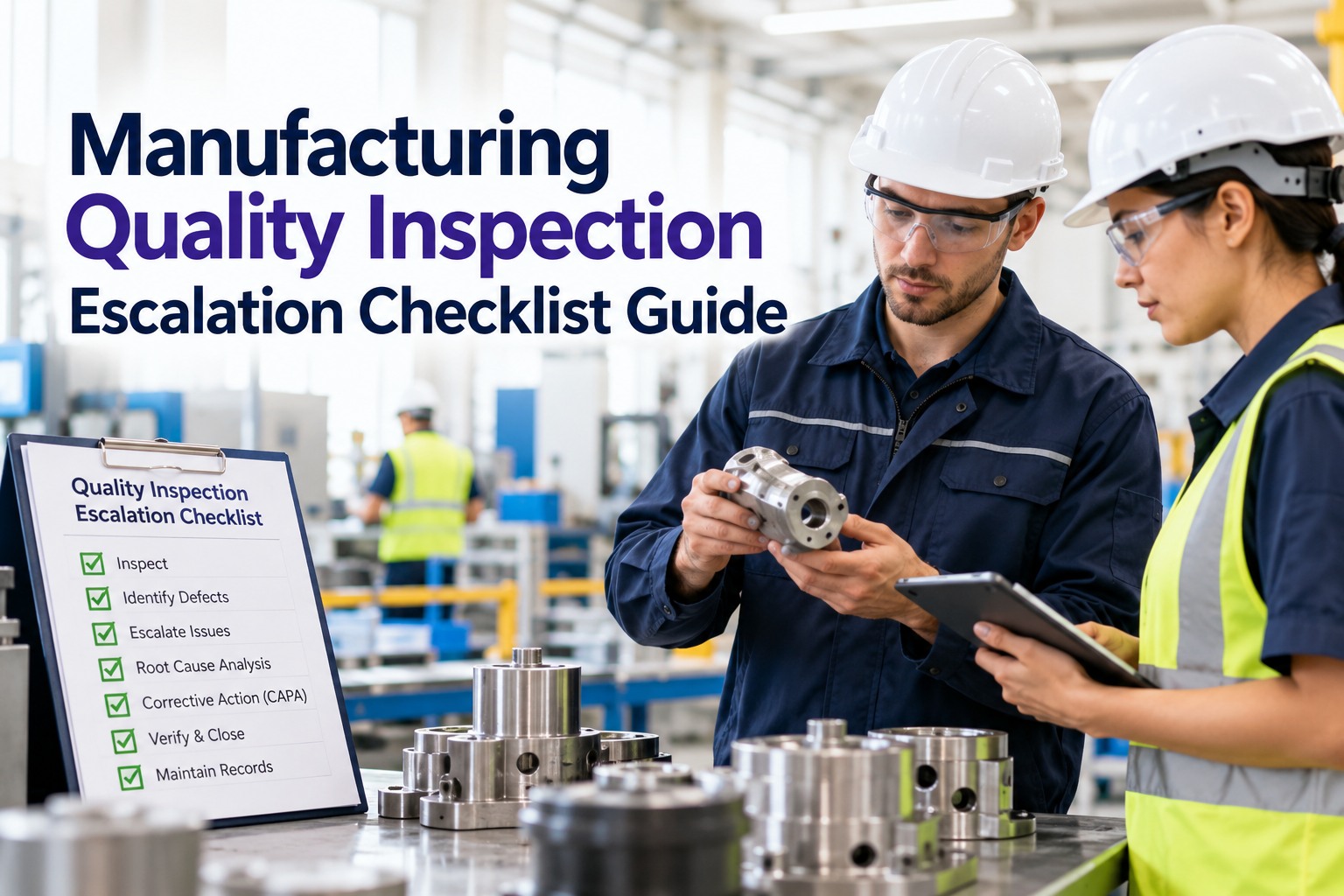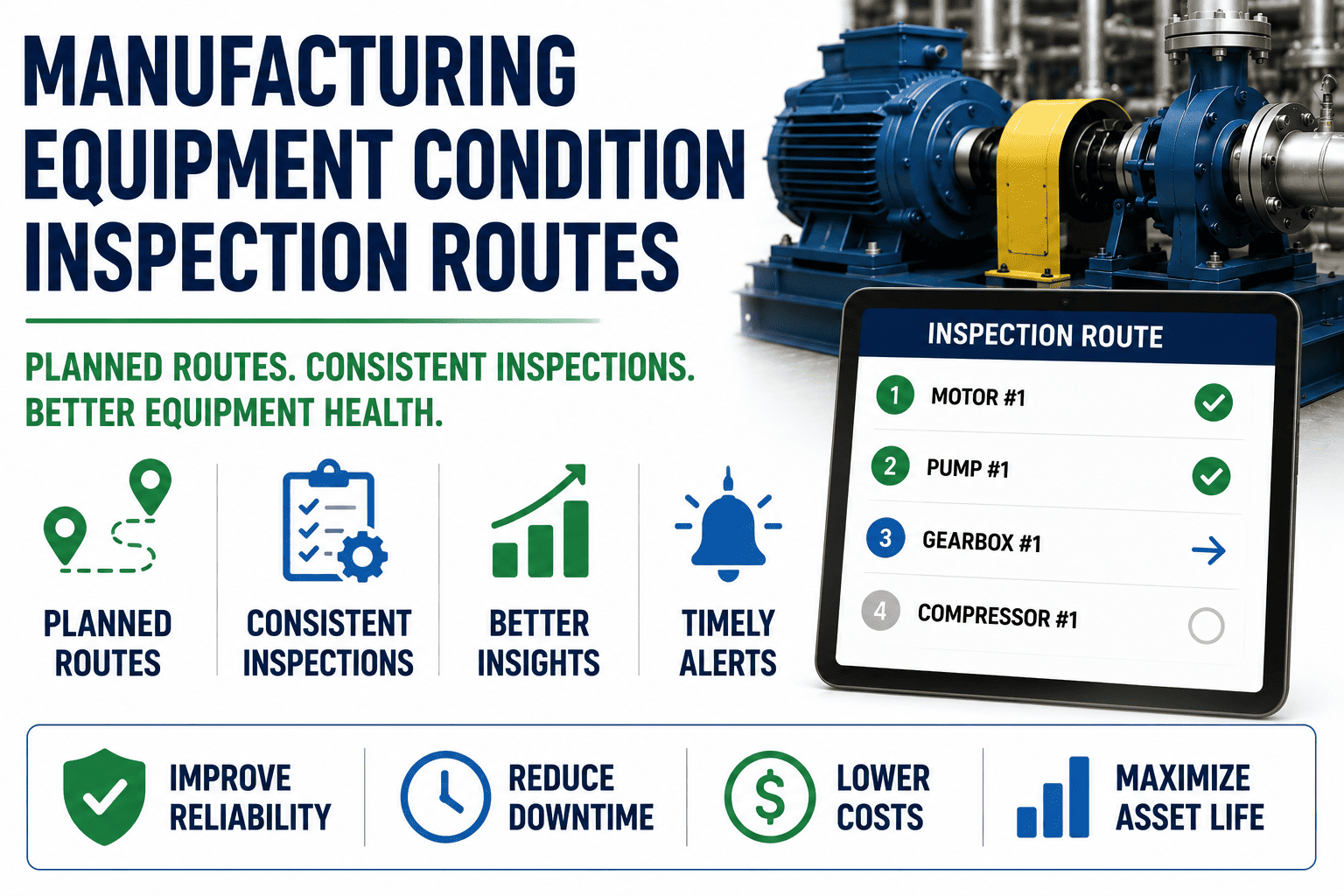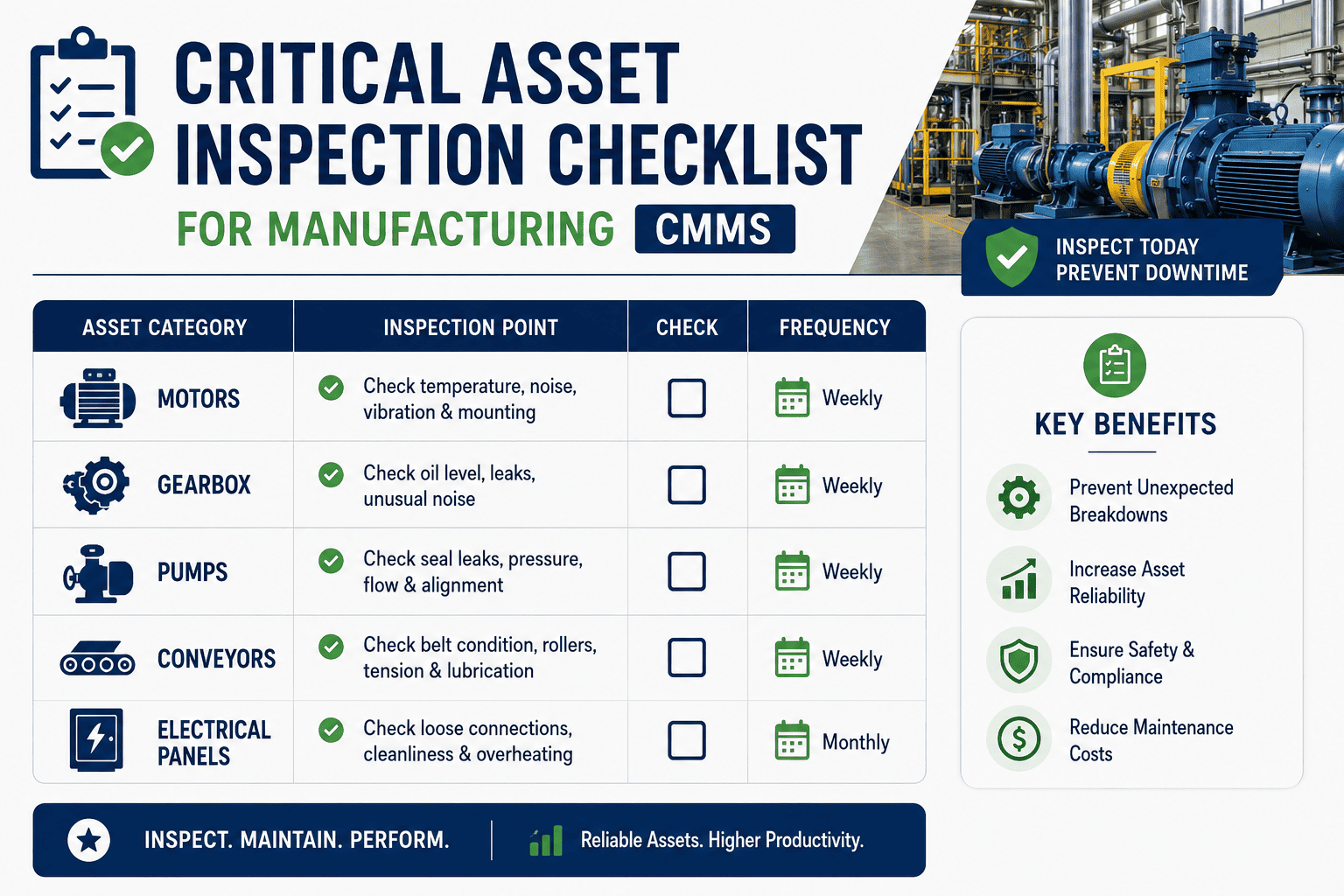
A critical asset inspection checklist for manufacturing is a structured, equipment-specific set of inspection points, acceptance criteria, and measurement captures tied directly to asset criticality—designed to catch failures before they escalate into unplanned downtime. In a modern CMMS, these checklists replace generic paper rounds with conditional logic, forcing technicians to score machine health against precise thresholds rather than ticking a generic "OK" box. When built correctly, a manufacturing asset inspection program aligned to ISO 55000 standards can reduce unplanned downtime by 30–50% and extend the mean time between failures (MTBF) of your most vital equipment. See how OxMaint digitizes and automates your plant inspection checklist when you Start Free Trial today.
Are your most critical machines inspected against precise failure criteria, or just a generic checklist?
Plants lose over $50 billion annually to unplanned downtime, often because maintenance teams apply the same 20-point PM task list to both a low-criticality exhaust fan and a high-criticality production extruder. Critical assets deserve dedicated, measurement-driven inspection checklists built in a CMMS.
How to rank assets for your critical equipment inspection program
Not all assets deserve the same inspection scrutiny. Before building a critical asset inspection checklist for manufacturing, you must define what actually makes an asset "critical" to your plant's safety, throughput, and profitability.
| Criticality Tier | Asset Examples | Failure Impact | Inspection Frequency |
|---|---|---|---|
| Tier 1: Mission-Critical | Main extruders, primary compressors, core hydraulic packs | Immediate line shutdown, safety risk, >$10K/hr downtime cost | Daily / Per-shift |
| Tier 2: Essential | Secondary pumps, HVAC units, material handling systems | Degraded throughput, workaround possible, $2K–$5K/hr loss | Weekly |
| Tier 3: General | Exhaust fans, ancillary motors, non-process pumps | Minimal immediate impact, run-to-fail acceptable | Monthly / Quarterly |
Real-world impact: A 180-asset manufacturing plant spending $42K annually on generic preventive maintenance for all equipment implemented a tiered criticality assessment using OxMaint. By shifting Tier 3 assets to run-to-fail and focusing 80% of their inspection labor on Tier 1 and 2 assets, they caught a pre-failure vibration anomaly on a primary compressor, avoiding a $128,000 unplanned shutdown.
Essential components of a critical asset inspection checklist in a CMMS
A critical machine inspection checklist must capture measurable data, not just visual confirmation. Here is the anatomy of a high-conversion inspection template that satisfies both reliability engineers and compliance auditors.
Measurement Capture & Acceptance Criteria
Instead of "Check bearings," mandate a numeric range: "Record bearing temperature (Acceptance: <70°C)." A CMMS inspection checklist should force technicians to input actual readings, automatically flagging any value outside the tolerance threshold for immediate supervisor review.
Conditional Escalation Paths
If an asset inspection reveals a critical fault (e.g., pressure drops below 80 PSI), the checklist must auto-trigger a high-priority corrective work order. This closes the gap between detection and action, ensuring no failed inspection is lost in a paper logbook.
Standardized Failure Modes (FMEA)
Build checklist questions around specific failure modes identified in your FMEA. If leakage is a top failure mode for a hydraulic press, include a dedicated step for inspecting seal integrity and fluid levels, rather than relying on a generic visual sweep.
Safety Lockout/Tagout (LOTO) Integration
Any critical asset inspection requiring guard removal or mechanical engagement must have mandatory LOTO verification steps built into the CMMS workflow. The technician cannot advance the checklist without confirming the energy isolation state.
How often should manufacturing assets be inspected?
Inspection frequency should be driven by criticality, failure history, and operating conditions—not a uniform calendar schedule. Here is a benchmark framework for a plant inspection checklist.
Tier 1: Mission-Critical Assets
Pre-shift visual checks, basic lubrication levels, safety interlock tests, and operating temperature/vibration readings on assets where a failure immediately stops production or compromises worker safety.
Tier 2: Essential Assets
Deeper visual inspections, coupling alignments, filter condition checks, and secondary system functionality tests on assets that impact throughput but allow for temporary operational workarounds.
Predictive Maintenance Routes
Vibration analysis, oil sampling, thermography, and ultrasonic testing scheduled for both Tier 1 and Tier 2 assets to catch bearing degradation, electrical faults, and lubrication breakdown before they become functional failures.
Compliance & System Audits
Full compliance verification for regulatory standards (OSHA, ISO 55000), calibration checks on sensors, and comprehensive reliability reviews to update the CMMS asset inspection master list.
Stop losing hours to paper checklists and missed inspection signals
OxMaint digitizes your critical asset inspection workflows, auto-flagging out-of-tolerance measurements and triggering instant corrective work orders. See it on your assets today.
How OxMaint transforms your critical asset CMMS workflows
Migrating from spreadsheets or reactive maintenance to an AI-powered CMMS removes the administrative burden of inspection management while drastically improving data fidelity and audit readiness.
Digital, Conditional Checklists
Replace paper rounds with dynamic CMMS inspection checklists that adapt to asset condition. Out-of-range measurements instantly generate high-priority corrective work orders, reducing response time by up to 60%.
Predictive Analytics Integration
Combine manual inspection data with IoT sensor readings. OxMaint's AI predicts failures 2–4 weeks in advance, allowing you to cut unplanned downtime by 30–50% and optimize your critical asset inspection frequency automatically.
Audit-Ready Compliance Trails
Every inspection is time-stamped, geotagged, and digitally signed. Generate ISO 55000, OSHA, and FMCSA compliance reports in seconds, eliminating the risk of missing documentation during regulatory audits.
Spare Parts & Inventory Sync
When an inspection identifies a worn component, OxMaint checks spare parts inventory in real-time. Automatically reserve parts and attach them to the generated corrective work order, eliminating repair delays.
Step-by-step: Building your CMMS asset inspection checklist
Transitioning to a digital, criticality-based inspection model takes days, not months, when you follow a structured rollout plan within your CMMS.
Assess & Rank Asset Criticality
Import your asset register into OxMaint. Score each machine on a 1–10 scale for production impact, safety risk, and mean time to repair (MTTR) to assign Tier 1, 2, or 3 status.
Define Failure Modes & Acceptance Criteria
For every Tier 1 and 2 asset, map the top 3–5 failure modes. Define exact measurement thresholds (e.g., vibration < 4.5 mm/s, temp < 75°C) to serve as automated acceptance criteria in the checklist.
Build Digital Checklists with Conditional Logic
Create the inspection templates in OxMaint. Add mandatory photo capture for visual faults, numeric keypads for readings, and automated escalation triggers for failed criteria.
Deploy to Mobile & Monitor KPIs
Push checklists to technicians' mobile devices. Monitor schedule compliance, inspection failure rates, and mean time to resolve flagged issues via the OxMaint analytics dashboard.
Critical asset inspection manufacturing FAQs
What is a critical asset inspection checklist in manufacturing?
A critical asset inspection checklist is a detailed, equipment-specific evaluation tool used in manufacturing to assess the health and operational condition of high-priority machinery. Unlike generic PM tasks, it includes specific measurement captures, acceptance criteria, and safety steps designed to catch early failure signs for mission-critical equipment. You can build and deploy these dynamically when you Start Free Trial with OxMaint.
How does a CMMS improve manufacturing asset inspection?
A CMMS replaces paper checklists with mobile digital forms, ensuring inspections are actually completed on schedule with time-stamped proof. It automatically flags out-of-tolerance readings, instantly triggers corrective work orders, and centralizes historical inspection data for predictive analytics and compliance audits. This reduces administrative time by up to 40% and eliminates lost paperwork.
How do you determine the frequency of critical equipment inspections?
Inspection frequency is determined by asset criticality ranking, historical failure rates, and manufacturer recommendations. Tier 1 mission-critical assets typically require daily or per-shift inspections, while Tier 2 essential assets may only need weekly checks. Predictive maintenance technologies like vibration analysis are usually scheduled on a 30-day rotating route to catch degradation trends early.
Can I migrate my existing Excel inspection checklists to OxMaint?
Yes, OxMaint supports seamless migration from Excel spreadsheets and paper-based systems. Our team helps you map your existing inspection points, criticality tiers, and acceptance criteria into intelligent digital templates, often completing the full transition in just a few days so your team can start seeing ROI immediately. Book a Demo to see the migration process.
What happens when an asset fails an inspection in OxMaint?
When a technician inputs a reading that falls outside the predefined acceptance criteria, OxMaint immediately flags the checkpoint as failed. The system can be configured to automatically generate a high-priority corrective work order, alert the reliability engineer, and check spare parts inventory for required repair components—all in real-time without manual data entry.
Ready to digitize your critical asset inspection program?
Join the manufacturing plants using OxMaint to cut unplanned downtime, ensure audit readiness, and extend the life of their most critical equipment. See the platform configured for your facility.
Free 14-day trial · No credit card required