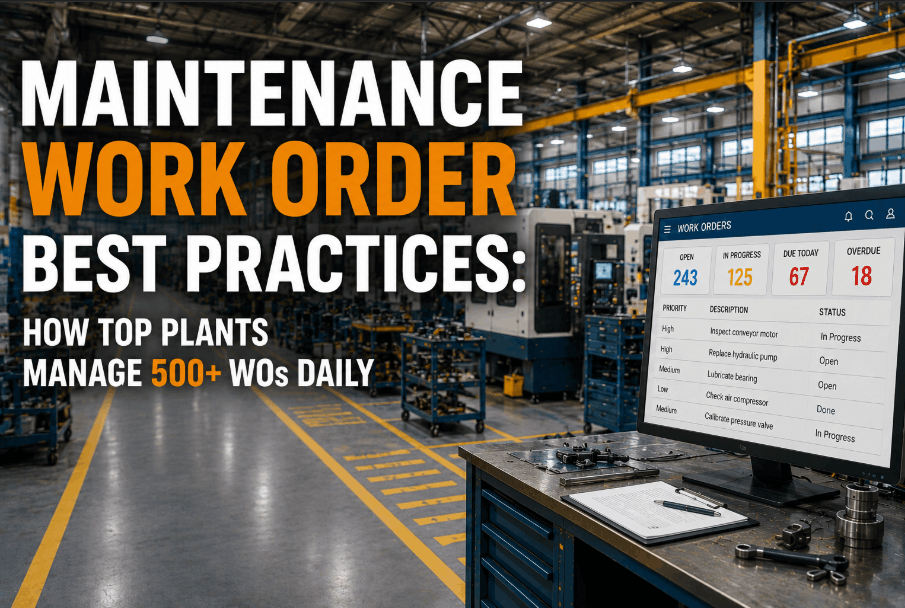
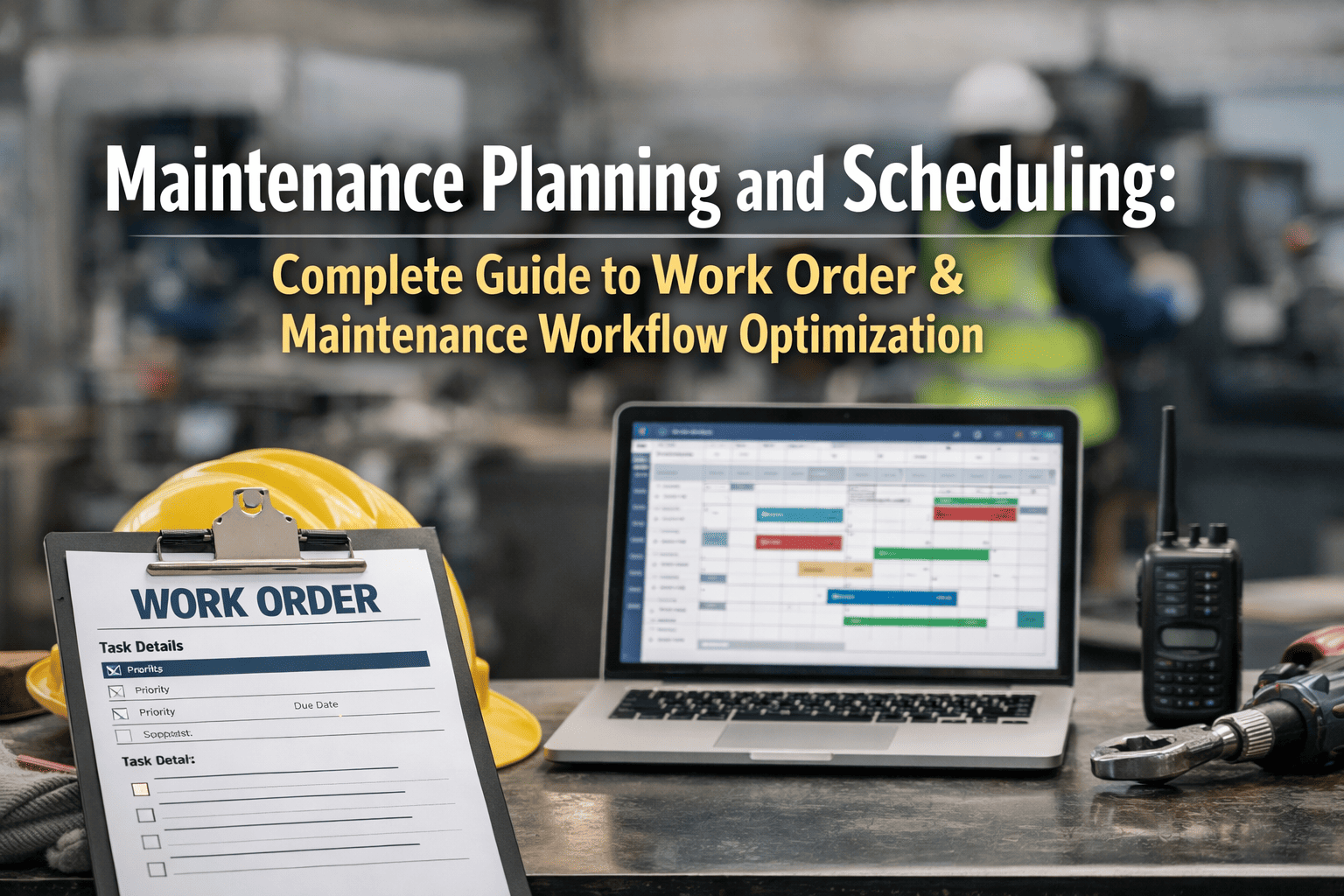
In high-volume factories, work orders don't just accumulate — they stack behind the shift plan in patterns that reveal exactly where execution pace is breaking down. Burn-down rate, queue aging, and task throughput are the signals that tell maintenance planners whether open load is clearing fast enough or quietly building toward a backlog crisis. Sign Up Free to track your factory's burn-down patterns in real time and identify closure gaps before they affect the line. OxMaint turns raw work order data into burn-down visibility — order closure rate, dispatch rhythm, and crew load balance measured per shift, per line, per priority class. Book a Demo to see how burn-down analytics maps across your factory's shift structure and backlog profile.
Work Order Analytics · High-Volume Factories · 2026
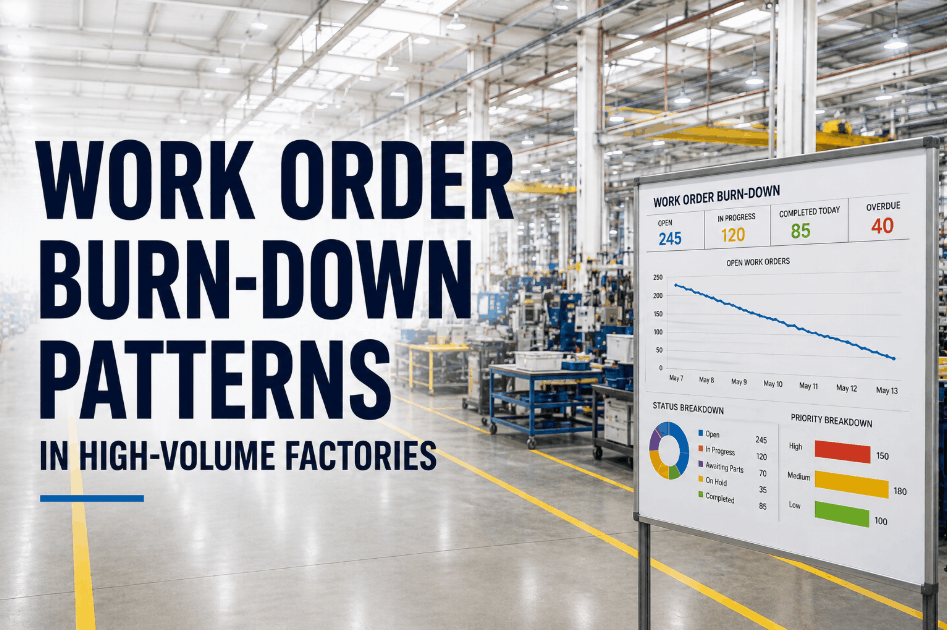
Work Order Burn-Down Patterns in High-Volume Factories
Track whether work orders clear fast enough or keep stacking behind the shift plan — the burn-down patterns that reveal hidden pressure across busy factories.
67%Of high-volume factories have work order closure rates below shift-plan demand
−38%Queue aging reduction in factories with real-time burn-down visibility
2.4×Faster order closure with automated dispatch rhythm and priority sequencing
91%Shift-plan accuracy with OxMaint burn-down pacing alerts
6 Burn-Down Patterns That Signal Hidden Factory Pressure
Burn-down failure in high-volume factories rarely announces itself — it accumulates across shifts through patterns that are invisible without structured measurement. The six patterns below represent the most consequential burn-down signals OxMaint surfaces for factory maintenance teams. Sign Up Free to configure burn-down pattern monitoring for your factory's shift structure in under an hour.
Intake Exceeds Closure
Pattern: New orders added faster than old ones close
Stack Risk
Net queue growth per shift — the primary indicator that burn-down rate is structurally below demand. Sustained over 3 shifts, backlog becomes unrecoverable without crew adjustment.
End-of-Shift Spike
Pattern: Closures cluster in final 90 minutes of shift
Timing Distortion
Indicates batch-closing behavior — technicians logging completions at shift end rather than real time. Distorts burn-down curve and hides true execution pace.
Priority Inversion
Pattern: P3 orders closing faster than P1/P2
Sequence Breach
Low-priority, easy tasks are being cleared while critical work ages in the queue. Common in factories without enforced dispatch sequencing — directly extends MTTR on production-critical assets.
Crew Bottleneck
Pattern: One skill set holding up multi-step work orders
Labor Constraint
Work orders stall when a required skill (electrical, hydraulic, PLC) is unavailable. Burn-down slows for the entire queue even when general labor is available — a labor balance issue, not a volume issue.
Shift Handoff Loss
Pattern: Work started on one shift not resumed on next
Continuity Gap
In-progress work orders abandoned at shift change and restarted from zero by the incoming crew — adding hours to effective closure time and inflating open load artificially.
Parts-Wait Stall
Pattern: Work orders paused awaiting parts for >4 hours
Supply Delay
Parts unavailability is the second most common burn-down inhibitor after crew bottleneck. OxMaint flags stalled orders and cross-references parts availability before dispatch.
Burn-Down Control — Without vs. With OxMaint
The difference between a factory managing burn-down reactively and one with shift-level work order flow visibility is measurable at the end of every week in queue aging, closure rate, and MTTR. The comparison below shows the operational gap across six burn-down control dimensions. Book a Demo to see what your factory's current burn-down profile looks like in OxMaint's analytics dashboard.
Burn-Down Maturity — Where Does Your Factory Sit?
Work order burn-down control in high-volume factories ranges from zero visibility to fully automated shift-plan pacing with real-time closure tracking and priority enforcement. The maturity framework below lets maintenance managers pinpoint the specific gap costing execution speed today. Book a Demo to assess your factory's current burn-down maturity with an OxMaint solutions engineer.
Work Order Burn-Down Maturity
Score 5 = real-time burn-down control · Score 1 = no closure tracking
5
Real-Time Burn-Down · Shift-Plan Integrated · Auto-Dispatch
Closure rate, queue aging, priority adherence, and crew load tracked per shift. Burn-down pacing alerts fire before the shift falls behind the plan. Shift handoff fully documented.
Profile: Factory operates at maximum execution speed. Work order flow matches demand. Backlog is a managed variable, not an accumulating liability.
4
Shift-Level Tracking · Priority Sequencing Active
Closure rate and priority dispatch active. Crew load and parts-wait stall detection still manual. Shift handoff partially documented.
Action: Add parts-availability pre-check and skill-level load balancing to complete the burn-down control layer in OxMaint.
3
Daily Reporting · No Shift-Level Visibility
Work orders tracked and reported daily. Burn-down curve visible in end-of-day reports but not during the shift. Priority inversion and crew bottleneck invisible in real time.
Gap: Daily cadence means burn-down failure accumulates for 8+ hours before correction. Shift-level pacing alerts are the missing control at this maturity level.
2
Work Order System · No Burn-Down Analytics
Work orders logged and assigned but no closure rate tracking. Queue aging unknown. Dispatch by supervisor discretion with no priority enforcement.
Risk: Priority inversion and crew bottlenecks are compounding undetected. Configure closure rate tracking and P1 dispatch SLA as an immediate first step.
1
No Closure Tracking
Work orders managed informally. No closure rate measurement, no queue aging visibility, no shift-plan comparison. Burn-down failure visible only when factory output drops.
Risk: Every untracked stall and priority inversion is silently extending downtime. Burn-down failure is already affecting output — it's just unattributed.
See Your Factory's Burn-Down Pattern — Before the Next Shift Stacks.
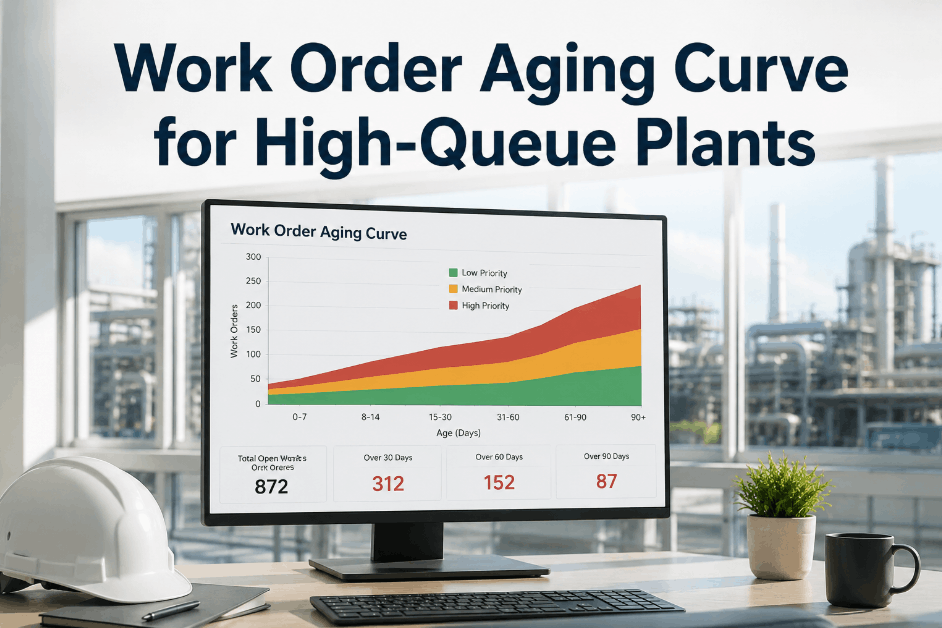
OxMaint tracks work order closure rate, queue aging, and dispatch rhythm per shift — giving high-volume factories the burn-down visibility to act before backlog compounds.
How OxMaint Controls Burn-Down Across the Shift Plan
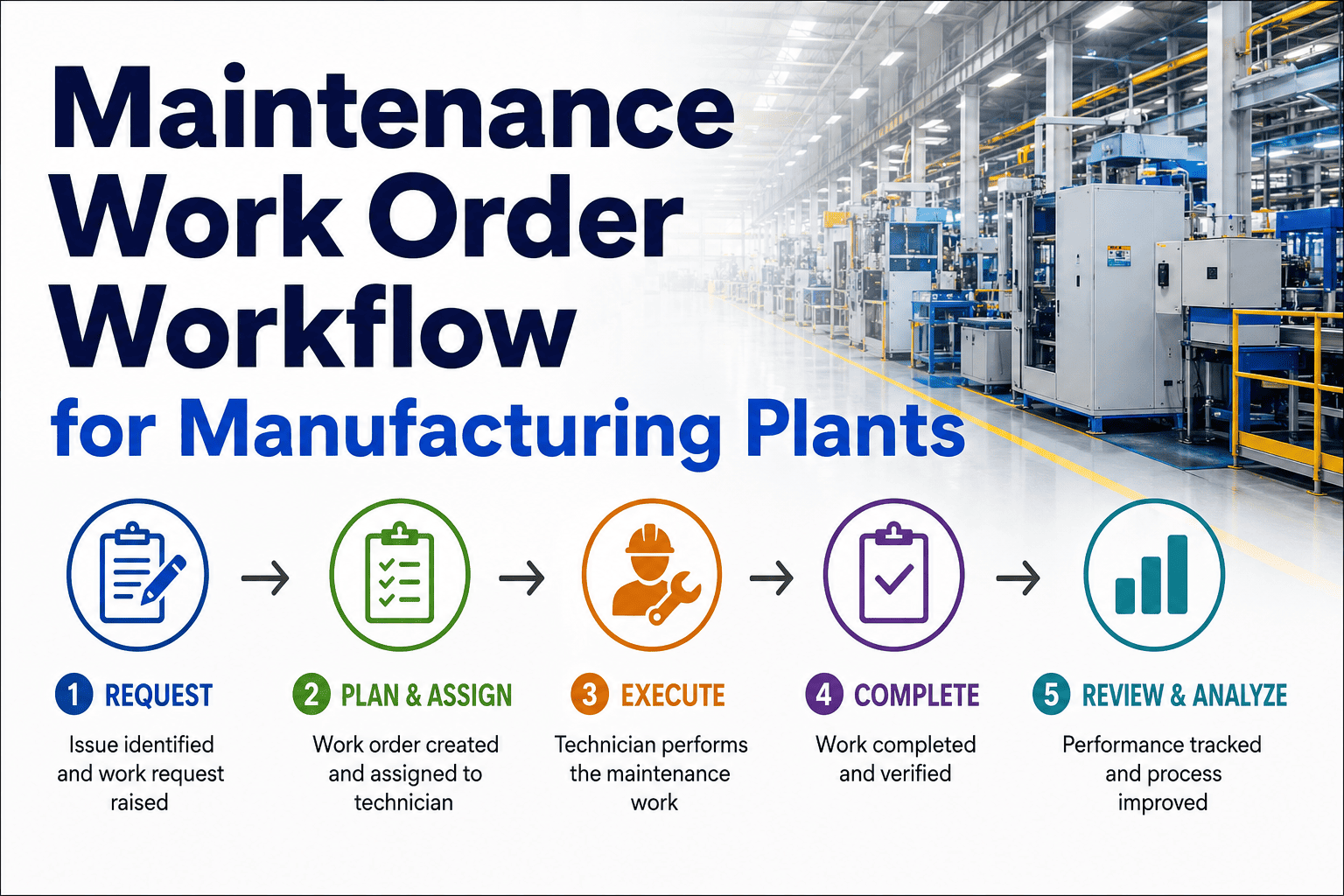
OxMaint doesn't just log work orders — it measures how fast they clear, identifies where they stall, and connects burn-down pace to the shift plan in real time. Maintenance planners see whether the factory is on track to close the day's open load, or whether the next shift will inherit a queue it cannot clear. Sign Up Free to start tracking your factory's burn-down curve with zero setup complexity. Automated priority sequencing ensures P1 and P2 orders reach the right technician before lower-priority work consumes available crew hours. Book a Demo to see how burn-down pacing alerts integrate with your current shift structure.
Burn-Down Dashboard
Real-Time Queue Curve
Open vs. closed orders tracked per shift
Live burn-down curve shows whether the factory is ahead or behind the shift plan. Intake vs. closure rate calculated every 30 minutes — pacing alert fires when the curve inverts.
Priority Dispatch Engine
Sequence Enforcement
P1/P2 dispatch compliance tracked per shift
Automated dispatch sequencing ensures high-priority work orders reach assigned technicians before lower-priority tasks. Priority inversion detected and flagged within the same shift.
Parts-Wait Detection
Pre-Dispatch Check
Parts availability verified before job assignment
OxMaint cross-references parts availability before dispatching a work order. Stall risk flagged before the technician is assigned — eliminating hours-long discovery delays at job start.
Shift Handoff Log
Context Transfer
In-progress work transferred with full job history
In-progress work orders carry complete job history, parts used, and next steps into the shift handoff — incoming crew resumes immediately rather than rediscovering the job from scratch.
"
Our burn-down problem was invisible. We thought we were keeping up with demand — but the queue was growing by 8–10 tickets every shift because technicians were batch-closing at the end of their run. Once OxMaint showed us the real closure curve, we found 3 priority inversions per shift that nobody had flagged. We cleared the backlog in 11 days and haven't gone back above threshold since.
Production Maintenance Lead — High-Volume Assembly, 4 lines, Pune, India
Frequently Asked Questions
What is a work order burn-down pattern?
A burn-down pattern describes how quickly open work orders are closed relative to new ones being created. In high-volume factories, when closure rate falls below intake rate across shifts, backlog stacks behind the shift plan and eventually affects output.
How does OxMaint detect priority inversion in work order dispatch?
OxMaint tracks closure timestamps against assigned priority class. When P3 orders are closing faster than P1/P2 orders within the same shift, the system flags a priority inversion and alerts the planner to correct dispatch sequencing.
Can OxMaint track burn-down across multiple shifts and crews?
Yes — OxMaint tracks closure rate, queue aging, and crew load independently per shift and per crew. Shift handoff documentation ensures burn-down continuity across day, evening, and night runs.
What causes parts-wait stalls and how does OxMaint prevent them?
Parts-wait stalls occur when a technician reaches a job and discovers required parts are unavailable. OxMaint cross-references parts stock before dispatch and flags unavailability — preventing stall discovery at the job site.
How quickly can burn-down monitoring be configured in OxMaint?
Most factories configure burn-down pacing alerts, priority dispatch rules, and shift handoff documentation within a single day. No hardware changes required — OxMaint works with your existing work order data.
Turn Burn-Down Patterns Into Shift-Level Execution Control.
OxMaint tracks closure rate, queue aging, and dispatch rhythm per shift — giving high-volume factories the work order flow visibility to prevent backlog before it stacks.