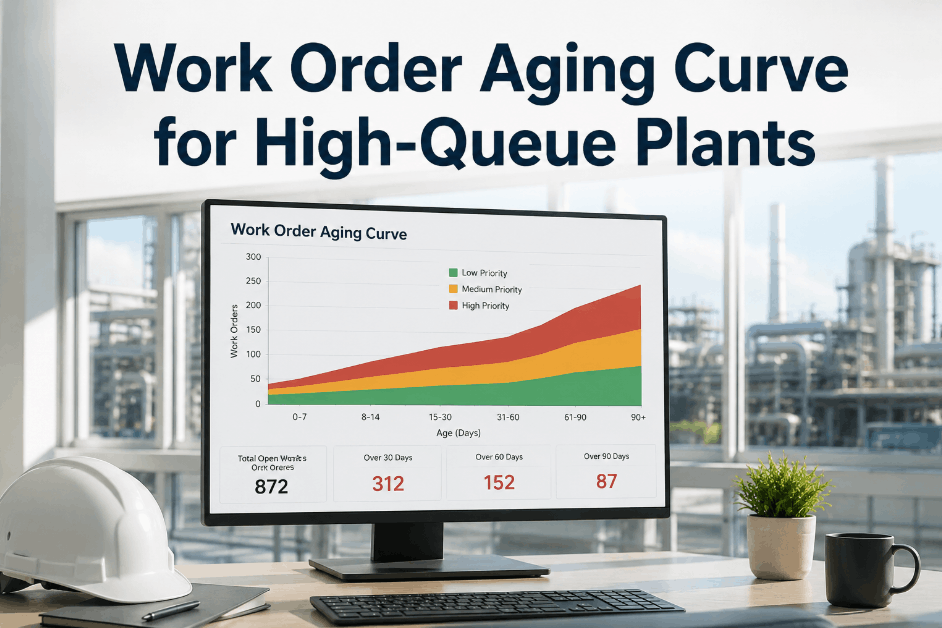
Queue pressure in packaging operations rarely announces itself as a crisis — it builds gradually through misaligned dispatch priorities, aging open work, and labor mismatches that compound during peak shifts until throughput visibly suffers. A mid-size packaging facility running multi-shift production found itself with a persistent execution gap: work orders were open but not sequenced, crew loads were uneven across shifts, and the triage process for deciding what to act on next was informal and inconsistent. The result was measurable queue pressure that squeezed productive output during the hours it mattered most. If your packaging operation is managing dispatch backlogs and peak-shift throughput pressure without structured work sequencing, Sign Up Free to see how Oxmaint structures execution priority — or Book a Demo with a maintenance operations specialist.
Queue Pressure · Dispatch Order · Peak Shift Throughput
Bring Execution Order to Your Packaging Operation Before Queue Pressure Becomes a Throughput Problem
Work sequencing, dispatch triage, labor balance monitoring, task aging visibility, and order closure tracking — Oxmaint helps packaging teams protect throughput by structuring how open work gets prioritized and executed.
Facility Profile
The Operation: High-Volume Packaging Site, Informal Dispatch, and Recurring Peak-Shift Backlogs
Facility Overview
IndustryConsumer goods packaging — high-volume, multi-line, three-shift operation
Scope8 packaging lines, 4 support areas, shared maintenance crew across shifts
Team22 technicians across 3 shifts, 3 supervisors, 1 planning coordinator
Prior SystemSpreadsheet-based work log, verbal dispatch handoffs, no triage queue structure
Oxmaint FeaturesWork Order Sequencing · Dispatch Triage · Labor Balance Monitoring · Task Aging · Order Closure Tracking · Priority Flow · Crew Load Visibility · Planning Accuracy
Baseline Pressure Points
34%
Queue pressure reduction achieved — waiting work during peak shifts dropped significantly after structured dispatch rules were applied
3.1×
Average task aging at peak — open work was sitting unaddressed for over 3× the intended response window during high-demand periods
47%
Of dispatch decisions were made informally — without visibility into crew load, task priority, or order sequence at shift handoff
Root Cause Analysis
Why Queue Pressure Kept Building — And Why Peak Shifts Absorbed the Damage
A structured review of 60 days of work order history, shift logs, and dispatch records identified four operational gaps sustaining the queue pressure problem. The facility had enough maintenance capacity — the problem was sequencing and visibility. Open work was not prioritized by service impact, crew loads were not visible across shifts, and the handoff between shifts had no structured triage process. Peak-shift throughput absorbed the accumulated disorder. Sign Up Free to assess your own dispatch queue exposure — or Book a Demo to see how Oxmaint applies work sequencing to your operation.
38%
No Structured Dispatch Priority — Work Executed in Arrival Order, Not Impact Order
Work orders were dispatched in the sequence they were submitted, with no triage weighting for production impact, line criticality, or shift timing. Low-priority tasks displaced urgent work during peak periods, extending queue depth without any structured mechanism to correct order.
27%
Crew Load Not Visible at Shift Start — Labor Balance Decisions Made Without Data
Supervisors had no real-time view into crew load distribution at the start of each shift. Work was assigned based on familiarity and availability estimates rather than structured load data, leading to uneven coverage that left some lines under-supported during peak demand windows.
21%
Task Aging Not Tracked — Waiting Work Accumulated Without Escalation Triggers
There was no mechanism to flag open work that had exceeded its response window. Tasks aged without escalation, and supervisors had no way to identify which open items were approaching critical delay until operators reported the impact directly on the production floor.
14%
Shift Handoff Had No Triage Process — Context Was Lost Between Crews
Work order status, priority context, and pending escalations were communicated verbally at shift handoff with no structured format. Incoming crews had incomplete pictures of queue depth and task urgency, causing repeated re-triage delays at every shift transition.
The Solution
How Oxmaint Reduced Queue Pressure and Protected Throughput at the Packaging Facility
The facility deployed Oxmaint to bring dispatch structure to a work environment that had been running on informal coordination. Work orders were assigned priority scores based on production impact and lead time, sequencing the queue automatically rather than by submission order. Crew load became visible at shift start, allowing supervisors to balance coverage before peak demand hit. Task aging thresholds triggered escalation flags, preventing open work from accumulating silently. Shift handoffs were structured through Oxmaint — incoming crews received a clear queue state with priority context, reducing ramp-up delays at every transition. Book a Demo to see how structured dispatch applies to your packaging lines.
01
Priority-Weighted Work Sequencing Across All Open Work Orders
Work orders were ranked by production impact, line criticality, and response window rather than submission time. The dispatch queue was ordered automatically within Oxmaint, giving supervisors a clear execution sequence that protected throughput during peak shifts without manual re-sorting.
02
Crew Load Visibility at Shift Start for Balanced Coverage
Supervisors gained real-time visibility into crew assignments and current load distribution at the start of each shift. Labor balance decisions were made from structured data rather than estimates, reducing coverage gaps during peak demand and improving response cycle consistency across the production floor.
03
Task Aging Thresholds With Automatic Escalation Flags
Aging rules were configured in Oxmaint to flag work orders that exceeded their target response windows. Escalation alerts surfaced overdue tasks before they created production impact, replacing the previous system where aging only became visible after operators reported delays on the line.
04
Structured Shift Handoff With Queue State and Priority Context
Shift transitions were formalized through Oxmaint, with incoming crews receiving a structured view of open work, current priorities, and escalation status. Verbal handoff delays were replaced with a documented queue state that allowed new crews to begin execution without re-triage, recovering productive minutes at every shift start.
Results at 90 Days
What Queue Pressure and Throughput Numbers Looked Like Three Months After Deployment
34%
Reduction in queue pressure during peak shifts — waiting work decreased after structured dispatch rules were applied
81%
Of work orders now dispatched by priority sequence — down from less than 53% under informal dispatch
68%
Reduction in task aging beyond response window — escalation flags prevented silent backlog accumulation
+39%
Improvement in labor coverage balance across shifts — crew load visibility enabled structured assignment decisions
55%
Faster shift handoff ramp-up — structured queue state at handoff reduced re-triage delays at every shift transition
2.8×
ROI on platform cost within 90 days from recovered throughput minutes and reduced peak-shift disruption
| Metric |
Before Oxmaint |
90 Days After |
Change |
| Queue pressure during peak shifts |
High — unstructured dispatch |
34% reduction |
-34% |
| Work orders dispatched by priority |
~53% (informal) |
81% structured |
+28% |
| Task aging beyond response window |
3.1× target age |
Estimate-based |
Structured load data |
+39% |
| Shift handoff ramp-up time |
Verbal — 15–20 min delay |
Under 7 min |
-55% |
| Escalation flag response time |
Reactive (operator-reported) |
Proactive within shift |
Proactive |
Key Business Impact
What Structured Dispatch and Queue Control Mean for Packaging Operations
"Queue pressure in packaging operations is almost always a sequencing problem before it becomes a capacity problem. The work exists, the crews are available, but the dispatch order is wrong — so the highest-impact tasks wait while lower-priority items get addressed first simply because they arrived first or someone knew where to find the parts. When you add aging visibility and structured shift handoffs, the queue becomes manageable. Incoming crews know exactly what's urgent, supervisors can balance load before the peak hits, and escalation happens before operators feel the delay on the line. That's what protecting throughput actually looks like — not adding headcount, but making the existing operation execute in the right order."
Marcus Tran, Packaging Operations and Maintenance Execution Advisor
12 years packaging and FMCG maintenance management · Former production maintenance lead, multi-site consumer goods operations · Specialist in dispatch sequencing, crew load management, and peak-shift throughput protection
Work Sequencing · Dispatch Triage · Throughput Protection
Replace Informal Queue Management With Structured Dispatch Before Peak Shifts Absorb the Cost
Priority-weighted work sequencing, crew load visibility, task aging escalation, and structured shift handoffs — Oxmaint gives packaging operations the execution structure to reduce queue pressure without adding headcount.
FAQs
Frequently Asked Questions
How does Oxmaint reduce queue pressure during peak packaging shifts?
Oxmaint sequences open work by production impact and response urgency, ensuring high-priority tasks are dispatched first rather than by arrival order. This prevents lower-priority work from displacing urgent tasks during peak periods.
Can Oxmaint provide crew load visibility across multiple shifts?
Yes. Supervisors can view current crew load and assignment distribution at shift start, enabling structured labor balance decisions before production demand peaks rather than reacting after gaps appear.
How does task aging work in Oxmaint for packaging operations?
Aging thresholds are configured per work order type. When a task exceeds its response window, Oxmaint generates an escalation flag — surfacing overdue work before operators report the impact on the production line.
Does Oxmaint support structured shift handoffs for maintenance teams?
Yes. Incoming crews receive a structured queue state showing open work, priority status, and escalation flags — replacing verbal handoffs and reducing the ramp-up delay at every shift transition.
How quickly can queue structure and dispatch rules be configured in Oxmaint?
Priority rules and aging thresholds can typically be configured within the first week of deployment. Teams usually see measurable changes in dispatch order and task aging within the first 30 days.
Every Sequenced Task Is Throughput Protected
Give Your Packaging Operation the Dispatch Structure It Needs to Handle Peak Demand
Oxmaint brings work sequencing, crew load visibility, aging escalation, and structured handoffs to packaging maintenance — with no additional headcount required.