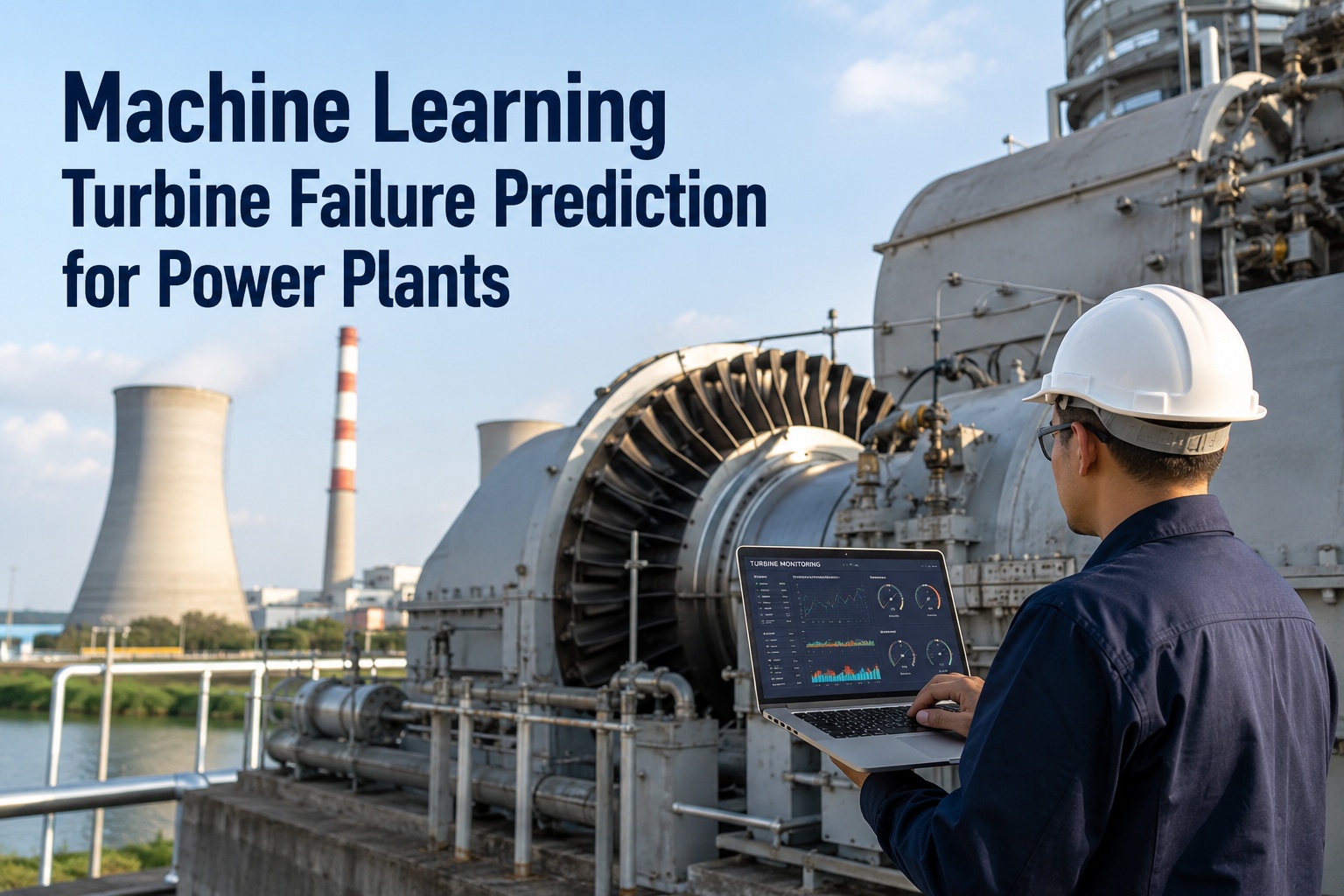
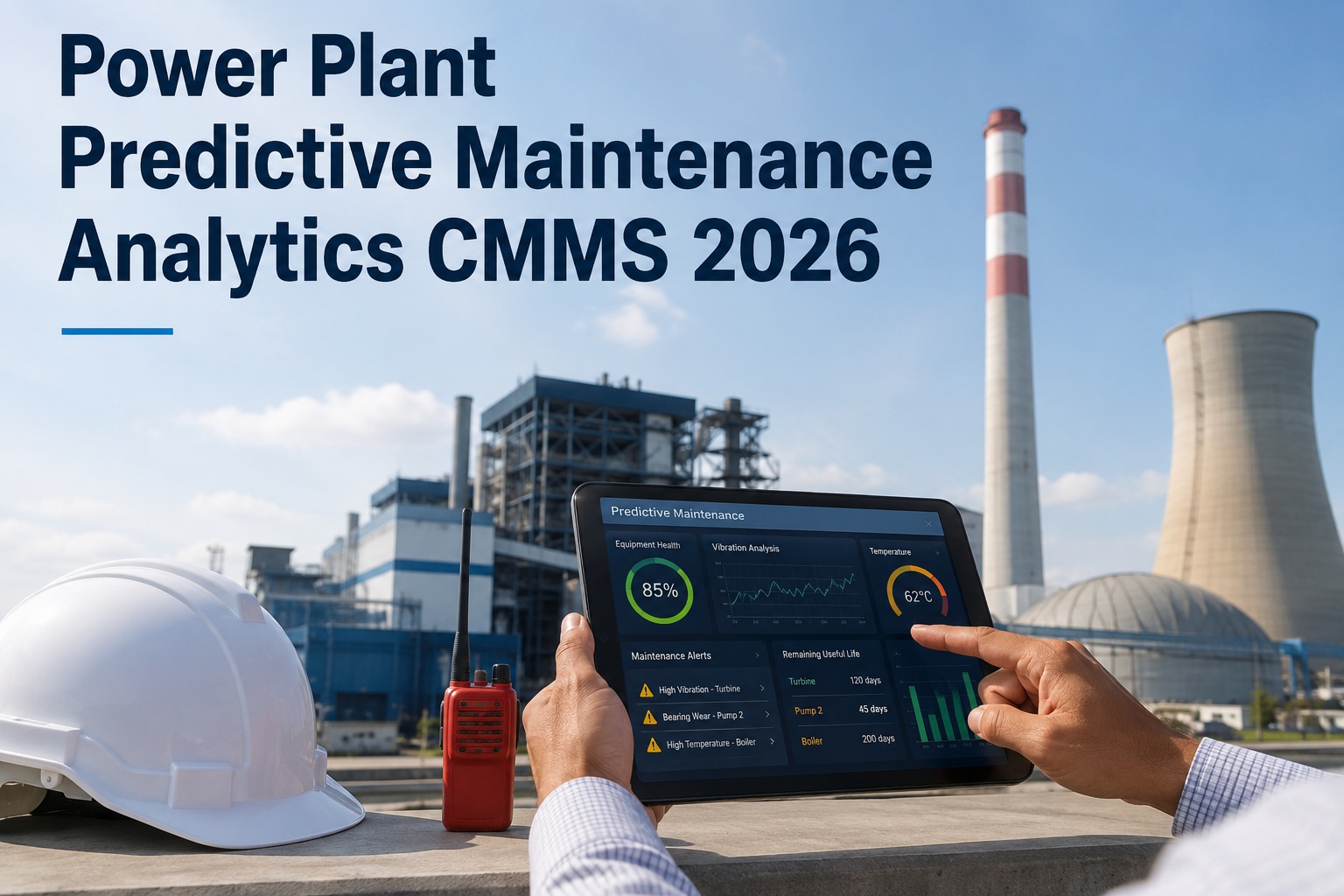
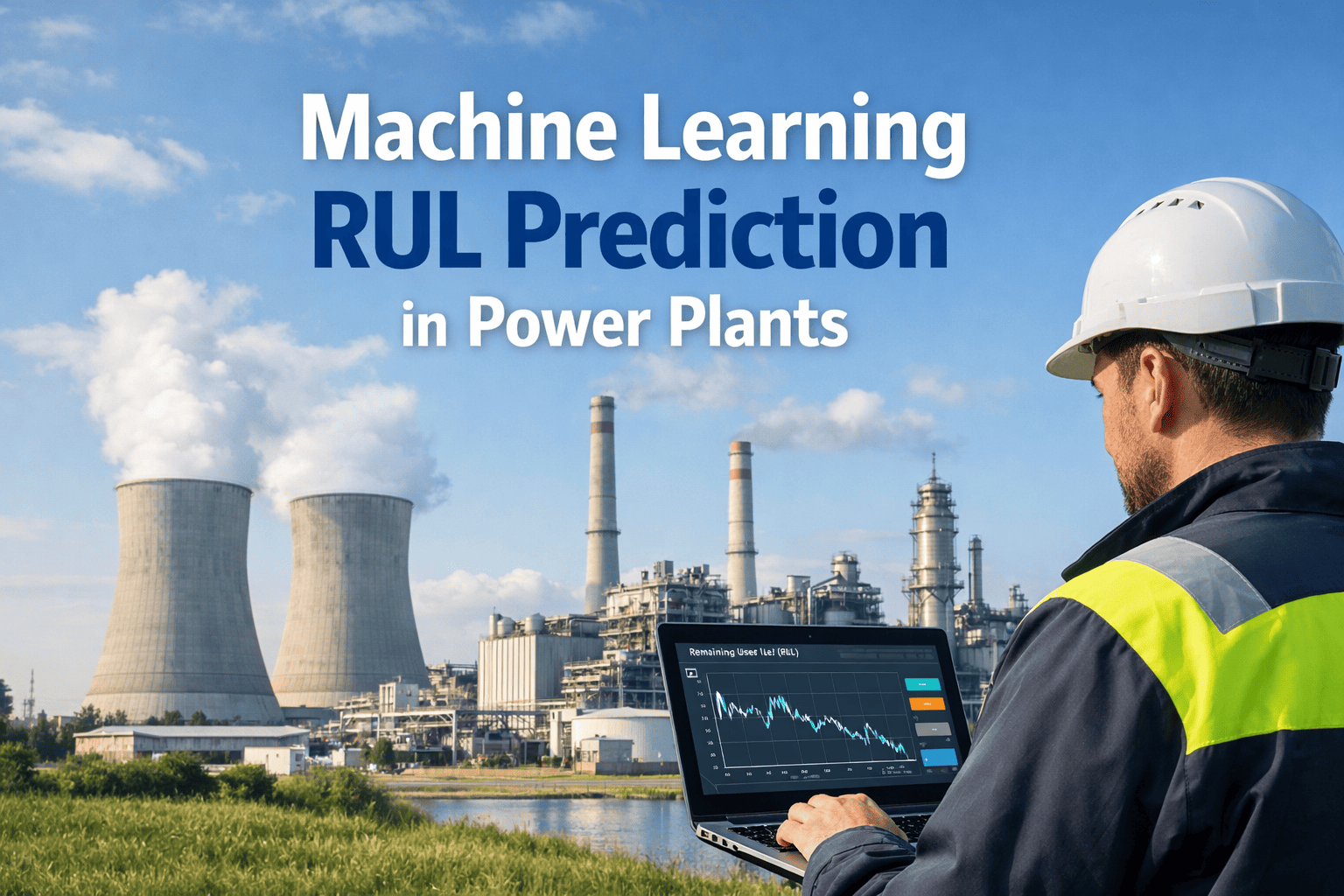
A 1,200MW gas power plant predicted a high-pressure feedwater pump failure 11 days in advance using ML-based analytics — saving $4.3M in unplanned downtime and avoiding a forced outage. Predictive analytics transforms raw maintenance history and real-time sensor data into failure forecasts, remaining useful life, and prescriptive work orders. Plants leveraging AI models reduce maintenance costs by up to 30% and increase availability by 15-20%. OxMaint's predictive engine continuously learns from your asset data to detect anomalies before they escalate. Book a demo to see how ML models prevent turbine trips and boiler tube leaks.
30%
lower maintenance cost
11d
early failure warning
87%
fewer catastrophic failures
AI & ML methodology
How predictive models turn power plant data into reliability
Using historical work orders, sensor streams, and environmental factors, machine learning algorithms identify patterns preceding equipment degradation. The result: shift from reactive to condition-based maintenance.
Historical WO & sensor data
→
Feature engineering
→
ML training (XGBoost / LSTM)
Real-time vibration/temp
→
Anomaly detection
→
Failure probability score
Recommendation engine
→
Auto WO creation in CMMS
Start predicting failures before they happen
Connect your maintenance history to OxMaint's ML engine. Get real-time failure probabilities and prescriptive tasks directly in your CMMS.
Real plant results
ROI from predictive analytics: power plant benchmarks
$2.8M
annual savings
Coal plant reduced forced outage hours by 63% using vibration prediction models.
97%
failure detection accuracy
For critical rotating assets after 8 months of model training.
52%
reduction in inspection costs
Targeted condition-based rounds instead of calendar-based.
Data pipeline & integration
Feeding your CMMS with high-fidelity predictions
Extract failure codes, MTBF, repair times, and sensor thresholds from existing CMMS, historians (OSIsoft, GE), and log sheets.
Supervised learning identifies patterns 48–72 hours before breakdown. Model retrains monthly based on new work order outcomes.
When anomaly score exceeds threshold, OxMaint creates a WO with suggested tasks, parts, and priority based on remaining useful life.
| Asset type | Predictive model type | Key data inputs | Average warning lead time |
| Gas turbine / Compressor |
LSTM neural network |
Exhaust temp, vibration, RPM, fuel flow |
10–14 days |
| Boiler feed pump |
XGBoost classification |
Bearing temp, discharge pressure, seal leakage |
5–9 days |
| Cooling tower fan |
Isolation forest |
Gearbox vibration, motor current, ambient temp |
3–7 days |
| Transformer |
Regression (RUL) |
Oil temp, DGA levels, load current |
20–30 days |
Implementation roadmap
Launch predictive analytics in 5 steps
Identify quality of historical work orders and sensor coverage. Prioritize assets with highest failure cost impact.
Run models in shadow mode for 4-6 weeks, compare predictions against actual failures without triggering work orders.
Connect OxMaint's API to your maintenance system to auto-generate recommended work orders and trigger alerts.
Explain confidence scores, false positive rates, and decision workflow. Link predictions to inspection plans.
Expand to balance of plant, retrain models monthly, and measure reduction in emergency work orders.
Predict, don't react — AI-powered reliability
Over 140 power plants use OxMaint's predictive analytics to lower unplanned downtime by 45% on average. Get failure forecasts delivered to your dashboard.
Expert answers
Frequently asked questions — predictive maintenance analytics
What historical data is required to start with predictive analytics?
How accurate are failure predictions for power plant turbines?
After proper training, models achieve 85-92% precision for critical rotating equipment, with false positive rates under 10%. Accuracy improves with more failure examples.
Can predictive analytics work without IoT sensors?
Yes — using only work order history and operational logs (runtime, starts/stops, load cycles) can predict wear-out failures with reasonable lead time.
Discuss your data maturity in a demo.
How long until we see ROI from predictive models?
Most plants achieve positive ROI within 6–9 months by preventing one major turbine or generator failure. Reduced inspection costs add further savings.
Does OxMaint integrate with existing SCADA or DCS?
Yes — through REST APIs or MQTT brokers, OxMaint ingests real-time tags from major DCS platforms (Siemens, ABB, Emerson) for online prediction.
Move beyond dashboards — get prescriptive insights
Your maintenance data holds the key to near-zero unplanned downtime. Let our team set up a pilot for your most critical power plant assets.