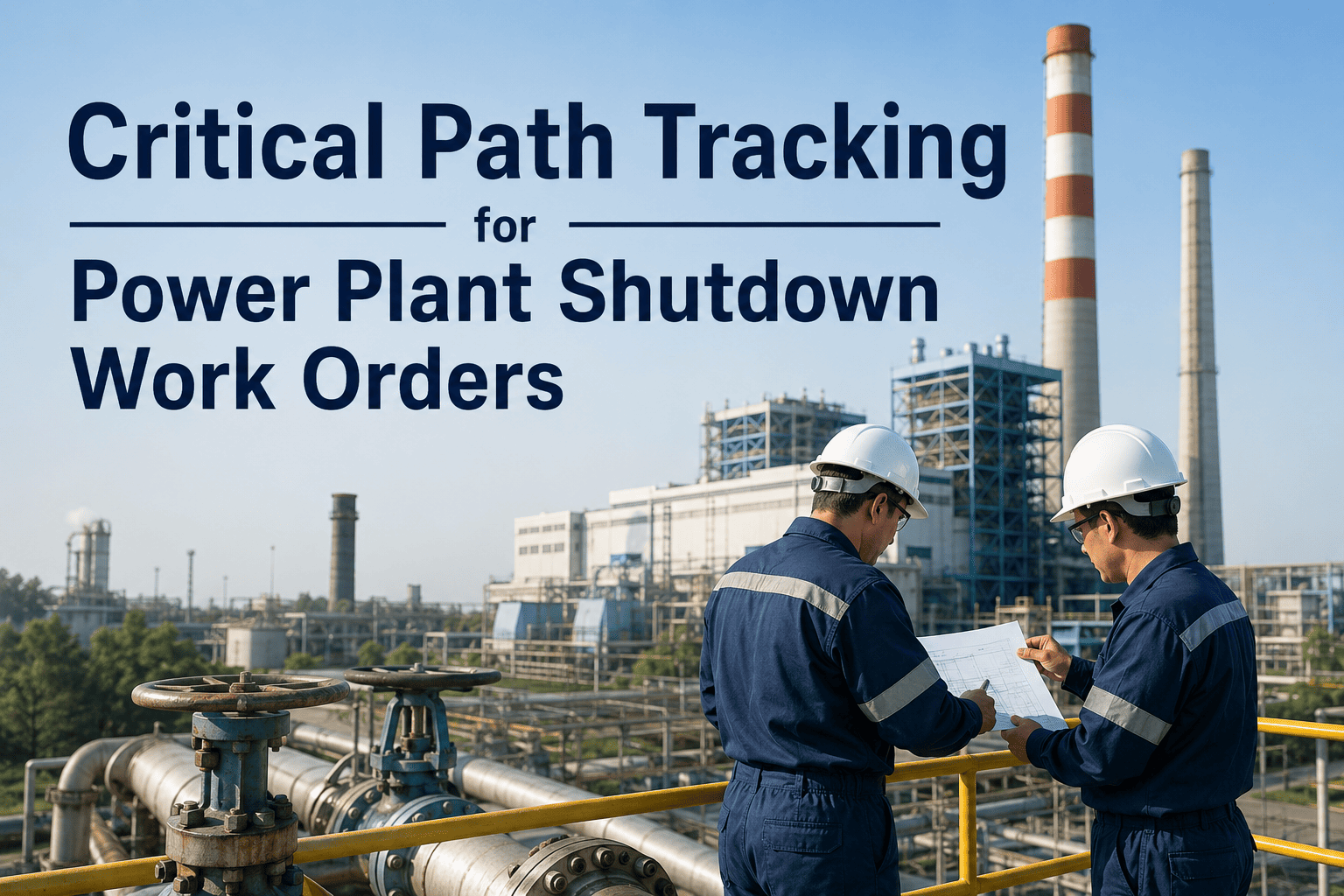
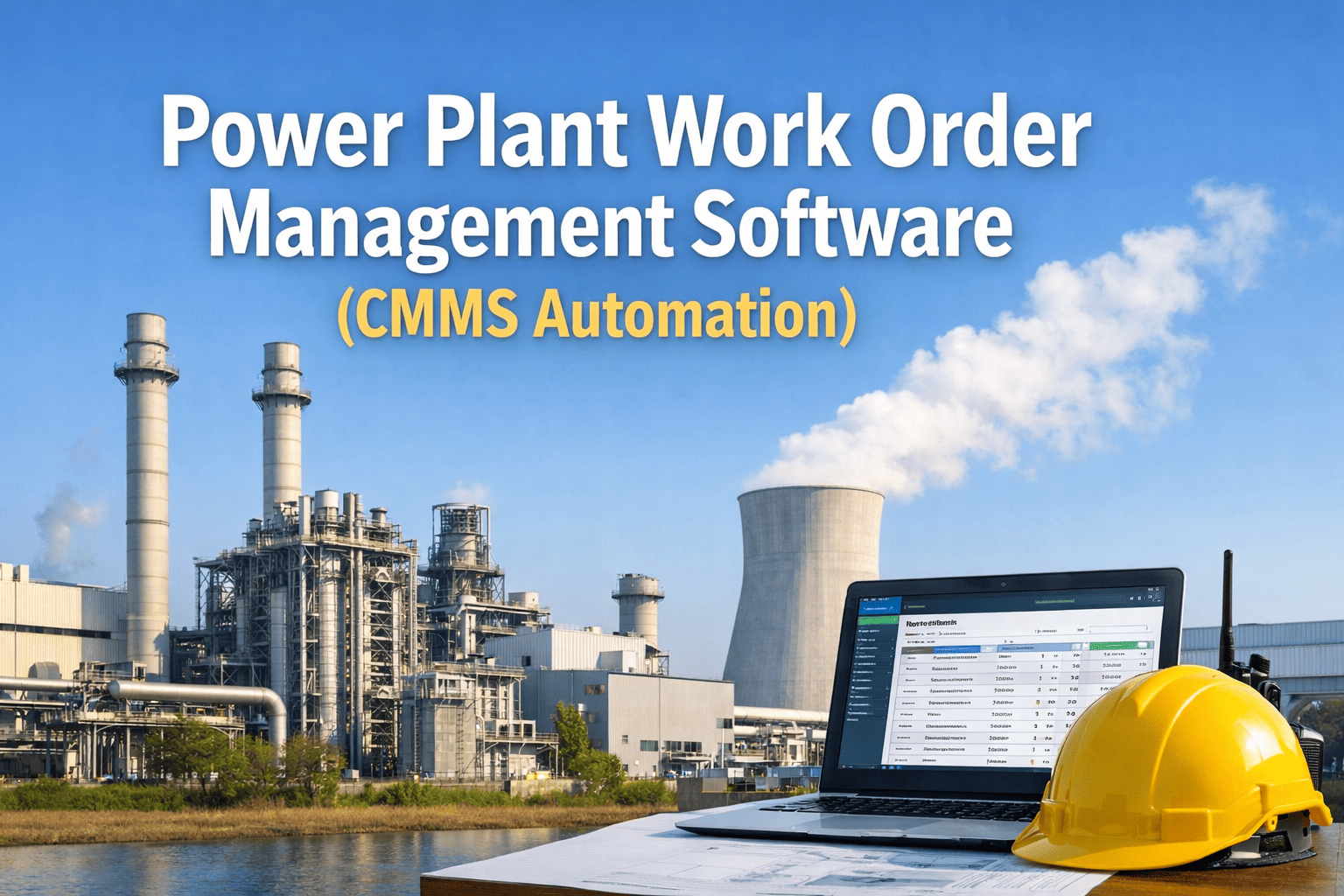
Summer is the worst time for a forced outage — and the most likely time for one. Peak demand periods put every asset under maximum thermal and mechanical stress simultaneously, while maintenance backlogs from spring outage season push deferred work into July and August when there's no capacity slack to absorb a failure. A turbine auxiliary cooling pump that was running slightly warm in May becomes an emergency on a 104°F dispatch day when the plant is running flat-out. Traditional maintenance scheduling doesn't adapt to this reality — it runs fixed PM intervals regardless of operational intensity, weather, or dispatch commitment. AI work order prioritization changes the logic: assets running harder get more attention, work that requires equipment outage gets scheduled during demand valleys, and the crew gets to the highest-consequence jobs first before the heat arrives. Explore OxMaint AI work order automation free, or book a demo to see dynamic prioritization running on your asset types.
BLOG · AI WORK ORDER AUTOMATION · PEAK DEMAND MAINTENANCE
July Is Coming. Is Your Maintenance Queue Ready for It?
Peak summer demand doesn't just stress your assets — it exposes every gap in your maintenance prioritization. AI work order management keeps the highest-consequence jobs at the top of the queue and pushes outage-requiring work to the overnight valley, automatically.
6 hrs
Average delay from AI fault detection to work order creation without automation
4 sec
Time to generate a complete AI work order with evidence, parts list, and assignment
$80K+
Revenue loss from a single poorly-timed equipment outage during peak demand hours
THE SUMMER MAINTENANCE PROBLEM
Why Peak Season Breaks Traditional Maintenance Scheduling
Fixed PM intervals were designed for average operating conditions. Summer peak demand isn't average — and the mismatch creates predictable failure clusters at exactly the wrong time.
A
The Cooling Asset Trap
Cooling tower fans, circulating water pumps, and auxiliary cooling systems get pushed hardest during summer — but their PM schedules were set for average load. Degraded cooling performance reduces turbine output efficiency at precisely the time output is most valuable. A cooling pump bearing that's been running 8°C above baseline for three weeks becomes a 2:00 PM Friday emergency during a heat wave.
B
The Wrong-Window Work Order
A feedwater heater PM that requires taking equipment offline gets scheduled on a Tuesday afternoon — forcing a 50 MW derate that costs $30,000–$80,000 in lost revenue for a job that could have been done during the overnight valley. Traditional CMMS schedules on calendar intervals. AI scheduling schedules on dispatch curves.
C
The Alert Backlog
During peak operations, alert volume spikes. Maintenance planners spend 30 hours per week manually translating sensor alerts into work orders — copying alert data, looking up asset codes, routing to crews. Six hours after an AI detects a bearing defect, the work order still hasn't been created. Six hours when the bearing kept spinning toward failure.
D
The Priority Inversion
Without dynamic priority scoring, a P2 work order on a redundant auxiliary system sits in front of a P3 on a unit-critical pump that's 12 days from predicted failure. Crews work the queue top-to-bottom — not by actual consequence and urgency. By mid-summer, the wrong things get done first.
HOW AI PRIORITIZATION WORKS
The Four Inputs That Drive Dynamic Work Order Priority
OxMaint's AI scheduling engine continuously processes four data streams to generate and update an optimal maintenance queue — not once a quarter, not during the morning shift meeting, but continuously throughout the day.
OXMAINT · AI WORK ORDER AUTOMATION · POWER PLANT CMMS
Stop Scheduling Maintenance on a Calendar. Start Scheduling It on Reality.
OxMaint's AI prioritization engine weighs asset condition, dispatch commitments, parts availability, and crew qualifications to keep your summer maintenance queue exactly right — continuously, without a planner manually juggling it.
AUTO WORK ORDER GENERATION
Fault Detected at 3:47 AM. Work Order in the Queue by 3:47:04.
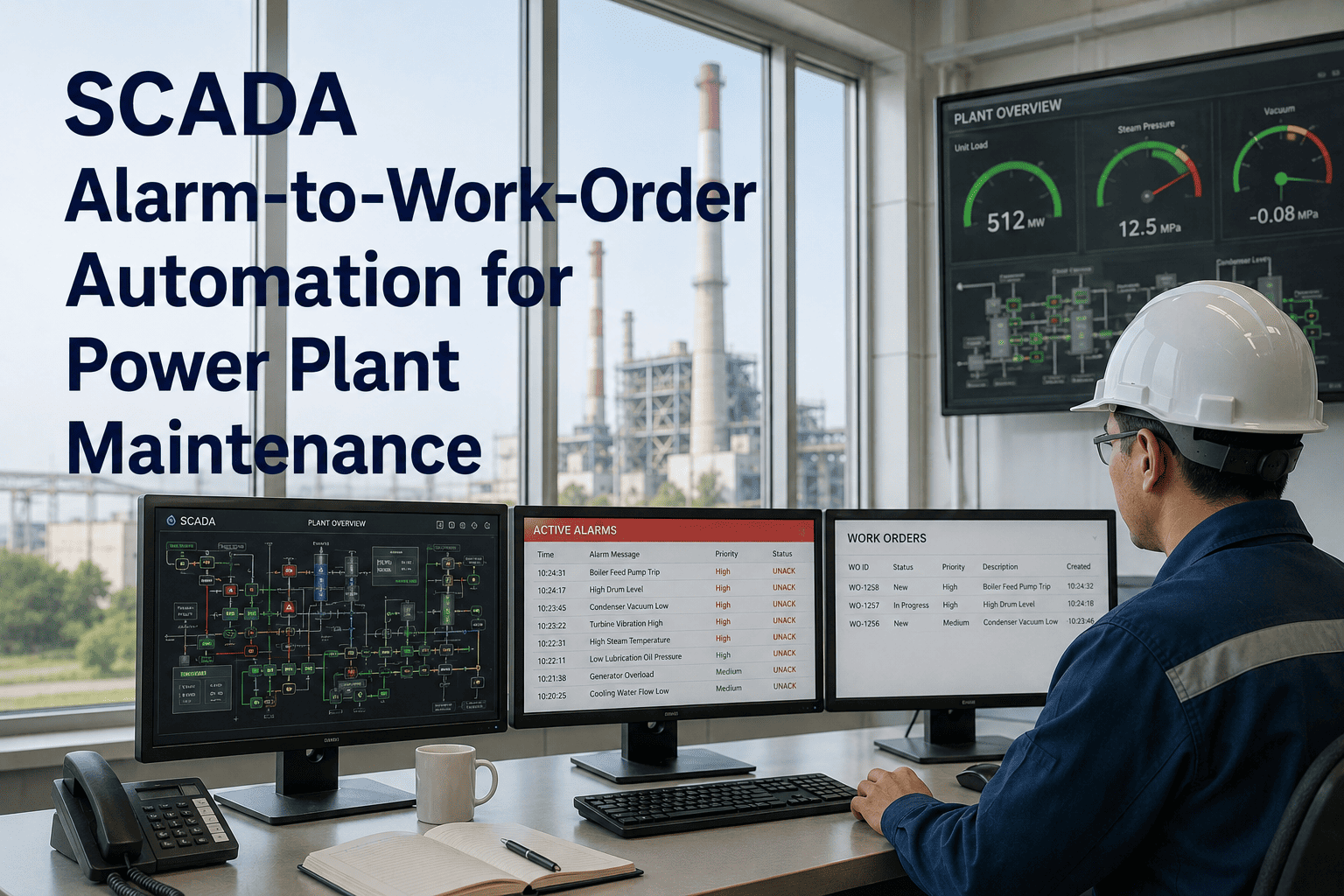
The gap between when an AI detects a fault and when a technician receives a work order is where failures are born. OxMaint's Auto Work Order Engine closes that gap from hours to seconds.
T+0 sec
Fault Detected
AI detects bearing defect frequency in PA Fan 02 vibration signature. Severity score calculated from deviation magnitude and asset criticality.
T+4 sec
Work Order Created
Complete work order auto-generated with sensor evidence attached, asset location, failure code, recommended action, required parts list, and skill requirement — zero typing.
T+5 sec
Priority Scored
Work order placed in queue based on asset RUL forecast, criticality tier, current dispatch commitment, and crew availability. Not top of queue by default — by actual urgency.
T+6 sec
Technician Notified
Mobile push notification to the qualified technician on shift. Full work order context in their hand before they've left the control room — including the parts they need to pull from the storeroom.
Without OxMaint AI
Alert pops up at 3:47 AM — nobody acts
7:00 AM shift change — alert mentioned in handover
9:30 AM — planner opens CMMS, starts creating WO manually
10:15 AM — work order in queue, 6.5 hours after detection
Bearing ran toward failure for 6+ hours
With OxMaint AI
Alert detected at 3:47 AM
Work order in queue at 3:47:04 AM
Technician notified at 3:47:06 AM
Parts confirmed available automatically
Repair scheduled for next maintenance window
SUMMER ASSET PRIORITIES
The Assets That Need Extra Attention Before Peak Season
TIER 1 · UNIT-CRITICAL
Turbine Auxiliary Cooling Systems
Degraded cooling performance under peak load directly reduces output. AI scheduling elevates cooling asset PM priority in May–June, before summer dispatch intensity peaks.
TIER 1 · UNIT-CRITICAL
Circulating Water Pumps
Condenser vacuum drives output efficiency. CW pump failure on a 100°F day causes immediate unit derate. Vibration and bearing temp trending through summer is non-negotiable.
TIER 2 · HIGH PRIORITY
Instrument Air Compressors
Control valve actuation failure cascades rapidly during high-demand operations when operators have less margin to absorb anomalies. Pressure and cycle time monitoring peaks in importance.
TIER 2 · HIGH PRIORITY
Lube Oil Systems
Lube oil cooler fouling and pump degradation become failure-critical during sustained high-load operation. Oil temperature trending above baseline in June is an early warning for August problems.
TIER 3 · SEASONAL
Cooling Tower Fans
Each offline CT cell reduces cooling capacity and creeps condenser backpressure up. Batch PM completion before summer ensures full CT deck capacity during peak weeks.
TIER 3 · SEASONAL
Fuel Gas Conditioning
Fuel quality and filter condition directly affect combustion efficiency and hot section temperatures under peak dispatch. Coalescer and filter element PMs should complete before peak season.
FREQUENTLY ASKED
AI Work Order Prioritization Questions
Does AI prioritization override maintenance planners, or work alongside them?
AI prioritization generates recommendations and automates the mechanical work of work order creation and initial scoring — but planners retain full authority to override priority scores, reassign work, and adjust scheduling windows. The AI handles the volume; the planner makes judgment calls that require contextual knowledge the system doesn't have.
Sign up free to see the planner interface.
How does OxMaint know when peak demand periods are to avoid scheduling outage work?
OxMaint ingests ISO dispatch schedules, unit commitment data, and energy price forecasts via API connection or manual upload. Work orders requiring equipment outage are automatically flagged when the proposed window falls within high-dispatch periods — and rescheduled to the nearest demand valley that fits the maintenance window and crew availability.
What happens to AI-generated work orders if the required parts aren't in stock?
OxMaint holds the work order in a "pending parts" status and fires a procurement alert — rather than scheduling a job that can't be completed. This prevents the "crew shows up, parts missing" failure mode that wastes labor and leaves the fault unaddressed. The work order moves to schedulable status automatically when inventory confirms receipt.
Book a demo to see the parts-check workflow.
How far in advance should peak season maintenance preparation begin?
Best practice is to begin peak season preparation 8–12 weeks before peak summer dispatch — typically April through May. This window allows completion of cooling system PMs, condenser tube inspections, CT fan blade and motor servicing, and lube oil system maintenance while spring outage windows are still available. OxMaint's seasonal priority elevation can be configured to automatically increase criticality scores for summer-critical assets starting in a defined pre-peak window.
Can OxMaint track whether AI-prioritized maintenance actually reduced summer forced outages?
Yes. OxMaint tracks forced outage cause codes and correlates them with prior maintenance activity — allowing year-over-year comparison of forced outage rates against PM compliance and AI alert response times. The dashboard shows which asset classes benefited most from predictive intervention and which failure modes still occurred despite the program, enabling continuous improvement.
Explore the analytics module free.
OXMAINT · AI WORK ORDER AUTOMATION · PEAK DEMAND MAINTENANCE
Don't Let August Find Your Maintenance Queue Out of Order
OxMaint's AI work order engine prioritizes by asset condition, dispatch schedule, parts availability, and crew qualification — keeping your peak season maintenance program one step ahead of the heat, automatically.