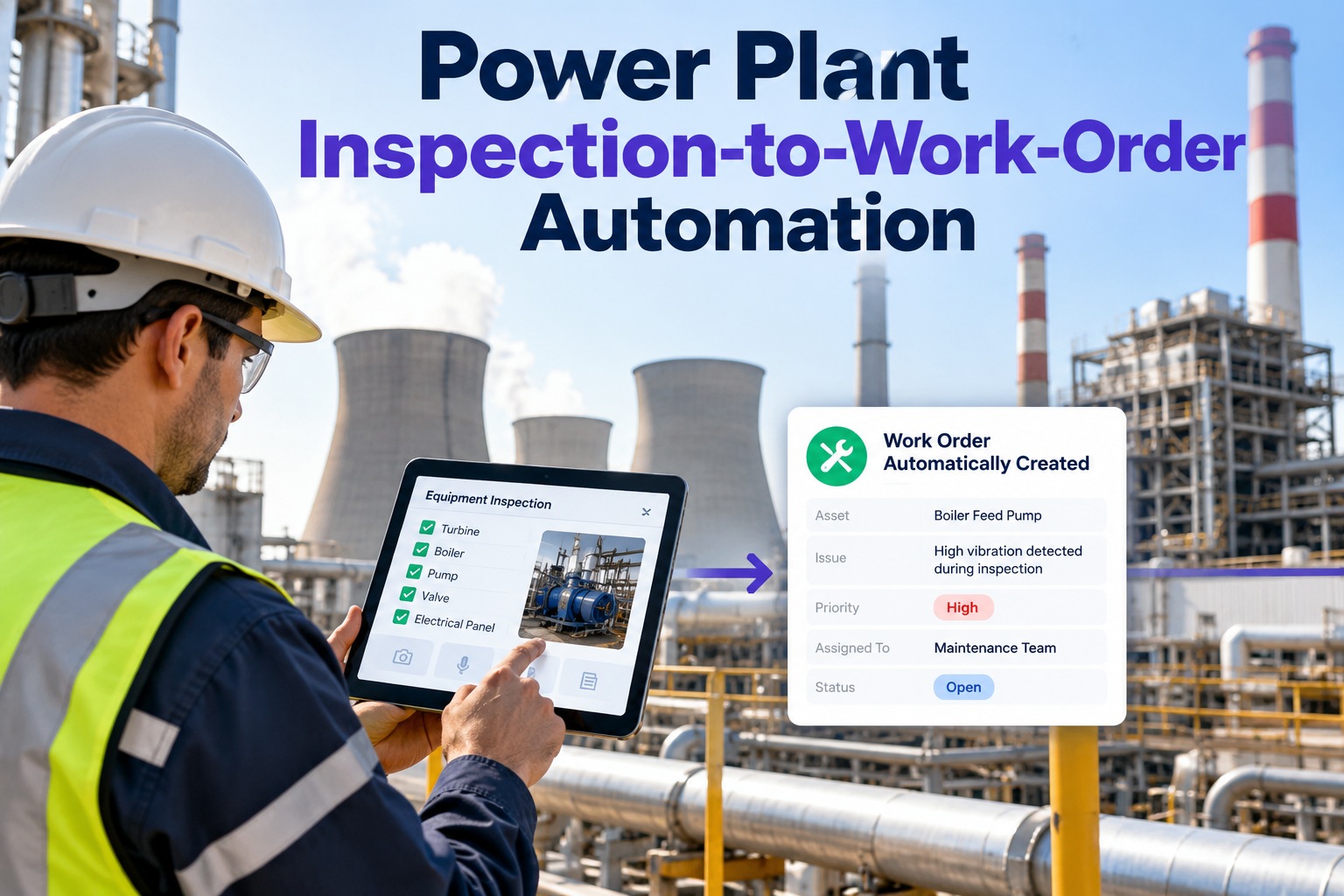
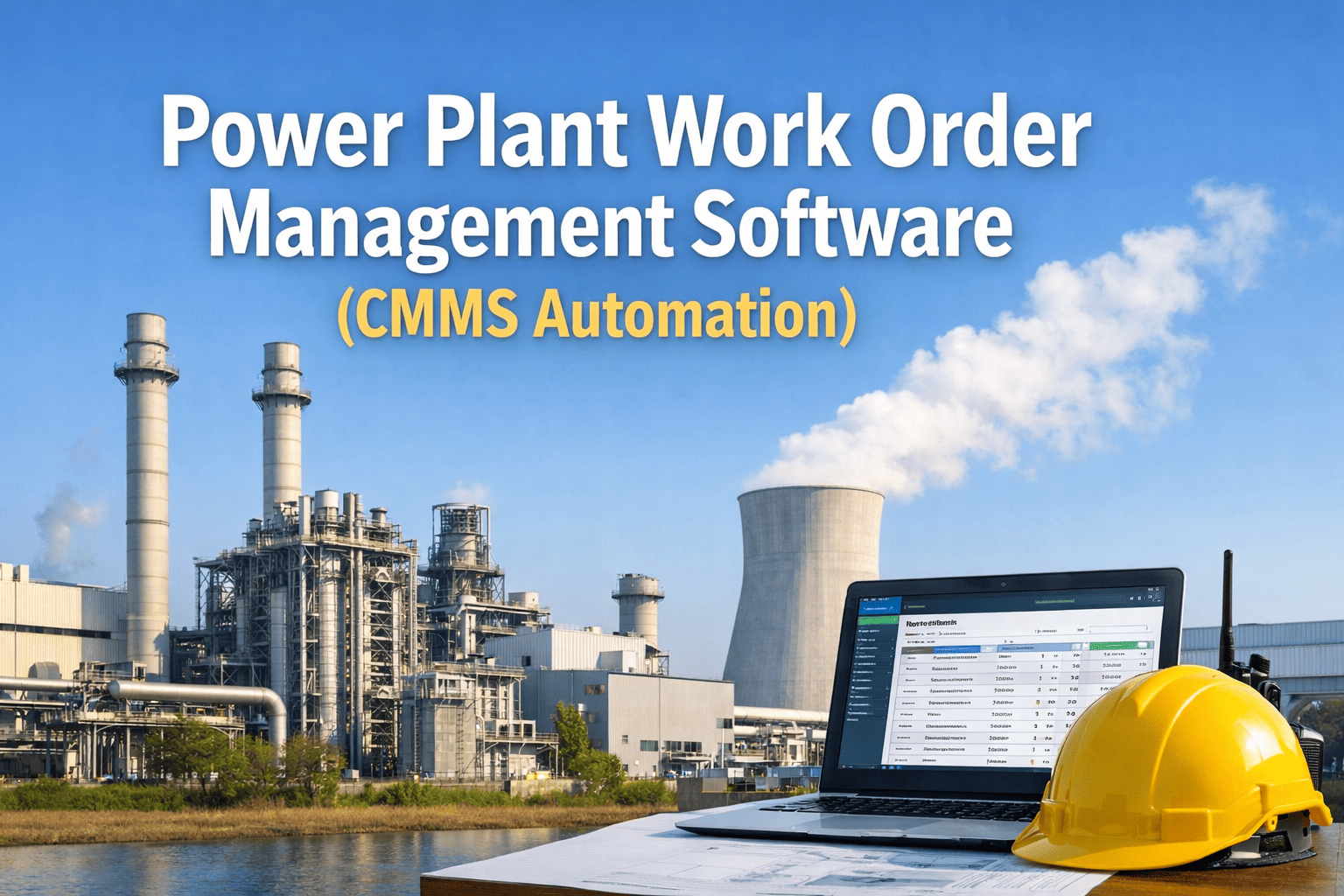
Power plant maintenance teams lose 35–40% of productive hours creating, updating, and routing work orders manually. Generative AI changes this completely — converting technician voice notes, sensor anomalies, and inspection findings into structured, prioritized, and asset-linked work orders in under 8 seconds. Plants using AI-powered CMMS platforms report a 73% drop in work order creation time, 58% faster technician response, and 3.2× improvement in first-time fix rates. Start automating on OxMaint — free signup.
Generative AI · CMMS Automation · Power Plant Operations
AI-Powered Work Order Automation for Power Plant Maintenance
Stop writing work orders. Let generative AI convert sensor alerts, technician reports, and inspection data into structured CMMS entries — automatically, instantly, accurately.
73%
Reduction in work order creation time with AI automation
8 sec
Average time for AI to generate a fully structured work order
3.2×
Improvement in first-time fix rate with AI-prioritized maintenance
91%
Of missed PM tasks eliminated through automated scheduling triggers
The Real Cost of Manual Work Orders
Why Traditional CMMS Workflows Fail Power Plants
Manual work order systems were designed for a simpler era. In a modern power plant with thousands of assets, sensor feeds, and maintenance events, they create bottlenecks that directly translate into unplanned downtime and compliance risk.
01
Technicians Become Data Entry Clerks
Skilled maintenance engineers spend 25–35 minutes per shift logging work orders, updating asset records, and routing approvals — time that should go toward actual equipment care.
02
Sensor Alerts Go Unlinked
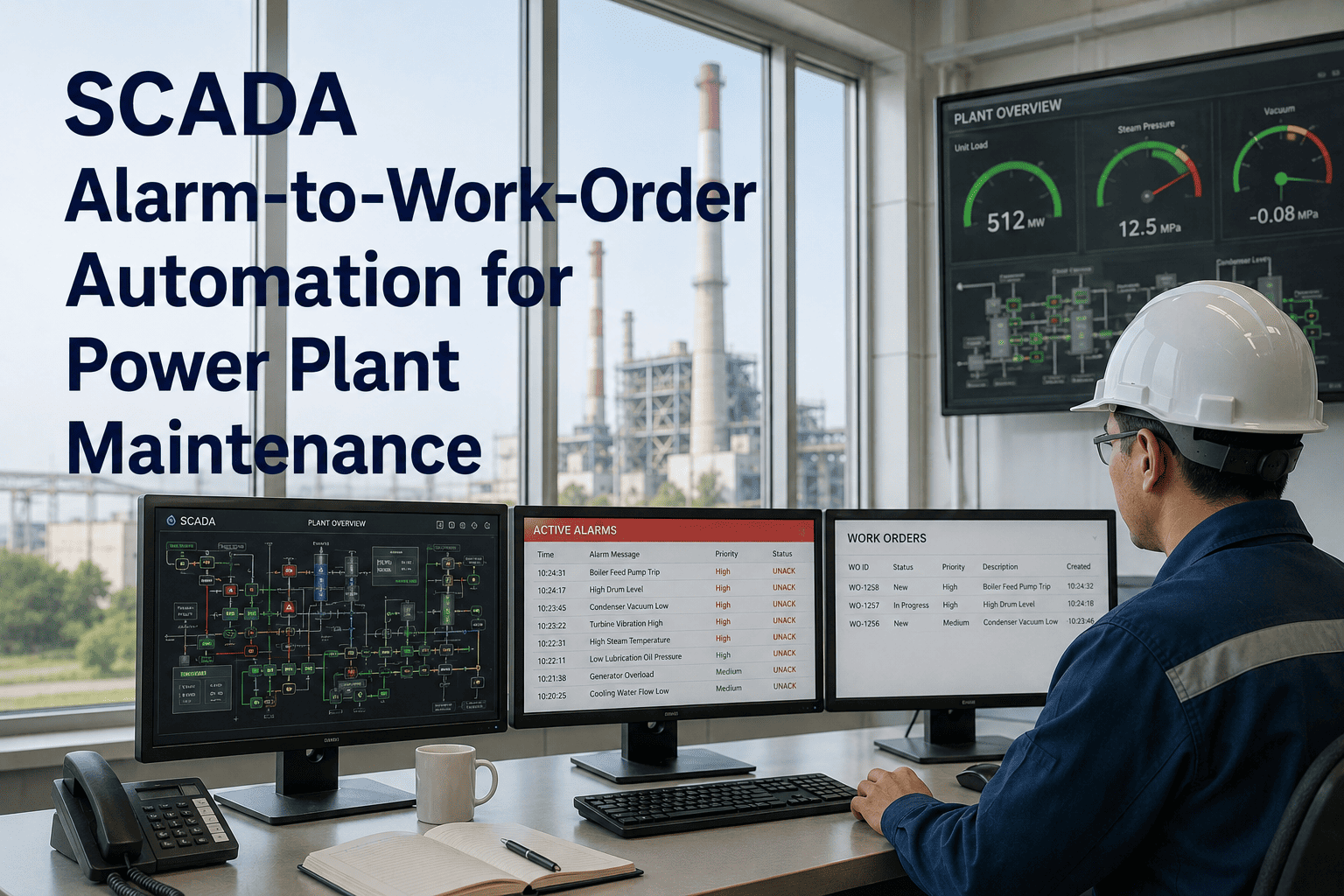
SCADA triggers and edge AI anomaly scores sit in monitoring dashboards without automatically generating maintenance tasks. The gap between alert and action averages 4.7 hours.
03
Priority Errors Cause Escalation
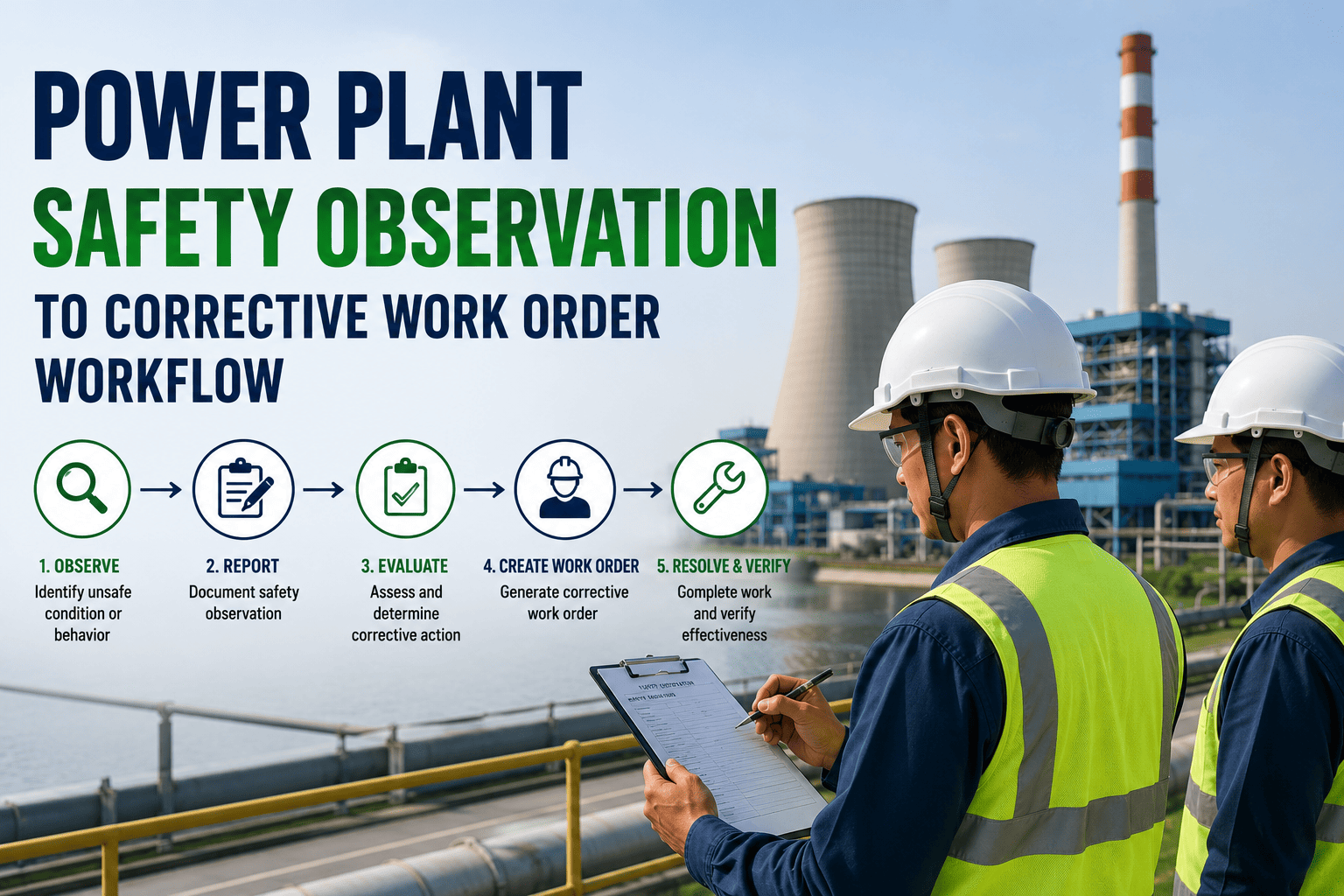
Human-assigned priorities are inconsistent. Studies show 1-in-4 critical tasks are initially mislabeled as routine, delaying intervention until failure risk is significantly elevated.
04
Unstructured Data Stays Invisible
Voice memos, inspection photos, and handwritten notes contain valuable maintenance intelligence that never makes it into the CMMS — breaking the asset history chain.
How It Works
From Raw Input to Structured Work Order — Automatically
OxMaint's generative AI layer sits between your data sources and your CMMS workflow. It reads, interprets, and structures maintenance information from any input format — no templates, no manual mapping.
Generative AI Engine
Parses natural language + structured signals
Identifies asset, failure mode, urgency
Retrieves asset history + spare parts
Assigns priority, crew, and schedule window
Auto-Generated Work Order
AssetGT-03 Gas Turbine Bearing — Unit 2
Failure ModeOuter race spall — vibration anomaly 0.81
PriorityCritical — Intervene within 48h
Assigned ToRotating Equipment Team
SparesSKF 6316 bearing — in stock, Bay 4
Est. Duration3.5 hours
AI Capabilities
What the Generative AI Actually Does Inside OxMaint
OxMaint's AI goes beyond form-filling. It reasons about your asset network, maintenance history, and current plant state to generate work orders that a senior planner would approve — in seconds.
Natural Language to Work Order
Technicians describe issues in plain speech or text. AI extracts asset ID, symptom, severity, and required action — no dropdown menus, no form fields.
Avg input time: 22 seconds
Auto-Priority Scoring
AI weighs asset criticality, current load, failure probability, and production schedule to assign correct priority tiers — eliminating human priority errors.
Priority accuracy: 94%
Spare Parts Intelligence
Linked to your inventory, AI automatically appends required parts, checks stock levels, and flags procurement needs before the work order is dispatched.
Parts miss rate reduced by: 67%
SCADA-to-WO Bridge
Edge AI and SCADA alerts auto-trigger work order creation the moment anomaly thresholds are breached — zero human handoff required between detection and dispatch.
Alert-to-WO gap: under 60 sec
Asset History Context
Every generated work order includes the last 5 maintenance events, failure patterns, and OEM service recommendations for that asset — giving technicians full context upfront.
First-time fix rate lift: +3.2×
Compliance Auto-Fill
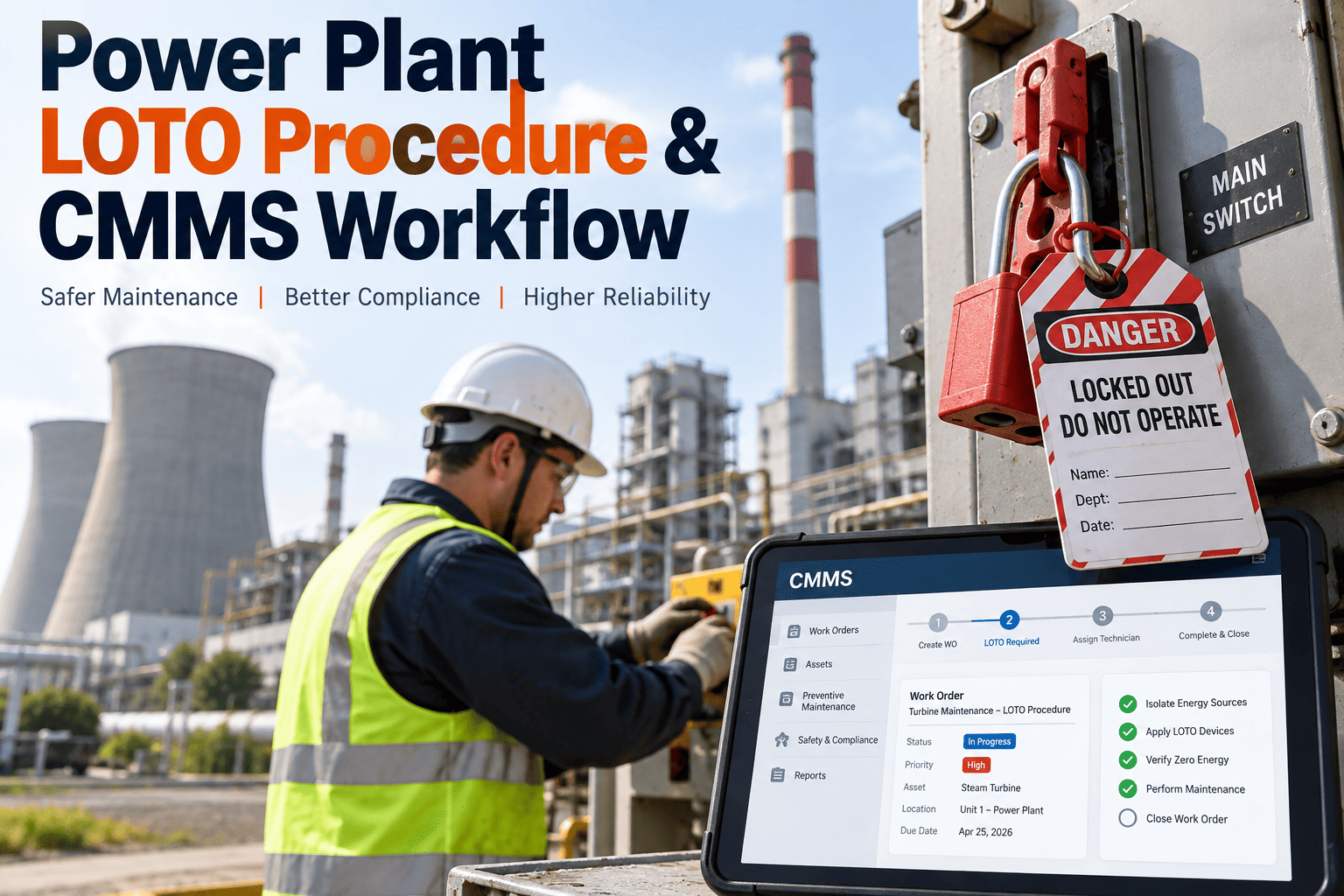
AI populates permit-to-work requirements, LOTO procedures, and regulatory hold points based on asset type and work classification — ensuring compliance without extra steps.
Compliance gaps eliminated: 89%
Stop Losing Hours to Manual Work Orders
OxMaint's AI turns every sensor alert and technician report into a fully structured, compliant, prioritized work order — before your team even opens a laptop.
Measured Outcomes
What Power Plants Report After AI Work Order Automation
These figures come from operational deployments across thermal, combined-cycle, and hydro facilities — not vendor projections.
Alert-to-action response time
With OxMaint AI
14 min avg
Work orders with correct priority assigned
Integration
Works With Your Existing Plant Systems
OxMaint AI does not require replacing your control systems. It connects as a workflow intelligence layer that accepts inputs from any data source your plant already uses.
Data Inputs
SCADA / DCS alarm feeds
Edge AI anomaly APIs
OPC-UA / Modbus streams
Mobile inspection forms
Voice transcription input
OxMaint AI Engine
Parse · Classify · Prioritize · Route · Generate
CMMS Outputs
Structured work orders
Crew assignment notifications
Permit-to-work drafts
Parts reservation requests
Asset history updates
Common Questions
Frequently Asked Questions
Does the AI need to be trained on our plant data before it works?
OxMaint uses pre-trained foundation models fine-tuned on industrial maintenance datasets. For most asset types — turbines, pumps, generators, compressors — the AI generates accurate work orders from day one. Asset-specific calibration improves further over 2–4 weeks as it learns your plant's naming conventions, crew structure, and failure history patterns.
Can technicians talk to OxMaint AI to create work orders on the floor?
Yes. Technicians can describe a fault in plain language via the OxMaint mobile app — typing or voice input. The AI extracts asset ID, fault description, urgency indicators, and recommended actions from the free-text input and generates a structured work order without any additional form completion. The technician reviews and approves in under 30 seconds.
How does the AI decide priority levels for generated work orders?
Priority scoring uses a multi-factor model: asset criticality tier, current anomaly score or failure probability, production schedule impact, time since last maintenance, and available resources. The model is auditable — every work order shows the priority rationale so planners can understand and override if needed. Override patterns are used to further refine future scoring.
What happens to work orders that AI creates but a planner disagrees with?
Every AI-generated work order enters a configurable review queue before dispatch. Planners can accept, modify, or reject with a single action. Rejection reasons are captured and fed back into the model, so disagreements actively improve AI accuracy over time. Most plants reach 90%+ planner acceptance rates within 60 days of deployment.
Ready to Automate Your Maintenance Workflows?
Every Alert. Every Report. Every Work Order — Handled by AI.
OxMaint turns your plant's sensor data, technician inputs, and inspection records into structured, compliant, prioritized work orders — automatically. Your team focuses on fixing equipment, not filling forms.