Your 500MW turbine generator has been operating at 3,600 RPM for eleven months straight. The vibration readings look normal on the control room screens. Temperature sensors show values within acceptable ranges. But somewhere inside that massive rotating assembly, microscopic fatigue cracks are forming in a bearing cage. In approximately 23 days, those cracks will propagate far enough to cause catastrophic bearing failure during peak demand—resulting in an unplanned outage that costs your facility $1.2 million in lost generation and emergency repairs. Asset health monitoring exists to detect these invisible degradation patterns weeks before they become disasters, transforming raw sensor data into actionable intelligence that prevents forced outages.
The Financial Reality of Unplanned Outages
Power plant reliability is directly tied to revenue generation. Every hour a unit sits idle during peak demand represents lost megawatt-hours that cannot be recovered. The 2024 machine health monitoring market data shows that power generation facilities represent 18% of all predictive maintenance installations globally, with plants typically monitoring between 500 and 3,000 assets per site using online vibration and thermal sensors. The reason for this investment is clear: facilities that start monitoring asset health today have reduced forced outages by 20-30% across the industry, translating to millions in preserved revenue annually.
Coal plants experience forced outage rates of approximately 10%, while nuclear facilities maintain rates around 2%. The gap exists largely because of differences in monitoring sophistication and maintenance strategies. Research indicates that 43% of plant incidents stem from mechanical failures—failures that produce detectable warning signs weeks before catastrophic breakdown. Power plants seeking to book a free asset health consultation are discovering that predictive analytics can cut maintenance costs by up to 30% while increasing equipment availability by 20%.
Critical Equipment Monitoring Parameters
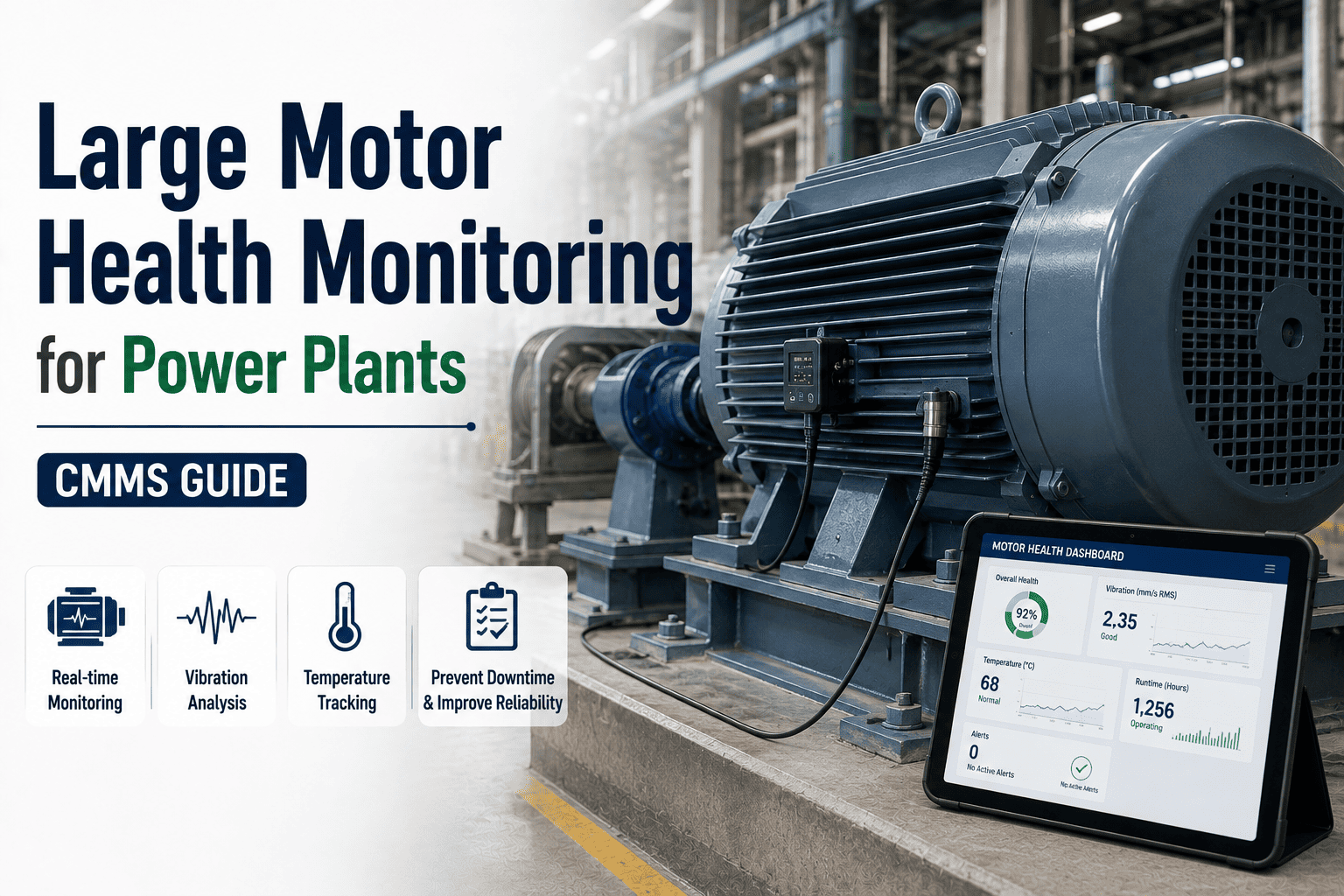
Thermal power plants contain interconnected systems where a single component failure can cascade through the entire generation process. The boiler, turbine, generator, condenser, and auxiliary systems each require continuous monitoring of specific parameters to maintain operational integrity. Modern IoT sensors track vibration patterns, thermal signatures, electrical loads, pressure levels, and acoustic emissions from each critical asset, feeding this data into analytics engines that identify degradation trends long before human operators could detect problems.
| Equipment | Primary Parameters | Failure Indicators | Warning Window |
|---|---|---|---|
| Steam Turbine | Vibration, temperature, rotational speed, blade clearance | Amplitude spikes, harmonic shifts, thermal drift | 3-8 weeks |
| Boiler System | Pressure, temperature, fuel consumption, water chemistry | Scale buildup, tube thinning, flame instability | 2-6 weeks |
| Generator | Stator temperature, insulation resistance, partial discharge | Winding degradation, rotor eccentricity | 4-12 weeks |
| Transformer | Oil temperature, dissolved gases, load current | Insulation degradation, hot spots, arcing | 2-8 weeks |
| Feed Pumps | Vibration, bearing temperature, flow rate, pressure | Cavitation, seal wear, impeller damage | 1-4 weeks |
| Condenser | Vacuum pressure, tube fouling, cooling water temp | Air ingress, tube leaks, biofouling | 1-3 weeks |
Steam turbines remain the most common source of failure-related losses in thermal power plants. Blade fatigue from fluctuating steam pressures, erosion from high-velocity wet steam, and foreign object damage from debris can all cause severe operational disruptions. After upgrading water treatment systems and implementing routine chemical cleaning at one major facility, the frequency of boiler tube leaks decreased by 50%—demonstrating the direct connection between continuous monitoring and reliability improvement. Plants ready to sign up for equipment monitoring find that early detection of these issues prevents the cascade effects that turn minor problems into major outages.
The Technology Behind Predictive Intelligence
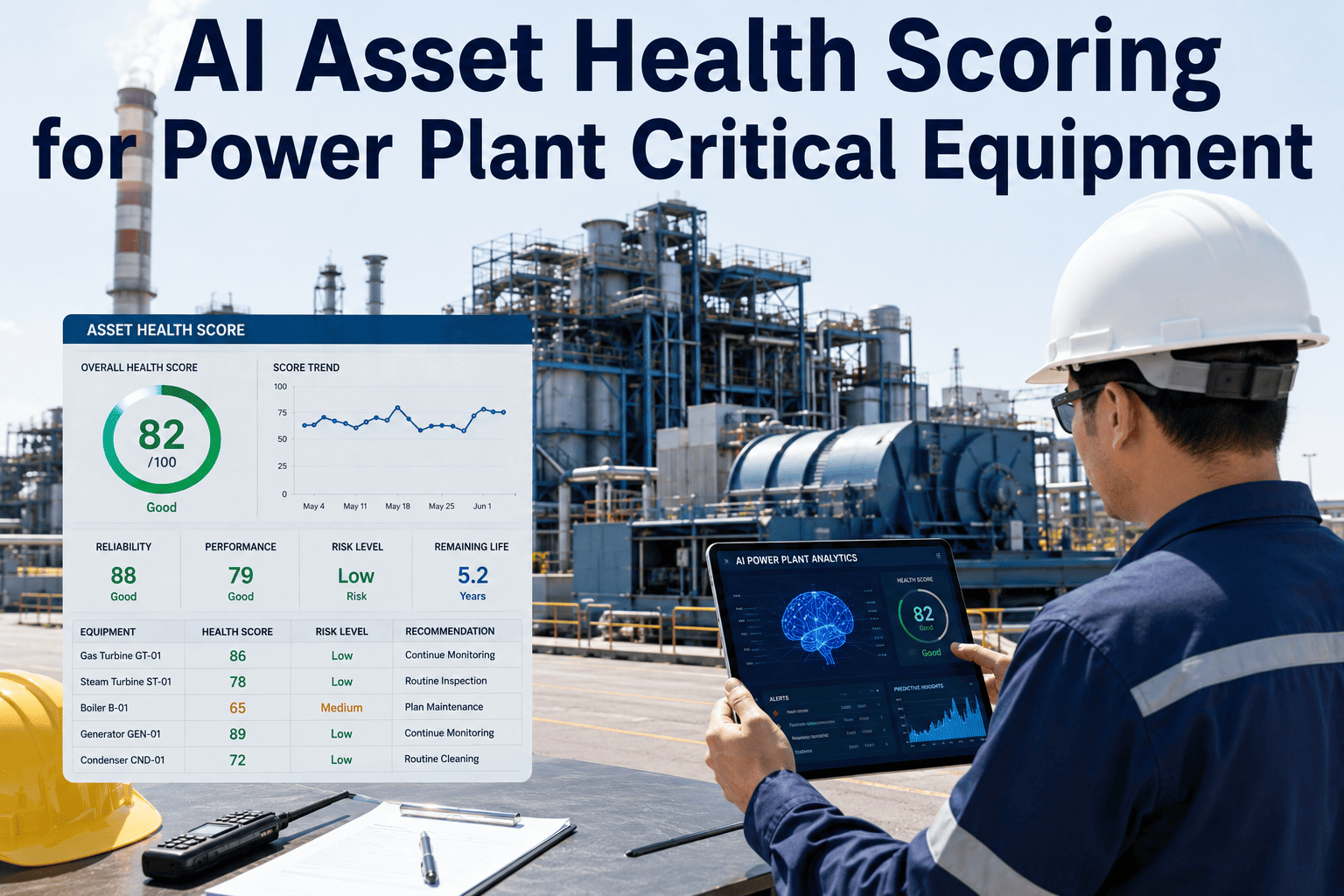
Asset health monitoring combines multiple sensor technologies with AI-powered analytics to transform raw data into maintenance decisions. Vibration sensors hold approximately 45% of total installations in industrial monitoring applications, followed by thermal cameras at 18%. These sensors continuously stream data to edge computing devices that perform initial filtering and anomaly detection before transmitting refined information to central processing systems where machine learning algorithms compare current readings against established baselines.
Expert Analysis: Building Resilient Power Operations
The shift from reactive to predictive maintenance represents the most significant operational transformation in power generation this decade. Facilities implementing real-time asset monitoring are achieving 15-25% improvements in asset availability rates while cutting unplanned downtime by 20-60%. The technology has matured to the point where AI-based anomaly detection models process over 20,000 data points per second, identifying degradation patterns that human operators simply cannot perceive.
The integration of condition monitoring with computerized maintenance management systems (CMMS) creates a closed-loop workflow where sensor alerts automatically generate work orders, assign technicians based on skills and availability, check parts inventory, and schedule repairs during planned downtime windows. This automation eliminates the human delay between detection and response that often allows minor issues to escalate. Facilities looking to schedule a demo of CMMS integration discover that the combination multiplies the value of both investments.
Implementation Roadmap for Power Plant Managers
Transitioning from reactive maintenance to comprehensive asset health monitoring requires systematic planning. The process begins with criticality assessment—identifying which equipment failures would have the greatest operational and financial impact. For most thermal plants, this means prioritizing turbines and generators followed by boilers, transformers, and auxiliary systems. Modern wireless sensors install quickly on existing equipment without requiring process shutdowns, and cloud-based platforms begin establishing baseline patterns immediately upon activation.
The Electric Power Research Institute has determined that corrective maintenance costs $17-18 per horsepower annually while preventive and predictive maintenance costs only $7-13 per horsepower. For a plant with thousands of horsepower in rotating equipment, this differential translates to substantial savings. Beyond direct cost reduction, the improvement in grid reliability and regulatory compliance positions facilities for long-term operational success. Plants that create their free monitoring account typically see positive ROI within the first year, often from preventing a single major outage event.