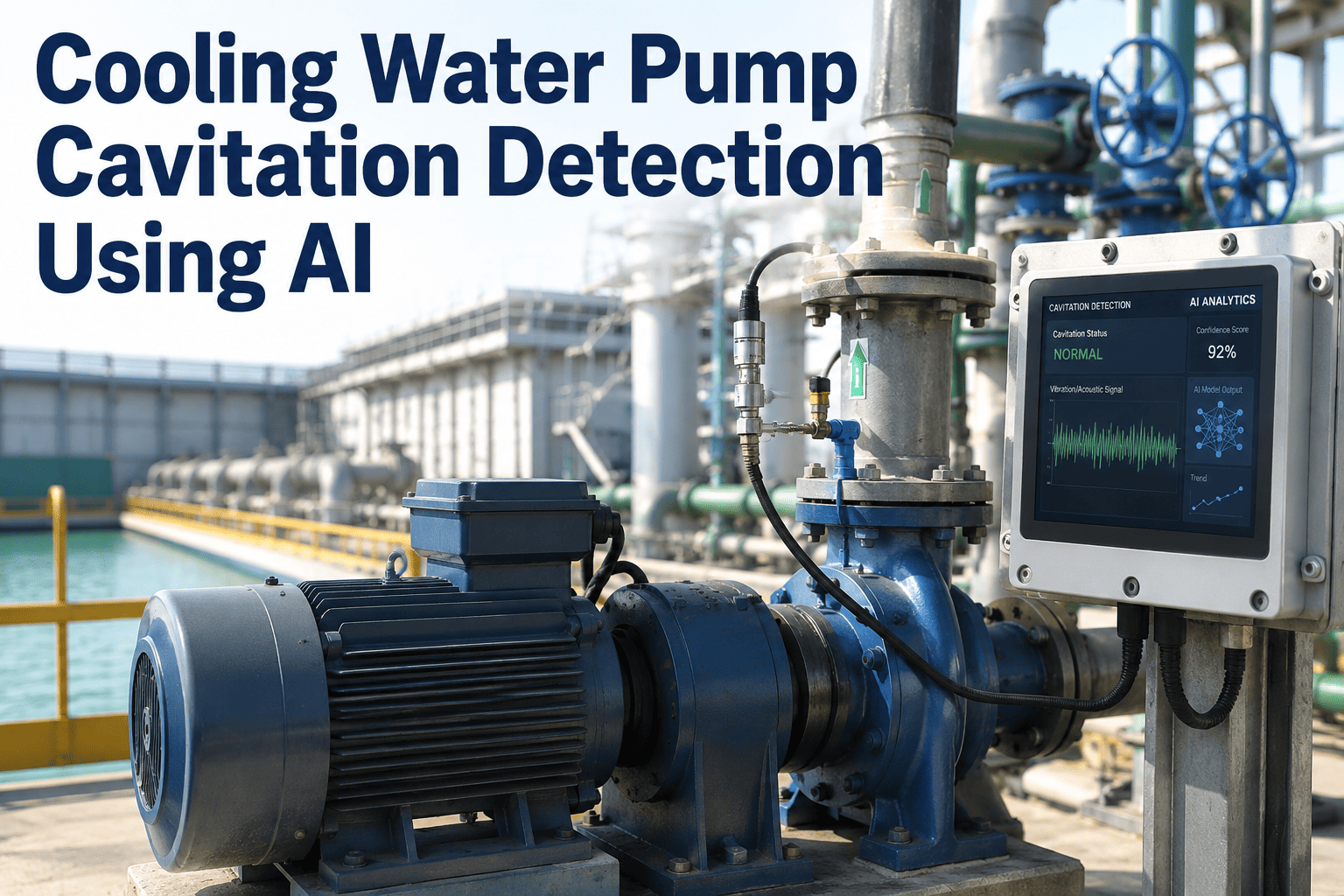
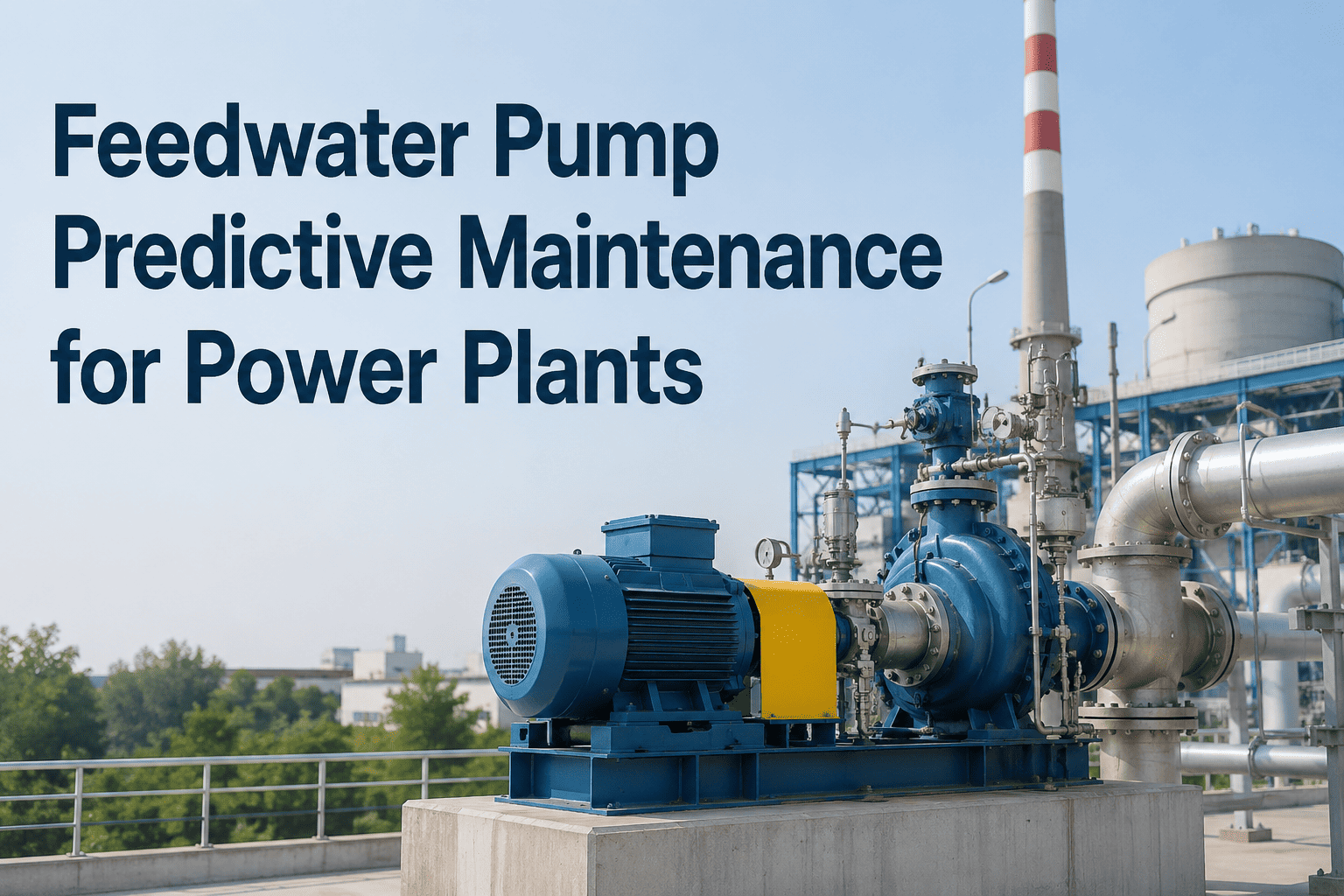
Pump cavitation is the silent killer of power plant efficiency. It starts as a faint noise — a sound technicians describe as "marbles rattling" — and escalates into impeller erosion, shaft misalignment, and catastrophic seal failure over weeks or months. By the time vibration levels trigger alarms, the damage is already done: a $4,200 feedwater pump now requires $18,000 in emergency repairs plus 48 hours of forced outage. Traditional time-based maintenance misses cavitation entirely because it develops between inspection intervals. Condition-based monitoring using vibration, pressure differential, flow rate, and acoustic sensors catches cavitation in its early stages — when the fix is a discharge valve adjustment or suction strainer cleaning, not an impeller replacement. Power plants that deploy OxMaint's predictive maintenance platform for pump monitoring reduce cavitation-related failures by 84%, extend pump service life by 2.3x, and eliminate 92% of emergency pump repairs within the first year of implementation.
Pump Cavitation Detection for Power Plant Maintenance
Detect pump cavitation using vibration analysis, pressure monitoring, flow rate tracking, and acoustic data to prevent impeller damage and efficiency losses before they force emergency shutdowns.
Four Root Causes of Pump Cavitation in Power Plants
Cavitation occurs when local pressure in the pump suction drops below the vapor pressure of the fluid, causing bubbles to form and violently collapse against metal surfaces. Understanding the root causes guides sensor placement and monitoring strategy.
Insufficient Net Positive Suction Head (NPSH)
NPSH available falls below NPSH required when suction line losses increase due to fouled strainers, partially closed valves, or elevated fluid temperature. Pressure differential sensors between suction and discharge detect NPSH margin degradation before cavitation begins.
Operating Beyond Design Flow Rate
Pumps operated at 120–150% of design flow develop low-pressure zones at impeller vane tips. Flow meters integrated with CMMS alert operators when pumps exceed cavitation-free flow limits, triggering throttling or load redistribution.
Impeller Wear and Clearance Degradation
Erosion from normal operation increases internal clearances, reducing pump efficiency and lowering suction pressure at a given flow rate. Vibration spectrum analysis detects the characteristic frequency shifts that indicate wear progression months before failure.
Suction Strainer Fouling and Blockage
Debris accumulation in suction strainers increases head loss and reduces pressure at the pump inlet. Differential pressure transmitters across strainers flag rising pressure drop, triggering cleaning before cavitation-inducing blockages form.
Four Sensor Types That Detect Cavitation Before Failure
Effective cavitation monitoring combines multiple sensor types. No single measurement catches all cavitation scenarios, but the combination provides early warning with minimal false positives.
Vibration Analysis and Frequency Spectrum Monitoring
Accelerometers mounted on pump casings detect the high-frequency vibration signature of collapsing cavitation bubbles. Spectrum analysis identifies cavitation by the broad-spectrum noise between 2,000–10,000 Hz, distinct from mechanical looseness or misalignment.
Suction and Discharge Pressure Differential Tracking
Pressure transmitters at pump suction and discharge calculate real-time NPSH margin. When available NPSH approaches required NPSH within 10%, alerts trigger before cavitation initiates. Trending shows degradation patterns weeks in advance.
Flow Rate Monitoring Against Design Curves
Magnetic or ultrasonic flow meters measure actual flow and compare against manufacturer performance curves loaded into CMMS. Operating points that drift into cavitation zones generate alerts even when pressure and vibration remain normal.
Acoustic Emission Monitoring
Ultrasonic sensors detect the acoustic signature of bubble collapse at frequencies beyond human hearing. Acoustic monitoring provides the earliest cavitation detection but requires careful sensor placement to avoid interference from adjacent equipment.
Stop Pump Failures Before They Start
OxMaint's predictive AI integrates vibration, pressure, flow, and acoustic data to detect cavitation weeks before impeller damage occurs. See how early detection converts emergency repairs into planned maintenance on your schedule.
Cavitation Monitoring Strategies by Pump Type
Different pump applications require tailored monitoring approaches based on criticality, operating conditions, and failure consequences.
Feedwater Pumps
High-pressure, high-temperature pumps feeding boilers are most vulnerable to cavitation during startup and load changes. Continuous vibration and NPSH monitoring with 30-second sampling intervals catches transient cavitation events that intermittent readings miss.
Circulating Water Pumps
Large-volume, low-pressure pumps moving cooling water are less prone to cavitation but suffer severe impeller erosion when it occurs. Flow rate monitoring against design curves provides the earliest warning, supplemented by quarterly vibration surveys.
Condensate Pumps
Low-NPSH pumps handling near-saturated condensate are cavitation-prone even within design flow ranges. Acoustic monitoring detects incipient cavitation before pressure or vibration changes become measurable, enabling proactive valve adjustments.
Fuel Oil Transfer Pumps
Pumps handling viscous fluids develop cavitation when suction strainers foul. Differential pressure monitoring across strainers provides direct indication of blockage, triggering cleaning before NPSH margin erodes to cavitation levels.
How CMMS Converts Sensor Data Into Preventive Action
Sensors generate data. CMMS platforms convert that data into work orders, parts procurement, and maintenance schedules that prevent failures before they happen.
Continuous Data Collection
Vibration, pressure, flow, and acoustic sensors stream data to OxMaint every 30–300 seconds depending on pump criticality. Historical baselines establish normal operating ranges for each pump under varying load conditions.
Anomaly Detection and Pattern Recognition
AI algorithms compare real-time sensor data against baseline patterns. Deviations exceeding statistical thresholds trigger alerts ranked by severity: informational, warning, or critical. Pattern recognition distinguishes cavitation from bearing wear or misalignment.
Automated Work Order Generation
Critical alerts auto-generate work orders with pre-filled scope: pump ID, detected condition, recommended corrective action, required parts, and estimated labor hours. Planners review and schedule the work without manually transcribing sensor readings.
Parts Procurement and Availability Check
Work orders query inventory for impellers, seals, bearings, or strainer elements. If parts are unavailable, procurement requests auto-generate with vendor information pre-populated. Lead time calculations ensure parts arrive before scheduled maintenance windows.
Execution Tracking and Validation
Technicians document findings, corrective actions, and post-repair sensor readings in mobile work orders. CMMS validates that vibration and pressure returned to normal ranges, closing the loop between detection and resolution.
Cost Analysis: Predictive Monitoring vs Emergency Repair
The business case for cavitation monitoring is straightforward. Early detection converts catastrophic failures into planned maintenance at a fraction of the cost.
Feedwater Pump Cavitation Failure
Early Cavitation Detection and Correction
Deploying Cavitation Monitoring: 60-Day Implementation Plan
Cavitation monitoring does not require plant-wide sensor installation on day one. A phased approach targets the highest-risk pumps first and expands based on demonstrated ROI.
Critical Pump Identification and Baseline
Prioritize pumps by failure consequence and cavitation risk. Install vibration sensors and pressure transmitters on top five critical pumps. Establish 10-day baseline of normal operating conditions under varying loads.
Alert Threshold Configuration
Set alert thresholds at 2 standard deviations from baseline for informational alerts, 3 standard deviations for warnings, and 4 standard deviations for critical. Validate thresholds against known historical failures to minimize false positives.
CMMS Integration and Work Order Automation
Connect sensor platform to OxMaint CMMS. Configure automated work order templates for detected conditions: cavitation, bearing wear, seal leakage, misalignment. Test end-to-end workflow from sensor alert to technician mobile notification.
First Detection Event and Validation
Monitor for first cavitation detection event. Execute predictive work order and document findings. Validate that corrective action returned sensor readings to normal ranges. Calculate cost avoidance versus emergency repair scenario.
Frequently Asked Questions
Catch Cavitation Before It Destroys Your Pumps
OxMaint's predictive AI monitors vibration, pressure, flow, and acoustic data to detect cavitation weeks before impeller damage forces emergency shutdowns. See how early detection converts expensive failures into routine maintenance adjustments.