Power plant operators managing assets across multiple sites have always faced the same problem: the data exists, but it lives in disconnected systems that never talk to each other. Azure Digital Twins changes this by creating a live, cloud-native knowledge graph of every asset relationship in your plant — turbines, transformers, cooling loops, and switchgear — continuously updated by IoT sensor streams and queryable from anywhere in the world. When that intelligence connects to OXmaint CMMS, remote monitoring becomes remote action: every anomaly becomes a work order, every threshold breach becomes a documented compliance event. Sign in to OXmaint and start building your cloud-native power plant maintenance program today.
30%
downtime reduction using Azure Digital Twins predictive maintenance across industrial operations
$150K+
annual savings per facility from avoided downtime at just 100 prevented outage hours per year
39%
of global digital twin market growth through 2029 attributed to North America energy and utilities sector
Pay-as-go
Azure Digital Twins pricing model — scale from one turbine to a fleet of 50 plants without rearchitecting
Azure Digital Twins: Cloud-Native Asset Intelligence for Power Generation
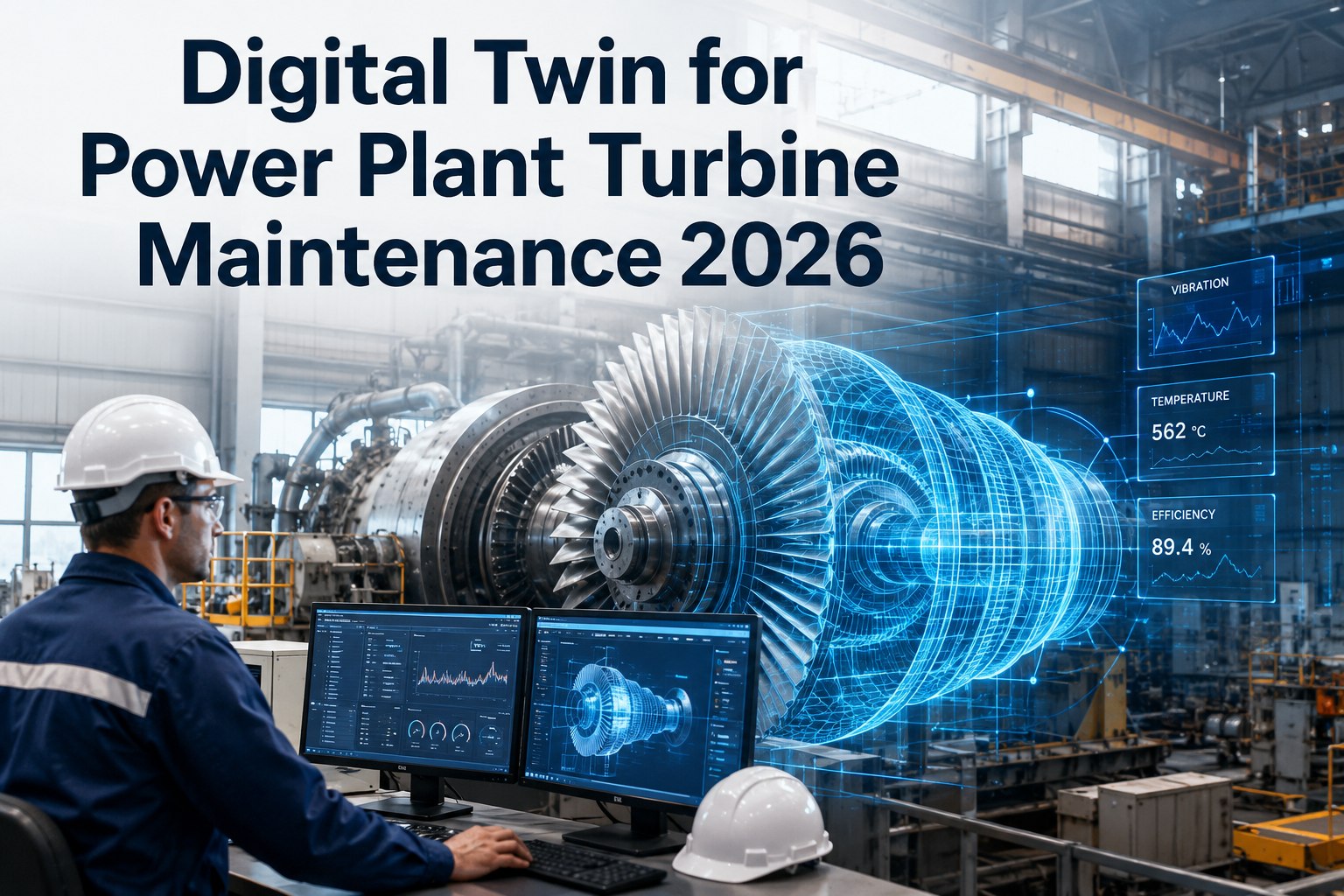
Azure Digital Twins is Microsoft's cloud platform for building live knowledge graphs of physical environments. For a power plant, each asset — gas turbine, HRSG, steam turbine, generator, cooling tower — becomes a digital twin instance defined by a DTDL (Digital Twins Definition Language) model. These instances are not static records. They reflect real-time state from IoT Hub sensor streams, store historical telemetry in Azure Time Series Insights, and expose queryable relationships across the entire plant topology.
The Microsoft Azure stack surrounding digital twins — IoT Hub for device connectivity, Azure Synapse Analytics for machine learning on historical data, Power BI for operations dashboards, Logic Apps for workflow automation, and HoloLens 2 for mixed-reality field maintenance — creates a complete cloud-native maintenance intelligence platform. OXmaint CMMS sits at the action layer of this stack, converting twin-generated condition alerts into structured, documented, mobile-first work orders.
The Azure + OXmaint Power Plant Stack
Sensor Layer
IoT HubSCADAOPC-UAModbus
↓
Twin Layer
Azure Digital TwinsDTDL ModelsTwin Graph
↓
Analytics Layer
Azure SynapseTime Series InsightsPower BIAzure AI
↓
Action Layer
OXmaint CMMSWork OrdersCompliance RecordsMobile + HoloLens
Why DTDL Makes Azure the Right Foundation for Power Plant Twins
Most digital twin platforms lock you into proprietary data formats. DTDL (Digital Twins Definition Language) is Microsoft's open, JSON-LD based modeling standard — used across Azure IoT services including IoT Plug and Play and Time Series Insights — which means your power plant asset models remain portable, interoperable, and free of vendor lock-in. Microsoft has published an open-source Energy Grid Ontology on GitHub adapted from the Common Information Model (CIM), the global standard for energy grid asset management, so you are not building turbine and transformer DTDL models from scratch.
Open Standard
DTDL v3 Models
JSON-LD based, programming-language independent. Define turbine properties, HRSG relationships, and generator telemetry schemas once — reuse across every Azure IoT service without reformatting data.
Pre-Built
CIM Energy Grid Ontology
Microsoft's open-source Energy Grid DTDL ontology covers substations, feeders, generation assets, and transformers using the global CIM standard. Skip months of model design — start with industry-validated schemas.
Live Graph
Twin Knowledge Graph
Azure Digital Twins Explorer visualizes your entire plant as a queryable relationship graph. See which cooling tower feeds which condenser bundle, trace failure cascades across asset relationships in real time.
Scalable
Multi-Site Fleet Modeling
One Azure Digital Twins instance can model hundreds of power plants simultaneously. Fleet-level queries identify which sites have assets trending toward threshold conditions across your entire generation portfolio.
Azure Digital Twins Detects the Problem. OXmaint Fixes It.
The intelligence gap between a cloud dashboard and a completed maintenance task is where power plants still lose millions. OXmaint closes that gap — translating Azure Digital Twin condition alerts into prioritized work orders your team can execute on mobile, with full compliance documentation built in.
Power BI Dashboards + HoloLens: Visualization That Drives Action
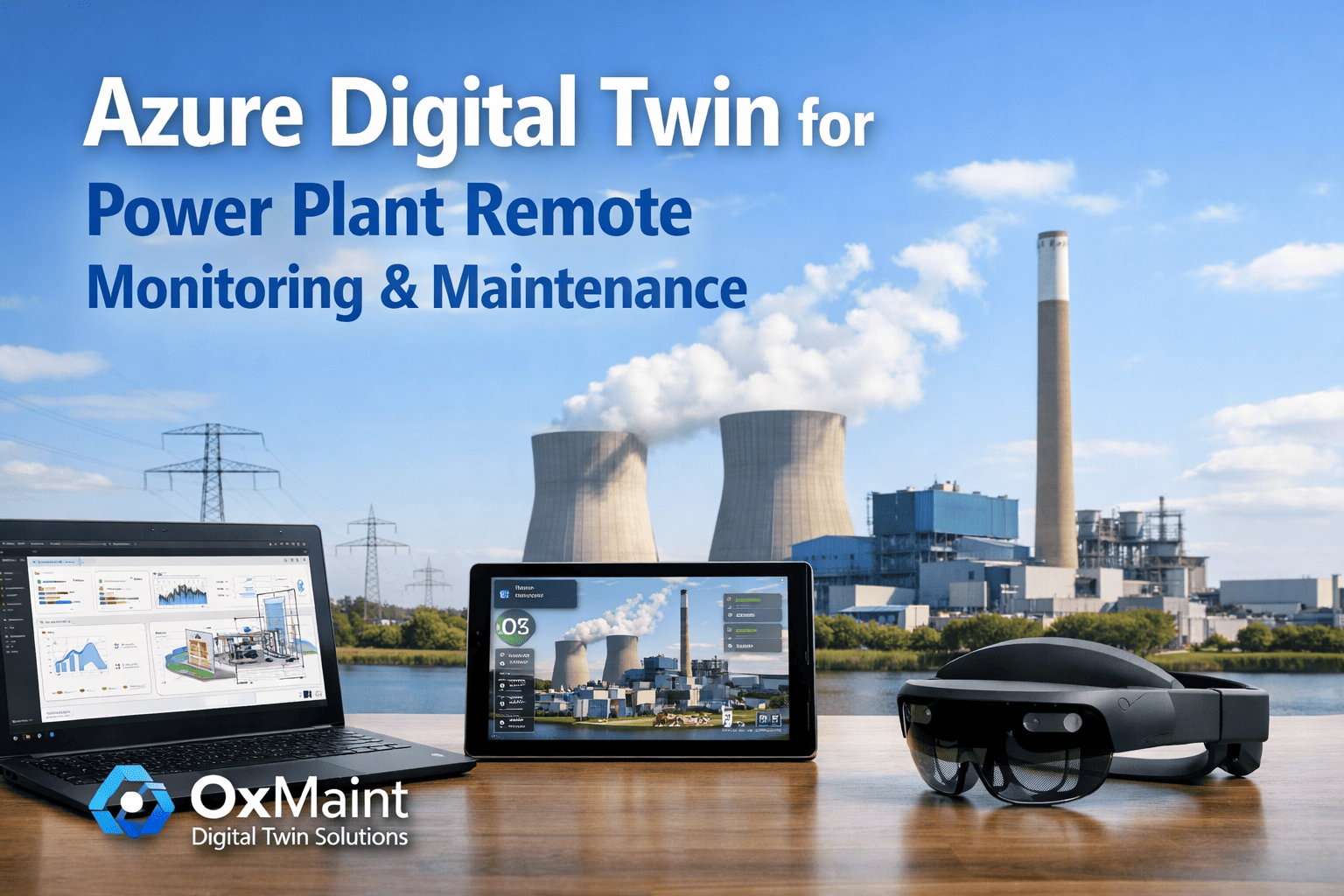
Azure Digital Twins integrates natively with Power BI through event routing via Azure Synapse Analytics, giving your operations team live plant performance dashboards without custom API development. For field maintenance teams, HoloLens 2 mixed-reality integration overlays twin data directly onto physical equipment — a technician wearing HoloLens standing in front of a gas turbine sees its live telemetry, maintenance history, open work orders, and next PM due date without touching a device.
Remote Operations
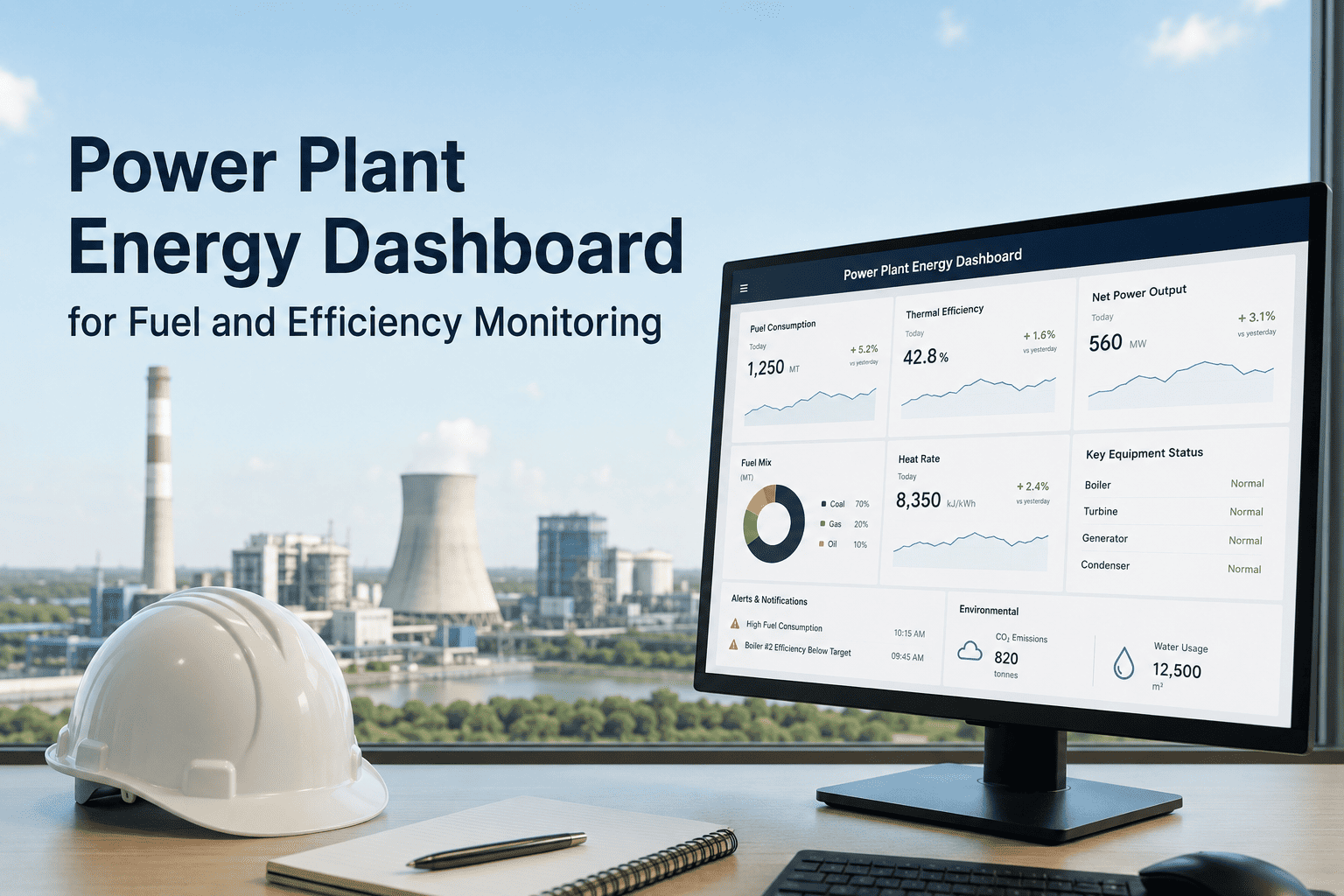
Power BI Live Dashboards
Fleet-level heat rate and efficiency trending across all plant assets
Real-time threshold alert monitoring with condition severity classification
OXmaint work order completion rates and open backlog linked to asset health
Historical twin state queries via Azure Time Series Insights integration
Compliance dashboard showing NERC/EPA documentation completion status
Best for: Control room operators, plant managers, and multi-site fleet directors
On-Site Field Work
HoloLens 2 Mixed Reality
Overlay live twin telemetry directly onto physical equipment in the field
View OXmaint work order details and repair instructions hands-free
Capture inspection photos and complete checklists via voice commands
Access full asset maintenance history without leaving the equipment location
Shared presence for remote expert guidance on complex repair procedures
Best for: Field technicians, maintenance leads, and remote specialist support
Traditional Monitoring vs Azure Digital Twin + OXmaint
The gap between legacy remote monitoring and a connected Azure Digital Twin program is not just technological — it is financial. Every column below represents a real operational difference that compounds across a multi-site power fleet.
Traditional Monitoring
Azure DT + OXmaint
Data Latency
Batch exports, 24–72 hr lag
Real-time IoT Hub streams, sub-minute
Asset Relationships
Siloed per-asset data, no context
DTDL knowledge graph models all relationships
Maintenance Trigger
Calendar schedule or operator observation
Condition-based alert auto-creates OXmaint WO
Multi-Site Visibility
Site-by-site login, no fleet view
Single Power BI dashboard, all sites, all assets
Field Execution
Paper forms, verbal handoffs, lost records
HoloLens + OXmaint mobile, e-signed records
Compliance Documentation
Manual log consolidation before audits
Auto-timestamped records, audit-ready always
Failure Prediction
React after failure, emergency repair costs
Azure AI + Synapse ML predicts 4–8 weeks ahead
Scalability
New site = new system, new integration
Pay-as-go, add sites without rearchitecting
The Remote Monitoring to Closed Work Order Flow
This is the critical path that separates plants that use Azure Digital Twins as a monitoring dashboard from plants that use it as a proactive maintenance engine. Every step below is automated when Azure Digital Twins is connected to OXmaint.
1
Sensor Signal
IoT Hub ingests real-time telemetry from turbine vibration sensors, HRSG temperature probes, and generator winding monitors — thousands of data points per second routed to the twin graph.
2
Twin State Update
Azure Digital Twins updates the DTDL instance properties in real time. Azure Synapse ML models compare current state against historical baselines to score anomaly probability for each asset.
3
Logic App Trigger
Azure Logic Apps monitors twin state changes. When a threshold breach is confirmed, it fires an event that creates a priority-ranked work order in OXmaint with pre-populated asset context and diagnostic summary.
4
Technician Notified
The certified technician receives a mobile push notification with the work order, asset location, recommended action, and any relevant safety notes pulled from the DTDL model's documentation field.
5
Work Executed + Closed
Technician completes inspection on mobile or HoloLens, captures photos, fills required data fields, and e-signs the record. OXmaint sends completion data back to Azure Digital Twins to recalibrate the twin baseline.
Documented outcomes from Azure Digital Twin + CMMS deployments in power and energy sectors
10%
average reduction in total maintenance costs (Gartner, 2024 digital twin deployment data)
30%
downtime reduction achievable through Azure Digital Twins predictive maintenance programs
60%
faster compliance documentation when DTDL event data auto-fills OXmaint work order fields
8–15%
machinery insurance premium savings for facilities with structured digital maintenance records
Remote Monitoring Use Cases by Power Plant Asset Type
Twin MonitorsExhaust temperature spread, compressor pressure ratio, vibration spectrum, fuel flow efficiency
Alert TriggerBlade efficiency drop or exhaust spread deviation beyond 3% baseline
OXmaint ActionHot section borescope inspection WO with fired hours, starts count documented
Risk Avoided$2.4M+ unplanned repair
Twin MonitorsOil temperature, dissolved gas analysis, load factor, insulation resistance trending
Alert TriggerDGA hydrogen concentration above IEC 60599 alarm threshold
OXmaint ActionOil sampling WO created with DGA analysis fields pre-populated from twin data
Risk Avoided$3.5M+ transformer failure
Twin MonitorsStack temperature, tube wall temperatures, approach delta, steam drum water level
Alert TriggerTube approach temperature deviation beyond 3°F from established baseline
OXmaint ActionTube inspection WO with pressure test procedure and NBIC documentation fields
Risk Avoided$28M+ HRSG failure event
Twin MonitorsStator winding temperature, hydrogen purity, vibration, exciter brush wear indicator
Alert TriggerStator temperature asymmetry or hydrogen purity drop below 97%
OXmaint ActionInsulation resistance test WO with megger readings and partial discharge records
Risk Avoided$5M+ generator rewind
Frequently Asked Questions
What is Azure Digital Twins and how does it work for power plant remote monitoring?
Azure Digital Twins is Microsoft's cloud-native platform for creating and managing live digital representations of physical environments. For a power plant, each asset — turbine, HRSG, generator, transformer — is modeled as a digital twin instance using DTDL (Digital Twins Definition Language), which describes the asset's state properties, telemetry types, and relationships to other assets. Azure IoT Hub feeds real-time sensor data into the twin instances, updating their state continuously. Azure Synapse Analytics and Azure AI services process this data against historical baselines to identify anomalies. The result is a cloud-accessible, always-current knowledge graph of your entire plant that operations teams can monitor remotely via Power BI dashboards from any location.
What is DTDL and why does it matter for long-term power plant digital twin programs?
DTDL (Digital Twins Definition Language) is Microsoft's open, JSON-LD based standard for defining digital twin model schemas. Unlike proprietary modeling formats, DTDL is used across multiple Azure IoT services — IoT Plug and Play, Time Series Insights, and Azure Digital Twins — which means your asset models are portable and interoperable. For power plants, Microsoft has published an open-source Energy Grid Ontology on GitHub based on the global Common Information Model (CIM) standard, covering generation assets, substations, feeders, and transformers. Using DTDL v3, which adds support for complex schemas, array properties, and semantic annotations, ensures your twin models remain compatible with evolving Azure services and third-party tools without requiring expensive rework.
How does HoloLens 2 integrate with Azure Digital Twins for field maintenance work?
Microsoft HoloLens 2 connects to Azure Digital Twins through Microsoft Mesh and Unity or Unreal Engine integration layers. When a field technician wearing HoloLens 2 approaches a physical asset like a gas turbine, the device overlays the live twin state data — current telemetry readings, open work orders from OXmaint, maintenance history, and next PM due dates — directly onto their field of view as holographic annotations. Technicians can complete OXmaint work order checklists hands-free via voice commands, take inspection photos, and access wiring diagrams or repair procedures without pulling out a tablet. Remote experts can join the same mixed-reality session to guide complex repairs from anywhere in the world, reducing the need for specialist travel to remote plant sites.
Book a demo to see how OXmaint work orders integrate with field visualization tools.
How does Azure Digital Twins connect to OXmaint to create maintenance work orders automatically?
Azure Logic Apps acts as the integration bridge between Azure Digital Twins and OXmaint. When a digital twin's state changes — for example, a turbine's vibration signature crosses a threshold — Logic Apps captures the event from Azure Event Grid or Event Hubs and fires a workflow that creates a structured work order in OXmaint via API. The work order is pre-populated with the asset ID, the specific anomaly context from the twin, the recommended action, and any relevant compliance documentation requirements. The technician receives a mobile notification, completes the work order, and the closed record is written back to Azure Digital Twins as a maintenance event that recalibrates the twin's baseline for improved future predictions.
Can Azure Digital Twins manage a multi-site fleet of power plants in a single instance?
Yes. Azure Digital Twins is architected for fleet-scale modeling. A single instance can contain thousands of interconnected digital twin models representing assets across multiple sites, regions, and asset types. The DTDL knowledge graph enables cross-site queries — for example, identifying all gas turbines across your fleet that have vibration scores trending above a defined threshold, ranked by severity. Azure Digital Twins' pay-as-you-go pricing model means you add new sites and assets by deploying additional DTDL instances without rearchitecting the underlying platform. Power BI fleet dashboards connected to Azure Synapse provide a single-pane view across all sites simultaneously.
Sign up to OXmaint to configure your first multi-site power plant maintenance hierarchy.
What compliance standards can OXmaint document when receiving alerts from Azure Digital Twins?
OXmaint generates digitally signed, timestamped work order records that satisfy NERC GADS (Generating Availability Data System) reporting, NERC CIP cyber-security compliance evidence, EPA Section 608 refrigerant inspection requirements, and OEM-mandated inspection interval documentation tied to fired hours and turbine starts. When an Azure Digital Twins condition alert triggers an OXmaint work order, the resulting completed record automatically captures all required fields — inspection readings, technician certification, repair description, and e-signature — creating an audit-ready compliance trail without any manual log consolidation before inspections.
Your Power Plant Is Already Generating the Data. Is Anyone Acting on It?
Azure Digital Twins turns raw sensor streams into an intelligent, queryable model of everything in your plant. OXmaint turns that intelligence into executed maintenance, closed work orders, and documented compliance records your auditors and insurers will respect. Together, they are the cloud-native power plant maintenance stack your team deserves.