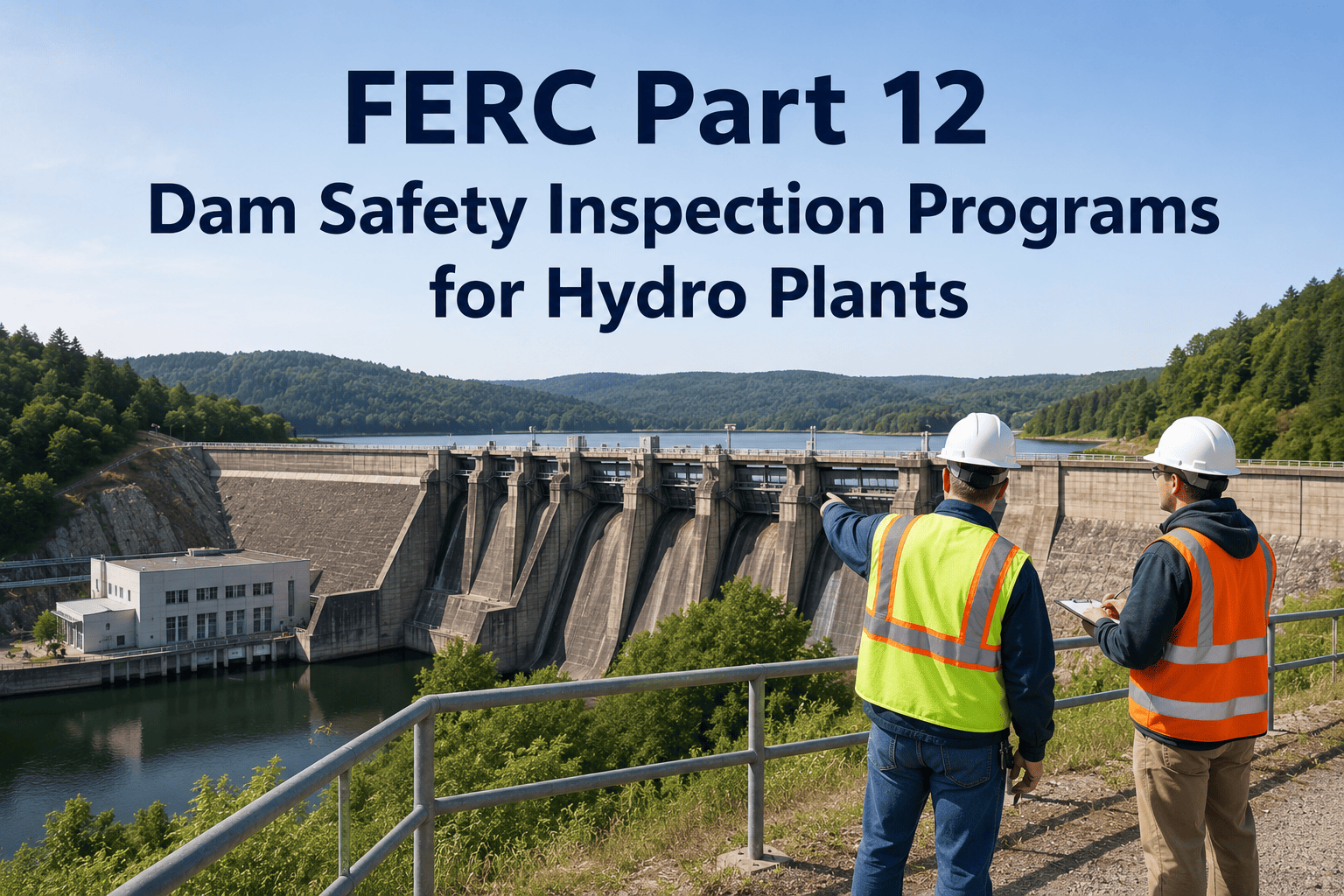
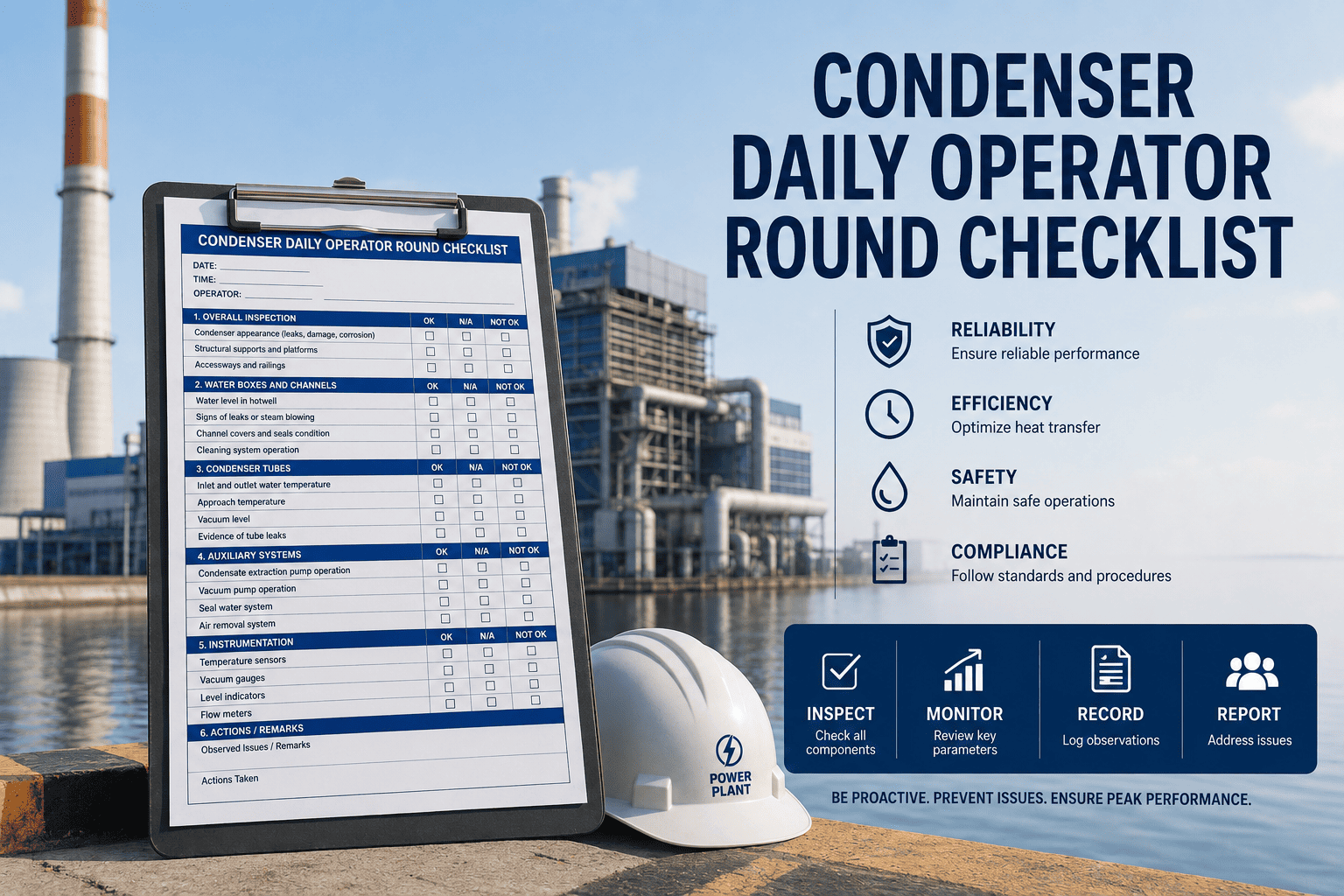
Dam safety is not optional and not delegable — the owner of a FERC-licensed hydroelectric project is legally responsible for the physical integrity of the dam structure every day of the year, not just on inspection day. FERC Part 12 establishes the framework: independent consultants conduct formal safety reviews, but the foundation of any defensible dam safety programme is the daily or regular inspection performed by the owner's operations staff. These rounds detect the seepage, cracking, settlement, and instrumentation anomalies that signal developing instability — often months before they become visible on a consultant's biennial visit. A missed seepage observation that appeared between consultants' visits is not just a safety failure — it is a FERC compliance failure that can affect project licence renewal and force emergency action. Oxmaint structures every FERC Part 12-aligned daily inspection parameter into a guided digital workflow so findings are recorded, trended, and retrievable at any Part 12 review or FERC inquiry.
Run Dam Safety Rounds on Oxmaint
Oxmaint gives dam operators and safety engineers a centralised platform to complete daily dam inspections digitally, track seepage trends, log crack and settlement measurements, capture instrumentation readings, and generate FERC-retrievable audit records — all linked to each dam structure's full inspection history.
Why Daily Rounds Are the Core of FERC Part 12 Compliance
FERC Order 122 and the Engineering Guidelines for the Evaluation of Hydropower Projects (Chapter 14) are clear: the owner's inspection programme is the first line of defence in dam safety. Formal Part 12 independent consultant reviews occur every six to twelve years depending on project classification — but the daily operator round is what catches the seepage that began three weeks ago, the new crack that appeared after a storm, or the piezometer that has been rising for two months. FERC expects these records to be complete, consistent, and immediately retrievable. Projects with gaps in daily inspection records are cited during Part 12 reviews regardless of the physical condition of the structure.
1. Seepage Observation and Measurement
Seepage through or around a dam structure is never normal — it is water finding a path that the design did not intend or can no longer contain. The question is not whether seepage is present, but whether it is increasing, becoming turbid, or shifting location. All three are warning signs of internal erosion progression. FERC Part 12 requires seepage to be quantified, not just noted as present or absent. Log seepage readings and turbidity observations with automatic trend alerts in Oxmaint.
Downstream toe — seepage volume and location mapping
Inspect the full downstream toe for seepage emergence. Measure flow rate at all established collection points (V-notch weirs, collection sumps, or timed bucket measurements). Record the GPS or station reference for any new seepage location discovered during this round — new emergence points are a Part 12 reportable finding regardless of volume. Report — new emergence location
Seepage turbidity — visual and grab sample
Observe seepage colour and clarity at all collection points. Any turbidity (cloudiness or particle transport visible to the naked eye) in seepage that was previously clear is a critical finding requiring immediate escalation — turbid seepage indicates material transport, which is internal erosion in progress. A turbid finding triggers emergency notification protocols under most FERC Emergency Action Plans. Emergency — turbid seepage
Seepage trend — compare to 30-day and 90-day averages
Record today's total seepage flow and compare to the trailing 30-day average. An increasing trend at stable or falling reservoir pool is abnormal and requires investigation. A 25% or greater flow increase in a single week at stable pool warrants an engineering review notification. Seasonal variation (higher seepage at high pool) is normal; departures from the seasonal baseline are not. Notify — 25% weekly increase
Abutment seepage — both abutments and foundation contact zones
Inspect both abutment contact zones where the embankment or concrete structure meets native rock or soil. Abutment seepage is distinct from foundation seepage and may indicate a different failure mechanism. Any seepage at a previously dry abutment contact zone requires same-day engineering notification — abutment contact is a high-consequence zone for concentrated seepage development. Notify — new abutment seepage
2. Cracking and Structural Distress Inspection
Cracking in concrete dams, spillway structures, and on embankment crests is the visible surface expression of internal stress — thermal cycling, settlement, alkali-aggregate reaction, or seismic loading. The daily round's role is not structural analysis — it is detection and documentation of change. A crack that was 2mm wide last week and is 4mm wide this week tells an engineer something that a single observation never can. Measurement with consistent tools, recorded at consistent reference points, is what makes inspection data useful.
Concrete structure cracking — width, length, and orientation
Using a crack comparator gauge, measure the width of all previously identified cracks at their marked reference stations. Note any new cracks observed outside mapped areas. For active cracks, attach a plaster tell-tale or crack monitor at the reference station so future rounds can detect movement without remeasurement. Record crack orientation (transverse vs longitudinal vs diagonal) — orientation indicates the stress mechanism. Record — width at reference station
Embankment crest — longitudinal cracking or depressions
Walk the full crest length and inspect for longitudinal cracks parallel to the dam axis. Any longitudinal crack on an embankment crest is a potential indicator of slope instability or internal erosion piping — it requires same-day engineering notification and is a Part 12 exceptional finding. Also note any circular depressions, sinkhole formation, or uneven settlement that was not present on the previous round. Emergency — longitudinal crest crack
Spillway and stilling basin — joint condition and concrete spalling
Inspect all expansion joints in the spillway chute and stilling basin for seal failure, open joints with water infiltration, or faulting between adjacent slabs. Record any spalling, delamination, or cavitation damage. Faulted slab joints (adjacent slabs at different elevations) allow uplift pressure development that can dislodge slabs at operating flow velocities — a defect that grows non-linearly under operating conditions. Record — faulted joint elevation
3. Embankment and Slope Integrity Check
Embankment slopes are the largest surface area of any earthfill dam and the zone where external erosion, slope instability, and burrowing animal damage present first. The downstream slope is also the primary indicator of internal erosion — wet spots, soft areas, and slope face seeps that develop between rounds are often the first visible sign of a developing piping failure. Inspectors who know what the slope looked like on the previous round will notice these changes; inspectors working from memory alone will not.
Downstream slope — wet areas, soft spots, and slope face seeps
Walk the full downstream slope face. Mark and record the location of any wet area or soft spot by station and elevation using the dam's reference grid. A wet area that was dry on the previous round is a priority finding even if no visible seepage flow is present — saturation precedes visible seepage emergence in embankment dam piping initiation. Priority — new wet area on slope
Upstream slope — wave erosion, rip-rap displacement, and slope failure
Inspect the upstream slope from the crest or observation platform. Check rip-rap protection for displacement, settlement, or voids indicating loss of underlying fill. Note any sloughing or circular failure scar on the upstream slope. Seasonal wave action creates progressive toe erosion that accumulates undetected without regular measurement of the rip-rap toe elevation. Record — rip-rap displacement
Burrowing animal activity — rodent holes and tree root damage
Inspect both slopes for burrowing animal holes, particularly muskrat, beaver, and groundhog burrows on embankment dams. Any animal burrow within the dam's zone of influence (typically within 50 feet of the downstream toe) requires same-day notification to allow assessment of depth and proximity to the seepage path. Tree root systems on embankment dams create preferential seepage pathways and must be managed per plant tree management plan. Notify — burrow in zone of influence
4. Instrumentation Reading and Alert Check
Dam instrumentation is only useful if readings are taken consistently, recorded accurately, and compared to established alert and action thresholds. A piezometer that has been rising for six weeks and is now at its alert level did not fail overnight — it gave weeks of warning that only consistent daily reading would reveal. FERC Part 12 requires that instrumentation alert thresholds be established and that owners have documented procedures for responding to threshold exceedances. Automate piezometer threshold alerts and trend charts in Oxmaint — no manual chart plotting required.
Piezometers — all standpipe and vibrating wire readings
Read all standpipe piezometers by measuring tape and all vibrating wire piezometers by readout device. Record the water elevation at each instrument, not the depth to water — elevation is the meaningful engineering parameter. Compare each reading to its alert threshold (typically set by the independent consultant). Any reading at or above an alert level triggers immediate notification to the dam safety engineer per the project's dam safety monitoring plan. Notify — at alert threshold
Seepage weirs and collection points — flow measurement
Read all V-notch or trapezoidal weirs using staff gauges or automated level sensors. Convert the gauge reading to flow rate using the site-specific weir calibration table. Record flow in standard units (gallons per minute or litres per second) to allow trending. Any weir reading that has increased by more than 50% from the same pool elevation reading in the previous 30-day period requires engineering review. Review — 50% flow increase at same pool
Settlement monuments — elevation and horizontal position
Record survey monument readings if automated settlement monitoring is not installed. For projects with manual survey monuments, compare current readings to baseline and to the most recent quarterly survey. Any settlement exceeding 25mm since the baseline survey, or any differential settlement between adjacent monuments exceeding 15mm, requires engineering notification before the next routine survey cycle. Notify — differential settlement
Reservoir pool elevation — record and compare to alarm thresholds
Record reservoir pool elevation from the primary staff gauge and cross-check against the automated water level sensor. Pool elevation is the primary driver of all seepage and instrumentation readings — it must be recorded at every round to allow normalisation of all other measurements. Verify the pool is within the licensed normal operating range and that no uncontrolled rise is occurring. Alert — pool above normal maximum
5. Outlet Works, Gates, and Spillway Check
Operational structures — gates, outlet works, and spillways — are required to function on demand during flood events when dam safety risk is highest. A gate that has not been exercised in six months may not open under the pressure differential during a flood inflow event. FERC requires that gates be regularly operated and that the inspection record demonstrates this. The daily round confirms that gates are in their correct position, that no uncontrolled releases are occurring, and that the downstream channel is clear.
Outlet works gates — position verification and leakage check
Verify all outlet works gates (sluice gates, needle valves, butterfly valves) are in their correct operating position per current operations instructions. Inspect gate stems and seals for leakage — leakage past a closed gate in an outlet conduit creates a seepage path that can initiate piping in the surrounding embankment over time. Record gate position as fully open, partially open with position indicator reading, or fully closed. Record — gate position and leakage
Spillway — clear of debris and ice, crest free of obstruction
Inspect the spillway crest and approach for floating debris, ice accumulation, or vegetation that could obstruct flow during flood events. In winter operations, ice on a gated spillway can prevent gate operation at the moment of highest flood loading — a condition that has contributed to multiple dam safety events. Any obstruction within 10 feet of a gate sill is an immediate operational finding. Clear — spillway obstruction
Downstream channel — flow, debris, and no uncontrolled release
Inspect the downstream channel at the stilling basin exit and at the first accessible cross-section downstream. Confirm that the observed flow is consistent with recorded gate positions and controlled releases. Any flow in the downstream channel that cannot be accounted for by controlled releases must be investigated immediately as a potential uncontrolled seepage outlet. Emergency — unaccounted downstream flow
FERC Part 12 Inspection Classification Reference
FERC classifies dam safety findings by urgency. Daily inspection records must document which classification applies to each finding so that the response protocol is clear to all personnel — not just the inspector who made the observation.
| Finding Classification | Typical Triggers | Required Response | FERC Reporting |
|---|---|---|---|
| Normal observation | Parameter within established limits, no change from previous round | Record and continue — no action required | Retained in inspection record |
| Anomaly — monitor | Parameter approaching alert threshold, minor new observation | Increase round frequency, notify dam safety engineer within 24 hrs | Noted in next periodic report |
| Alert threshold exceeded | Piezometer at alert level, seepage increase over 25%, new crack | Engineer notification same day, investigation within 7 days | Written notification to FERC within 30 days |
| Action level / emergency | Turbid seepage, longitudinal crest crack, unaccounted downstream flow | Emergency Action Plan activation, FERC notification within 1 hour | Immediate FERC verbal notification |
Frequently Asked Questions
Build a FERC Part 12-Ready Inspection Programme on Oxmaint
Oxmaint gives dam operators and safety engineers structured digital daily inspection rounds, automatic threshold alerts, trending charts for seepage and piezometers, and instant record retrieval for FERC audits and Part 12 independent consultant reviews. Every finding linked to the dam's full inspection history.