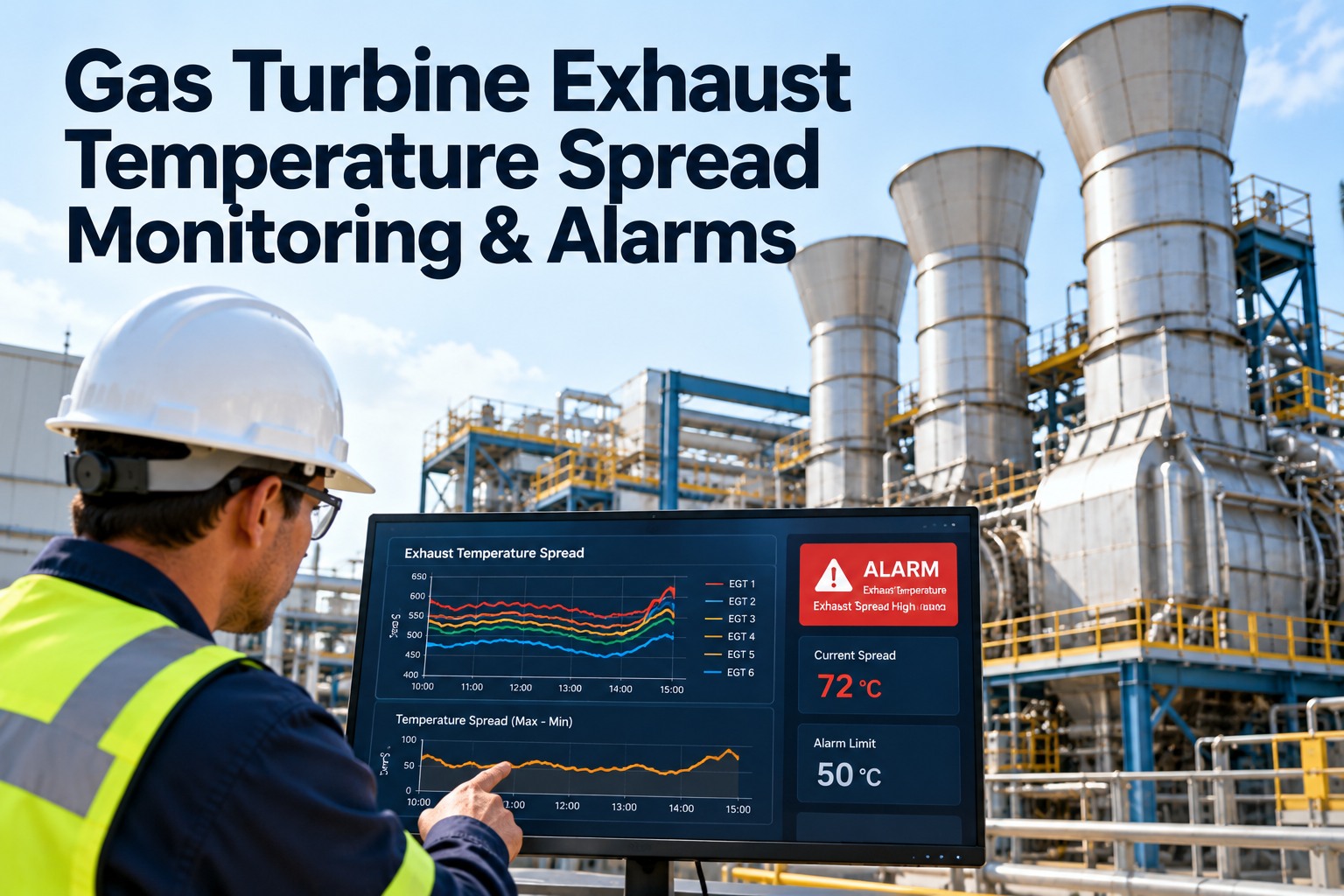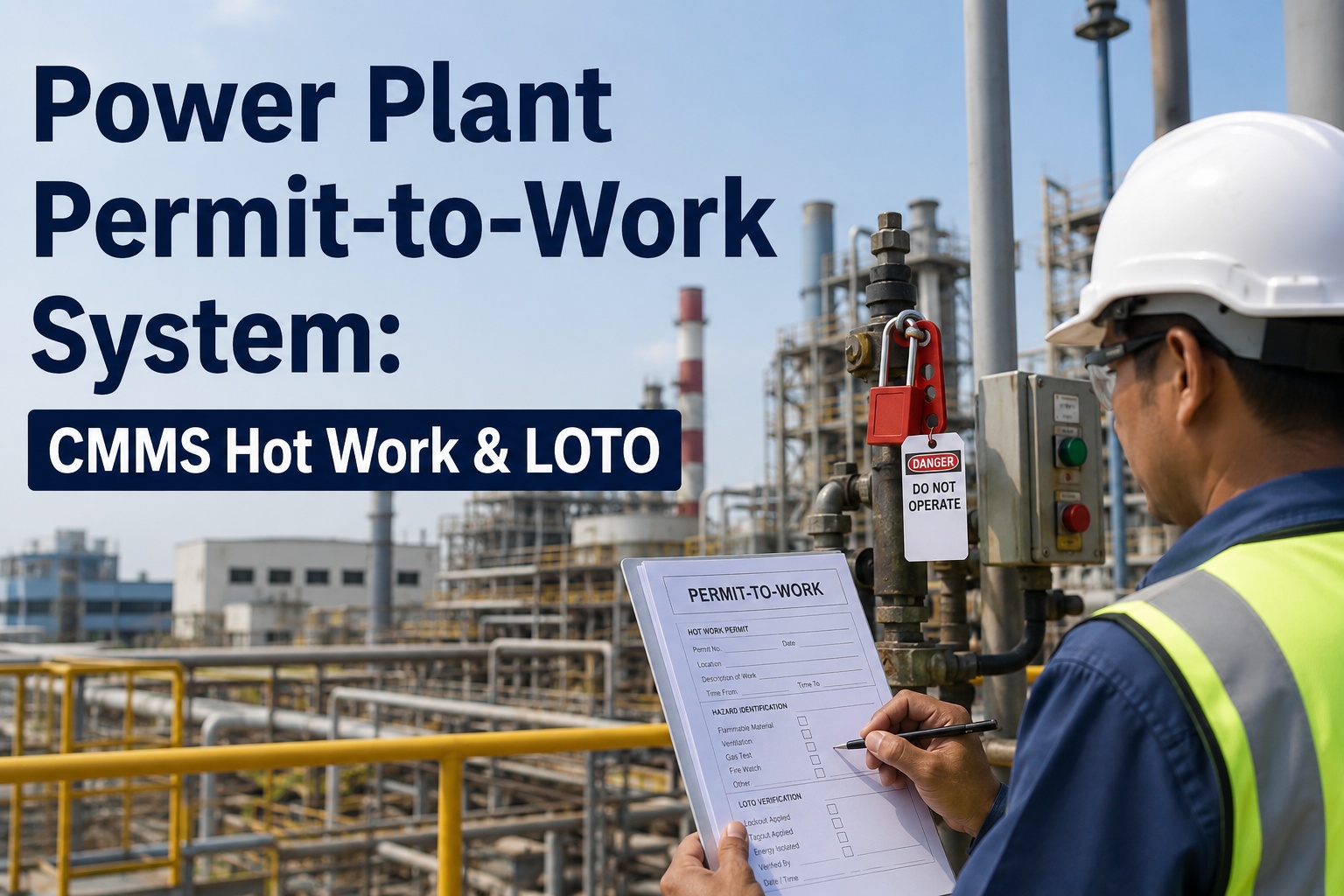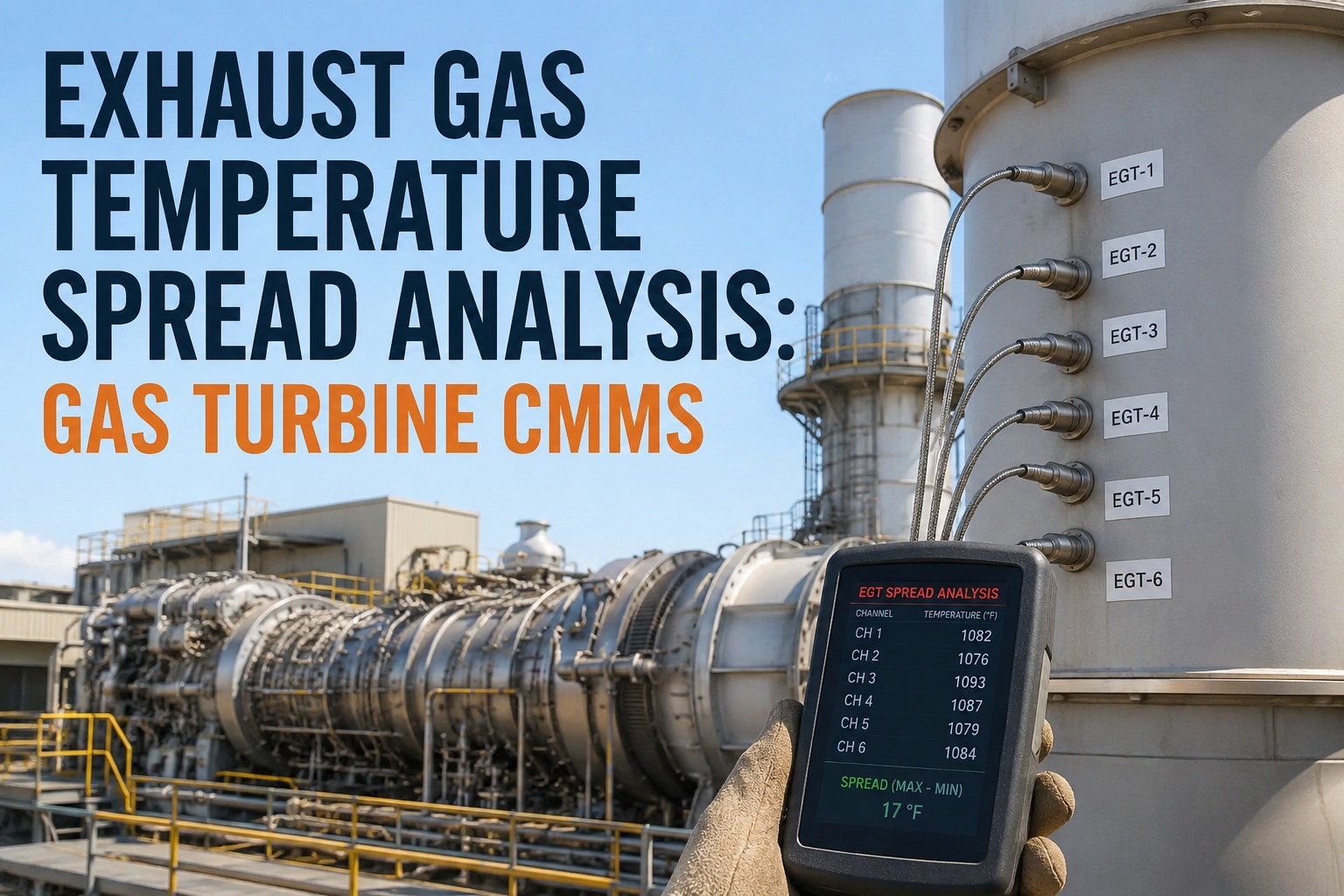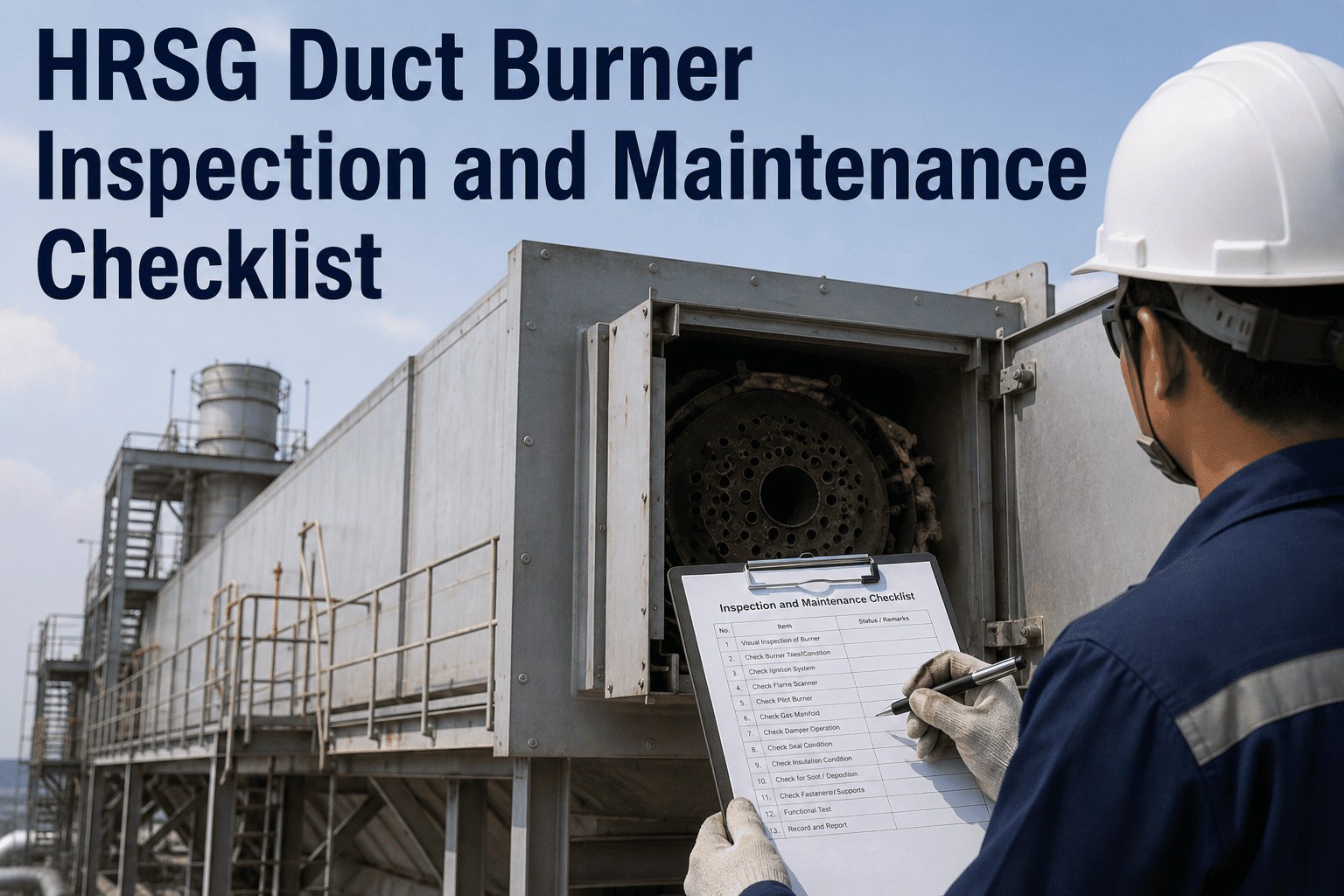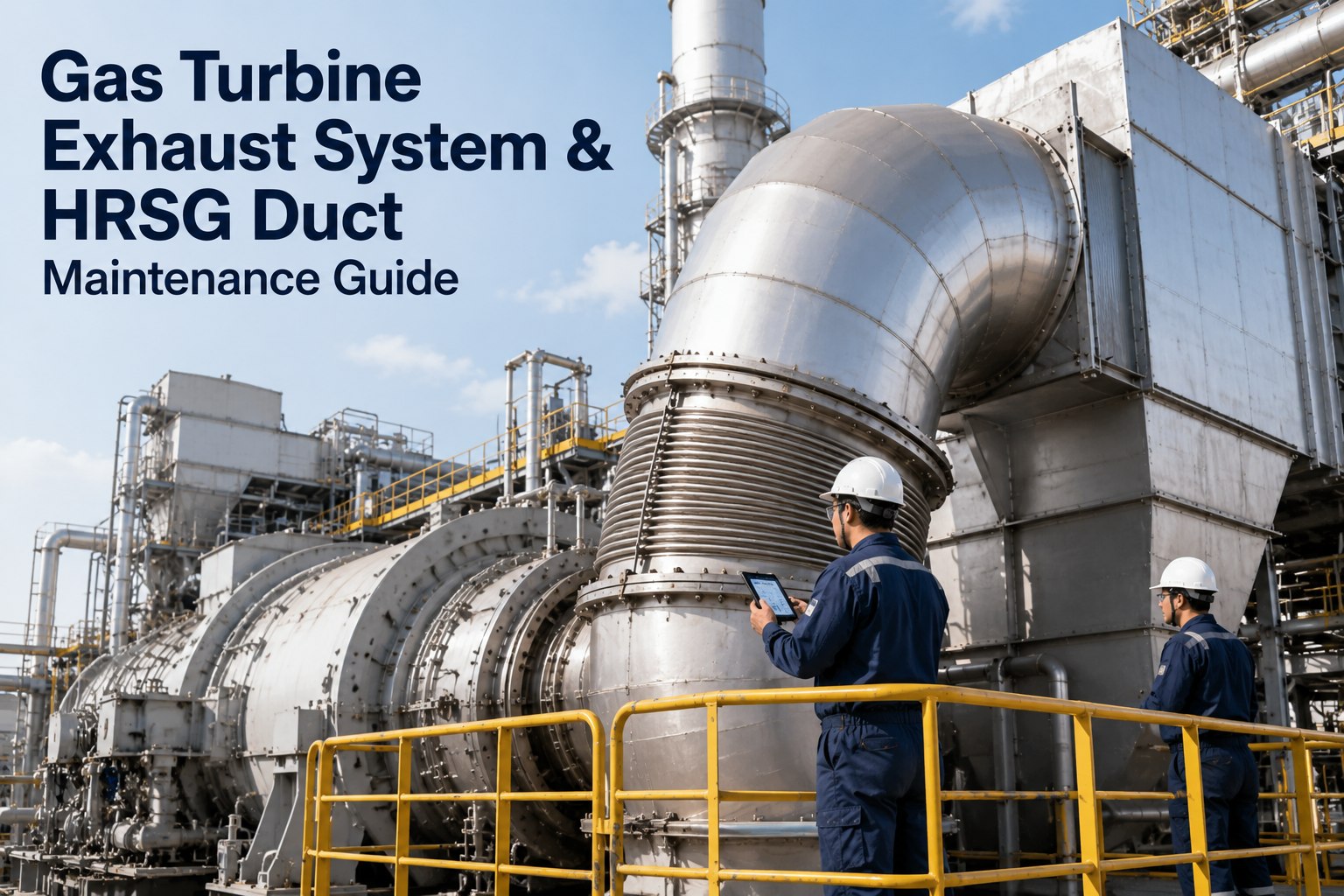
A gas turbine exhaust system and HRSG duct run hot, fast and unforgiving — a single degraded expansion joint or a seized diverter damper can trip a unit, bleed efficiency and trigger six-figure unplanned outages. This guide translates decades of combined-fleet maintenance experience into a practical preventive program covering expansion joints, diverter dampers, transition ducts and the CMMS workflows that bind them together. Expect concrete inspection intervals, failure-mode benchmarks, and a worked payback case for a 180-asset combined-cycle plant. When you are ready to operationalize it, you can Start Free Trial and deploy the full PM library in minutes.
Is your next unplanned exhaust-system outage already forming inside the duct?
Most gas-turbine exhaust failures aren't sudden — they're slow leaks through cracked bellows, seized damper linkages and liner fatigue that crews miss between outages. A disciplined PM program with CMMS-tracked inspections catches them early and protects 98%+ unit availability.
unmanaged exhaust-duct degradation
per combined-cycle unit, per year
Four silent costs of deferred exhaust-system PM
A 500 MW combined-cycle block can lose roughly $18,000–$26,000 per forced-outage day in margin alone — before parts, labor and restart fuel. The degradation below is what crews find when PM is run on memory instead of a CMMS.
The maintenance-critical components in your exhaust path
Treat the gas-turbine exhaust to HRSG connection as four interdependent components. Each one has a distinct failure signature, inspection cadence and consequence window — and each belongs in a CMMS with triggered work orders.
Expansion Joints
Multi-ply metallic bellows absorb axial, lateral and angular movement between turbine exhaust and HRSG inlet. Degradation: ply separation, hot-gas bypass, packing-glass washout, bellow cracking at the root.
Diverter Damper
Single or multi-blade louvers redirect exhaust to bypass stack or HRSG. Degradation: blade warping, seal strip erosion, linkage bushing wear, actuator drift, seized bearings under thermal growth.
Transition Duct
Tapered casing connecting turbine exhaust frame to expansion joint. Degradation: internal liner pin-hole fatigue, insulation slumping, external skin hot-spots, doubler-plate weld toe cracks.
HRSG Inlet Connection
Flange, liner sleeve and pressure-boundary weld at the HRSG inlet. Degradation: gasket relaxation, liner-baffle tearing, casing distortion, stud-stretch from cyclic thermal load.
Tiered PM checklist — daily, monthly, outage
Build these tiers into your CMMS with auto-triggered work orders. Each line below maps to a failure mode that has caused a documented forced outage in combined-cycle service.
Daily / Running Inspections
~10 min · operator roundMonthly PM
~2 hr · maintenance techOutage Inspection (CI / MI)
~16–40 hr · specialist crewThe annual exhaust-system PM rhythm
Map these intervals to a rolling 12-month calendar inside your CMMS so every task has an owner, a date and a completion record. Frequencies assume baseload + load-follow duty; double cadence for peaking service.
From PM trigger to closed work order in five steps
A CMMS is what turns this checklist into a living program. Without it, 60% of inspection findings are lost within one outage cycle. Here is the workflow that locks in accountability.
Asset register & criticality
Register every expansion joint, damper blade, transition duct and HRSG inlet flange as a unique asset with parent-child hierarchy and a criticality score (A/B/C) tied to production impact.
PM templates & triggers
Build tiered PM templates (daily / monthly / quarterly / outage) with checklists, safety permits, parts kits and labor estimates — triggered by calendar, runtime hours or condition flag.
Mobile work-order execution
Techs complete checklists on a mobile app at the asset — photo capture, digital signatures, as-found dimensions and pass/fail criteria all flow back to the work order in real time.
Failure-mode analytics
Dashboards flag repeat findings, MTBF trends and overdue PMs by asset. A bellow that has logged three dye-pen indications in two cycles auto-triggers a replacement work order.
Audit-ready history
Every inspection, repair and replacement lives in a permanent, time-stamped record. Insurance carriers, ISO 55000 auditors and corporate reliability teams get instant traceability.
180-asset combined-cycle plant: PM payback in year one
A 2×1 combined-cycle plant with 180 exhaust-path assets (expansion joints, dampers, duct sections, flanges) was running PM on spreadsheets. Here's what changed when they moved to a structured CMMS program over 12 months.
Inspection findings, failure windows and response actions
Use this table to triage findings during walk-downs and outages. Time-to-failure windows assume baseload duty at 1000–1050°F exhaust temperature.
| Component | Finding | Severity | Time to failure | Recommended action |
|---|---|---|---|---|
| Expansion joint | External insulation scorch / discoloration | Watch | 6–12 mo | Schedule borescope at next monthly PM |
| Expansion joint | Dye-pen indication at bellow root, <5 mm | Urgent | 3–6 mo | Plan replacement at next planned outage |
| Diverter damper | Stroke time 25%+ slower than baseline | Urgent | 1–3 mo | Lubricate, calibrate positioner, re-test |
| Diverter damper | Seal-strip clearance >0.125 in/ft | Watch | 12–24 mo | Replace seal strips at next CI outage |
| Transition duct | IR hot-spot >200°F above ambient on skin | Urgent | 3–6 mo | Inspect internal liner; repair insulation |
| Transition duct | UT thinning >15% at weld toe | Critical | 1–2 mo | Engineering review; doubler or replacement |
| HRSG inlet flange | Stud torque drift >10% of spec | Watch | Next outage | Re-torque full flange using hydraulic tensioner |
| HRSG inlet flange | Audible gas leak under load | Critical | Immediate | Unit hold; gasket replacement required |
After we moved our gas-turbine exhaust PM into a structured CMMS program, we caught a bellow-root crack during a routine borescope that would have ruptured within two months. That single catch paid for the entire software rollout for three years.
Stop inspecting exhaust systems on memory and spreadsheets
Deploy the full gas-turbine exhaust PM library — expansion joints, diverter dampers, transition ducts and HRSG connections — in your CMMS this week, not next outage.
Gas turbine exhaust & HRSG duct maintenance — answered
How often should expansion joints on a gas turbine exhaust be inspected?
External visual inspection should happen monthly during operator rounds, with a full internal borescope and dye-penetrant exam every six months. At every combustion or major inspection outage, remove the internal sleeve and perform 100% PT/MT on bellow convolutions at the root and crown. Plants running peaking duty or seeing exhaust temperatures above 1050°F should double that cadence. Log every finding in your CMMS so repeat indications auto-trigger a replacement work order before the bellow ruptures.
What are the warning signs that a diverter damper is about to fail?
The earliest indicator is a 25%+ increase in stroke time compared to baseline, which points to linkage bushing wear or actuator drift. Next comes position-indication disagreement with the DCS command — if the blade is more than 2° off commanded position, the seals or bearings are likely degraded. Audible squealing during transition, seal-strip erosion visible through inspection ports, and torque-current spikes on the actuator motor all indicate imminent failure. Weekly stroke tests catch most of these before they become forced outages.
How does a CMMS improve exhaust-system maintenance over a spreadsheet?
A CMMS enforces scheduling, captures as-found data with photos at the asset, and surfaces failure-mode trends across inspections. Spreadsheets lose roughly 60% of inspection findings within one outage cycle because there is no automatic trigger to act on them. A CMMS also gives you audit-ready history for ISO 55000 and insurance carriers, and lets you tie each PM to a specific asset hierarchy — so a bellow indication on Unit 7's west joint never gets confused with Unit 7's east joint. You can Start Free Trial to import your asset register and PM templates in a single afternoon.
What is the typical service life of a gas turbine expansion joint?
A well-maintained multi-ply metallic expansion joint in baseload combined-cycle service should deliver 8–12 years before replacement. Neglected joints — no borescope, no dye-pen, no tie-rod inspection — typically fail at 5–7 years, often catastrophically. The two biggest life-extenders are catching root-crack indications early and maintaining proper limit-stop and tie-rod settings so the bellow absorbs only its designed movement. Replacement during a planned outage costs $60K–$120K; an emergency replacement after a rupture runs $200K–$400K plus outage extension.
Can we integrate exhaust-system PM with our existing reliability program?
Yes. The PM templates described here slot into any ISO 55000-aligned asset-management framework and complement existing RCM or FMEA studies. Each component — expansion joint, damper, transition duct, HRSG inlet — maps to documented failure modes with severity and detectability scores. If you want a guided walkthrough of how to layer this onto your current program, Book a Demo and we'll map it to your fleet in 30 minutes.
Your gas turbine exhaust PM program — live this week
Import the full PM library, attach it to your asset hierarchy, and start catching bellow cracks and damper drift before they trip the unit. Free 14-day trial, full onboarding support, no long contract.
Free 14-day trial · No credit card