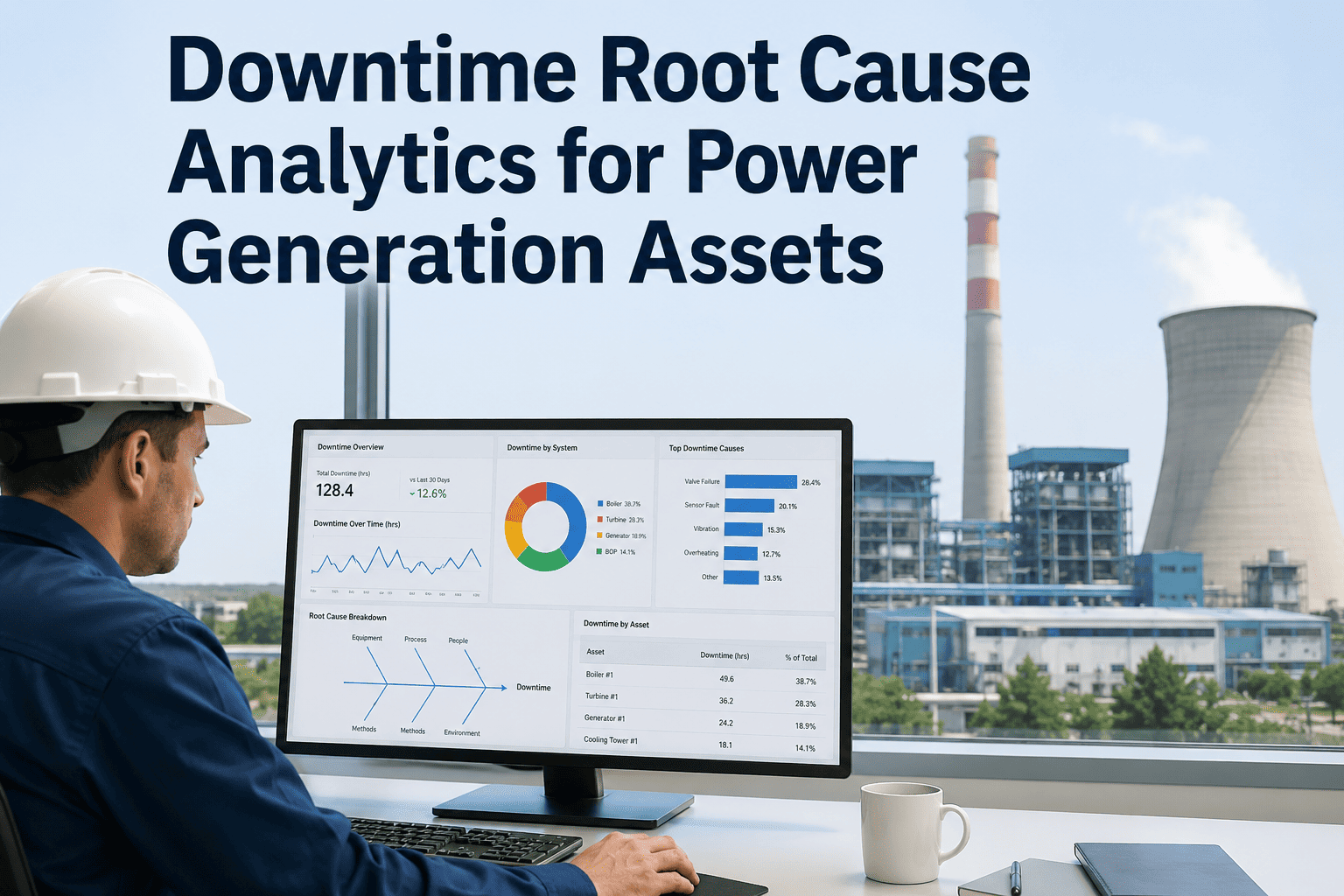
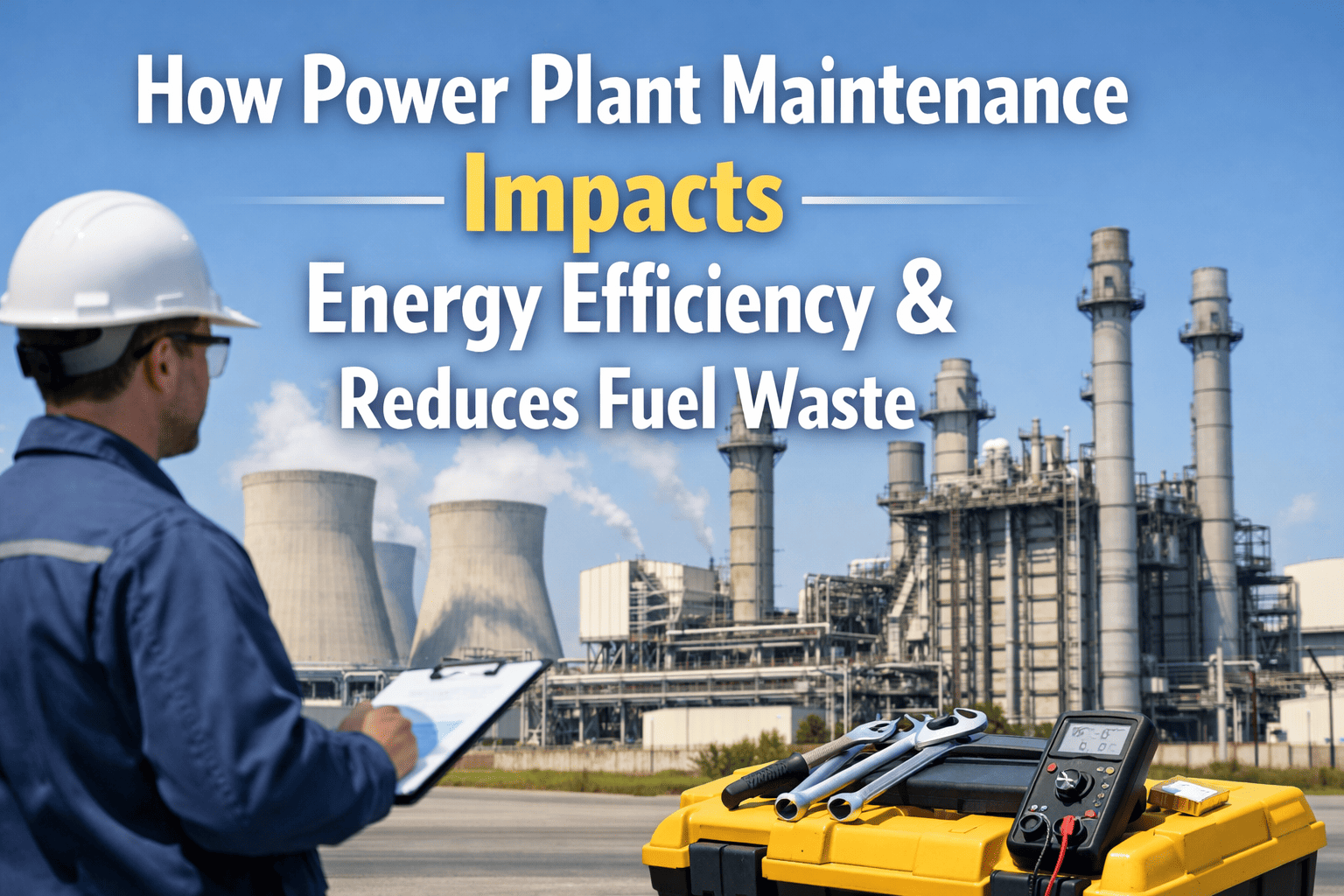
Power generation is a margin game. Every percentage point of efficiency improvement translates directly to revenue — and every percentage point lost to unplanned downtime, suboptimal dispatch, or premature component replacement erodes the economics that justify the plant's existence. For decades, efficiency gains in power generation came from engineering advances in turbine design, combustion chemistry, and materials science. The next wave is operational — it comes from applying AI to the maintenance, asset management, and performance optimization decisions that plant operators make every day. This post breaks down where AI delivers real efficiency gains, what the numbers look like in production environments, and what separates plants that capture those gains from those that do not. Start a free trial on Oxmaint to see AI-powered maintenance analytics applied to your plant's specific asset profile.
Efficiency Intelligence
AI Is the Efficiency Lever Plant Operators Have Been Missing
Six areas where AI predictive maintenance measurably improves plant output, cost structure, and asset longevity — with numbers from operating facilities
1.8%
Average heat rate improvement in gas turbines after AI-optimized maintenance scheduling
+$4.2M
Annual generation revenue recovered per 500 MW plant through reduced forced outage hours
22%
Reduction in total maintenance expenditure through AI-driven condition-based intervals
3.1 yr
Average extension in critical asset service life when AI-guided maintenance replaces calendar cycles
Why Efficiency Slips Away Without AI
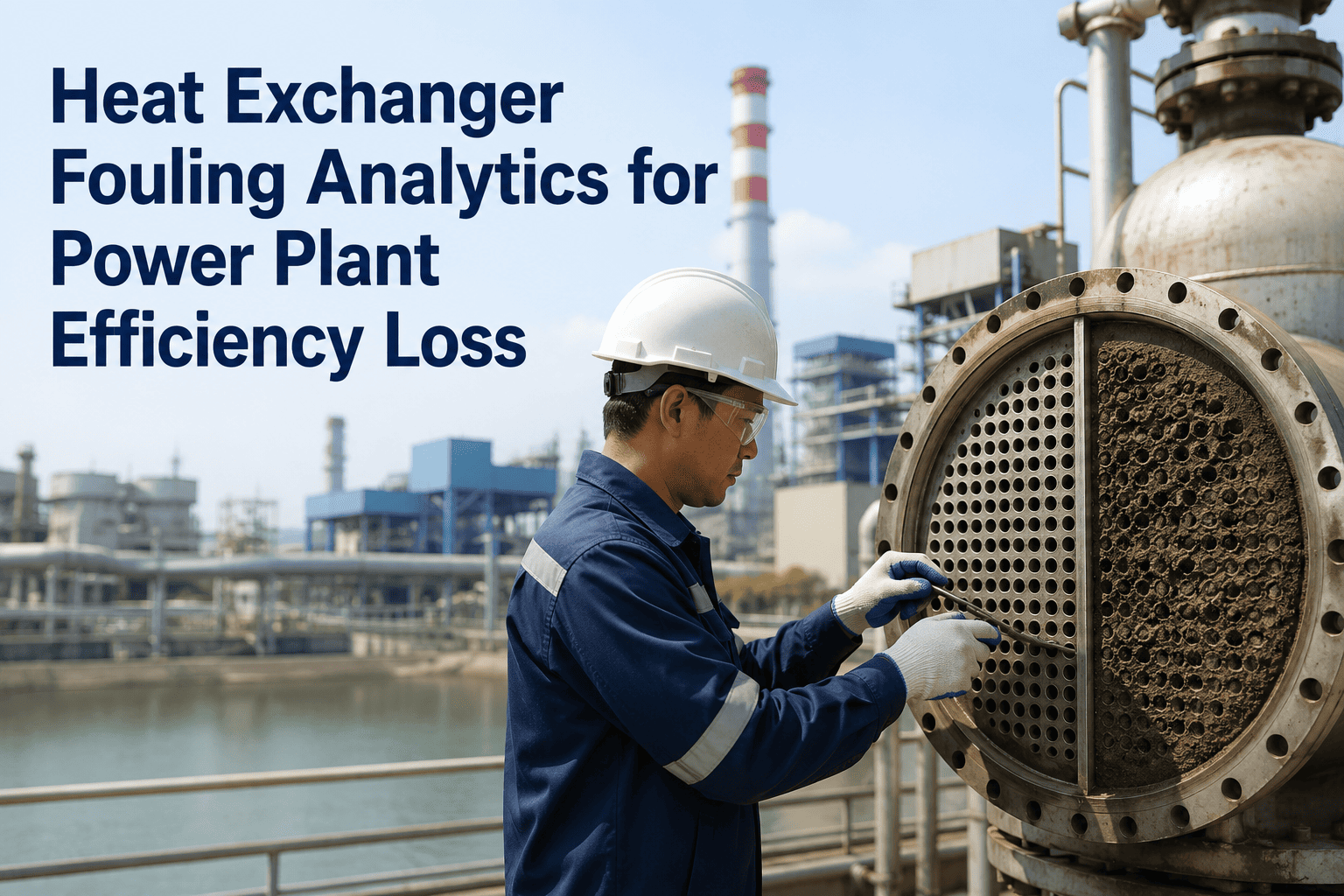
Plant efficiency doesn't collapse suddenly — it erodes gradually. A turbine running with slightly increased vibration loses heat rate efficiency week by week. A heat exchanger fouling incrementally adds backpressure. A cooling tower nozzle clogging reduces condenser effectiveness across an entire season. None of these events trigger alarms until the degradation is severe. By then, the efficiency loss has been accumulating for months, and restoration requires a major intervention instead of a minor one. AI monitoring catches the efficiency-robbing trend at its origin point — when correction is cheap and the output impact is still small.
Six Efficiency Levers AI Activates in Power Plants
01
Heat Rate Optimization
AI correlates real-time operating parameters against design heat rate curves. Deviations from optimal — caused by fouled heat transfer surfaces, degraded turbine blading, or sub-optimal fuel composition — are flagged before they accumulate into meaningful efficiency losses. Plants report 1.5–2.1% heat rate improvement after AI-guided maintenance interventions.
1.5–2.1% heat rate gain
02
Forced Outage Prevention
Every megawatt-hour of forced outage is either lost revenue or expensive replacement power. AI models trained on vibration, thermal, and electrical signatures detect developing failures 2–5 weeks in advance, converting catastrophic unplanned outages into planned, shorter maintenance windows. One prevented forced outage typically covers months of platform cost.
67% fewer forced outage hours
03
Condition-Based Maintenance Intervals
Calendar-based overhaul schedules replace components at fixed intervals regardless of actual asset health. AI remaining useful life estimates allow assets confirmed healthy to run beyond standard intervals — and flag assets degrading faster than expected for early intervention. The result is a maintenance budget allocated by need, not by calendar.
18–25% overhaul cost reduction
04
Auxiliary Equipment Efficiency
Pumps, compressors, fans, and cooling systems account for 3–7% of a thermal plant's total generation output in parasitic load. AI monitoring identifies pumps operating below design efficiency due to wear, cavitation, or fouling — and triggers corrective action before parasitic losses compound. Documented parasitic load reductions of 0.8–1.4% are achievable through active monitoring.
0.8–1.4% parasitic load reduction
05
Spare Parts and Inventory Efficiency
Emergency parts procurement at premium prices is a hidden efficiency tax on every reactive maintenance event. AI-predicted maintenance windows allow parts to be ordered at standard lead times and pricing. Plants report 21–31% reductions in spare parts spend after 12 months of AI-guided ordering, without any reduction in parts availability.
21–31% spare parts cost reduction
06
Workforce Productivity
When maintenance teams work from AI-generated prioritized work orders with sensor evidence attached, diagnostic time at the asset drops to near zero. Technicians repair rather than investigate. The same crew resolves more work orders per shift — effectively expanding maintenance capacity without adding headcount.
-44% mean time to repair
See All Six Levers Working Together
Oxmaint Activates Every AI Efficiency Gain in One Platform
Heat rate monitoring, predictive work orders, condition-based intervals, and parts intelligence — Oxmaint connects all six efficiency levers to your maintenance workflow. Book a demo to see the platform applied to your plant type.
The Efficiency Gap Between AI-Enabled and Traditional Plants
The gap between plants using AI maintenance analytics and those still running on calendar-based programs is measurable and growing. As AI models accumulate more operating history on plant assets, their predictive accuracy improves — compounding efficiency gains year over year. The table below shows the operational difference at the 12-month and 24-month marks.
What AI Cannot Do — Setting Realistic Expectations
AI maintenance analytics are not magic. Understanding the realistic boundaries of what the technology delivers helps plant operators make better deployment decisions and avoid the disappointment of over-promised outcomes. The most effective AI deployments are built around clear expectations from the beginning.
Early detection of mechanical and electrical degradation trends in monitored assets
Prioritized maintenance work queues based on actual asset risk — not schedule
Remaining useful life estimates that extend asset intervals beyond calendar cycles
Automated compliance documentation and audit-ready maintenance records
Cross-fleet pattern recognition that improves with each asset's operating history
AI flags degradation — maintenance teams still execute the repair. Response speed determines outcomes.
Sensor data quality depends on proper installation and calibration. Bad sensors produce bad signals.
AI models improve with data volume. First 60 days produce broader anomaly alerts as baselines build.
Novel failure modes without historical precedent may not be detected until the model learns them.
Efficiency gains require acting on AI recommendations — monitoring without action produces no results.
Frequently Asked Questions
What plant size justifies the investment in AI maintenance analytics?
AI maintenance platforms deliver positive ROI for plants as small as 20–30 MW when forced outage costs and emergency repair rates are accounted for. The smaller the plant, the faster the payback on each prevented failure because each event represents a larger share of the annual maintenance budget.
Book a demo to model ROI for your specific plant size and asset type.
How does AI maintenance differ from digital twins for power plants?
Digital twins simulate plant behavior from physics-based models — useful for design optimization and training but computationally expensive and difficult to calibrate in operation. AI maintenance analytics operate on live sensor data from real assets, learning actual failure patterns without requiring a full physics simulation. Both have value; AI maintenance is faster to deploy and directly actionable in the maintenance workflow.
Can Oxmaint's AI analytics integrate with our existing historian and SCADA system?
Yes. Oxmaint integrates with OSIsoft PI, Ignition, Wonderware, and other major historian platforms as well as SCADA systems via OPC-UA and Modbus. Live process data from the historian feeds directly into AI analytics — no duplicate sensor installation needed for assets already instrumented in the plant's control infrastructure.
Start a free trial to test your historian connection.
Which plant assets show the fastest efficiency gains from AI monitoring?
Main turbine-generators, boiler feed pumps, condensers, and cooling towers consistently show the fastest and largest efficiency improvements because they carry the highest efficiency sensitivity and the most available sensor signals. Gas turbine hot sections and wind turbine gearboxes show the fastest ROI because failure events are most expensive.
Book a demo to prioritize asset monitoring sequencing for your plant.
How does AI maintenance affect plant availability factor and capacity factor?
Availability factor improves directly as forced outage hours decrease — the most documented outcome of AI maintenance programs. Capacity factor improvement depends on whether the plant is energy-constrained or capacity-constrained in its market. For merchant generators and plants with performance-based contracts, availability factor improvement from AI maintenance directly increases annual revenue.
Your Plant's Efficiency Program Starts Here
Stop Losing Efficiency to Failures You Could Have Predicted
Every plant running without AI maintenance analytics is leaving efficiency gains on the table — in heat rate, in availability, in maintenance cost, and in asset life. Oxmaint makes the switch straightforward: sensors, analytics, and work orders connected in a single platform your team can learn in days, not months.
Heat Rate Optimization
Forced Outage Prevention
Condition-Based Intervals
AI Work Orders
Compliance Automation