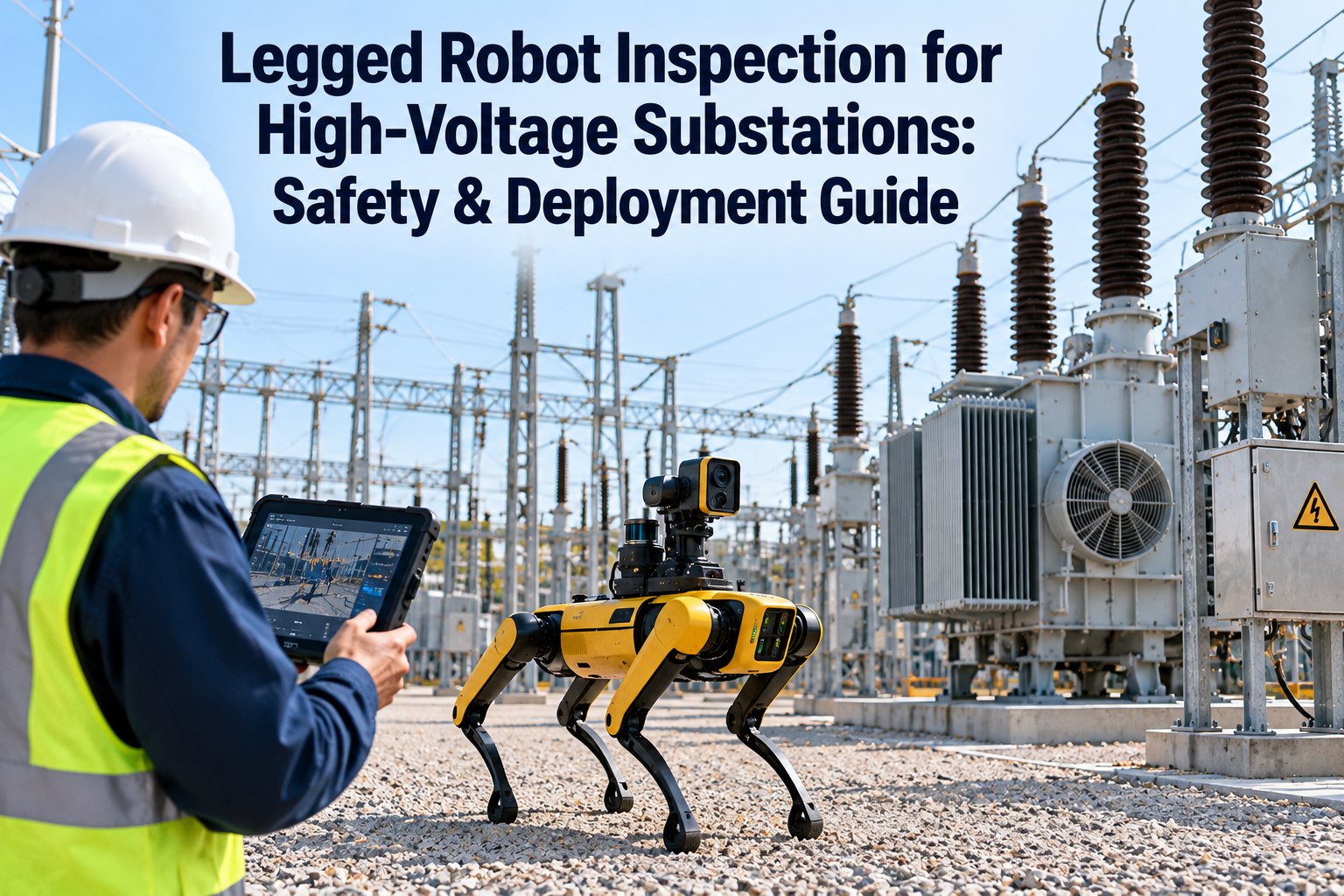
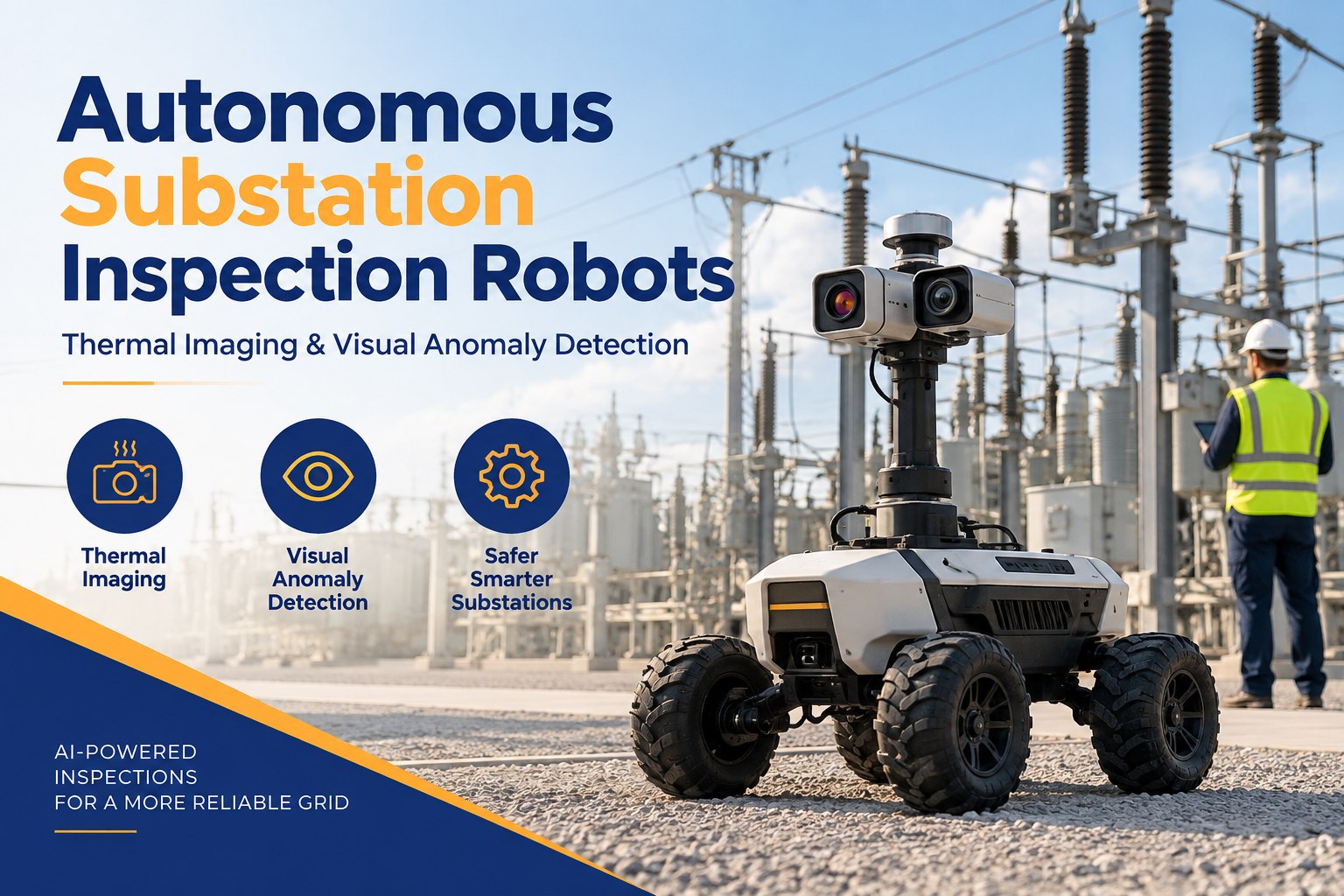
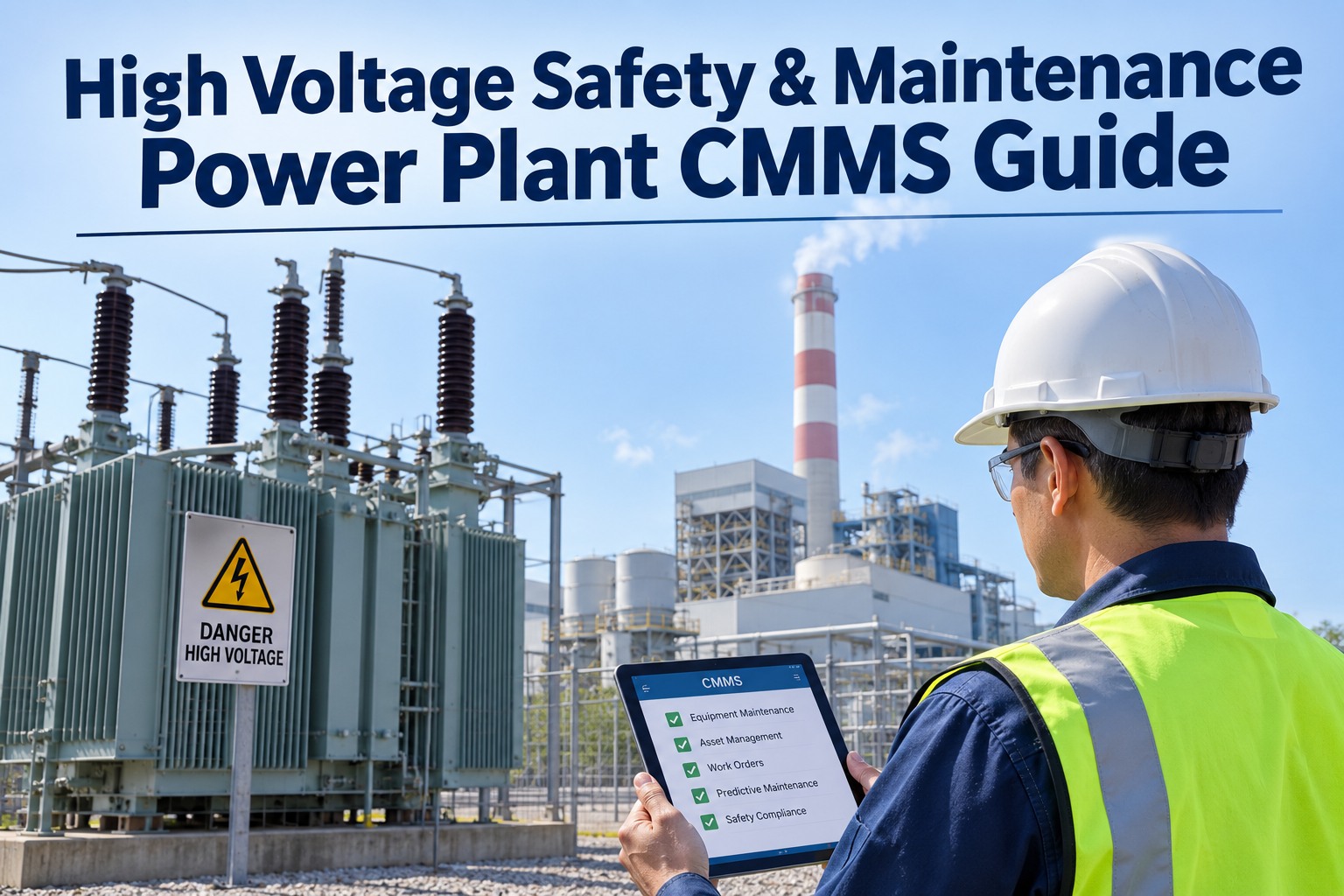
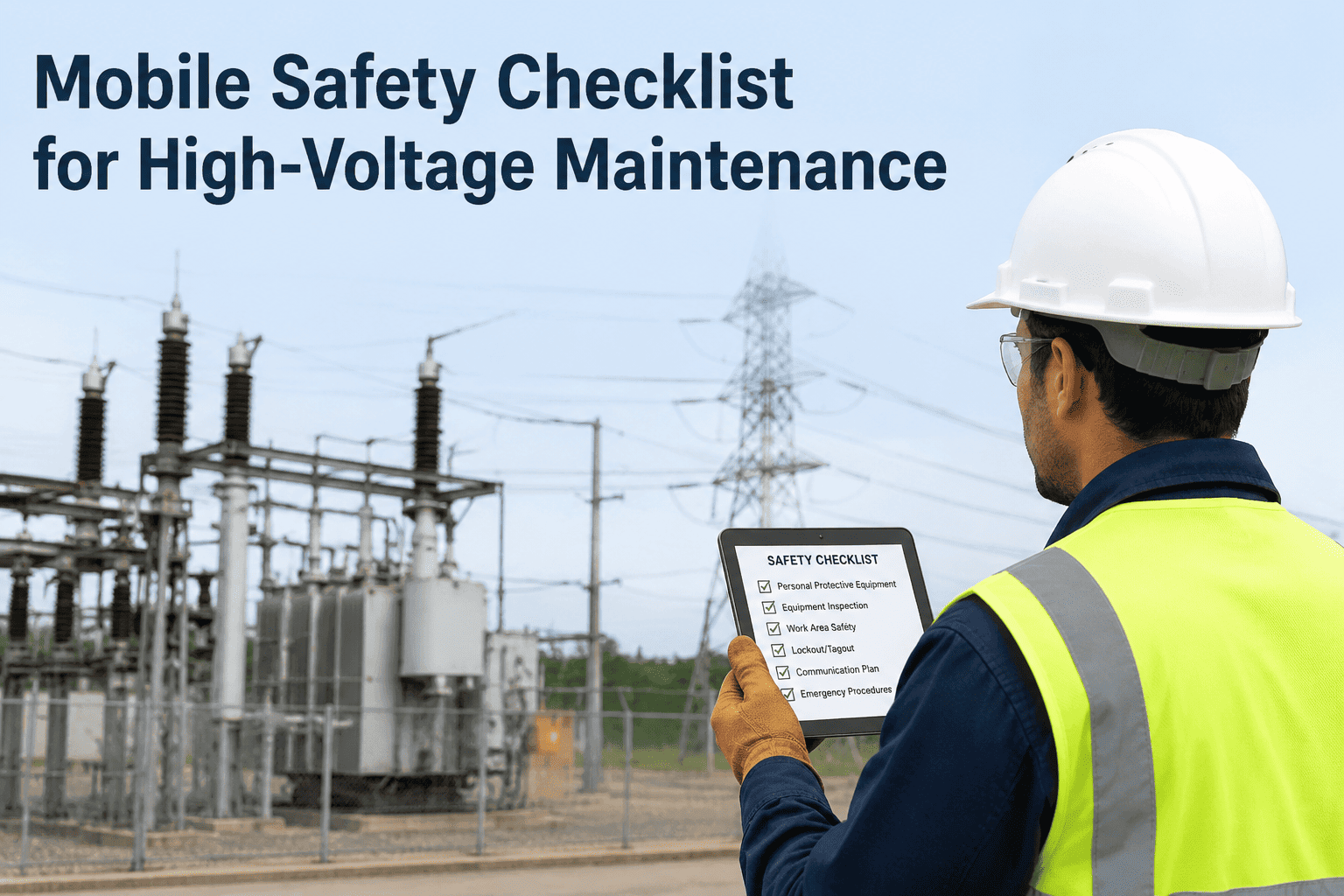
A legged robot can walk a substation that wheeled platforms can't — over trenches, onto elevated platforms, through dense equipment. But the robot only pays off if a bad reading becomes a fixed asset. That last step is where OxMaint AI maintenance management software comes in — an AI-powered CMMS that turns every meaningful patrol reading into a ranked, tracked work order.
Substation & Switchyard · Legged Robot Inspection · Safety & Deployment
Legged Robot Inspection for High-Voltage Substations
The robot is the sensor — the value is what happens after it reads. OxMaint AI maintenance management software turns every timestamped, geo-tagged patrol reading into a ranked work order against the exact asset, so a fault caught early becomes a scheduled fix and the audit trail builds itself.
1 Patrol & capture
2 Score & locate
3 Ranked work order
4 Dispatch & close
4 challenges
access · navigation · data capture · escalation
The last one
escalation — where most robot programs quietly stall
NFPA 70E
standoff distances enforced by navigation geofences
Zero manual entry
every reading linked to its asset ID automatically
Why Manual Substation Inspection Hits a Wall
A high-voltage yard is one of the most hostile inspection environments in industry — proximity to energized equipment, dense layouts, and the risk of colorless, odorless gas leaks make manual patrols slow, costly, and genuinely dangerous. A legged robot removes the person from the hazard zone; but only when maintenance management software turns what it sees into action does the program pay for itself. Start free and route robot findings straight into a work-order queue in OxMaint AI.
MANUAL PATROL
What Slows It Down
- People working in close proximity to energized equipment
- Handheld thermal readings taken time-based, not condition-based
- Early faults missed between scheduled rounds
- Readings logged on paper, keyed in later — or not at all
- Findings sit in a notebook with no path to a repair
LEGGED ROBOT + OXMAINT AI SOFTWARE
What Changes
- Robot enters the hazard zone; people stay clear
- Repeatable patrol cycles catch drift before it's a fault
- Every reading timestamped, geo-tagged, tied to an asset ID
- Out-of-range readings become ranked work orders automatically
- An auditable trail builds itself, patrol after patrol
The Four Deployment Challenges — and How Each Is Solved
Every legged-robot substation program lives or dies on four questions, in order. Solve access but not navigation and the robot can't be trusted near live gear; solve capture but not escalation and you've automated data collection while leaving the actual maintenance untouched. Here is each challenge, what makes it hard, and what closes it. Book a demo to see the full patrol-to-repair loop on your assets.
01ACCESS
Can the robot physically reach every asset?
The hard part: substations are packed with cable trenches, gravel, grating, elevated platforms and narrow passages between transformer units — terrain that stops wheeled and rail-bound platforms cold.
What solves it: legged locomotion crosses trenches and climbs onto platforms; the payload orients toward each target from a fixed checkpoint, so every patrol measures the same asset from the same angle.
02NAVIGATION
Can it move safely through a live HV yard?
The hard part: strong electromagnetic interference disrupts positioning and comms, dense equipment causes occlusions, and any drift toward an energized component is a safety event, not just a navigation error.
What solves it: LiDAR-based SLAM positioning plus hard navigation geofences that enforce NFPA 70E approach boundaries per voltage class — long-range thermal and zoom optics let the robot read from a safe standoff distance.
03DATA CAPTURE
Do the readings actually mean something?
The hard part: a thermal number with no asset context, no baseline and no location is noise. Sensors also interfere with each other in high-voltage fields if fired carelessly.
What solves it: a checkpoint-specific protocol fires thermal, acoustic, gas, visual and OCR sensors in a defined sequence — and every reading lands timestamped, geo-tagged and bound to a specific asset ID with zero manual data entry.
04ESCALATION
Does a bad reading become a fixed asset?
The hard part: this is where most programs stall. The robot flags a hot connection — then the alert dies in an inbox, and the same finding reappears next quarter. Capture without escalation is just expensive data collection.
What solves it: OxMaint AI maintenance management software turns an out-of-range reading into a ranked work order against the exact asset, routed to the right engineer with the evidence attached — and tracked to a verified close.
The First Three Challenges Are the Robot's. The Fourth Is Yours.
Access, navigation and capture are solved by the platform. Escalation — turning a flagged reading into a completed repair with an audit trail — is a maintenance-software problem. That's the gap OxMaint AI maintenance management software is built to close.
Which Robot Fits a Substation? Four Platform Types
Legged is one of four inspection-robot classes, and the right choice depends on your yard. The trade-off is always mobility versus cost and endurance — legged buys you the roughest terrain at the price of power draw and complexity. Sign up free and connect any platform's data feed into OxMaint AI.
| Platform | Best for | Trade-off in a substation |
| Rail-mounted |
Fixed high-precision routes |
Fixed track, high install cost, route-locked |
| Wheeled |
Flat indoor bays, long endurance |
Poor on trenches, gravel and uneven yard terrain |
| Tracked |
Rough terrain, stable base |
Less agile in tight, dense equipment layouts |
| Legged |
Unstructured terrain, trenches, platforms |
Higher power draw and cost — bought for reach |
What a Legged Patrol Actually Reads
A substation robot isn't a roving camera — it runs a multi-sensor protocol at each checkpoint, each sensor targeting a specific failure mode before it becomes an outage. Book a demo to map these readings to your asset register in OxMaint AI.
Thermal / Infrared
Hot connections, overloaded bushings and failing joints — the earliest sign of a fault.
Acoustic / Partial Discharge
Corona and partial discharge in insulators and switchgear, inaudible to a passing person.
Gas Detection
Abnormal emissions and leaks in an environment where gas can be colorless and odorless.
Visual + OCR
Meter and gauge reading, switch-status recognition, and insulator contamination checks.
The Patrol-to-Repair Pipeline in OxMaint AI
Capturing a reading is stage one. The value is in the seconds after — how it reaches the right engineer, ranked by urgency, tied to the asset. This is the loop OxMaint AI maintenance management software runs to turn a robotic patrol into closed-loop maintenance. Start free and run this pipeline on your first patrol route.
Stage 1
Checkpoint capture — the robot stabilizes, orients its payload, and fires the checkpoint protocol in sequence to avoid sensor interference.
Stage 2
Ingest & locate — each reading arrives timestamped and geo-tagged, matched to its asset ID in the register automatically.
Stage 3
Score against baseline — AI compares the reading to historical records for that asset and flags meaningful deviation, not just raw numbers.
Stage 4
Ranked work order — a flagged asset becomes a prioritized work order, routed to the right engineer with the evidence attached.
Stage 5
Dispatch & close — the fix is executed, verified and recorded — and the next patrol re-checks the same asset against its own history.
Safety Is Engineered Into the Route, Not Bolted On
The point of a legged robot in a high-voltage yard is to keep people out of harm's way — so safety can't depend on the operator remembering a rule. It has to live in the navigation itself. Book a demo to review route safety against your voltage classes.
Approach-Boundary Standoffs
Robot standoff distances programmed to comply with NFPA 70E approach boundaries for each voltage class.
Read From a Safe Distance
Long-range thermal and zoom optics capture data without the robot needing to close on energized gear.
Hard Geofences
Navigation geofences prevent accidental entry into restricted approach zones — a boundary the robot cannot cross.
Sequenced Sensing
Sensors fire in a defined order to avoid the electromagnetic interference common in high-voltage environments.
What OxMaint AI Software Adds Once the Robot Rolls
The robot captures; OxMaint AI maintenance management software makes the capture count — the layer that turns readings into a maintenance program you can defend at an audit. Start free and see the escalation layer working end to end.
Reading-to-Work-Order
Out-of-range sensor values become ranked work orders against the exact asset, no manual keying.
Asset-Linked History
Every patrol reading joins that asset's record, so trends and repeat issues surface by location.
Criticality-Based Patrols
Asset criticality scoring sets patrol frequency by grid impact — high-consequence assets watched closest.
Evidence on Every Order
Thermal images and readings attach to the work order as proof of the finding and the fix.
Predictive Alerts
Deviation from baseline triggers an alert before a reading crosses a hard failure threshold.
Auditable Inspection Trail
A timestamped, geo-tagged record assembles automatically — retrievable on demand for any review.
Frequently Asked Questions
Why use a legged robot instead of a wheeled one in a substation?
How does the robot stay safe near energized equipment?
Does electromagnetic interference affect the readings?
What happens to a reading after the robot captures it?
It's matched to its asset ID, scored against that asset's history, and — if out of range — turned into a ranked work order with the evidence attached, not left in a data file. That hand-off from reading to work order is what OxMaint AI software automates.
Book a demo of the patrol-to-repair loop.
Where do most robot inspection programs fail?
At escalation. The robot captures beautifully, but findings never become fixes — so the same faults recur. Closing that loop is exactly what OxMaint AI maintenance management software is built to do.
Start free and close the loop on your patrols.
Let the Robot Walk the Yard. Let OxMaint AI Software Close the Loop.
A legged patrol solves access, navigation and capture. OxMaint AI maintenance management software solves the fourth challenge — turning every meaningful reading into a ranked, assigned, verified work order, with the audit trail built as the robot walks. That's when robot inspection starts paying for itself.