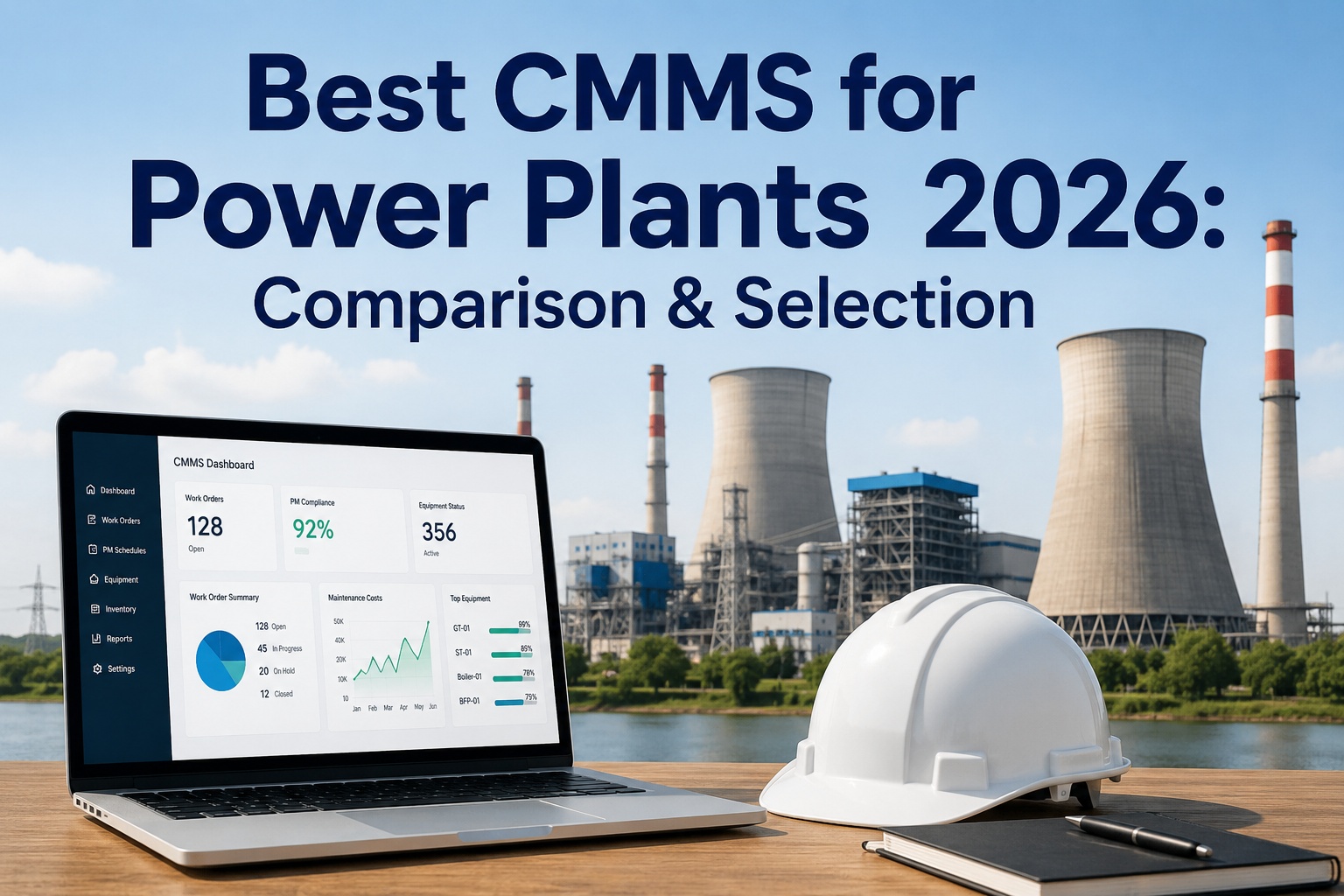
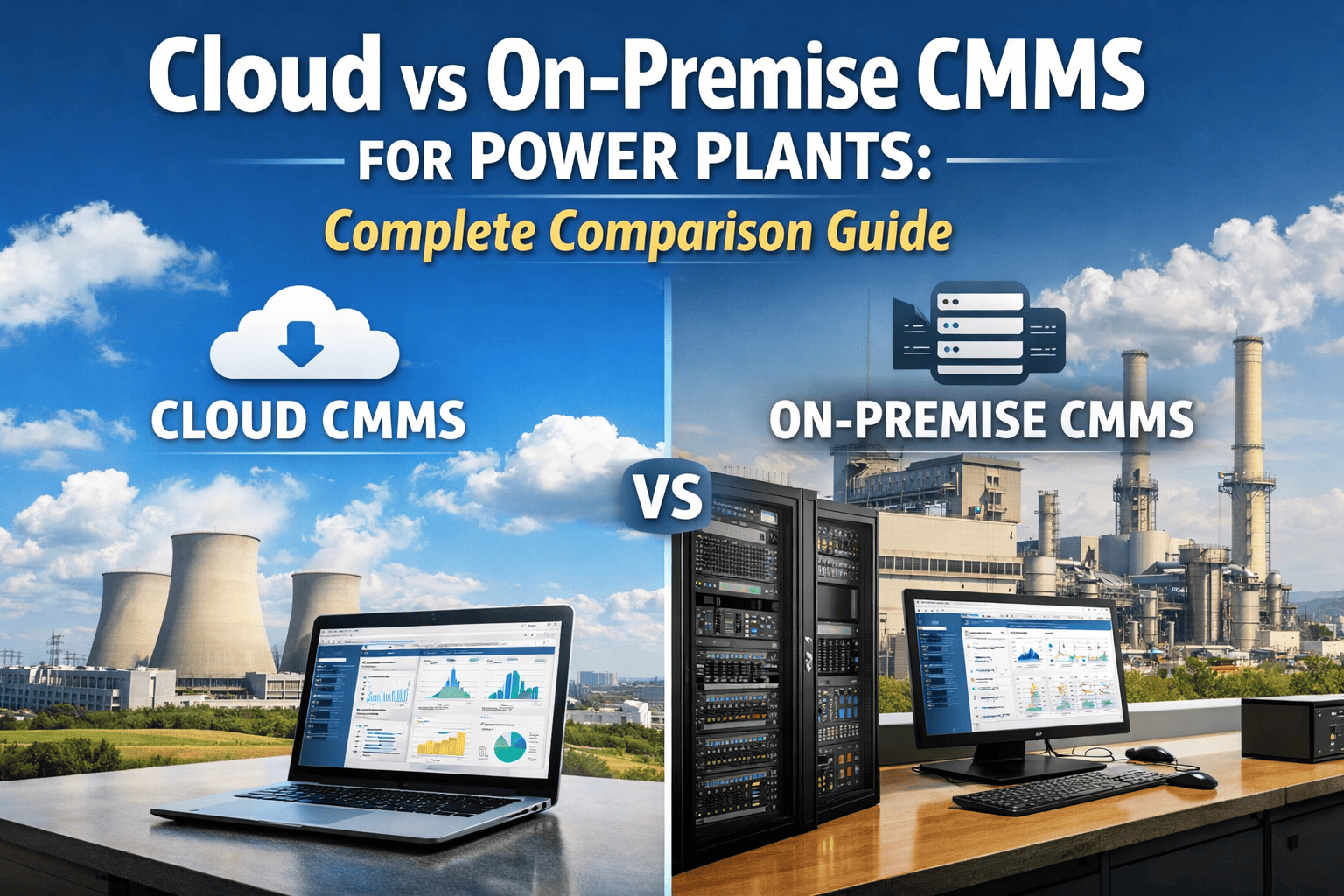
Power generation and utility teams evaluating maintenance software face a choice that most comparison guides get wrong: SAP Plant Maintenance and OxMaint are not interchangeable tools competing for the same job. SAP PM is a module inside an enterprise ERP — powerful for financial governance, built for planners. OxMaint is a purpose-built CMMS — built for the technician standing next to a turbine at 2 AM. This guide breaks down the real differences in deployment speed, technician adoption, field execution capability, and total cost of ownership so your team can make the right decision for your plant floor. If you are ready to see OxMaint in action, you can Start a free trial on Oxmaint or Book a live demo with the OxMaint team today.
Your Power Plant Deserves a Maintenance System Built for Technicians, Not Accountants
SAP Plant Maintenance was built to serve an ERP ecosystem. OxMaint was built to serve the people standing next to a turbine. This guide gives power generation and utility teams the full picture — features, deployment speed, technician adoption, and total cost of ownership — so you can make the right call for your plant floor.
What Are You Actually Comparing?
SAP Plant Maintenance (SAP PM) is not standalone software. It is one module inside a sprawling ERP architecture — connected to finance, procurement, HR, and production. OxMaint is a cloud-native CMMS purpose-built for maintenance execution. They are not the same category of tool solving the same problem. Understanding that distinction is the entire comparison.
SAP PM lives inside the SAP ERP ecosystem. Its real strength is connecting maintenance events to financial records, procurement workflows, and inventory systems across the enterprise. Every action in SAP PM produces a data trail that finance and compliance teams can follow. The cost of that integration is complexity — T-codes, structured order workflows, and screens designed for planners rather than field technicians.
OxMaint is built around the daily reality of a maintenance technician at a power plant: mobile-first work orders, asset-linked history, preventive maintenance scheduling, and photo-documented closure. Every design decision optimises for field adoption. OxMaint also integrates bi-directionally with SAP — so plants that need both ERP governance and technician-friendly execution run them in parallel, not at odds.
Why SAP PM Alone Fails on the Plant Floor
SAP PM is powerful in the boardroom. That power comes at a cost that shows up in three very specific places on a power generation site — and each one silently drains maintenance performance every day.
Shadow Maintenance
SAP PM's T-code navigation and multi-screen work order flow creates enough friction that technicians stop logging work in the system. Industry data shows that plants running SAP PM as the sole maintenance tool experience widespread "shadow maintenance" — work that gets done but never recorded. Asset history becomes unreliable, and recurring fault patterns stay invisible.
Months to Value
A greenfield SAP PM implementation in a utility or power generation environment requires trained SAP consultants, significant configuration, data migration, and formal change management. The typical timeline runs from several months to over a year before technicians are using the system confidently. During that time, your plant is still running on spreadsheets and radio calls.
Enterprise Licensing Costs
SAP Plant Maintenance is priced for enterprise-wide ERP contracts, not standalone maintenance departments. Licensing, implementation consultancy, custom development for small process changes, and annual maintenance fees create a total cost of ownership that many mid-size utility operators and independent power producers cannot absorb — especially when the primary beneficiary is the accounting department.
Feature-by-Feature: OxMaint vs SAP Plant Maintenance
This table covers the operational dimensions that matter to reliability engineers, maintenance managers, and plant directors in power generation — not generic software criteria that apply equally to hotel management systems and oil refineries.
| Dimension | SAP Plant Maintenance | OxMaint |
|---|---|---|
| Deployment Speed | Months to 12+ months (enterprise implementation) | 3–5 days for a standard power facility |
| Technician Usability | T-code navigation, weeks of training required | Mobile-first, 45-minute onboarding per technician |
| Work Order Creation | Multi-screen process with notifications and confirmations | Single-tap mobile creation with asset auto-link |
| Preventive Maintenance | Maintenance plans (time-based and performance-based) | Auto-generated PMs in same queue as reactive work |
| Asset History | Comprehensive — if technicians log the work | Auto-linked per asset; recurring faults flagged at event 2 |
| Mobile Field Execution | Requires add-on or mobile overlay (extra cost) | Native mobile app, works offline |
| Photo Documentation | Limited in base module, complex to configure | Required for closure on every work order |
| SAP Integration | Native (is SAP) | Bi-directional API sync with SAP S/4HANA |
| Compliance Reporting | Strong — requires consultant to configure reports | On-demand report generation, no IT dependency |
| Pricing Model | Enterprise licensing, quote-based, multi-year contract | Transparent subscription, free to start |
| IT Dependency | High — changes require formal change requests | Zero — configured by maintenance managers |
| Data sourced from industry analyst benchmarks, maintenance director interviews, and published platform documentation. Results vary by facility size and configuration. | ||
Swipe to view all columns on mobile.
What Power Plants Need That Generic CMMS Comparisons Miss
Power generation maintenance is not the same as facilities maintenance or hotel engineering. Turbines, generators, boilers, cooling systems, and high-voltage electrical infrastructure have failure modes — and regulatory implications — that demand more than a task tracker. Here is what matters specifically to energy and utility teams.
Turbine and Generator History
Every maintenance event against a turbine or generator must be linkable across years of operation. OxMaint stores the complete work order history per named asset — not just per location — so reliability engineers can run failure pattern analysis on individual rotating equipment without manual data compilation.
Compliance Documentation on Demand
Regulatory audits in power generation can arrive with short notice. A maintenance program that lives in paper binders and shared calendars cannot produce documented PM completion evidence quickly. OxMaint generates compliance history reports in under ten minutes — timestamped, photo-supported, and audit-ready without IT involvement.
Recurring Fault Detection Before Forced Outages
In power generation, an unplanned forced outage is not an inconvenience — it is a grid reliability event with financial and regulatory consequences. OxMaint's automatic recurring fault flagging triggers a root-cause inspection work order after two events on the same asset within 30 days, giving maintenance teams the signal to intervene before a full outage occurs.
SAP ERP Coexistence
Over 395 energy and utility companies run SAP globally. OxMaint's bi-directional SAP integration means facilities don't have to choose between their ERP backbone and a field-usable maintenance tool. SAP continues handling financial and procurement governance while OxMaint handles work order execution, inspection logging, and asset condition tracking — with both systems sharing a single source of truth.
Which Path Is Right for Your Plant?
This is not a one-size-fits-all answer. The right choice depends on your current SAP environment, team size, deployment urgency, and whether your primary problem is enterprise governance or field execution.
- Your entire enterprise runs on SAP S/4HANA and finance requires native ERP maintenance data
- You have dedicated SAP consultants on staff or retainer for ongoing configuration
- Your primary requirement is procurement and cost center integration, not technician usability
- You have a 12+ month implementation timeline and budget for enterprise-scale deployment
- Regulatory compliance reporting is handled by a central IT team rather than the maintenance department
- You need technicians confidently using the system within days, not months
- Your SAP PM is running but technicians have stopped logging work in it reliably
- You want field execution, mobile photo closure, and PM auto-scheduling without IT dependency
- You are an independent power producer or mid-size utility that cannot absorb enterprise ERP pricing
- You want OxMaint to run alongside SAP — each handling what it does best
The majority of power generation teams don't choose between SAP and OxMaint — they run both. SAP handles enterprise finance and procurement. OxMaint handles maintenance execution, field data capture, and asset history. The integration layer keeps both systems current without manual data re-entry. It takes 30–60 minutes per technician per shift out of administrative overhead and puts it back into actual maintenance work.
OxMaint in a Power Generation Facility: Week 1 to Value
One of the most repeated objections to switching or adding a maintenance platform is the assumed implementation burden. Here is the actual timeline for a typical power generation facility with 150–500 assets.
Asset Register Import
Upload your turbine, generator, boiler, HVAC, electrical, and auxiliary system asset list using OxMaint's import template. A 300-asset power facility completes this in under two hours. No IT resource required. No data migration project. No SAP consultant needed.
Priority Rules and SLA Configuration
Configure Critical, High, Standard, and Planned priority levels with SLA response targets specific to power generation fault types. Set escalation rules for forced outage risks. Define technician skill assignments for rotating equipment, electrical, and mechanical specialisations. Takes under three hours with the OxMaint onboarding guide.
Technician Mobile Onboarding
Engineers and technicians download the OxMaint mobile app. A 45-minute onboarding session covers work order acceptance, completion with photo evidence, and parts logging. Technicians who struggled with SAP T-codes for years routinely confirm comfort with OxMaint's interface within the first shift.
PM Schedules Live, SAP Integration Active
Build your first preventive maintenance schedule for highest-risk asset categories — turbine inspections, boiler checks, cooling system maintenance, electrical switchgear. PM work orders begin auto-generating. If your facility runs SAP, the bi-directional integration is activated to sync work orders and asset cost data. Start Day 1 setup free at app.oxmaint.ai
What Changes in the First 90 Days
The improvements that follow OxMaint deployment in power generation and utility environments follow a predictable sequence. Here is what moves, and when.
Technician Adoption Visible
Work orders start closing with photo evidence and completion notes. The "shadow maintenance" pattern — work done but not logged — begins to collapse because the mobile-first interface removes the friction that made SAP PM logging optional in practice.
Response Times Drop
Digital dispatch routes work orders to qualified available technicians rather than the first person to answer a radio. Facilities running paper and radio coordination typically see average fault response time fall by 50–70% within the first 30 days as manual relay chains are eliminated.
PM Completion Rate Rises
Preventive maintenance work orders now compete in the same queue as reactive work. They are no longer invisible when reactive volume spikes. PM completion rates in facilities without digital scheduling average 61%. With OxMaint automated scheduling, the same facilities reach 94%.
Recurring Fault Assets Identified
With 60+ days of asset-linked work order data, the highest-cost recurring fault assets in your fleet become visible for the first time. Maintenance directors at power plants consistently report that a small number of assets account for a disproportionate share of reactive maintenance spend — invisible until the data is linked per asset.
Frequently Asked Questions
Does OxMaint replace SAP Plant Maintenance?
How does OxMaint handle power plant compliance reporting?
What is the actual cost difference between OxMaint and SAP PM?
Can OxMaint handle the complexity of a large power generation facility?
How fast do power generation teams typically see ROI from OxMaint?
The Plant Floor Does Not Run on T-Codes.
Power generation facilities running SAP PM as their only maintenance tool know the reality: work gets done but not logged, PMs slip when reactive volume spikes, and recurring faults stay invisible until they become forced outages. OxMaint gives your engineering team the field-first execution layer that SAP PM was never built to be — and integrates with SAP so your ERP stays the backbone it was designed to be.