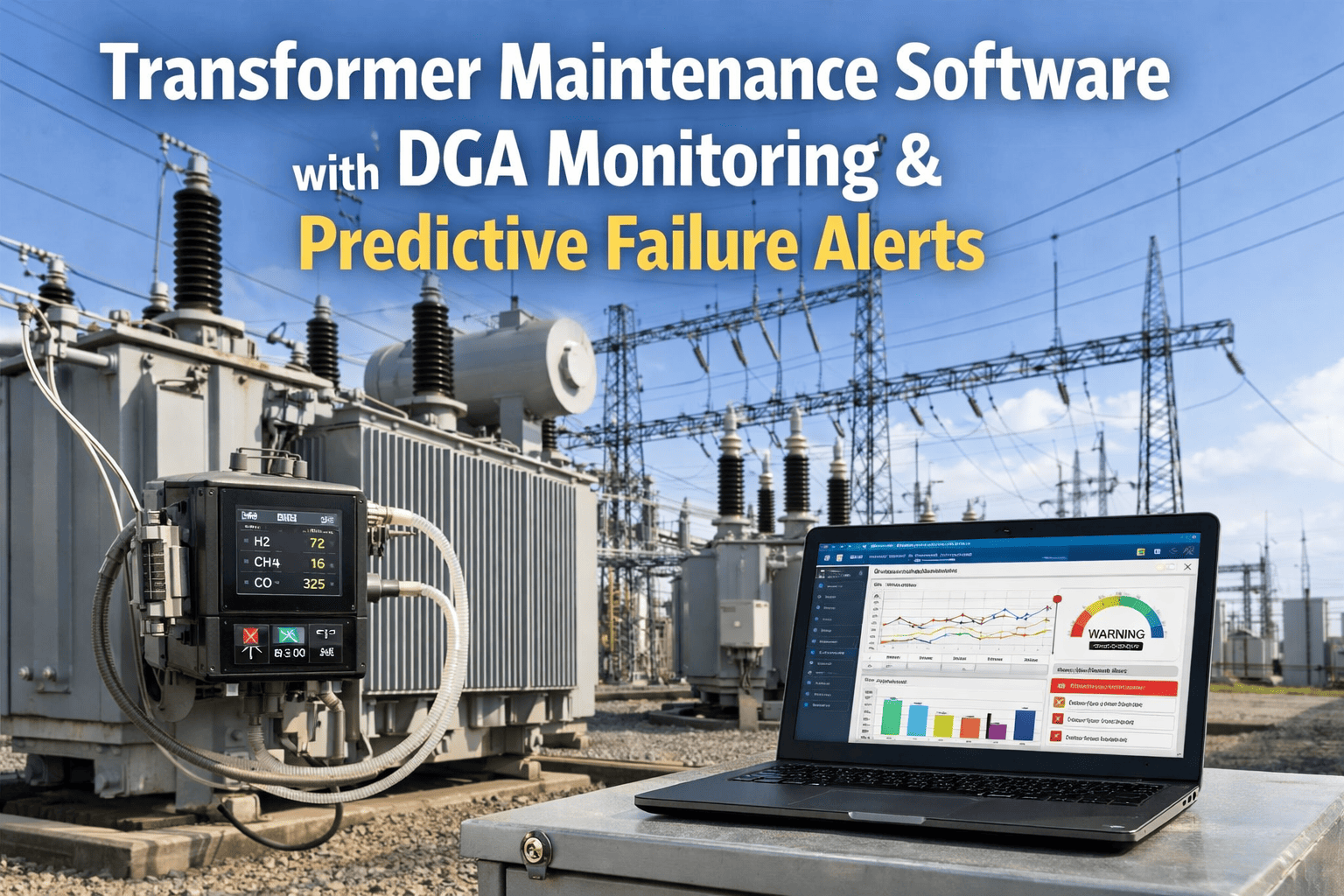
A power transformer fails silently — no vibration, no visible sign, no warning on your SCADA screen — while gases dissolve steadily into its insulating oil, each one a precise fingerprint of a fault developing weeks or months before the catastrophic failure that costs millions in equipment replacement, grid disruption, and emergency response. Dissolved Gas Analysis (DGA) is the closest thing the industry has to a blood test for transformers: it reads the gases to identify what is going wrong inside, long before the winding insulation fails. But DGA data without a connected maintenance system is information without action. Book a demo to see how Oxmaint links DGA readings to automatic work order generation — so every fault signal becomes a documented maintenance action with a closed-loop outcome.
$4M+
Average replacement cost for a failed large power transformer
18–24 mo
Typical delivery lead time for new transmission-class transformers
70%
Of transformer failures detectable weeks in advance via DGA trending
99%
Accuracy of integrated DGA fault diagnosis using multi-method analysis
The Science Behind DGA
How Transformer Oil Tells You What's Failing Inside
When a transformer experiences abnormal operating conditions — overheating, arcing, partial discharge — the insulating oil and paper windings degrade. That degradation produces specific gases that dissolve into the oil. The type of gas, its concentration, and how fast it is growing each carry diagnostic information that points to a specific fault type. Think of it as the transformer's internal distress signal — readable if you know the language.
Hydrogen (H₂)
Partial discharge (corona), electrolysis, thermal fault in oil
Moderate
Increase sampling frequency; monitor rate of rise against IEEE C57.104 limits
Acetylene (C₂H₂)
High-energy arcing — very hot spot, electrical discharge between conductors
Critical
Immediate work order — transformer should be de-energized and inspected before return to service
Ethylene (C₂H₄)
High-temperature thermal fault — localized hot spot above 300°C
High
Schedule inspection within current maintenance window; check cooling system and tap changer contacts
Carbon Monoxide (CO)
Cellulose insulation (paper winding) decomposition — thermal degradation
High
Elevated CO signals insulation life consumption — furan analysis to quantify paper degradation
Methane (CH₄)
Low-to-medium temperature thermal fault in oil, partial corona discharge
Moderate
Monitor trend; schedule offline inspection if rate of rise exceeds 10% per month
Ethane (C₂H₆)
Low-to-medium temperature overheating of oil — loose connections, core ground
Moderate
Inspect tap changer, bushing connections, and core grounding at next planned outage
Carbon Dioxide (CO₂)
Normal cellulose aging (expected) — elevated levels indicate accelerated degradation
Monitor
Track CO/CO₂ ratio; ratio above 0.1 indicates abnormal paper aging rate requiring attention
Offline vs Online DGA
Two Approaches to DGA — and Why Plants Need Both
Offline and online DGA are not competing methods — they are complementary. Each provides what the other cannot. The most reliable transformer programs use a hybrid approach: periodic lab sampling for baseline accuracy and trend validation, continuous online monitoring for real-time fault detection between sampling windows.
IEEE C57.104 / IEC 60567 standard method
How it works
Oil sample drawn from transformer valve by qualified technician under NFPA 70E protocols. Sample kept airtight, shipped to laboratory. Gases extracted and identified via gas chromatography — full 9-gas analysis with quantified concentrations.
Best for
Baseline establishment
Long-term trending
Furan & moisture analysis
Pre-overhaul assessment
Limitation
Sampling intervals of 6–12 months mean a fast-developing fault can progress to failure between samples
Real-time multi-gas sensor on energized transformer
How it works
Sensor unit installed directly on transformer — measures dissolved gas concentrations continuously using photoacoustic spectroscopy (PAS) or solid-state sensing. Readings transmitted to SCADA or CMMS via API in real time. No oil sampling, no lab turnaround.
Best for
Real-time fault detection
Rate-of-rise alerts
Critical asset coverage
Between-outage monitoring
Limitation
Cannot assess moisture, furan, or acidity — requires periodic offline sampling to validate readings and complete the health picture
Connect Your DGA Data to Maintenance Action — Automatically
Oxmaint integrates with your existing DGA hardware and lab workflow. Every threshold alert, every trending gas concentration, every abnormal reading becomes a tracked work order — assigned, escalated, and documented — without manual intervention between the sensor and the technician.
Complete Oil Testing Program
Beyond DGA: The Full Transformer Oil Health Picture
DGA identifies what type of fault is developing. A complete transformer oil testing program adds four additional test dimensions that together produce a full health index — enabling replacement vs. refurbishment decisions, remaining life estimates, and capital planning grounded in condition data rather than calendar age.
01
Dissolved Gas Analysis (DGA)
9 fault gases: H₂, CH₄, C₂H₆, C₂H₄, C₂H₂, CO, CO₂, O₂, N₂
Identifies fault type — thermal, electrical, discharge — and severity trend
Standard: IEEE C57.104 / IEC 60599
02
Moisture Content
Water in oil (ppm) and estimated paper moisture saturation %
Every 10°C rise in temperature with elevated moisture cuts insulation life by half
Standard: IEC 60814 / ASTM D1533
03
Furan Analysis
Furfural (2-FAL) and related compounds in oil — cellulose degradation markers
Quantifies paper insulation life consumed — furan levels above 1 ppm indicate significant aging
Standard: IEC 61198 / ASTM D5837
04
Breakdown Voltage (BDV)
Dielectric strength of oil sample in kV — ability to withstand electrical stress
BDV below 30 kV in service oil indicates contamination — risk of insulation failure under surge conditions
Standard: ASTM D877 / IEC 60156
05
Acidity (Neutralization Number)
Total acid number (TAN) in mg KOH/g — oil oxidation state
Acidic oil accelerates corrosion of copper windings and sludge formation — TAN above 0.2 triggers oil reconditioning
Standard: ASTM D974 / IEC 62021
06
Interfacial Tension (IFT)
Oil-water interface tension in mN/m — measures sludge and oxidation byproducts
IFT below 22 mN/m signals significant oil degradation — sludge deposits on windings reduce cooling efficiency
Standard: ASTM D971 / IEC 62961
CMMS Integration Workflow
From Gas Reading to Closed Work Order: The Oxmaint Workflow
DGA data is only as valuable as the maintenance system connected to it. Without a CMMS linking every oil sample, threshold alert, and inspection result to the transformer asset record, fault signals produce reports — not actions. Here is how Oxmaint closes the gap between detection and intervention.
1
DGA Reading Ingested
Online monitor readings enter Oxmaint via API or webhook in real time. Periodic lab results are logged manually or via structured import. Both are stored against the transformer asset record with timestamp and source attribution — building a continuous condition history.
2
Threshold and Trend Evaluation
Oxmaint compares each reading against configurable thresholds aligned to IEEE C57.104 action levels. Rate-of-rise alerts trigger when a gas concentration increases more than 10% month-over-month — catching accelerating faults before they breach absolute limits.
3
Predictive Work Order Auto-Generated
When a threshold or trend alert fires, Oxmaint automatically creates a prioritized work order — assigned to the correct crew, with the DGA reading, asset history, and recommended inspection scope attached. No manual step between detection and dispatch. Critical faults (acetylene detected) trigger immediate escalation with supervisor notification.
4
Field Inspection Documented
Field engineers complete the inspection via mobile app — findings, photos, thermal imaging results, and repair actions logged at the asset with offline capability in substation environments. Every finding is captured in the moment, not reconstructed from memory at a desk terminal hours later.
5
Asset Record Updated — Audit Trail Complete
Work order closure automatically updates the transformer health record — DGA history, intervention timeline, parts used, inspector attribution. When a transformer fails and insurers or OEM warranty teams request the complete maintenance history, it is produced in minutes, not assembled from disconnected emails and lab reports over days.
Transformer Health Index Components Tracked in Oxmaint
DGA Readings
Moisture Content
Furan Levels
BDV Results
Acidity (TAN)
Thermal History
Work Order Log
"Our maintenance team added online DGA monitoring to an 84 MVA transformer showing questionable acetylene levels. The combined offline-online approach let us detect active section loss seven days before the next scheduled offline sample would have been taken. That single event — caught in time — prevented what would have been a catastrophic failure and an 18-month equipment lead time."
Maintenance Planning Engineer
Midwestern Generation and Transmission Cooperative
Frequently Asked Questions
Transformer DGA and Predictive Maintenance: Common Questions
How often should a power transformer receive a DGA oil sample?
Sampling frequency depends on transformer criticality, age, and condition history. New transformers in normal service typically receive annual DGA samples. Transformers with elevated gas concentrations, rapid rate-of-rise trends, or previous fault history move to quarterly or monthly sampling. Critical transmission-class assets over 30 years old warrant continuous online DGA monitoring supplemented by periodic lab validation samples. Oxmaint tracks sampling schedules per asset and auto-generates collection work orders before each interval closes.
Start a free trial to configure DGA sampling intervals for your transformer fleet by criticality tier.
What gas concentration levels should trigger an immediate maintenance response?
IEEE C57.104 defines condition levels for each gas — the most critical is any detection of acetylene (C₂H₂) above 1–2 ppm in a sealed transformer, which indicates active high-energy arcing and warrants immediate removal from service consideration. Hydrogen above 700 ppm or a month-over-month rate of rise exceeding 10% for any combustible gas are also immediate action triggers regardless of absolute concentration. Rate-of-rise is often a more reliable indicator than absolute concentration for catching developing faults early.
Book a demo to see how Oxmaint configures IEEE C57.104 action level alerts for each transformer asset.
Does Oxmaint replace our existing DGA monitoring hardware or lab analysis process?
No — Oxmaint integrates alongside your existing DGA hardware and lab workflow as the maintenance execution and asset history layer. Online monitor readings enter Oxmaint via API or structured import; periodic lab results are logged manually or via CSV. The CMMS functions as the connection between your DGA data and your maintenance team — turning readings into work orders, findings into asset records, and audit requests into ready documentation. No replacement of monitoring hardware is required.
Start a free trial to test the DGA integration path for your monitoring hardware environment.
What compliance documentation does Oxmaint produce for transformer maintenance under NERC CIP?
Every DGA reading, inspection, and maintenance action logged in Oxmaint is timestamped, inspector-attributed, and stored against the transformer asset record in immutable form. NERC CIP compliance exports include full inspection history, corrective action documentation, and sign-off records — exportable in under 4 hours for 100+ assets, compared to the 18 staff-days most utilities report when working from disconnected lab reports and spreadsheets.
Book a demo to review the NERC CIP documentation output for your regulatory obligations.
How does Oxmaint handle transformer health index calculation across a multi-unit substation fleet?
Oxmaint aggregates DGA readings, moisture content, furan levels, BDV results, acidity, and maintenance history into a composite health score for each transformer — updated whenever new test data is logged. Fleet-level dashboards rank transformers by health score, flagging assets approaching decision thresholds for refurbishment versus replacement. Capital planning decisions are grounded in condition evidence, not calendar age assumptions.
Start a free trial to see the fleet health dashboard for a multi-transformer substation configuration.
Your Transformers Are Already Telling You What's Wrong. Is Your Maintenance System Listening?
Oxmaint connects transformer DGA trending directly to predictive work order generation — so every gas anomaly that matters becomes a tracked, assigned, and documented maintenance action. Deploy across your full transformer fleet in 8–12 weeks. No replacement of existing monitoring hardware required.