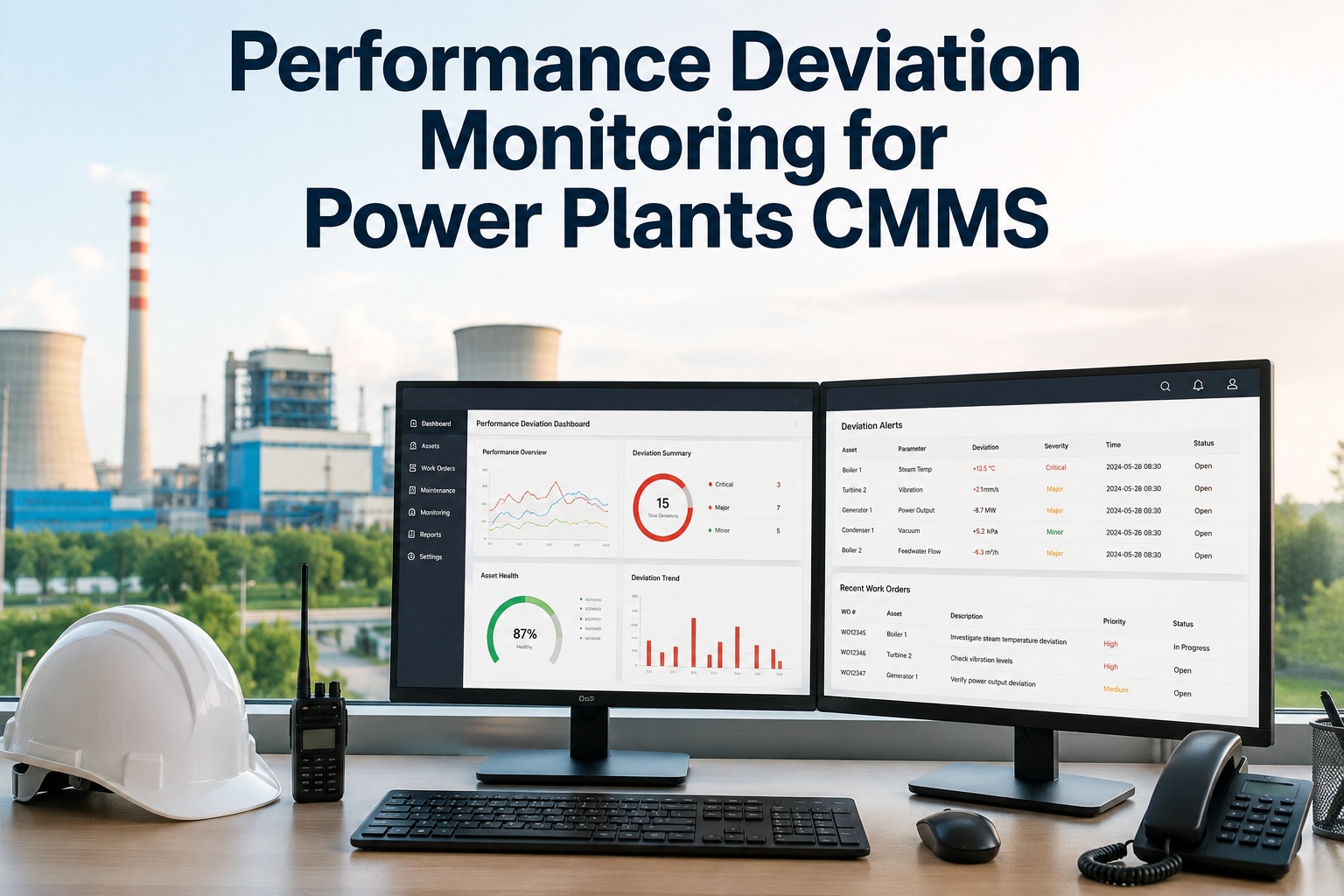
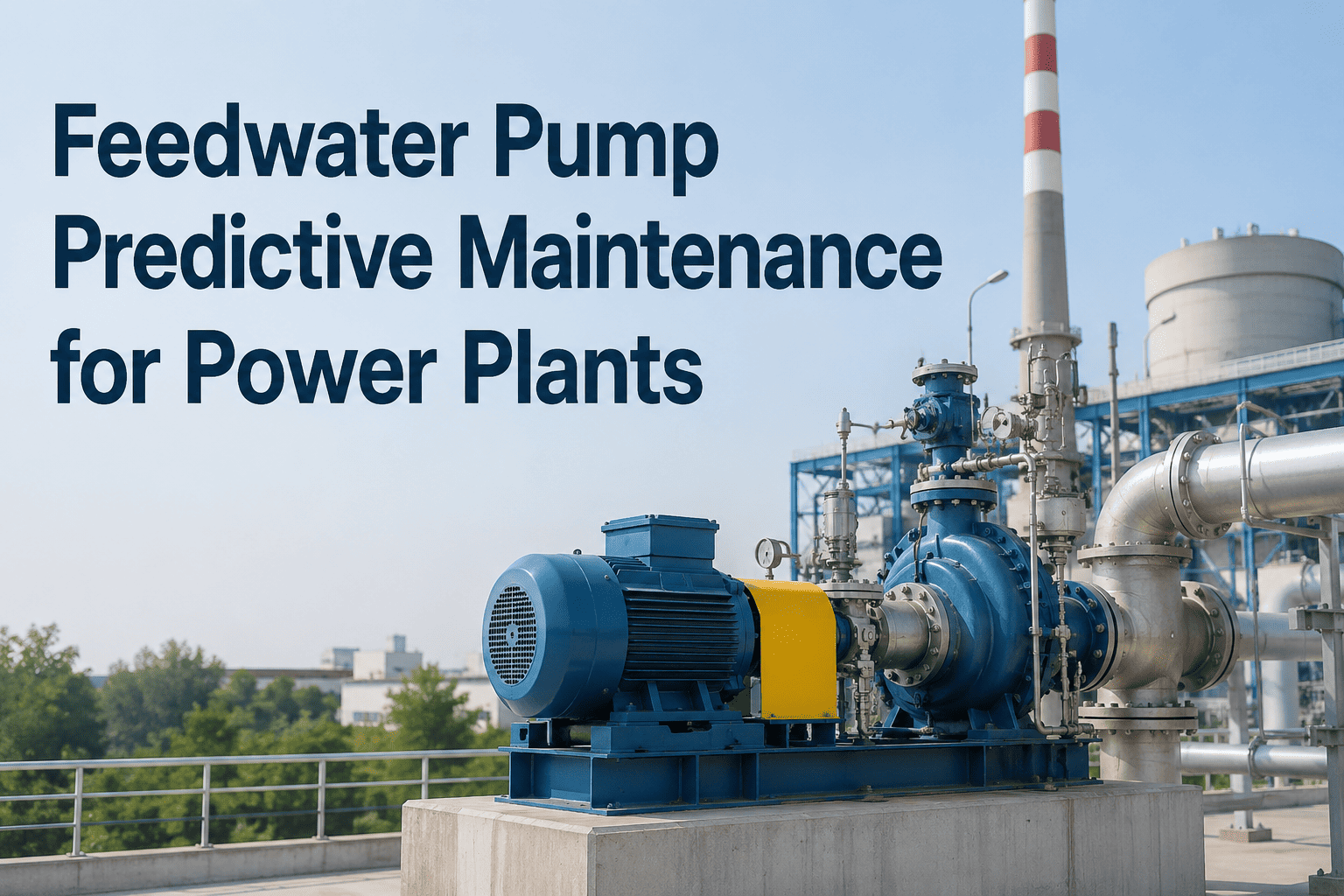
Power plants run on the continuous, flawless performance of pumps and compressors. When a boiler feed pump degrades undetected, generation capacity drops and forced outages cost operators anywhere from $50,000 to $500,000 per hour. Predictive maintenance for rotating equipment changes that calculus—detecting bearing wear, seal deterioration, cavitation, and performance degradation weeks before a failure event. Sign up for OxMaint to bring AI-powered condition monitoring to every pump and compressor in your plant.
Predictive Maintenance AI
Pump & Compressor Predictive Maintenance for Power Plants
Stop reacting to failures. Monitor seal health, bearing condition, cavitation signals, and performance curves in real time—before unplanned outages shut down generation.
$500K
Hourly cost of a forced outage
42%
Of pump failures are bearing-related
8x
ROI of predictive vs reactive maintenance
Critical Assets in the Predictive Maintenance Crosshairs
Power plant rotating equipment spans dozens of asset classes. Four categories account for over 80% of unplanned generation losses when they fail unexpectedly.
BFP
Boiler Feed Pumps
High-pressure multistage pumps delivering feedwater to steam drums. Thrust bearing degradation, balance disc wear, and seal leaks are leading failure modes that predictive monitoring catches early.
CEP
Condensate Extraction Pumps
Low-NPSH vertical pumps extracting condensate from the hotwell. Cavitation from insufficient suction head is the primary failure driver—detectable through vibration signature analysis.
CWP
Circulating Water Pumps
Large axial-flow or mixed-flow pumps serving the cooling water circuit. Impeller erosion, bearing wear, and hydraulic imbalance develop slowly and are invisible without performance trending.
CMP
Plant Air Compressors
Instrument and service air compressors feeding control systems, valve actuators, and tools. Inter-stage valve wear, oil contamination, and intercooler fouling reduce efficiency and reliability.
The Failure Progression No One Sees Coming
Pump and compressor failures do not happen instantly. They follow a predictable degradation curve—with detectable signals at every stage that a predictive program can intercept.
Stage 1
Early Degradation
Microscopic bearing surface wear begins. Vibration at bearing defect frequencies rises by 15–20%. Invisible to operators without spectrum analysis.
Detectable 4–8 weeks before failure
Stage 2
Accelerating Wear
Seal faces begin to weep. Temperature at bearing housings climbs 8–12°C above baseline. Overall vibration increases measurably. Performance curve shifts.
Detectable 2–4 weeks before failure
Stage 3
Functional Degradation
Efficiency drops 5–10%. Operators may notice flow or pressure anomalies. Vibration alarms trigger. Cavitation noise audible during walkarounds.
Detectable days before failure
Stage 4
Failure Event
Catastrophic bearing seizure, seal blowout, or impeller damage. Emergency shutdown triggered. Secondary damage to motor, coupling, and casing is common.
Reactive response — too late
What OxMaint Monitors on Every Rotating Asset
Predictive maintenance effectiveness comes down to which parameters you track and how quickly deviations trigger action. OxMaint conditions monitoring covers the full health picture.
01
Vibration Signatures
Overall vibration levels and spectral analysis across bearing locations. Detects imbalance, misalignment, looseness, and bearing defect frequencies before physical damage occurs.
BFP · CEP · CWP · Compressors
02
Bearing Temperature
Continuous temperature monitoring at drive-end and non-drive-end bearings. Rising temperature differential identifies lubrication breakdown and race surface degradation early.
All rotating assets
03
Seal Condition & Leakage
Mechanical seal flush flow, quench pressure, and seal pot level trends track progressive seal face wear. Scheduled replacement planning replaces emergency seal failures.
BFP · CEP · CWP
04
Cavitation Detection
High-frequency vibration analysis in the 1–10 kHz range identifies cavitation inception in condensate and feed pumps before impeller erosion causes measurable performance loss.
CEP · BFP
05
Performance Curve Trending
Head, flow, and power consumption tracked against the original design curve. Efficiency drop below 3% of baseline triggers a work order for inspection before the problem compounds.
BFP · CWP · Compressors
06
Discharge Pressure & Flow
Continuous comparison of actual vs. design operating point. Operating too far right on the pump curve accelerates cavitation and bearing loads; too far left causes recirculation damage.
All pump types
Industry Data Point
Plants using predictive maintenance for rotating equipment report 55% fewer unplanned outages and a 35% reduction in annual maintenance spend per pump.
OxMaint aggregates condition data, maintenance history, and work orders in one platform so your team acts on signals—not surprises. Start your free account and connect your first pump in under 10 minutes.
Predictive vs. Reactive: The Real Cost Difference
The maintenance strategy you choose today determines your plant's outage profile for the next decade. The numbers speak clearly.
Reactive Maintenance
Average pump repair cost
$28,000 – $85,000
Emergency parts premium
2.5x – 4x standard cost
Secondary damage rate
68% of failure events
Mean time to repair
3 – 7 days
Annual unplanned outage hours
180 – 320 hrs/year
Predictive Maintenance with OxMaint
Average pump repair cost
$6,000 – $18,000
Parts procurement
Planned — standard pricing
Secondary damage rate
Under 8% with early alerts
Mean time to repair
8 – 16 hours (planned)
Annual unplanned outage hours
Under 40 hrs/year
How OxMaint Works for Power Plant Rotating Equipment
From sensor data to scheduled work order — four steps that transform how your maintenance team operates.
1
Build Your Asset Registry
Load every pump and compressor into OxMaint with nameplate data, design curves, criticality ratings, and permit requirements. Import from spreadsheets or connect to your existing CMMS in hours, not weeks.
2
Connect Condition Data
Integrate vibration transmitters, temperature sensors, flow meters, and pressure transducers through OxMaint's IoT gateway. Manual round data entered via mobile app flows into the same trending engine.
3
Set Intelligent Alert Thresholds
Configure condition-based triggers per asset type. When bearing temperature drifts 8°C above baseline or vibration velocity crosses 7 mm/s, OxMaint auto-generates a prioritized work order assigned to your team.
4
Execute & Track in the Field
Technicians receive work orders on mobile devices with inspection checklists, historical data, and spare parts availability. Every action is logged, creating an audit-ready maintenance history per asset.
Start Predicting Failures Before They Happen
OxMaint gives power plant maintenance teams a single platform to monitor pump and compressor health, automate condition-based work orders, manage spare parts inventory, and eliminate unplanned forced outages. Set up your account in under 2 minutes—no credit card required.
Frequently Asked Questions
Which pump types does OxMaint support for predictive maintenance?
OxMaint manages predictive maintenance for all power plant pump types including boiler feed pumps, condensate extraction pumps, circulating water pumps, cooling tower pumps, chemical dosing pumps, and fuel oil transfer pumps. Each asset class gets customized condition monitoring parameters, inspection checklists, and alert thresholds.
How does OxMaint detect cavitation in condensate pumps?
OxMaint integrates with vibration sensors to track high-frequency spectral components associated with cavitation. When these signatures appear alongside suction pressure data falling near vapor pressure, the system generates a condition-based work order prompting operators to verify NPSH margins and check suction strainer condition before impeller erosion begins.
Can OxMaint connect to existing SCADA and DCS systems?
Yes. OxMaint connects to plant historian and SCADA systems through standard OPC-UA, MQTT, and REST API interfaces. Real-time process variables from DCS—discharge pressure, flow, bearing temperatures—flow directly into OxMaint's condition trending engine without additional hardware in most deployments.
How long does implementation take for a typical power plant?
Most power plants are fully operational with OxMaint within 3–5 weeks. The OxMaint onboarding team assists with asset registry import, condition monitoring configuration, spare parts setup, and technician training. Plants with existing digital infrastructure connecting to sensors are typically live within 2 weeks.
Book a demo for a site-specific timeline.
What spare parts data can OxMaint track for pumps and compressors?
OxMaint tracks mechanical seal kits, bearing assemblies, impellers, wear rings, coupling elements, compressor valve assemblies, piston rings, and chemical lubricants. Minimum stock levels and auto-reorder triggers ensure critical parts are on-site before scheduled maintenance windows, eliminating emergency procurement premiums.