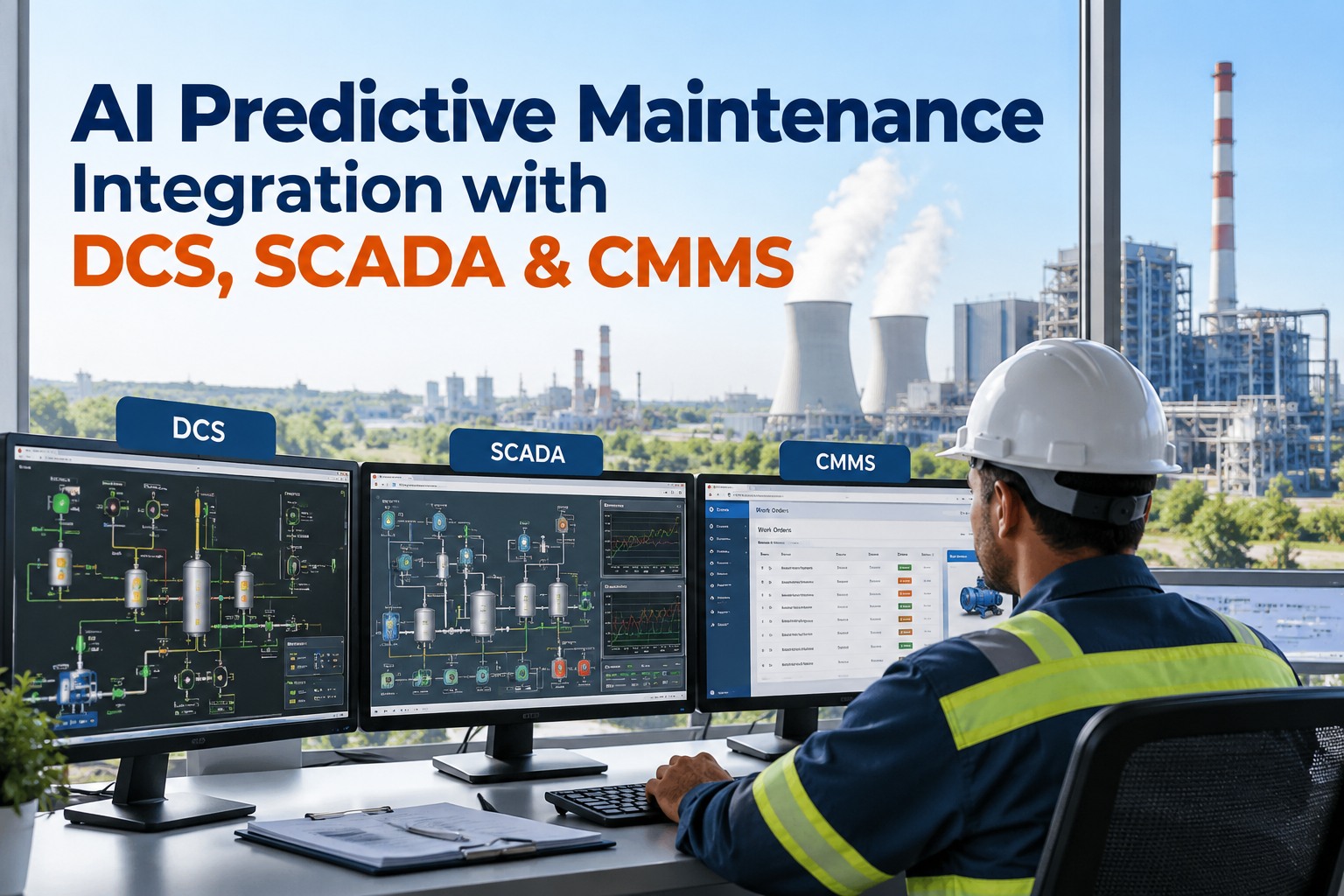
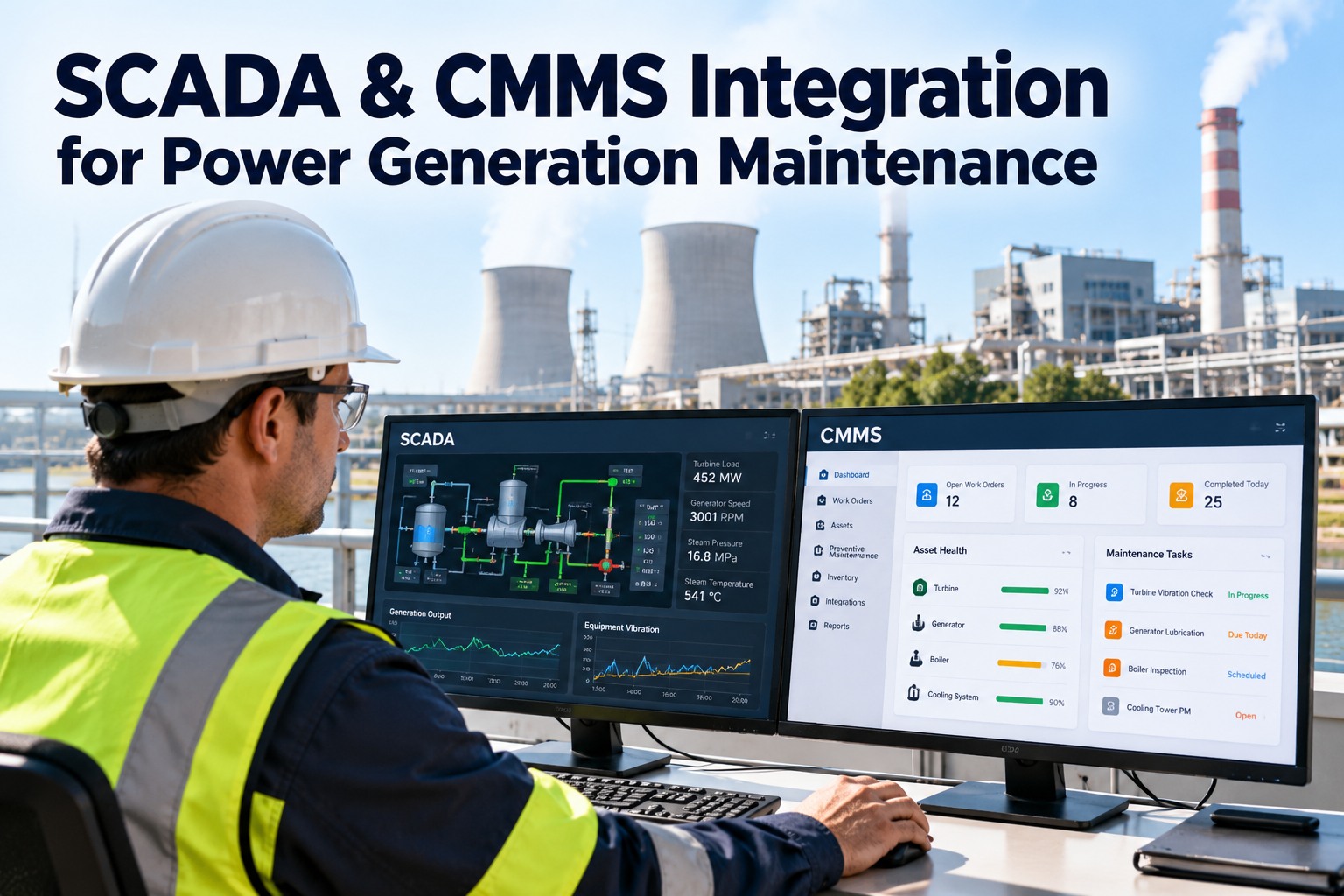
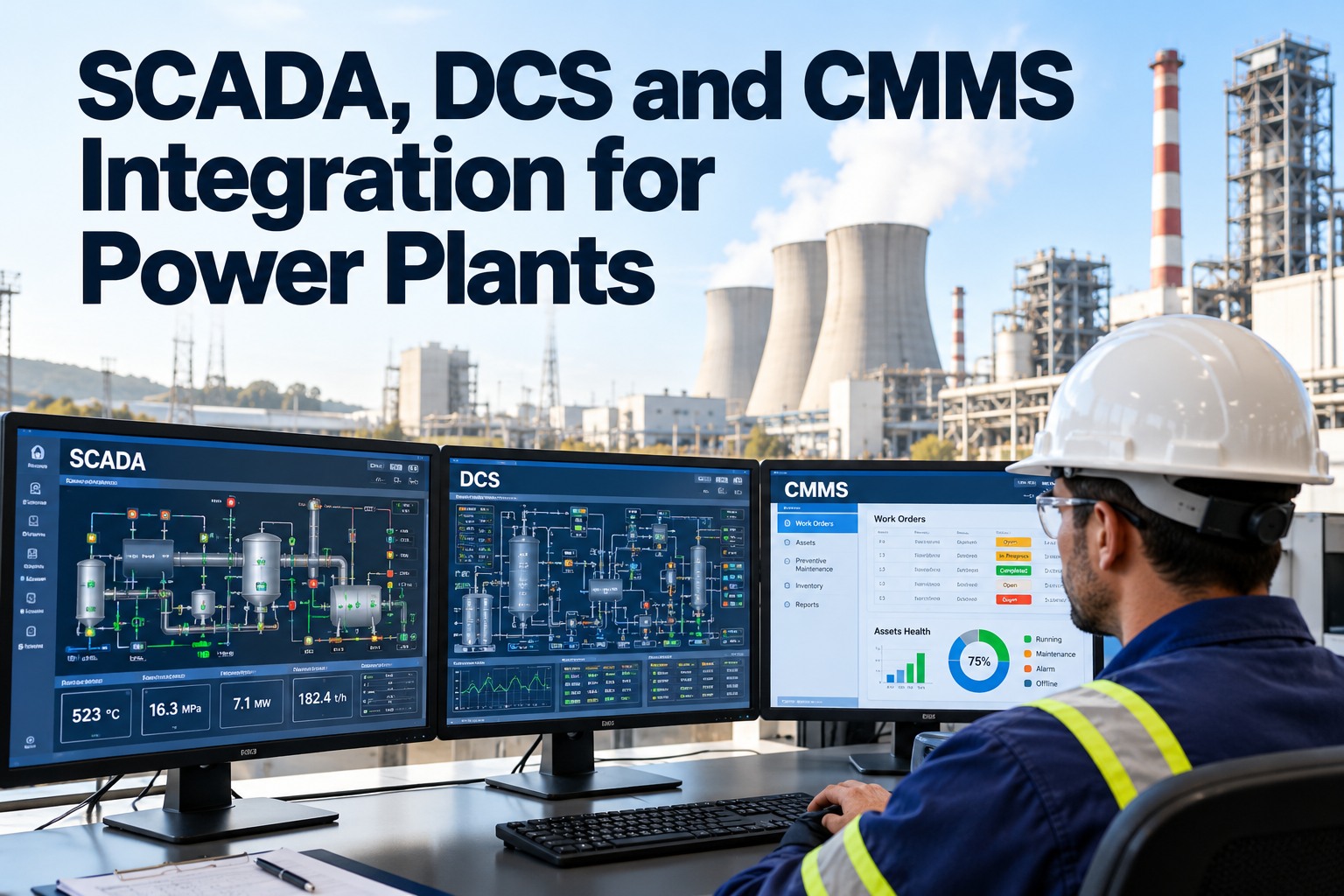
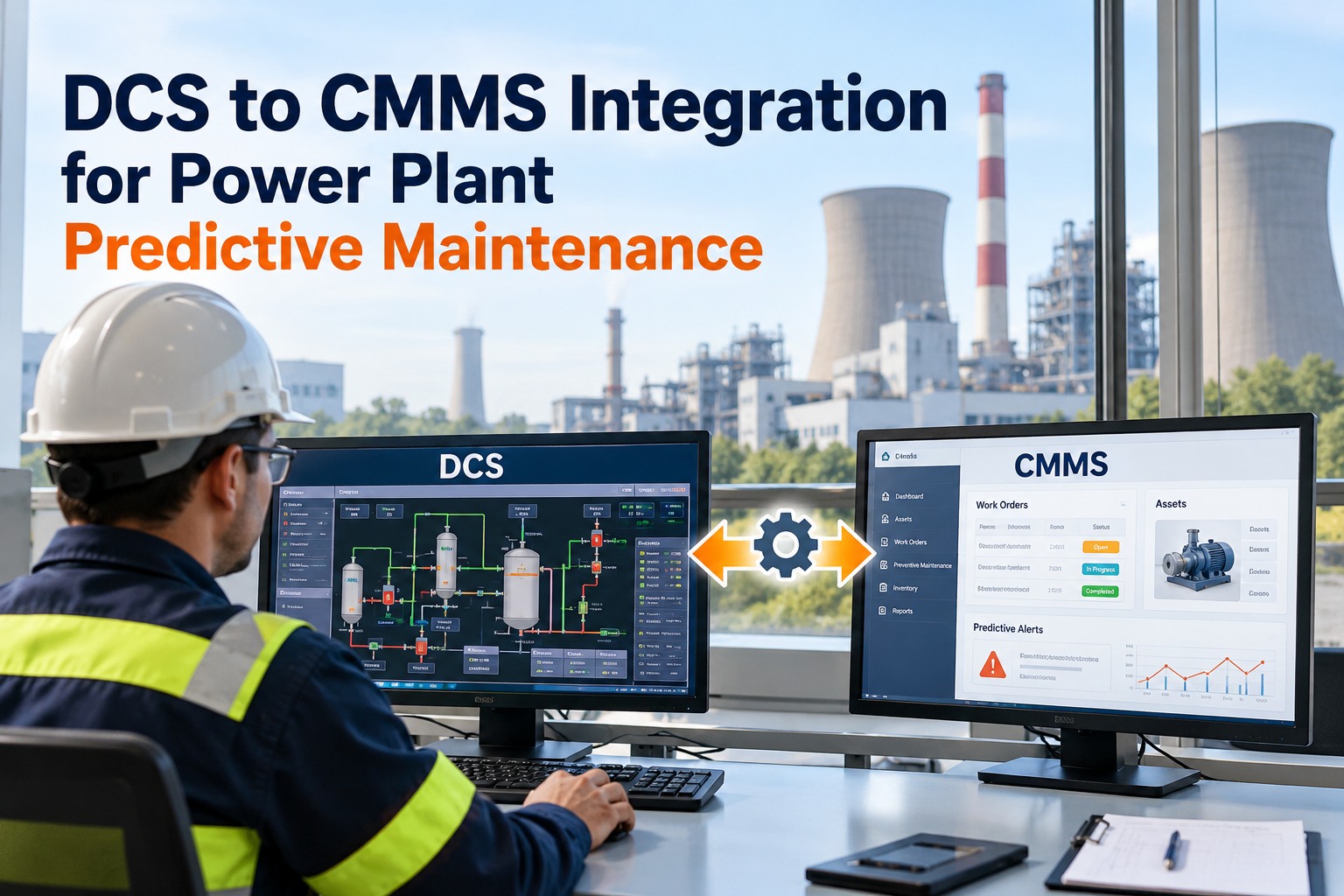
An AI model spots a bearing drifting toward failure three weeks out. It's a brilliant catch and completely useless if the alert lands on a screen nobody owns, with no asset tag, no severity and no way to become a job. Most predictive maintenance fails here, not at the algorithm: the control system knows, the model knows, and the maintenance team finds out when the bearing lets go. The value isn't the prediction — it's the work order the prediction turns into. OXMAINT AI is the AI-powered maintenance management software that connects anomaly detection to your DCS, SCADA and historian, and turns each prediction into a routed inspection or work order.
AI Predictive Maintenance · DCS · SCADA · Historian · CMMS · OT/IT · 2026
AI Predictive Maintenance, Wired Into DCS, SCADA & CMMS
Your plant already generates the data — the gap is the last mile, from a prediction to a job someone works. The OXMAINT AI maintenance management software reads the signals your control systems already collect, runs anomaly detection on them, and lands the result in the CMMS as a ranked, asset-tagged work order.
3 systems
DCS, SCADA and the historian — where the data already lives
1 gap
the last mile — turning a prediction into a job someone owns
Read-only
the safe way to pull OT data without touching control
OPC UA
the common standard most modern control systems speak
Why Good Predictions Die on a Dashboard
An accurate model is only half a system. Without a path into the work-management world, the prediction becomes a notification nobody acts on. These are the breaks that strand it; book a demo to see the prediction-to-work-order path in OXMAINT AI.
Stuck in a separate screen
The analytics tool sits apart from the CMMS, so a prediction never becomes a job — someone has to notice and re-key it.
No asset tag
An alert that can't name the exact asset and position is a mystery, not a work order — the tech can't act on "pump area, high vibration".
No severity or action
Without a rank and a recommended step, every alert looks the same — so the real one waits behind a dozen that don't matter.
Alert fatigue
Raw threshold alarms flood the team until they're muted — and a genuine early warning is lost in the noise it made.
The Three Systems, and Why They Don't Talk
Each system was built for its own job, not to hand data to the next. Knowing what each does makes the integration obvious; start free and connect them on one record in OXMAINT AI.
The Closed Loop: Signal to Work Order
Integration isn't a data dump — it's a loop that ends in a closed job and feeds the next prediction. This is the chain the OXMAINT AI maintenance management software runs end to end; book a demo to watch a signal become a work order in OXMAINT AI.
01
Acquire the signal
Process and condition data is pulled read-only from the DCS, SCADA or historian over a standard protocol — no write-back to control.
↓
02
Detect the anomaly
AI learns each asset's normal pattern and flags the drift a fixed threshold would miss — a trend heading wrong weeks before an alarm.
↓
03
Enrich & rank
The finding is tagged to the exact asset, scored for severity, and paired with a recommended inspection or action.
↓
04
Raise the work order
A ranked, assigned work order lands in the CMMS with the signal, the trend and the asset history already attached.
↓
05
Close & learn
The repair outcome is logged against the prediction, so the model is confirmed or corrected and the next call gets sharper.
A Prediction Nobody Can Act On Is Just an Alarm.
The algorithm is the easy part now — the hard part is the hand-off into work management. The OXMAINT AI maintenance management software closes that gap, turning every anomaly into an asset-tagged, ranked work order with the trend and the recommended action attached.
How the Data Actually Gets Across
Connecting to plant systems is a solved problem — the trick is doing it with the standards they already speak and without touching control. These are the common routes in; start free and map your own connection path in OXMAINT AI.
OPC UA
The modern standard most DCS and SCADA systems expose — a secure, structured read of live and historical tags.
MODBUS
The long-standing protocol for PLCs and field devices, used where older equipment doesn't speak OPC UA.
HISTORIAN API
A direct read from the time-series historian — the richest source of the trend history an AI model learns from.
MQTT / IoT
Lightweight messaging for newer sensors and edge gateways feeding condition data alongside the control systems.
Crossing the OT/IT Line Safely
Control networks run the plant and can't be put at risk for an analytics feed — so the integration is built read-only and one-way by design. The OXMAINT AI maintenance management software respects that boundary; book a demo to review the security model in OXMAINT AI.
READ-ONLY
Data is pulled, never pushed — the integration can observe the control system but has no path to change a setpoint or write to a controller.
ONE-WAY FLOW
Signals move from OT toward the maintenance side only, typically through a DMZ, so the control network is never exposed to the business network.
LEAST ACCESS
Only the specific tags the models need are shared — not blanket access to the whole control system — keeping the footprint minimal.
AUDITED
Every connection and data pull is logged, so the OT team can see exactly what is read and when, with nothing hidden.
What Makes a Prediction Actionable
A prediction only earns its keep when a technician can act on it without a second conversation. Four things turn a signal into a job — and all four ride on the work order; start free and see an actionable prediction in OXMAINT AI.
01
The exact asset
Tagged to the specific unit and position, so there's no hunting for which pump or drive the alert means.
02
A severity rank
Scored so a real early warning jumps the queue and a minor drift waits — the team acts on consequence, not order of arrival.
03
A recommended action
Paired with the inspection or task to run, so the finding carries its own next step instead of just a red flag.
04
The evidence attached
The trend, the signal and the asset history travel with the job, so the tech arrives knowing what the model saw.
How OXMAINT AI Runs the Integration
Reading the data is step one; turning it into maintenance action on one record is the whole point. Here's what the OXMAINT AI maintenance management software brings to the integration; book a demo to build your connection in OXMAINT AI.
Any-source connectors
Reads DCS, SCADA, historian and IoT feeds over OPC UA, Modbus and APIs — whatever your plant already speaks.
Pattern-based anomaly detection
Learns each asset's normal behaviour and flags the drift a fixed threshold misses, weeks before a hard alarm.
Asset-tagged findings
Every anomaly is pinned to the exact asset and position, so the work order is specific from the first second.
Prediction to work order
A flagged anomaly becomes a ranked, assigned work order on its own — with the trend and recommended action attached.
Read-only OT boundary
One-way, read-only, least-access and audited — observes the control system without ever writing to it.
Outcome feedback
Repair results logged against each prediction, so the models are confirmed or corrected and the next call gets sharper.
“
We'd bought an analytics package that was genuinely good at spotting anomalies — and it sat in its own portal that two people ever logged into. The models were right and nobody acted on them. The change wasn't a better algorithm; it was the anomaly landing in the CMMS as a work order with the asset tag and the trend already on it. That hand-off is what finally made the predictive investment pay back.
Plant Digital & Reliability Lead · Combined-Cycle Station
Frequently Asked Questions
Why integrate AI PdM with the CMMS at all?
Because a prediction only has value when someone acts on it. Without a path into the CMMS, an anomaly stays a notification on a screen — integrating it means the prediction becomes a ranked, asset-tagged work order on its own.
Start free and close that loop.
How does the data get out of the DCS or SCADA?
Through the standards those systems already expose — most commonly OPC UA, with Modbus for older PLCs and a direct historian API for trend history. The read is one-way and does not write back to control.
Is it safe to connect to our control network?
Yes, when it's built right: read-only, one-way flow, typically through a DMZ, sharing only the specific tags the models need, with every pull logged. The control network observes nothing new and is never written to.
Book a demo to review the model.
How is AI anomaly detection different from alarm thresholds?
A threshold fires only once a value crosses a fixed line — often too late. AI learns each asset's normal pattern and flags the drift away from it, catching a developing fault weeks before it would trip a hard alarm.
Do we need to replace our existing control systems?
No. The integration reads from the DCS, SCADA and historian you already run — you're adding a maintenance-action layer on top, not swapping out control. The plant keeps operating exactly as it does today.
Turn the Prediction Into the Work Order.
Close the last mile with the OXMAINT AI maintenance management software — read your DCS, SCADA and historian safely, run anomaly detection on the data you already collect, and land every prediction in the CMMS as a ranked, asset-tagged work order with the evidence attached. Stop letting good predictions die on a dashboard.