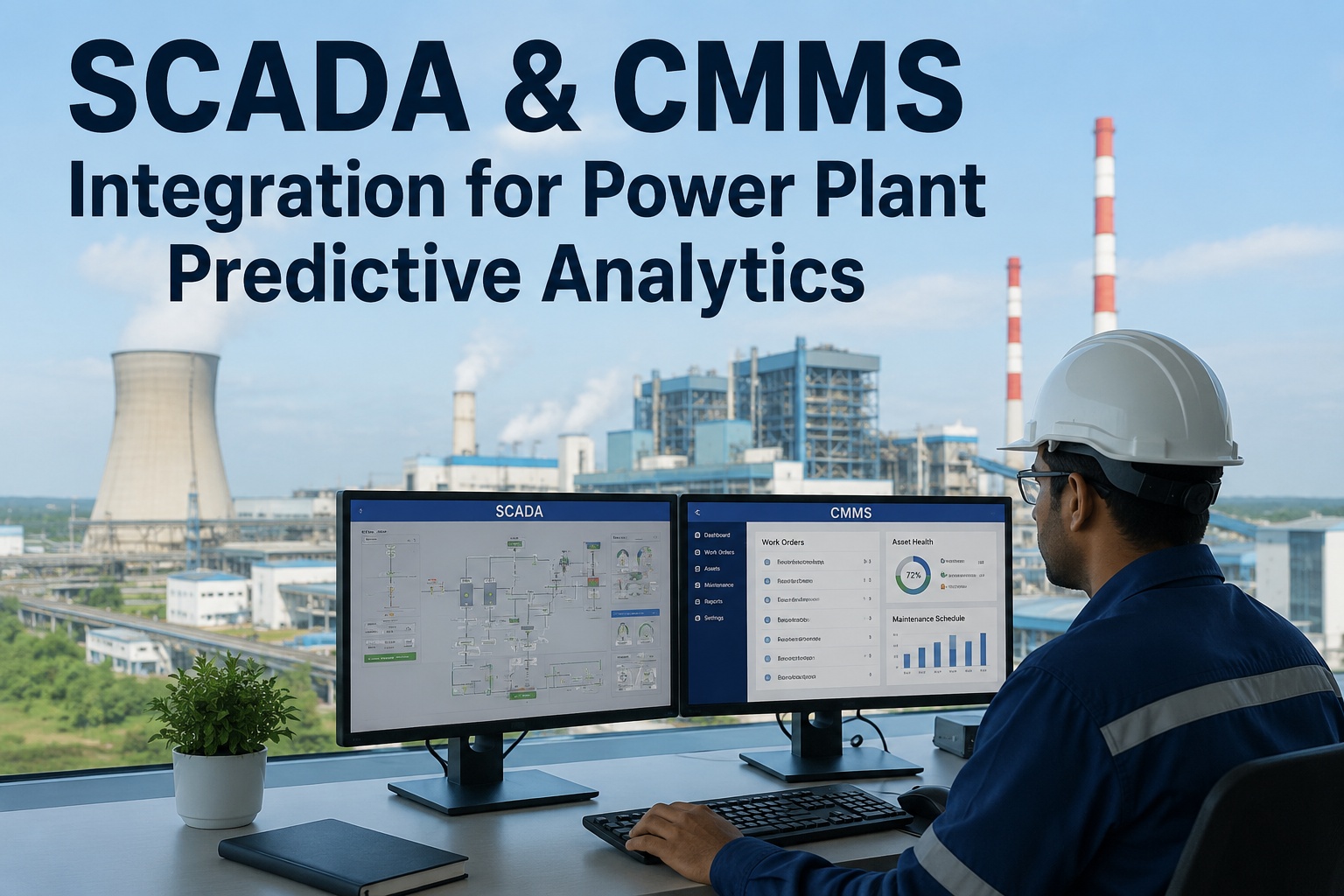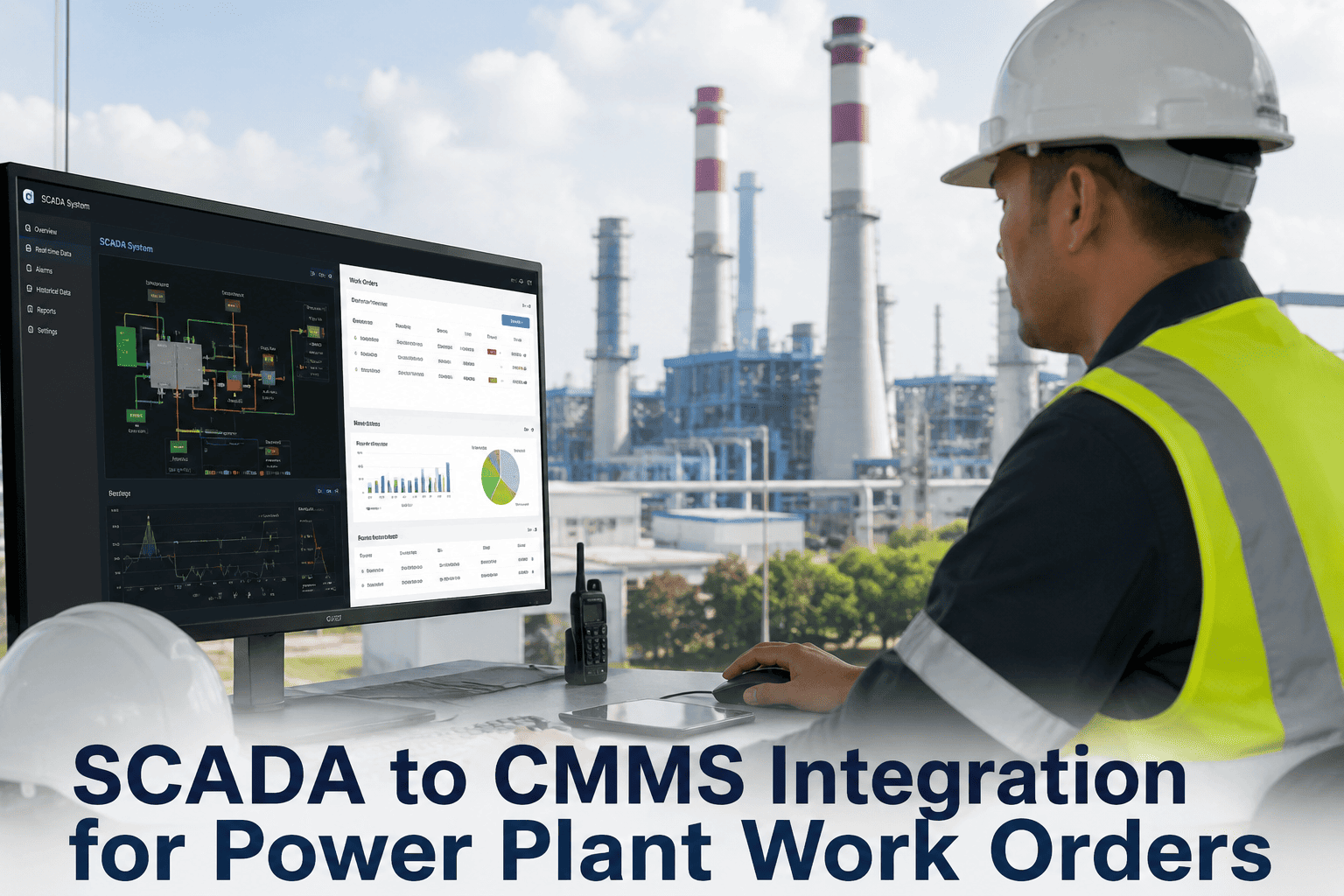
In most power plants the control room already knows a pump is running hot, a bearing is drifting, a breaker tripped at 3am. The problem is that this knowledge lives in SCADA and the DCS, and the people who fix things live in the CMMS — and the two rarely talk. So the plant knows, and maintenance finds out later, from a walk-down or a breakdown. Integration closes that gap. But the hard part is not wiring the systems together; it is deciding what should cross between them, because connect everything and you bury maintenance under alarms, while connect the right signals and only the readings that need a wrench become work. The OXMAINT AI — the AI-powered maintenance management software — is the CMMS side of that bridge, built to turn the signals that matter into work orders with full asset context.
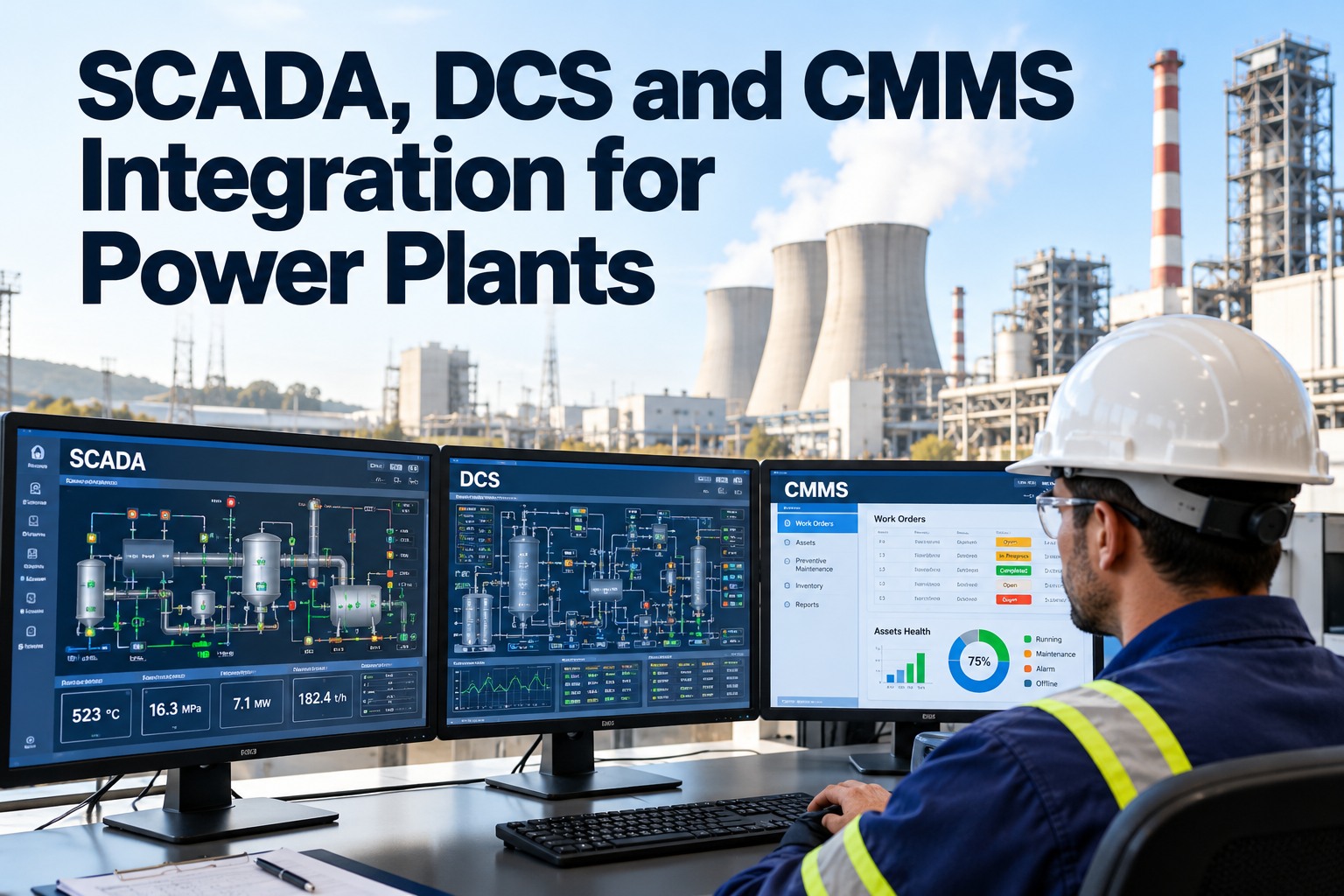
SCADA, DCS and CMMS Integration for Power Plants
Three systems, three jobs — and a gap between what the plant knows and what maintenance acts on. This guide covers who owns what, what should cross the bridge, and how to integrate so you get fewer failures, not more alarms.
Three Systems, Three Jobs
SCADA, the DCS and the CMMS are often lumped together as "plant systems," but each does a different job and none of them, alone, turns a bad reading into a completed repair. Integration matters precisely because the three were never built to do each other's work; start free and give OXMAINT AI the maintenance layer the control systems lack.
SCADA and the DCS know the condition. The CMMS owns the response. Integration is the wiring that lets a condition on one side become a response on the other.
What Each System Cannot Do Alone
The case for integration is clearest when you look at what each system is blind to on its own the gap between them is exactly where failures slip through. Book a demo to see the three joined up in OXMAINT AI.
The Gap: the Plant Knows, Maintenance Does Not
Without integration, a condition detected in the control room has to be noticed by a person, remembered, and re-entered by hand into the CMMS — if it is entered at all. Most alarms are acknowledged and cleared; the maintenance signal inside them evaporates. The equipment data and the maintenance record stay on opposite sides of a wall, and the plant keeps relying on rounds and breakdowns to find what its own instruments already saw. Integration is what carries the signal across that wall automatically — but only if you are deliberate about which signals cross.
What Should Cross the Bridge
This is the part that decides whether integration helps or hurts. A plant throws thousands of alarms a day; pipe them all straight into the CMMS and you get a flood of work orders no one can action. The bridge needs a filter — a step that asks of every signal, does this need a maintenance response? Only the ones that do should become work. Start free and set that filter up in OXMAINT AI.
Connect Everything, or Connect the Right Thing
The difference between a well-run integration and one that gets switched off within a month is the filter in the middle. Here is what each approach produces; book a demo to see the curated approach in OXMAINT AI.
- Thousands of signals become thousands of work orders
- Nuisance and process alarms bury the real ones
- Technicians stop trusting auto-raised jobs
- The integration gets muted or turned off
- Only maintenance-relevant signals raise a job
- Each work order carries asset context and history
- Technicians trust the queue because it is clean
- The integration stays on because it stays useful
Your Instruments Already Found the Failure. Your CMMS Should Hear About It.
Every day a plant's control systems catch conditions that never reach the people who could act on them. The OXMAINT AI maintenance management software sits on the maintenance side of the bridge — taking the filtered, asset-mapped signals from SCADA and the DCS and turning them into work orders with full context, then sending status back so operations knows the loop is closed.
Which Signals Are Worth Connecting
Not every data point from the control layer earns a place in the CMMS. These are the signal types that carry real maintenance value and what each one should drive. It scrolls sideways on a phone so every column stays whole; start free and map your own signals in OXMAINT AI.
Getting the Integration Right
A clean bridge rests on a few disciplines that have nothing to do with the connection itself and everything to do with keeping it trustworthy over time; book a demo to walk these through with OXMAINT AI.
How OXMAINT AI Bridges Control and Maintenance
OXMAINT AI is built to be the maintenance end of a SCADA and DCS integration — taking filtered signals and turning them into trusted, contextual work. Here is what it brings to the bridge; start free and connect your control systems to OXMAINT AI.
Frequently Asked Questions
Let the Plant That Already Knows Tell the People Who Fix It.
Bridge SCADA and the DCS to the OXMAINT AI maintenance management software — filtered alarm-to-work-order, condition-based triggers, usage-based PM, asset context on every job and a status loop back to operations — so the failures your instruments already see become work your team completes, not breakdowns you explain later.