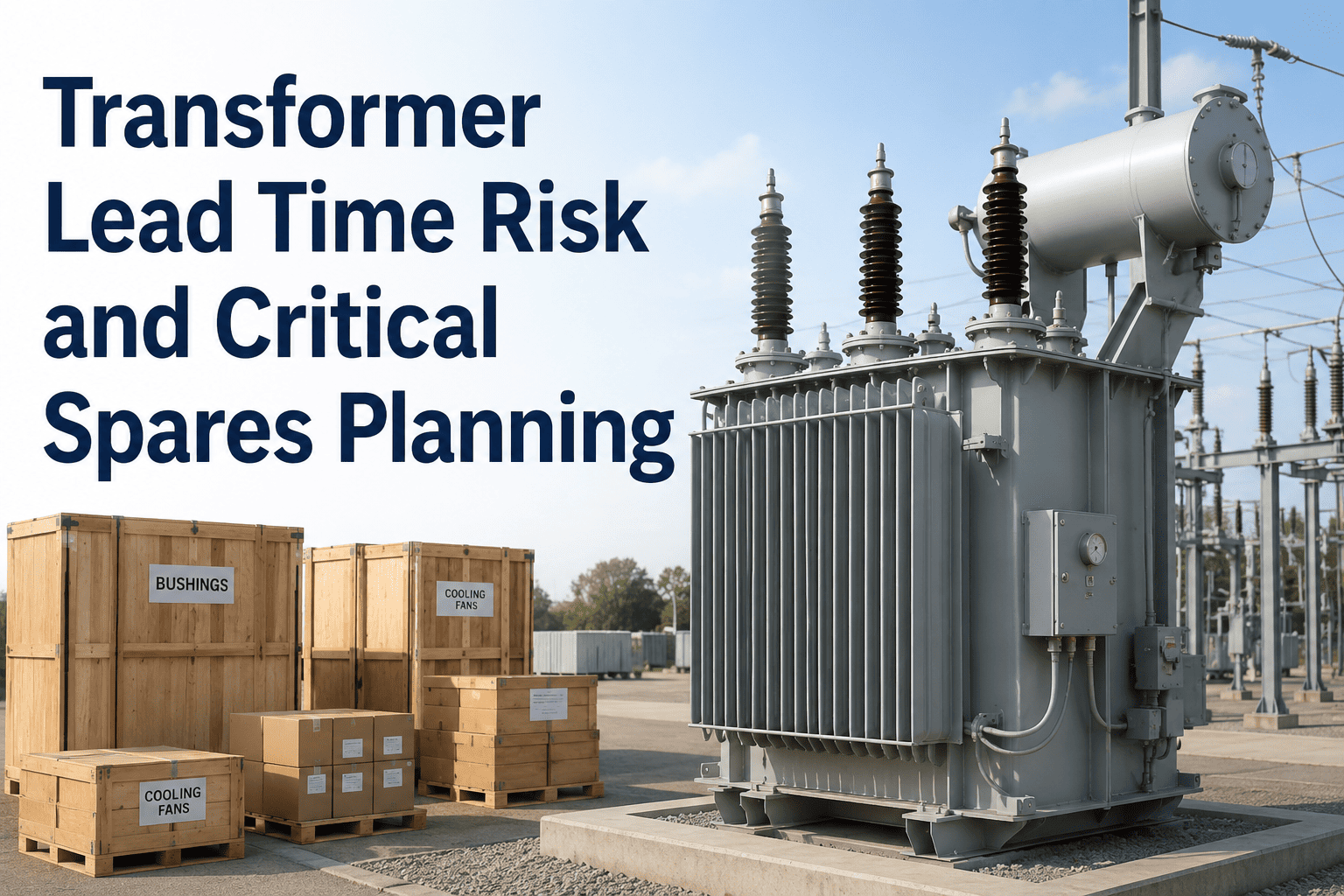
Large power transformer lead times have stretched from around 50 weeks in 2021 to 80–210 weeks today, which means a transformer ordered the week a risk register flags it will not arrive before the next budget cycle closes, let alone before an aging unit actually fails. Utilities that wait for a failure to drive the procurement decision are choosing the worst possible moment to discover a multi-year lead time. Build a transformer risk register free with Oxmaint and turn replacement planning into a scheduled decision instead of an emergency one.
Why Transformer Risk Planning Can't Wait for Failure
50 wks
Typical lead time in 2021, before supply chain pressure intensified
120 wks
Average lead time across the industry as of 2024
80–210 wks
Range for large power and generator step-up transformers specifically
The Risk Register: Scoring Every Spare Transformer Decision
A risk-based register replaces gut-feel replacement decisions with a structured score built from two dimensions: how likely a transformer is to fail, and how severe the consequence would be if it did. Plotting your fleet across both axes turns a long equipment list into a prioritized investment plan.
Low Impact
Moderate Impact
High Impact
High Failure Probability
Monitor
Prioritize Spare
Order Now
Moderate Failure Probability
Routine PM
Monitor
Prioritize Spare
Low Failure Probability
Routine PM
Routine PM
Monitor
Score Your Fleet Before the Lead Time Decides For You
Oxmaint tracks condition indices, age, loading history, and criticality tier per transformer, surfacing the units that belong in the top-right of your risk matrix long before a failure forces an emergency order at the back of a two-year queue.
What Goes Into a Transformer Failure Probability Score
Spare Strategy Options Ranked by Speed and Cost
Common Utility Spare Transformer Strategies
Frequently Asked Questions
How far in advance should a utility order a replacement transformer?
Given lead times now ranging from 80 to 210 weeks for large power transformers, replacement orders for aging or high-risk units typically need to be placed one to three years ahead of the expected need, with budgeting cycles adjusted to accommodate that lead time rather than treating it as a same-year purchase.
Track transformer age and condition with Oxmaint to identify which units need an order placed this budget cycle.
What factors should go into a transformer risk score?
A comprehensive score combines failure probability indicators — condition index, age relative to design life, loading history, and maintenance background — with impact factors covering operational, regulatory, and environmental consequences of a failure at that specific location.
Book a demo to see how Oxmaint structures a fleet-wide risk plot from your existing condition and inspection data.
Why are on-site co-located spares not always a reliable strategy?
A spare stored at the same substation as the operating transformer is vulnerable to the same event that damaged the original unit, whether that's severe weather, a physical attack, or another site-wide incident, which is why off-site storage and shared industry programs have become more common as a complementary strategy.
How often should the transformer risk register be reviewed?
Risk scores should be re-evaluated at least annually and aligned with budget planning cycles, since fleet condition shifts gradually but lead time pressure makes early identification of high-risk units essential to avoid missing an ordering window.
Start a free Oxmaint account and set up recurring condition review reminders tied to your risk register.
Can a CMMS help prioritize which transformers need a spare first?
Yes, when the platform tracks condition, loading, and criticality data per asset and can rank the fleet by combined risk score rather than relying on a flat list with no prioritization logic. This turns a maintenance database into a tool that directly supports capital planning decisions, not just work order tracking.
Don't Let Lead Time Decide Your Risk Tolerance
Oxmaint combines condition, age, loading, and criticality into a single transformer risk score, helping you place replacement orders years ahead of the failures that long lead times would otherwise force you to absorb.