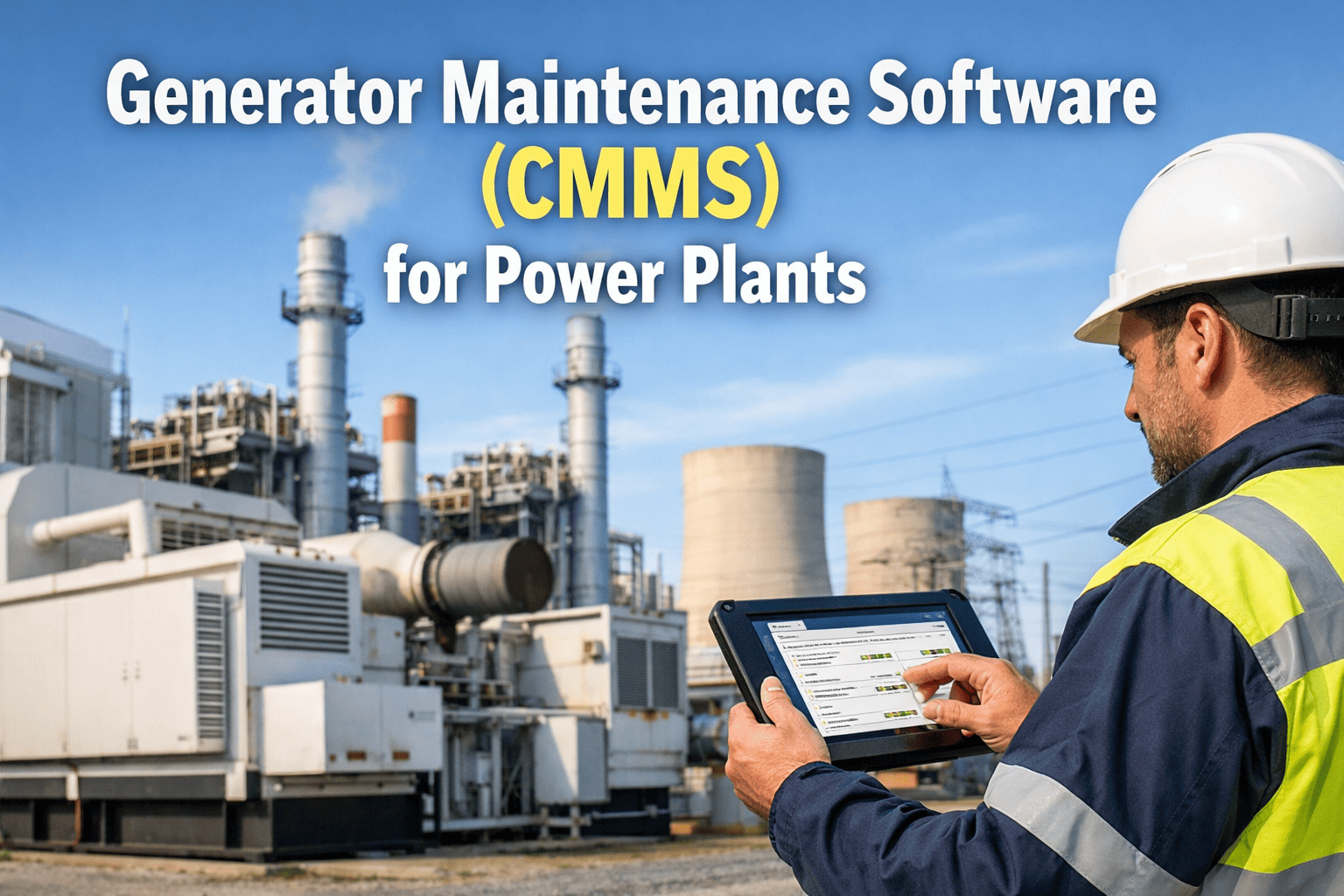
Maintaining a power plant is one of the most demanding jobs in heavy industry. Every turbine, boiler, and generator on your floor represents millions of dollars in capital investment running under extreme conditions around the clock. When maintenance falls behind, the consequences are measured in six-figure forced outage costs and regulatory penalties that can reach $1 million per incident. That is why a growing number of power generators are moving away from spreadsheets, paper-based systems, and legacy ERP modules that were never designed for the field. They are choosing purpose-built CMMS platforms that understand power generation. If your plant is evaluating its next maintenance platform, schedule a walkthrough with OxMaint to see how the platform maps to your specific asset mix and operational workflow.
Without Purpose-Built CMMS
Technicians print SAP work orders, scribble notes, re-enter data at shift end
70% of plants have little insight into when equipment needs replacement
Corrective maintenance costs $17-18 per horsepower annually (EPRI)
Forced outage fines range from $100K to $1M per incident
Knowledge walks out the door when experienced technicians retire
With OxMaint
Mobile work orders with photo documentation and real-time sync
Predictive analytics flag asset degradation weeks before failure
Preventive maintenance drops cost to $7-9 per horsepower (EPRI)
Automated compliance tracking with audit-ready documentation
Every procedure, failure history, and inspection stored permanently
43%
of plant incidents are caused by mechanical failures
47%
maintenance cost savings possible with predictive techniques (EPRI)
15%
of the time coal plants are unable to deliver power due to outages
Five Reasons Power Generators Are Making the Switch
Choosing a CMMS for power generation is not the same as choosing one for a warehouse or a hotel. Power plants operate under a unique combination of extreme asset criticality, strict regulatory oversight from OSHA, EPA, FERC, and NERC, and maintenance windows measured in hours rather than weeks. Here is what drives the decision for facilities that have already made the move to OxMaint.
01
Built for the Field, Not the Back Office
Legacy ERP maintenance modules are designed for desktop planners. Technicians working on a turbine deck in extreme heat need a mobile-first interface that loads fast, works offline, and captures photos, meter readings, and completion data without navigating through a dozen menu screens. OxMaint puts the work order, asset history, parts list, and safety documentation in one mobile view.
02
Power-Generation Asset Hierarchies
Generic CMMS platforms treat a cooling tower pump the same as an office HVAC unit. OxMaint supports the nested asset structures that power plants actually use: plant → unit → system → equipment → component. This means your turbine's bearing temperature history lives in context with its parent generator, its connected cooling system, and the overall unit performance data.
03
Compliance Without the Paper Chase
Power generators face overlapping regulations from OSHA, EPA, FERC, and NERC. Every inspection, every safety check, and every equipment modification must be documented and audit-ready. OxMaint automates compliance workflows with digital signatures, timestamped photo evidence, and structured inspection checklists that map directly to regulatory requirements.
04
Predictive Intelligence for Critical Assets
EPRI research shows predictive maintenance can reduce costs by up to 47% compared to run-to-failure approaches. OxMaint connects to your SCADA and historian data, applies condition-based triggers, and automatically generates work orders when vibration, temperature, or pressure readings cross thresholds you define. The system learns from your failure history to improve prediction accuracy over time.
05
Enterprise Integration Without Replacement
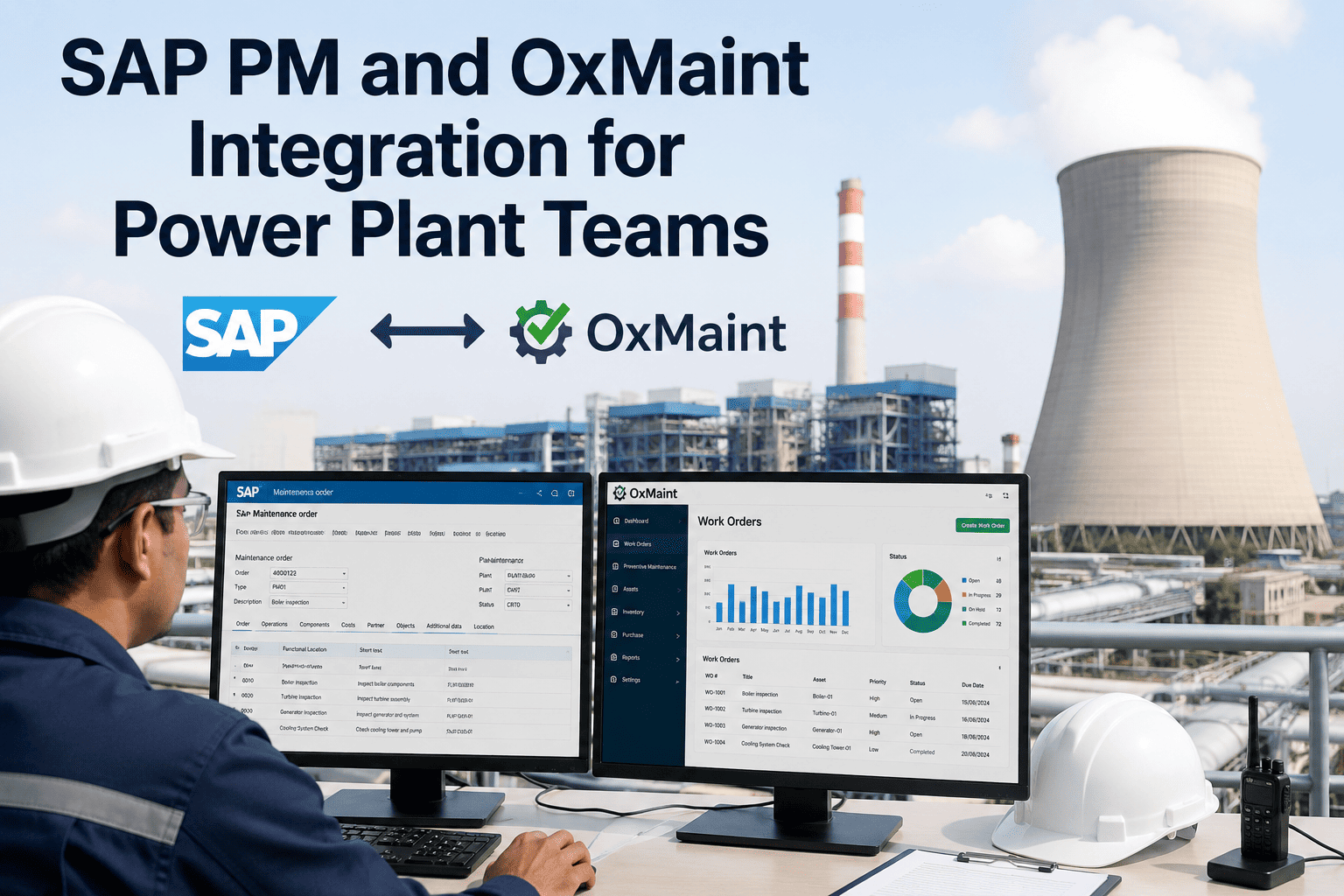
Power plants that run SAP, Oracle, or other ERP systems do not need to rip and replace. OxMaint connects bi-directionally through standard APIs, syncing work orders, equipment records, inventory, and cost data in real time. Your ERP remains the financial backbone while OxMaint handles field execution, mobile inspections, and predictive analytics.
See How OxMaint Fits Your Plant
Walk through a live demo configured for power generation. Our specialists will map the platform to your asset hierarchy, compliance requirements, and existing ERP environment.
Measurable Results from Power Generation Facilities
The difference between a good CMMS and the right CMMS shows up in the numbers. Across power generation facilities using modern, purpose-built maintenance platforms, the operational improvements follow consistent patterns. These results align with industry benchmarks from EPRI, Siemens, and IDC research on connected maintenance systems.
Reduction in Unplanned Downtime
Mobile work orders and condition-based alerts ensure problems are addressed during planned windows, not during peak demand
Lower Maintenance Costs
Shifting from reactive to preventive and predictive maintenance aligns with EPRI findings of $7-9 vs. $17-18 per horsepower
Faster Work Order Completion
Eliminating paper handoffs and manual re-entry gives technicians back 30-60 minutes per shift for actual maintenance work
Audit Pass Rate
Digital compliance records with timestamps, photos, and e-signatures eliminate the scramble before OSHA and FERC inspections
Expert Perspective: The CMMS Decision in Power Generation
The power generation industry is facing a workforce crisis alongside an equipment reliability crisis. With more than 78 GW of aging capacity scheduled for retirement and experienced technicians leaving faster than they can be replaced, the CMMS is no longer just a work order tracker. It is the institutional memory of your plant. The platforms winning in this space are the ones that capture knowledge from every repair, every inspection, and every failure, then make that knowledge instantly accessible to the next technician who faces the same problem. Plants that treat CMMS selection as a strategic decision rather than an IT procurement exercise are consistently outperforming their peers on availability, cost per megawatt-hour, and regulatory compliance.
Workforce Knowledge Retention
Every completed work order, inspection report, and failure analysis becomes searchable institutional knowledge that survives staff turnover
Deployment Speed
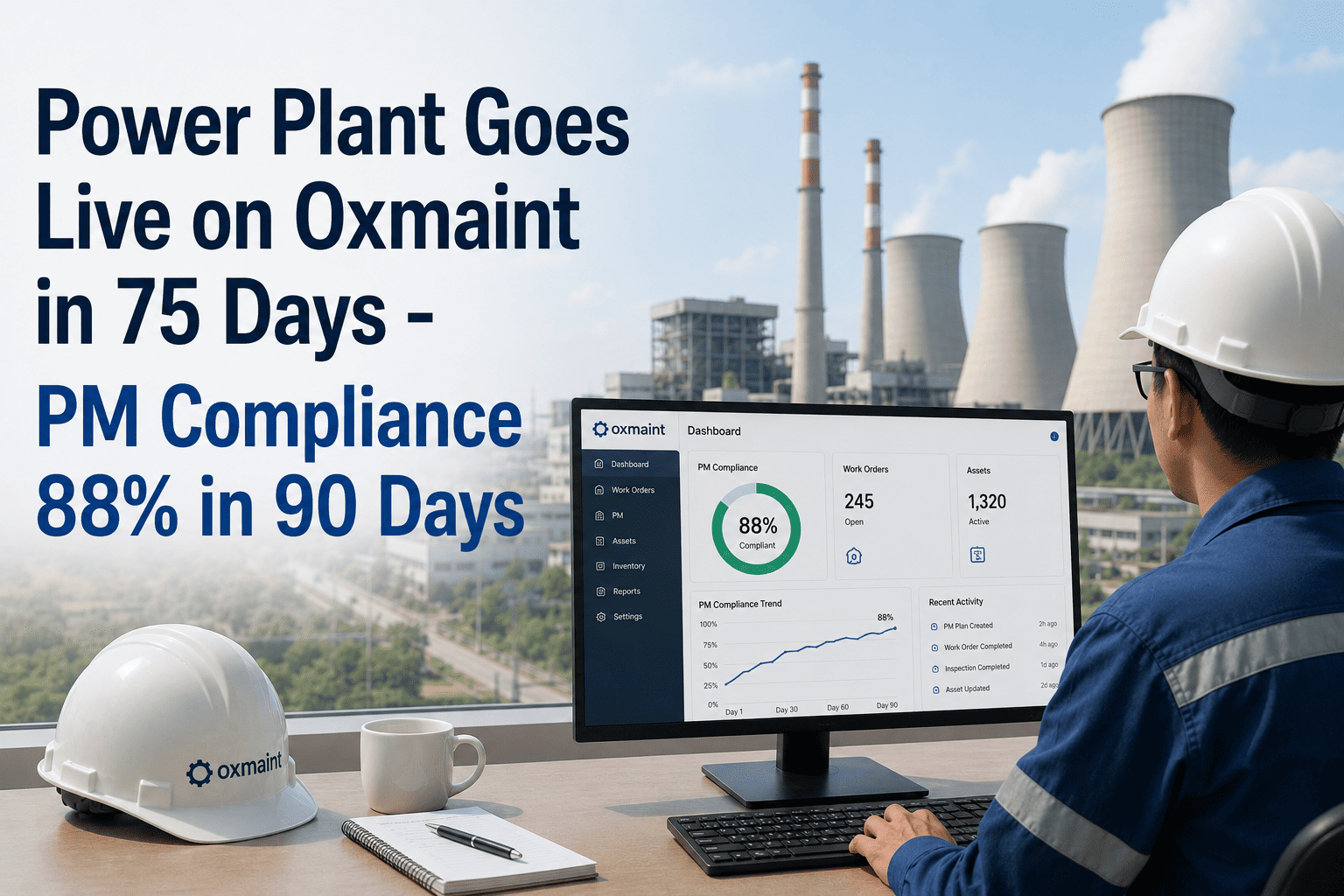
Cloud-based architecture means no server infrastructure to build. Most plants go live within 4-8 weeks including asset data migration
Total Cost of Ownership
Purpose-built CMMS delivers 90% of what SAP PM offers for maintenance execution at a fraction of the licensing, customization, and administration cost
What You Get with OxMaint for Power Generation
Mobile work orders with offline capability
Nested asset hierarchies for turbines, generators, boilers
SCADA and historian data integration
Condition-based and predictive maintenance triggers
Bi-directional SAP, Oracle, and ERP sync
OSHA, EPA, FERC, and NERC compliance workflows
Spare parts inventory with auto-reorder triggers
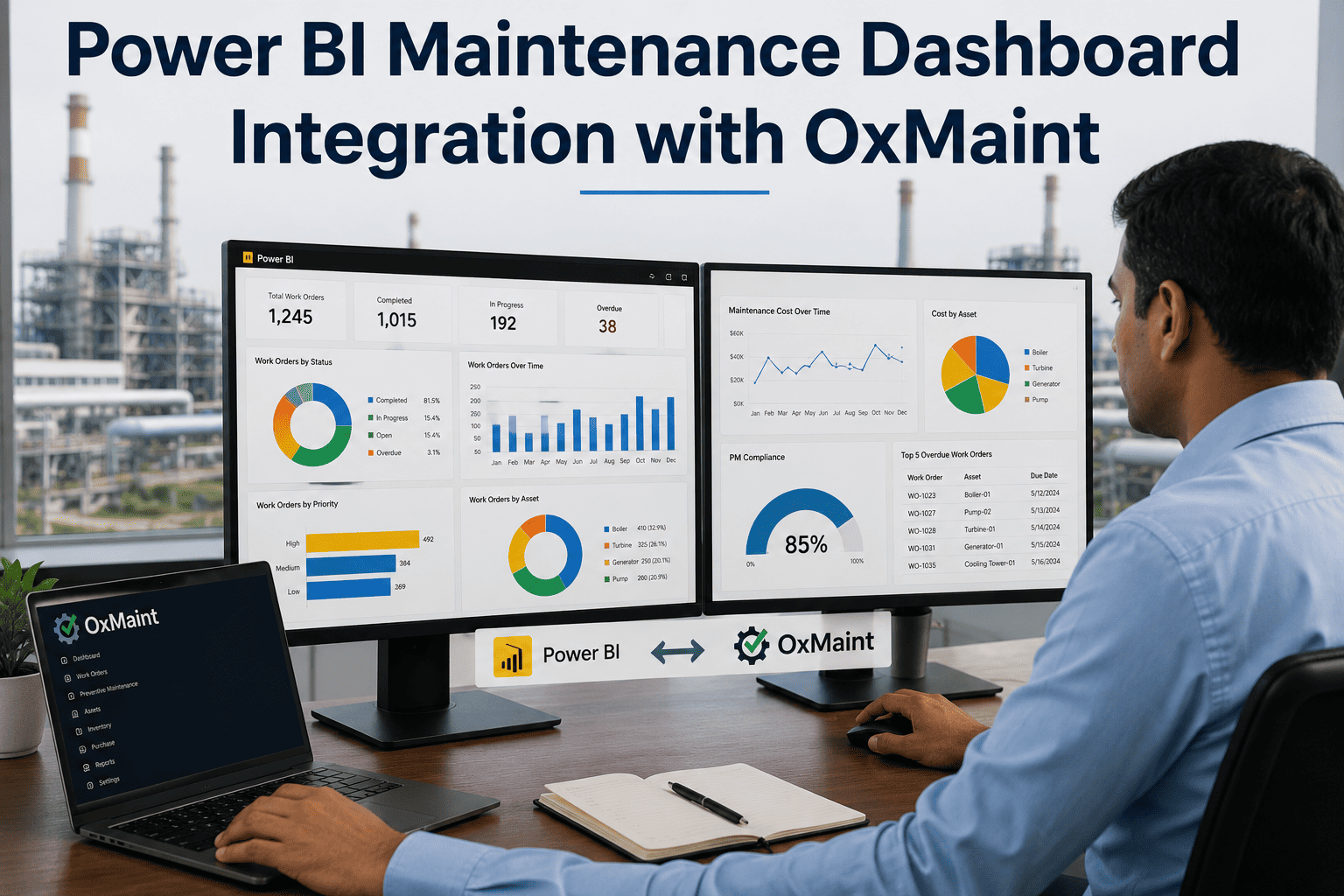
Real-time dashboards with MTBF, MTTR, and availability KPIs
Digital inspection checklists with photo evidence
Outage planning and multi-craft scheduling
Your Plant Deserves a Maintenance Platform Built for Power Generation
Join power generators using OxMaint to reduce forced outages, cut maintenance costs, and build institutional knowledge that outlasts any single technician. See the platform configured for your operations.
Frequently Asked Questions
How is OxMaint different from using SAP PM for power plant maintenance?
SAP PM excels as a financial and planning backbone, but its interface is designed for desktop planners, not field technicians. Industry research consistently finds that technicians avoid using SAP directly, leading to unreported work and data gaps. OxMaint provides a mobile-first execution layer that syncs bi-directionally with SAP, giving technicians an interface they actually use while ensuring every action flows back to your ERP in real time.
How quickly can a power plant go live with OxMaint?
Most power generation facilities complete deployment within 4-8 weeks, including asset data migration, user configuration, and team training. OxMaint is cloud-based, so there is no server infrastructure to provision. The timeline includes mapping your asset hierarchy, configuring compliance workflows, and establishing ERP integration if applicable. Plants typically start with critical assets and expand coverage incrementally.
Does OxMaint handle outage planning and multi-craft scheduling?
Yes. Planned outages involve thousands of coordinated tasks across electrical, mechanical, instrumentation, and contractor teams. OxMaint supports multi-craft work order scheduling, dependency tracking, and resource allocation that gives outage managers visibility into task progress, labor availability, and critical path items in real time.
What kind of predictive maintenance capabilities does OxMaint offer?
OxMaint connects to SCADA and historian data through standard industrial protocols to monitor equipment condition in real time. You configure condition-based triggers for parameters like vibration amplitude, bearing temperature, pressure differential, and motor current draw. When readings cross defined thresholds, the system automatically generates prioritized work orders with relevant asset history and recommended procedures. Over time, the AI engine learns from your plant's failure patterns to improve prediction accuracy.
How does OxMaint support regulatory compliance for power generators?
Power generators must satisfy overlapping requirements from OSHA, EPA, FERC, and NERC. OxMaint automates compliance documentation through structured inspection checklists, digital signatures, timestamped photo evidence, and automated audit trails. Certification tracking notifies managers when technician qualifications are expiring. During regulatory audits, all records are searchable and exportable, eliminating the paper chase that consumes days of preparation at most facilities.