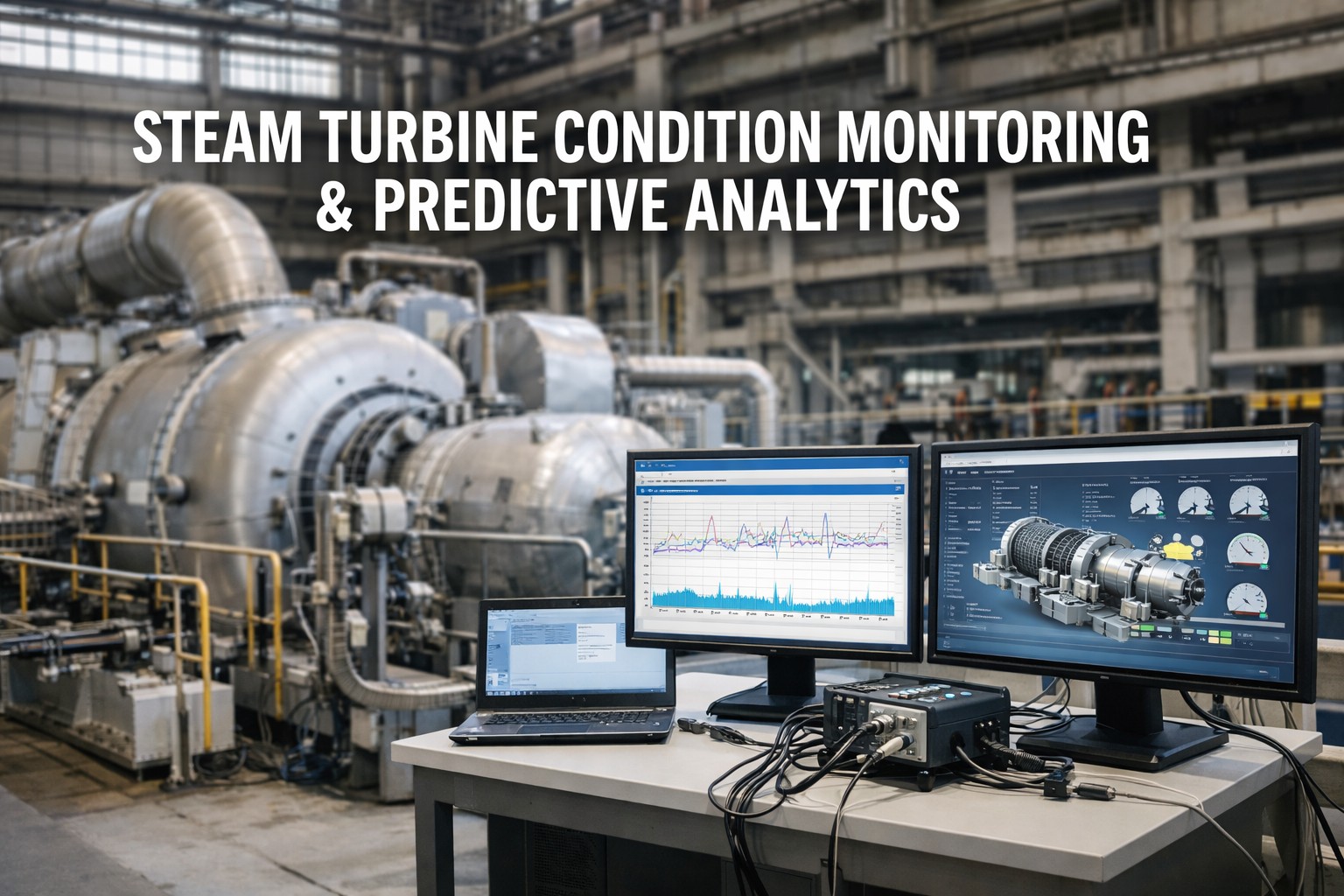
Wind turbines don't fail without warning — they fail because the warning was never acted on. A gearbox bearing running hot for 72 hours, a blade erosion pattern building for weeks, a yaw misalignment quietly reducing output by 8% — these signals exist in your SCADA data right now, and Oxmaint's wind turbine predictive maintenance software is built to catch them, generate work orders automatically, and get your team scheduled before the failure window closes. If your fleet is still running on calendar-based intervals, book a demo to see how condition-based CMMS changes the economics of wind O&M.
The Real Cost of Reactive Wind Farm Maintenance
65%
of wind O&M costs are currently unplanned — most triggered by blade and drivetrain failures
$25K
estimated daily revenue loss per turbine during an unplanned outage event
40%+
of gearboxes require replacement within 20 years — most failures are predictable weeks in advance
$350K
cost of a catastrophic gearbox failure vs. $20K for a planned repair caught early by condition monitoring
O&M already represents 20–30% of total wind turbine lifecycle cost. When 65% of that spend is unplanned, your maintenance budget is being written by your failures — not by your engineers. Predictive maintenance closes that gap by putting data-driven decision-making between the early fault signal and the expensive repair.
Calendar Maintenance vs. Predictive Maintenance — Where the Gap Lives
Calendar-Based (Most Fleets Today)
Turbine inspected every 6 months regardless of actual condition
Gearbox oil changed on schedule even when oil analysis shows no degradation
Bearing replaced when it seizes — not when vibration data first flagged the defect
Offshore service vessel dispatched reactively — crane mobilized under time pressure
Monthly O&M call reveals nothing until a turbine goes offline that morning
SCADA alarms respond to threshold breaches — faults already visible to the naked ear
Condition-Based with Oxmaint
Inspection triggered by actual vibration trend, temperature drift, or performance deviation
Oil changes scheduled when analysis detects metal particle count or viscosity shift
Bearing defect identified at 6–8 weeks lead time — replacement planned during low-wind period
Vessel dispatch planned weeks ahead — consolidated with other interventions on the same run
Anomaly detected in SCADA feed → work order auto-generated → technician scheduled same day
Multivariate AI models catch subtle fault patterns weeks before threshold alarms would fire
Six Components Where Predictive Monitoring Changes Outcomes
Gearbox & Drivetrain
Failure share: ~20% of unplanned downtime
Detectable Signals
Vibration amplitude at gear mesh frequencies
Oil metal particle content and viscosity
Bearing temperature deviation from baseline
Catching gearbox bearing wear early converts a catastrophic €150K+ failure into a planned €15–20K repair window.
Rotor Blades
Challenge: 80% of O&M costs from blade + drivetrain
Detectable Signals
Acoustic emission patterns indicating leading-edge erosion
Rotor imbalance from asymmetric mass or damage
Power curve deviation under equivalent wind conditions
Pitch bearing failures — if undetected — can result in complete blade loss. Early detection enables planned rotor removal before catastrophic progression.
Generator & Electrical
Failure impact: Extended outage + crane mobilization
Detectable Signals
Winding temperature rise above thermal model baseline
Current signature anomalies indicating insulation degradation
Voltage harmonics from converter or transformer issues
Generator rewinding costs €50–80K on average. Catching insulation degradation early allows planned intervention before a full rewind becomes necessary.
Yaw System
Hidden impact: Even 2° misalignment reduces output by 1–2%
Detectable Signals
Yaw error tracking vs. wind direction measurement
Yaw motor current draw anomalies
Yaw brake wear indicators and drag patterns
Persistent yaw bias across a 50-turbine fleet can represent millions in lost annual generation. AI-driven alignment correction is one of the fastest ROI interventions in wind O&M.
Main Bearings
Failure cost: Main shaft bearing replacement can exceed €200K
Detectable Signals
High-frequency vibration at bearing defect frequencies
Temperature asymmetry across drive-end vs. non-drive-end
Acoustic emission from raceway surface degradation
Main bearing failures often require full nacelle removal. 6–8 weeks of detectable vibration change before failure gives operators a meaningful planning window that calendar maintenance cannot provide.
Tower & Foundation
Long-term risk: Fatigue loading in offshore environments
Detectable Signals
Structural vibration mode shifts indicating loosened bolts
Corrosion progression in marine environments
Foundation tilt or settlement in monopile installations
Tower bolt fatigue and foundation movement are slow-developing but catastrophic if missed. Structural monitoring data stored in Oxmaint creates a trend baseline across the turbine's full operating life.
Stop Running Your Fleet on Gut Feel and Fixed Schedules
Oxmaint connects your SCADA data and sensor feeds to automated work order generation — so condition-based decisions happen at machine speed, not the speed of your monthly O&M call. Start a free account or book a live walkthrough built around your turbine fleet and monitoring setup.
How the Predictive Maintenance Workflow Runs in Oxmaint
01
Continuous Data Ingestion
SCADA feeds, IoT sensor readings, oil analysis results, and manual inspection records all flow into Oxmaint per turbine. Each data point is stored against the asset timeline — building the operational baseline that makes anomaly detection meaningful.
02
AI Anomaly Detection
Multivariate models compare current operating data against the established baseline and historical fleet patterns. Subtle shifts — a 2°C bearing temperature rise over 10 days, a 0.3 mm/s vibration increase at a specific gear mesh frequency — are flagged long before threshold alarms would fire.
03
Remaining Useful Life Estimation
When a degradation pattern is detected, Oxmaint estimates Remaining Useful Life (RUL) for the affected component. This tells your planning team not just that a problem exists — but how much time you have to schedule the intervention before the failure window closes.
04
Automated Work Order Generation
Threshold breaches and RUL flags automatically create prioritized work orders in Oxmaint — assigned to the correct technician, linked to the asset record, and preloaded with the component history, OEM specs, and required spare parts. No manual re-entry. No signal-to-action delay.
05
Planned Intervention and Execution
Maintenance is scheduled during low-wind periods, vessel slots, or existing crew visits — not driven by whatever failed last night. Technicians execute work orders on mobile with offline capability. Completion is logged with timestamps, photos, and measured outcomes against the asset record.
06
Fleet Learning and Pattern Recognition
Every completed intervention, every fault confirmed or ruled out, and every component performance measurement is fed back into the model. Over time, Oxmaint learns which early signals actually predict failures on your specific turbine makes and models — making the predictions sharper with every season.
The ROI Case for Predictive Maintenance
Frequently Asked Questions
How does Oxmaint connect to our existing SCADA and sensor systems?
Oxmaint integrates with SCADA platforms and data historians to pull turbine operating data — vibration, temperature, power output, and control signals — directly into asset records without requiring you to replace your existing monitoring infrastructure. Most SCADA integrations are configured within the first two weeks of deployment. Your existing sensor data starts driving predictive work orders from day one, rather than sitting in a dashboard that nobody checks between monthly O&M calls.
Can Oxmaint handle both onshore and offshore turbine fleets?
Yes.
Oxmaint supports multi-site portfolio management with site-specific asset hierarchies, access controls, and PM schedules — whether you operate a 10-turbine onshore site or a 200-unit offshore portfolio. Offshore operations particularly benefit from the intervention planning features, which allow vessel trips and crane mobilizations to be consolidated around predicted failure windows rather than reactive emergency call-outs. The mobile app also works offline for technicians in areas with no connectivity.
What is Remaining Useful Life estimation and how does Oxmaint use it?
Remaining Useful Life (RUL) is an estimate of how long a component can continue operating under current conditions before failure becomes likely.
Oxmaint generates RUL estimates from degradation trend models — so when a gearbox bearing shows early wear indicators, you see not just a warning flag but a projected intervention window. This allows your planning team to schedule the repair during the next low-wind period rather than reacting to a seizure.
Book a demo to see RUL forecasting in action on a live turbine dataset.
How quickly do wind farms see ROI after deploying Oxmaint?
Most operators begin seeing measurable impact within the first operating season — typically through earlier fault detection, fewer emergency call-outs, and reduced unplanned downtime. Portfolios using AI-driven predictive maintenance have reported 30%+ OPEX savings on average. A single avoided catastrophic gearbox failure ($350K vs. $20K for a planned repair) can cover a full year of platform costs.
Schedule a call and we can model the ROI case for your specific fleet size and turbine make.
Does Oxmaint replace our existing CMS vibration monitoring hardware?
Oxmaint works alongside your existing condition monitoring system (CMS) hardware — not as a replacement for it. Vibration data from your CMS feeds into Oxmaint where it is combined with SCADA performance data, oil analysis results, and inspection records to build a complete picture per asset. The value is in connecting those signals to maintenance workflows, not in replacing the sensors that generate them. If your current CMS produces reports that sit in PDFs until the monthly call, Oxmaint turns those signals into scheduled work orders.
Your SCADA Is Already Telling You What's About to Fail. Is Anyone Listening?
The data to predict 70–80% of your major turbine failures already exists in your SCADA historian. Oxmaint builds the bridge between that data and your maintenance team — with automated work orders, RUL forecasting, and fleet-level trend analysis that turns signals into scheduled interventions. Book a live demo tailored to your turbine fleet, or sign up free and connect your first assets today.