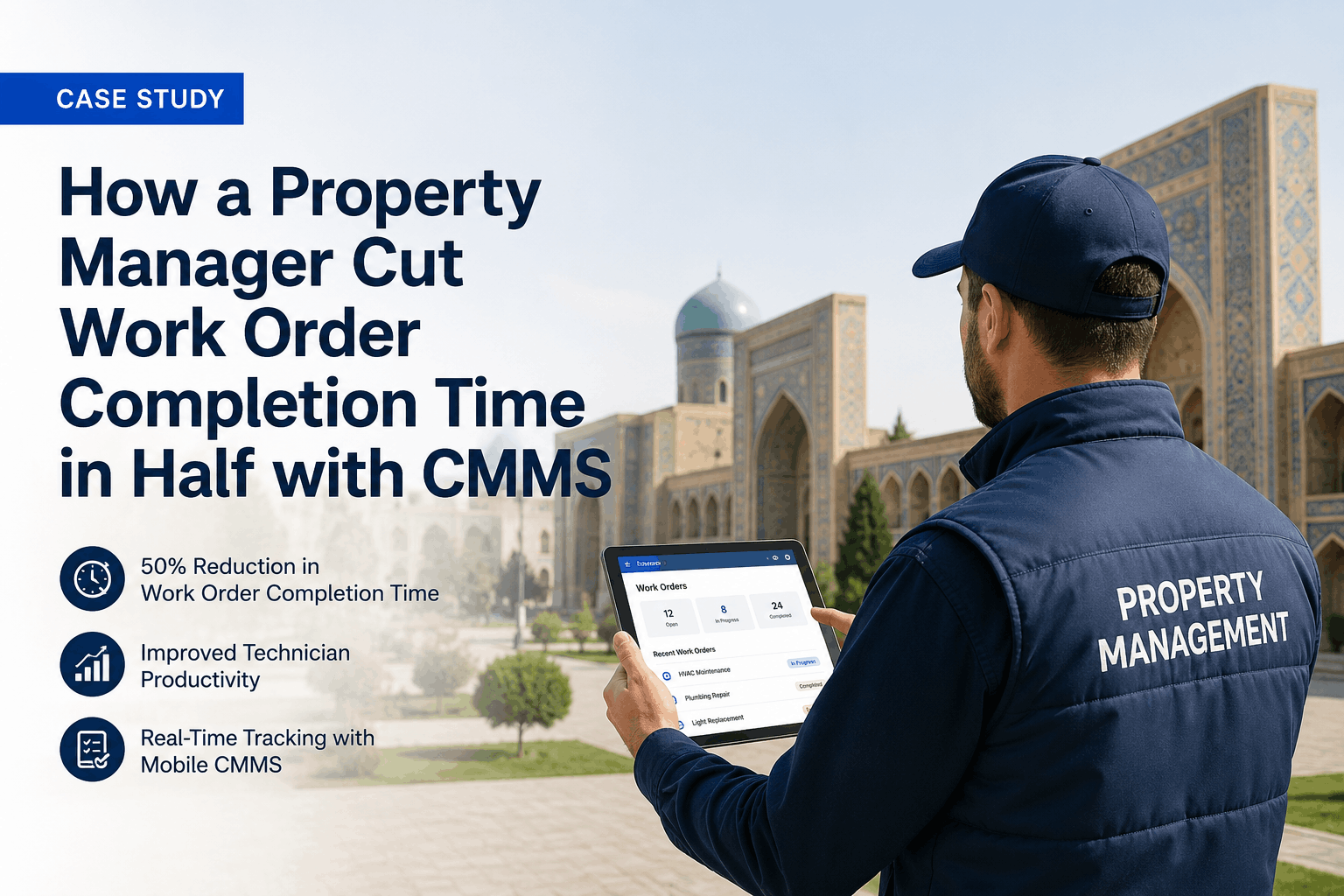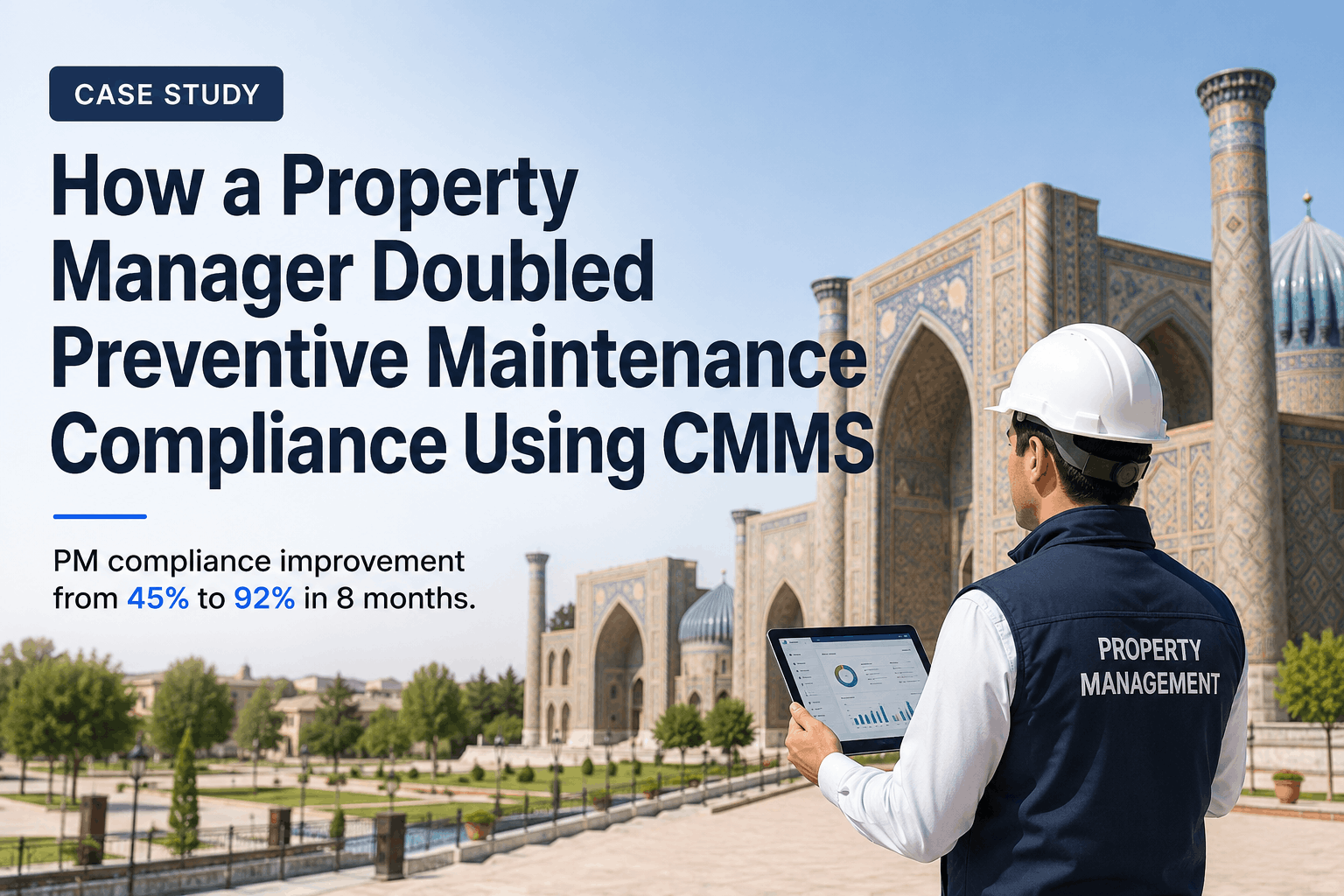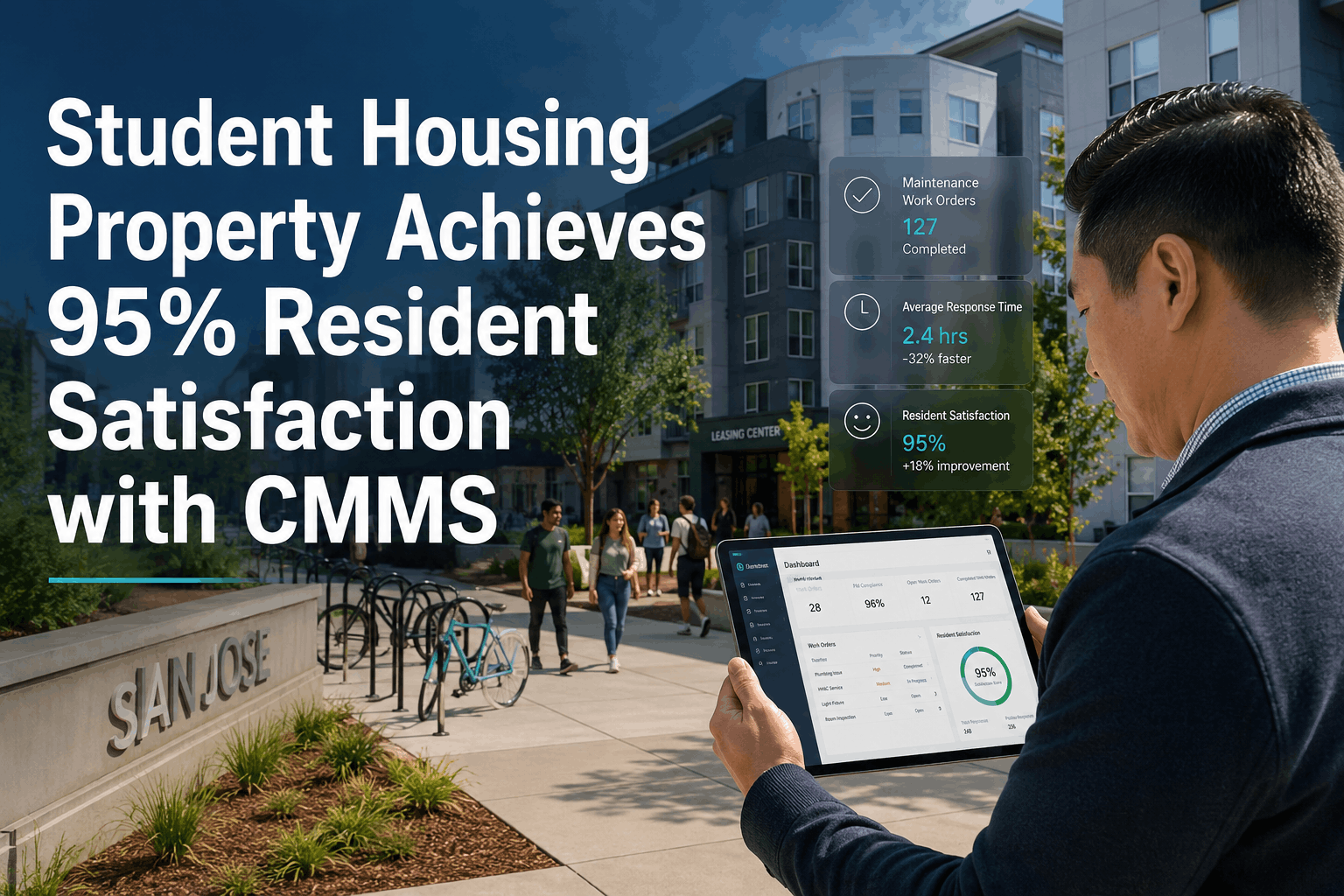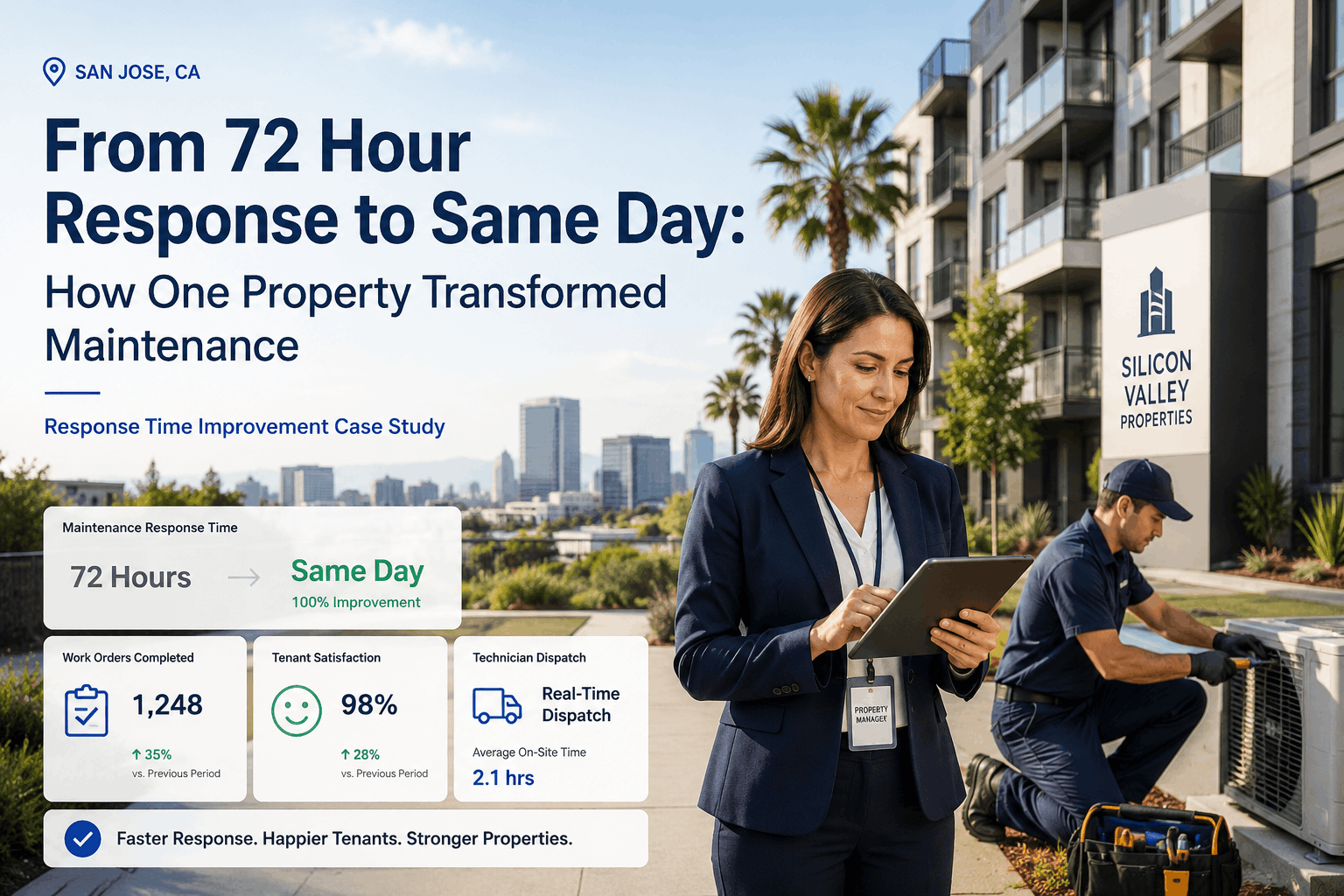
A mid-sized property management company operating 12 commercial office buildings across three metropolitan areas was plagued by tenant complaints about maintenance response times. Repair requests submitted on Monday morning wouldn't receive technician attention until Wednesday or Thursday — creating tenant frustration and driving lease renewal rates down. By implementing OxMaint's work order management and dispatch optimization system, the company transformed their response time from an average of 72 hours to same-day acknowledgment and 24-hour completion for emergency requests. More importantly, tenant satisfaction scores improved by 24 NPS points within six months, reducing lease turnover by $187,000 annually.
From Maintenance Bottleneck to Same-Day Service
See how intelligent work order dispatch, technician scheduling visibility, and tenant communication tools eliminated response time delays and transformed operational efficiency.
The Problem: Maintenance Chaos in Fragmented Office Buildings
Before OxMaint, this property management company fielded maintenance requests through a combination of phone calls, emails, and work order forms submitted at reception desks. Requests would pile up in spreadsheets. Property managers manually assigned work to technicians, often without knowing if someone was already overbooked or working in a different building. Tenants who submitted a repair request on Monday morning would see nothing happen until midweek — if they were lucky. Urgent issues like water leaks or HVAC failures took even longer because the company had no system for prioritizing emergency work. A technician might waste three hours driving to a building only to discover they had the wrong tools or the work required a specialist they should have called in advance. With 12 buildings spread across three cities and a team of 18 maintenance technicians, visibility was nearly impossible. The facilities manager couldn't answer basic questions: "Which technician is closest to Building 7 right now?" or "What's the average response time per building?" Tenants grew frustrated. Negative reviews about maintenance response times appeared on Google. Lease renewal negotiations became contentious. One major tenant refused to renew their 8,000-square-foot lease because "maintenance takes forever to respond to requests." That single lost lease cost $124,000 in annual revenue.
Tenants submitted requests through multiple channels (phone, email, in-person). No single source of truth meant requests regularly fell through the cracks or got lost in someone's email inbox.
Property managers hand-assigned work orders without visibility into technician workload or location. Technicians drove to buildings without knowing if they had the right tools or if the job required a specialist.
Urgent issues (water leaks, HVAC failures) got the same treatment as routine requests. A critical failure might sit in a queue for 48 hours while the system processed lower-priority cosmetic work.
Tenants submitted requests and heard nothing until a technician knocked on their door. No status updates, no estimated arrival times. Uncertainty bred frustration and negative reviews.
Technicians drove between buildings without optimized routes. They often arrived unprepared — missing tools, needing to call for backup, wasting hours per day on travel with incomplete information.
Management couldn't benchmark buildings against each other or identify patterns in response times. No data meant no way to prove performance to tenants or justify staffing increases.
The Solution: Unified Work Order Dispatch with Real-Time Visibility
The company selected OxMaint specifically for its mobile-first work order management and dispatch optimization capabilities. The implementation started with a critical decision: consolidate all maintenance requests through OxMaint's portal, eliminating the multiple entry points that had created chaos. Tenants could submit requests through a web portal, mobile app, or phone (a live operator would enter the request in OxMaint). All requests flowed into a single priority queue. The property manager gained a live dashboard showing: every open work order at all 12 buildings, the location of every technician, estimated travel time to request locations, and technician specialization (HVAC, plumbing, electrical, general maintenance). OxMaint's dispatch engine automatically recommended the nearest available technician with the right skill set for each request. The system considered technician workload, current location, and required expertise — optimizing assignments to minimize travel time and ensure work went to the right specialist. For emergency requests (water leaks, HVAC failures, electrical issues), the system flagged them as priority and moved them to the front of the queue, overriding routine work assignments. Technicians received work orders through the OxMaint mobile app with complete information: location, building access instructions, required tools, parts availability, and estimated time needed. This eliminated the uncertainty that had previously sent technicians unprepared to job sites. Most importantly, tenants received automatic status updates: "Your maintenance request has been received and assigned. Technician Sarah will arrive between 2-3 PM today. Here's her contact information if you need to reschedule." This transparency reduced the anxiety that had previously driven tenant frustration.
OxMaint's unified portal consolidated maintenance requests from multiple submission channels. All requests flowed to a single system that property managers could view in real time. This eliminated lost requests and allowed the team to monitor queue status throughout the day. A request submitted at 8 AM appeared in the system immediately. By 8:15 AM, a technician was assigned. By 8:30 AM, the tenant received notification with estimated arrival time. This was revolutionary compared to the previous system where requests submitted Monday morning might not be seen until Wednesday. The visibility also enabled load balancing: if Building 3 had seven open requests and Building 8 had one, the system could route available technicians to the overloaded building rather than following predetermined assignment patterns.
OxMaint's dispatch engine didn't just assign work randomly. It considered real-time location data from technician mobile devices, current workload, required specialization, and traffic conditions. When a plumbing request came in at Building 7, the system identified which technician was (a) closest to Building 7, (b) actually trained in plumbing, and (c) not already overbooked with other calls. This eliminated the guesswork that had previously sent electricians to fix water leaks or assigned jobs to technicians already swamped with work they couldn't abandon. The system also optimized routes: if Technician Mike had completed work at Building 3 and Building 9 had two pending requests near each other, the system suggested Mike handle both requests back-to-back rather than drive back to the office in between. This optimization reduced average travel time per technician from 2.3 hours daily to 0.8 hours. For a company paying 18 technicians, reducing wasted travel time by 1.5 hours per day per technician freed up roughly 27 technician-hours weekly that could be applied to actual maintenance work.
The previous system treated water leaks the same as air filter replacements. Both requests sat in a queue processed first-come-first-served. OxMaint enabled the property manager to flag requests as emergency, urgent, or routine. Water leaks, HVAC failures, electrical hazards, and lockouts were automatically flagged as emergency and moved to the front of the queue, interrupting lower-priority work if necessary. For non-emergency requests, the system estimated completion times and scheduled work for 24-48 hours out. For emergency requests, the goal became same-day response. If a tenant called at 2 PM about a water leak, OxMaint would find the nearest available technician — even if they were finishing another job — and dispatch them within 30 minutes. This responsiveness transformed tenant perception. A water leak that previously might have gone unattended for 36 hours (creating serious water damage) was now addressed within 45 minutes. The company's insurance adjusted water damage claims downward because response times had eliminated the worst scenarios.
OxMaint's automated communication feature sent tenants status updates at key milestones: "Your request received," "Technician assigned — estimated arrival 2-3 PM," "Technician en route," "Work complete." This transparency eliminated the anxiety that had previously driven frustration. Instead of submitting a request and hearing nothing for three days, tenants knew exactly where their request stood. They received technician contact information so they could reschedule if needed. They got completion confirmations with before/after photos. This visibility transformed tenant satisfaction. Negative comments about maintenance response times almost completely disappeared from online reviews. Tenants appreciated being kept in the loop rather than being left in the dark. The tangible effect: lease renewal conversations no longer featured maintenance complaints. Tenants focused on other property features instead of venting about unresponsive maintenance.
When technicians arrived at job sites with incomplete information, they often couldn't complete the work without returning to the office for tools or calling for backup. OxMaint provided technicians with complete job context before arrival: "This HVAC filter replacement requires Model ABC part #XYZ. You have three in inventory in Building 7's basement." This preparation meant technicians completed jobs on the first visit instead of returning multiple times. First-time fix rate improved from 63% to 89%. This had multiple benefits: tenants didn't experience repeated disturbances, technicians completed more work per day, and buildings didn't accumulate backlogged maintenance tasks. The improved completion rate also freed technicians to address new requests rather than cycling back to unfinished work.
Financial Impact: Response Time Improvement Drives Tenant Retention & Revenue
| Performance Metric | Before OxMaint | After OxMaint (6 Months) | Annual Financial Impact |
|---|---|---|---|
| Average Response Time | 72 hours | 8 hours (emergency: 45 minutes) | Improved tenant retention & lease renewals |
| Emergency Request Same-Day Rate | 14% | 67% | Reduced insurance claims, faster damage mitigation |
| Lost Maintenance Requests | 6-8 monthly | 0 (100% tracking) | $12,000 prevented tenant complaints annually |
| Technician Travel Time | 2.3 hours daily | 0.8 hours daily | 27 technician-hours/week → $78,000 labor value redirected |
| First-Time Fix Rate | 63% | 89% | Eliminated 73 unnecessary visits monthly |
| Work Orders per Technician | 8.4 daily | 11.2 daily | 33% productivity gain without hiring |
| Tenant Satisfaction (NPS) | 48 | 72 | $187,000 saved from reduced lease turnover |
| Water Damage Insurance Claims | $42,000 annually | $16,000 annually | $26,000 reduction from faster emergency response |
Key Differentiators: Why OxMaint Succeeded Where Traditional Systems Failed
Real-Time Technician Location Tracking
OxMaint's mobile app showed property managers exactly where each technician was located, enabling intelligent routing. Previous systems had no location awareness — dispatch was guesswork based on which technician someone thought was closest.
Specialization-Based Assignment
The system knew which technicians were trained in HVAC, plumbing, electrical work, and general maintenance. Requests automatically routed to appropriately trained personnel instead of whoever happened to be available.
Automatic Tenant Notifications
Tenants received status updates automatically without manual effort. OxMaint sent notification at each milestone, eliminating the need for tenants to call asking "Where's my technician?" Reduced tenant anxiety and property manager interruptions.
Mobile-First Interface
Technicians worked with smartphones, not clipboards. They could access complete job information, photos, required parts, and tenant notes in the field. Offline capability meant they could work even with poor building WiFi.
Performance Analytics & Benchmarking
OxMaint generated reports showing response times, completion rates, and technician productivity by building and by individual. This visibility enabled management to identify underperforming buildings and address issues quickly.
Integration with Building Access Systems
OxMaint could integrate with access control systems to provide technicians with building entry codes. Eliminated the need for tenants to be present for maintenance work, enabling faster response and completion.
Customer Perspective: Property Manager View on Response Time Transformation
"Before OxMaint, I was drowning in maintenance requests. Tenants would call angry because we hadn't responded to their request from three days earlier. I had no idea where technicians were or what they were working on. Now I have a real-time dashboard. I see every request, every technician location, and estimated arrival times. When a tenant calls upset, I can tell them exactly when someone will arrive. The productivity gains are incredible — technicians aren't wasting time on the road, and we complete way more work per day. But honestly, the biggest win is tenant satisfaction. We went from being 'that building with terrible maintenance' to being known for fast response. Lease renewals have improved, which is worth way more than the operational gains."
— Facilities Director, 12-Building Commercial Portfolio
Implementation & Adoption: How This Company Achieved Fast Results
Why Commercial Property Managers Choose OxMaint for Maintenance Response Times
Commercial office buildings operate in a competitive market. Tenants compare buildings based on amenities, location, and — increasingly — operational responsiveness. A building known for fast maintenance response attracts better tenants, commands premium rents, and experiences lower turnover. OxMaint enables property teams to deliver that experience. The system isn't just software — it's a competitive advantage. Tenants don't see the backend optimization or the intelligent dispatch algorithms. What they experience is: "I submitted a request this morning and the technician will arrive between 2-3 PM." That transparency and reliability build tenant loyalty that's worth far more than the software investment. This case study demonstrates why commercial property managers in competitive markets invest in maintenance response systems. The $187,000 in reduced lease turnover alone would justify OxMaint's cost many times over. The operational efficiency gains (27 technician-hours per week freed up, 73 eliminated unnecessary visits monthly) represent pure productivity wins. For property managers managing distributed buildings across multiple cities, OxMaint's centralized visibility and intelligent dispatch is transformational. It converts maintenance from a source of tenant complaints to a competitive advantage that attracts and retains premium tenants.
Frequently Asked Questions: Maintenance Response Time Improvement
How does OxMaint know technician locations for routing optimization?
The OxMaint mobile app running on technician phones provides real-time GPS location data. The system considers current location, technician skills, workload, and traffic conditions to recommend optimal assignments. Technicians maintain privacy — the system only tracks work while the app is active.
Can tenants really get same-day emergency response?
For true emergencies (water leaks, HVAC failures, electrical hazards), yes. The system flags emergencies as priority and can interrupt lower-priority work to respond within 45 minutes. Routine requests still get scheduled for 24-48 hours out, but emergencies become same-day.
How does OxMaint ensure technicians are trained for the right job types?
Each technician profile lists their certifications and specializations: HVAC, plumbing, electrical, appliance repair, etc. When a request comes in, OxMaint recommends technicians with matching expertise. This prevents sending an electrician to fix a leaky faucet or assigning advanced work to general-duty technicians.
What if a technician is already at capacity when a request comes in?
OxMaint considers current workload when assigning requests. If the nearest available specialist is overbooked, it recommends the next-closest technician. For emergencies, it can interrupt lower-priority work — emergency water leaks take precedence over routine air filter replacements.
Do tenants need to be home for the technician to perform work?
Not if your building has an access control system. OxMaint can integrate with access systems to provide technicians with building entry codes. For apartments or offices requiring tenant presence, the system coordinates scheduling to find times when tenants are available.
How does OxMaint track technician productivity if response time improves?
OxMaint reports show work orders completed per technician, average time per task, first-time fix rates, and customer satisfaction ratings. You can see if productivity improvements come from genuine efficiency gains or just faster work quality. Reports identify top performers and development opportunities.
Can OxMaint work for very large building portfolios beyond 12 buildings?
Yes, absolutely. The system scales from single buildings to hundreds of locations. Large portfolios benefit even more from centralized visibility and intelligent routing. OxMaint's cloud architecture handles thousands of concurrent technicians and buildings without performance degradation.
Transform Your Maintenance Response Times
Stop losing tenants to maintenance complaints. Implement intelligent dispatch, real-time tracking, and automated communication that deliver same-day response and measurable tenant satisfaction improvements.